At a time when India dreams of hosting the Olympic Games in 2036, a critical question demands urgent attention: are we nurturing the institutions that produce world-class athletes or quietly eroding them? The answer will determine whether India emerges as a sporting powerhouse or remains a nation of untapped potential.
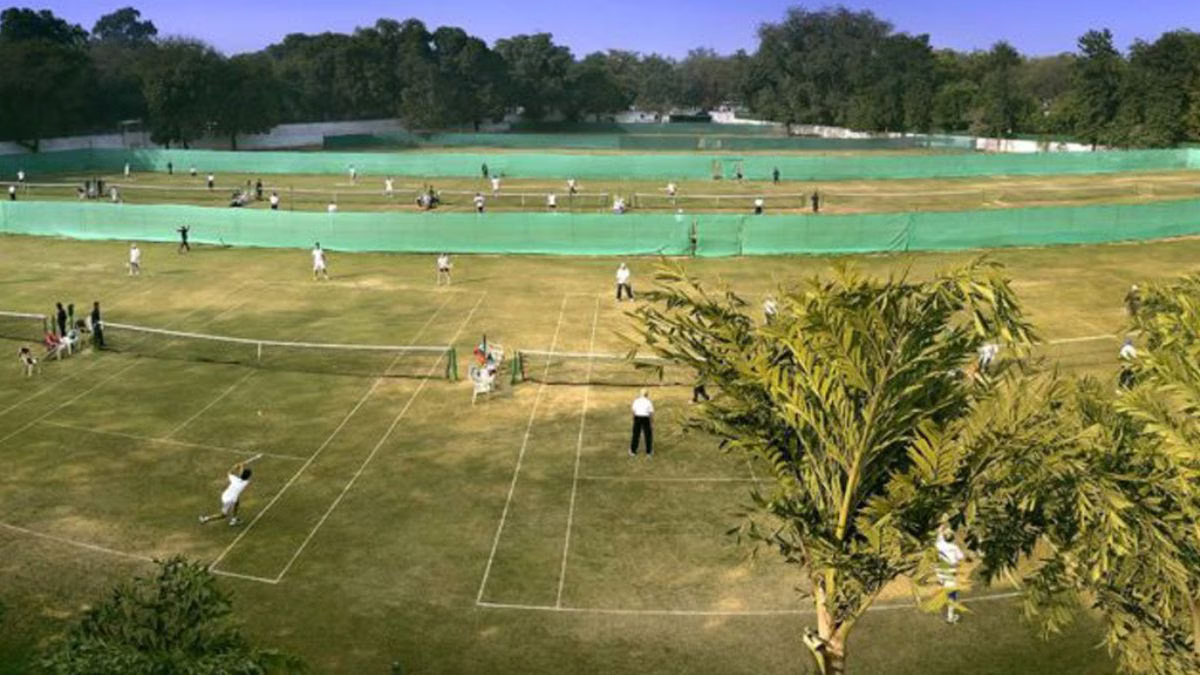
I write this not as an observer, but as someone whose life was shaped by one such institution, the Delhi Gymkhana Club.Growing up there, training there and competing on its courts shaped my tennis career, which included victories over top international players in Grand Prix tournaments. It was on foundations built in institutions like these that India mounted its remarkable Davis Cup campaign in 1974-75, reaching the finals in a defining moment of sporting history. I had the privilege of contributing, including a crucial singles victory against Australia.
Those experiences taught me something fundamental: Great athletes are not born in isolation; they are built within systems.And that is precisely where India is falling behind.A crisis of institutions, not talent
India does not lack talent. It never has.What we lack are world-class, well-governed institutions that can identify, nurture, and consistently develop that talent. In a country of 1.4 billion people, it is nothing short of alarming that we struggle to compete at the highest levels in most global sports. Our absence from events like the FIFA World Cup is not due to a lack of ability; it is due to a lack of structured ecosystems.Sporting excellence requires more than passion. It demands infrastructure, coaching, discipline, exposure and continuity.Institutions like Gymkhana embody exactly this ecosystem.One of the most significant obstacles in Indian sport today is governance.Too many sporting bodies are controlled by individuals with little understanding of sport itself. This has led to inconsistent policies, poor talent development pathways, and a failure to build excellence at scale.Yes, India has achieved success in cricket. And more recently, in badminton and hockey. But unlike cricket, these are exceptions, not the result of a nationwide system that produces champions across disciplines.If we are serious about becoming a global sporting nation, we must confront an uncomfortable truth: You cannot produce world-class athletes with third-rate systems.