AP, PARIS
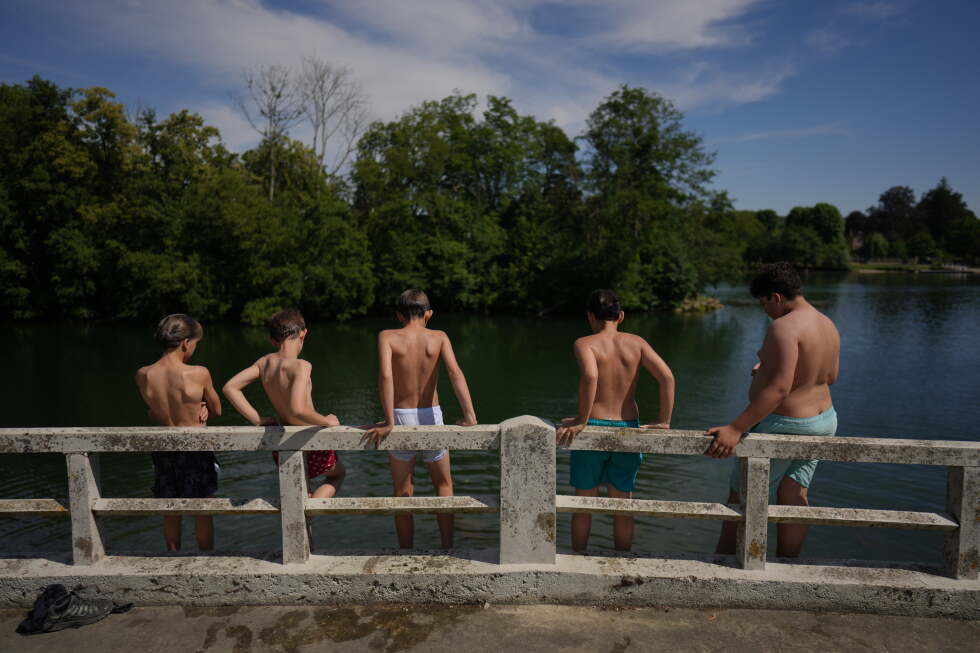
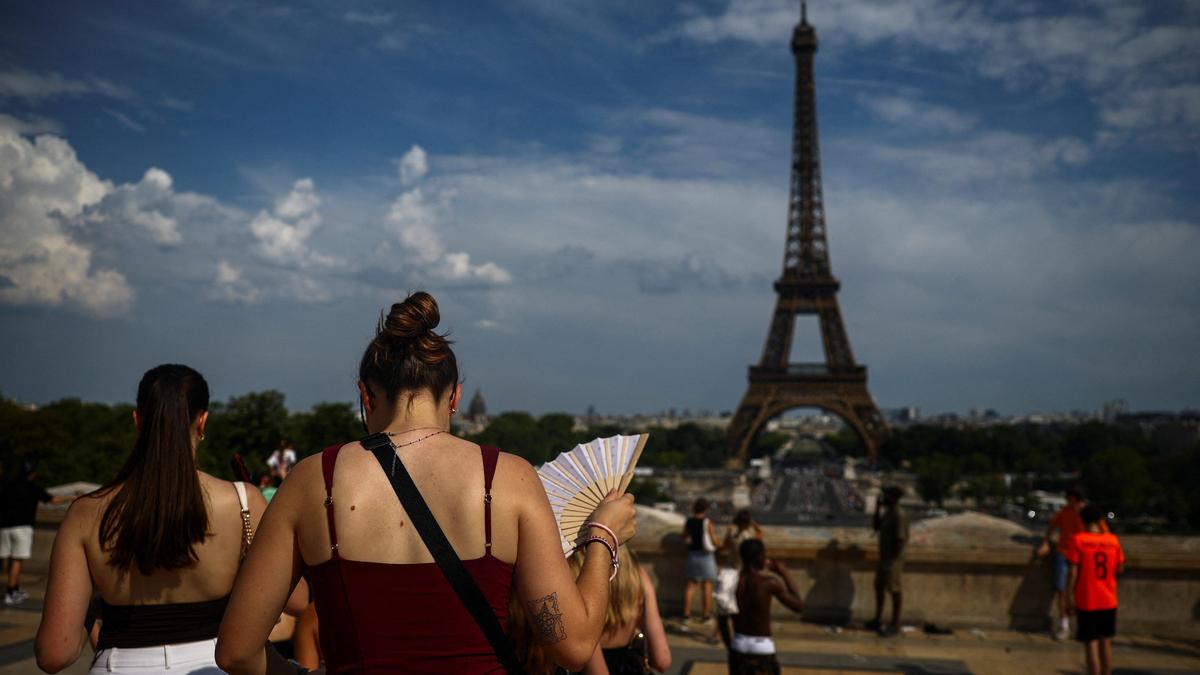
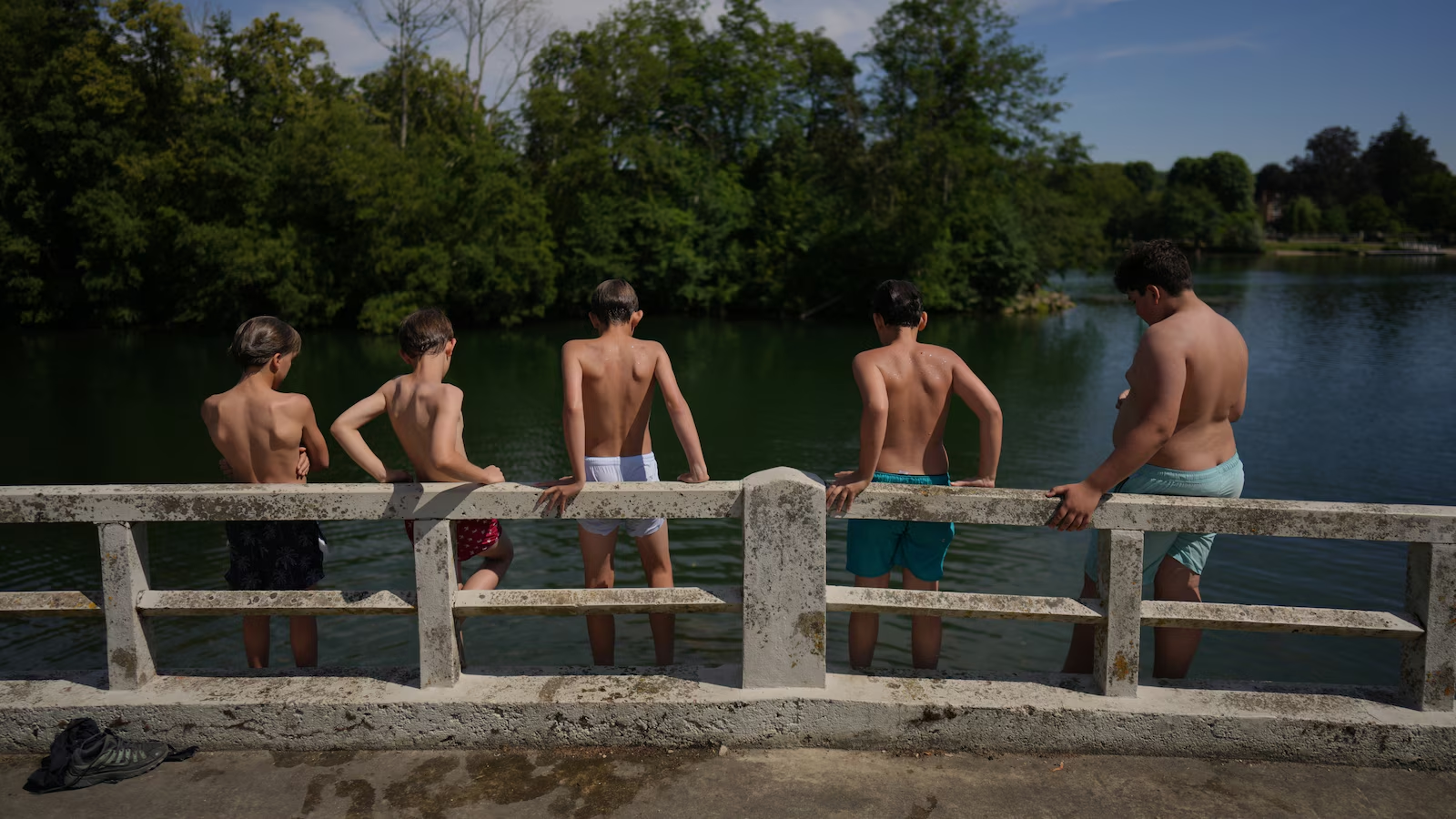
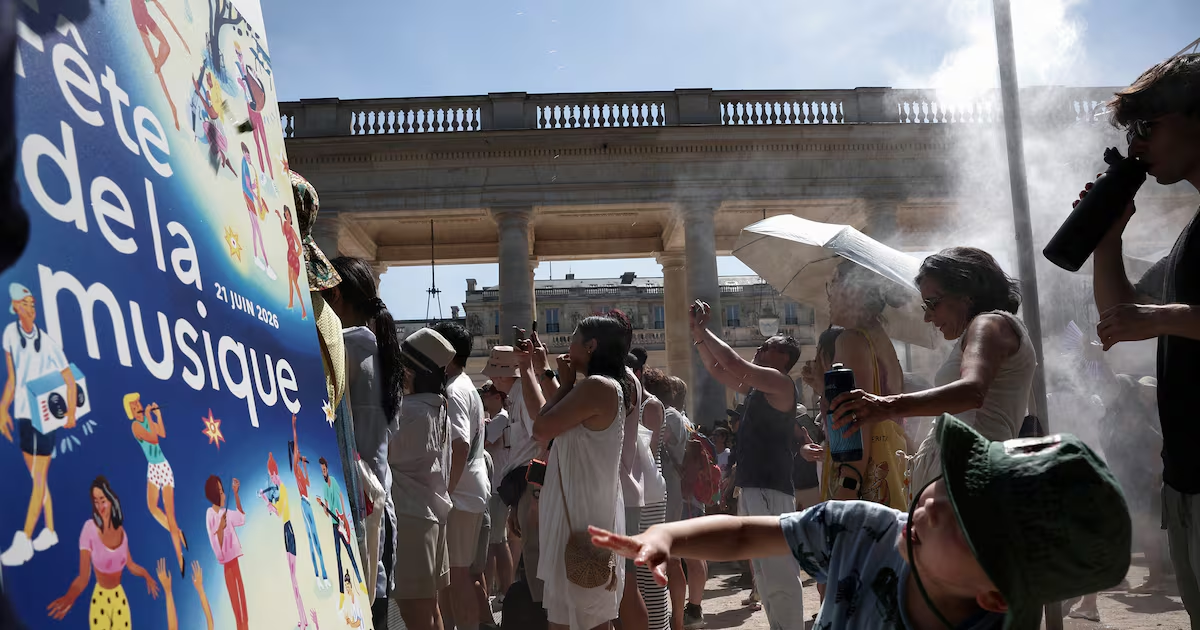
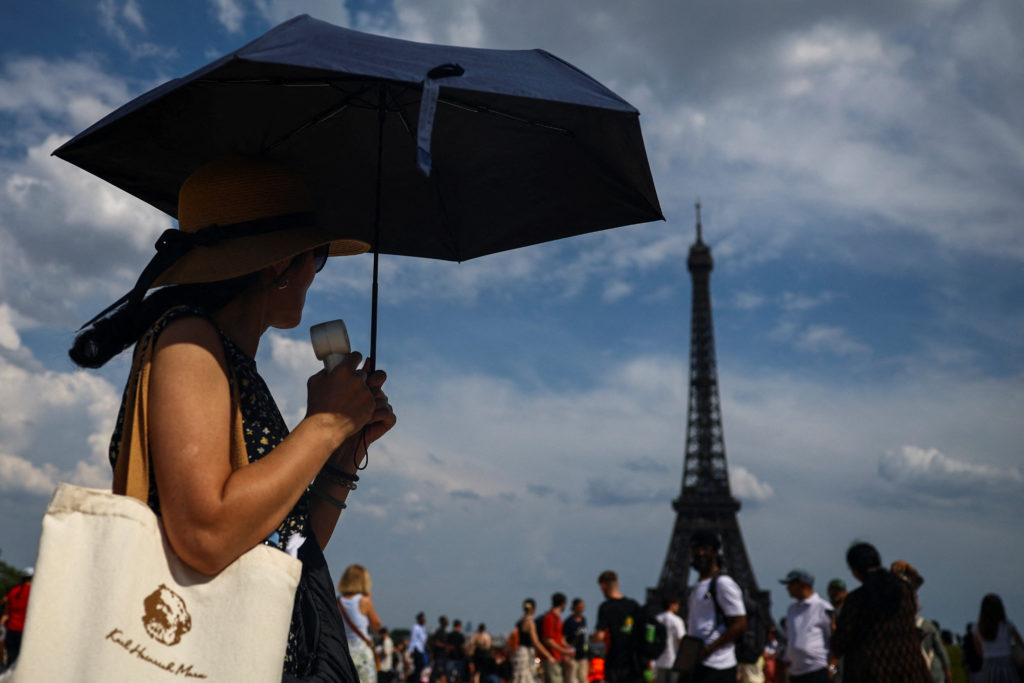
France has put emergency services and military forces on wildfire alert, restricting public alcohol consumption and canceling some outdoor sports events to cope with a heat wave unfurling across parts of Europe. About one-third of France was under the national weather service’s heat red alert yesterday and temperatures were high nationwide, expected to reach 40°C yesterday in some areas, in a country where air-conditioning is not widespread. The forecast for today is even hotter. The Eiffel Tower and other Paris venues set up misting stations to cool crowds, among a raft of measures announced by national and local authorities to minimize risks.
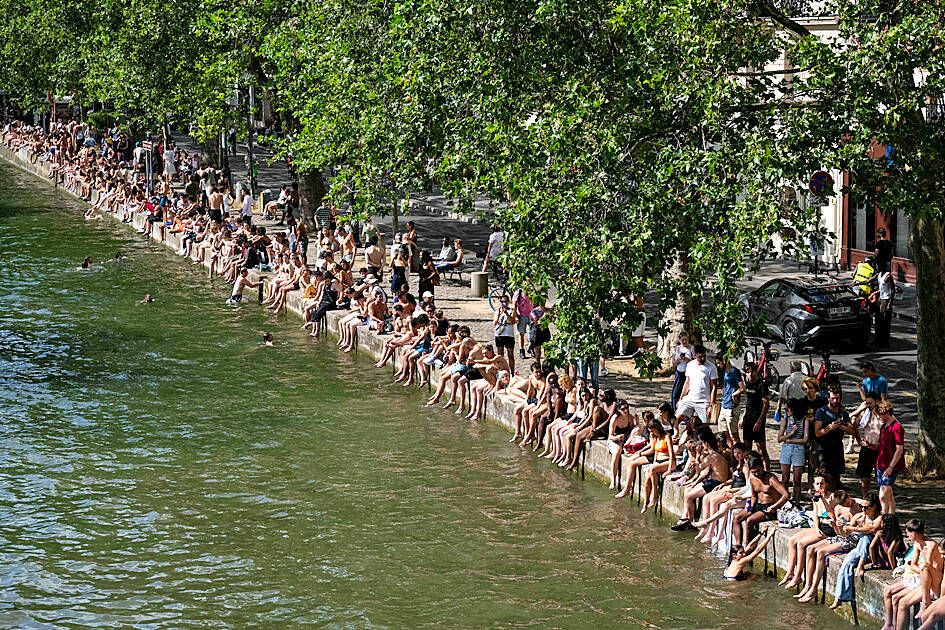
A swimmer dives into the Canal Saint-Martin from an unapproved spot for swimming as France experiences a heat wave in Paris on Saturday.
More than 200,000 people across Europe died from heat-related causes over the past four years, and most of the fatalities were preventable, the WHO’s Europe office said this month. More above-average temperatures are expected this summer, which can cause heat exhaustion and life-threatening heat stroke.
WHO’s Europe office called for countries and institutions to implement heat plans, such as opening cooling centers, or introducing breaks or flexible shifts that enable workers to stay out of the midday sun. France’s annual Music Day yesterday was a particular concern for authorities. The nationwide summer solstice celebration involves thousands of concerts in village squares, rave venues and Paris clubs, bringing communities together and increasingly drawing international visitors. The French government ordered organizers of music day events to limit alcohol use to “preserve emergency services and allow medics to concentrate on taking care of the most vulnerable.” Authorities are worried about people living in the baking streets, and older people in nursing homes or isolated in their homes. About 15,000 older people died in a 2003 heat wave that became a reckoning for France. The French government on Saturday announced reinforced wildfire readiness and ordered tightened surveillance of water supplies to France’s many nuclear reactors. Schools would only be closed as a last recourse, the government said, though end-of-year exams held in the afternoons might be delayed until the following morning or otherwise rearranged. French Prime Minister Sebastien Lecornu on Saturday convened a government heat crisis meeting and was planning another one on Sunday in the face of what the national weather service called a “widespread, long-lasting and intense” hot spell. Lecornu ordered government ministers to plan for better adapting France to heat waves in the future — including “via air-conditioning, if necessary.”