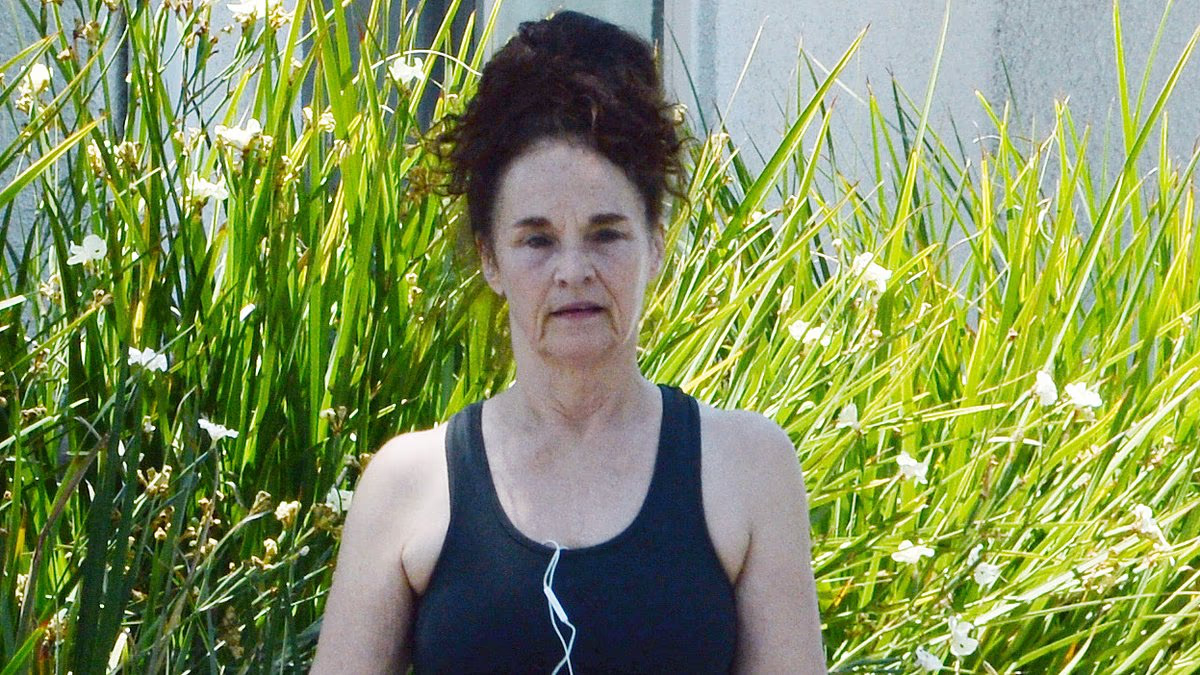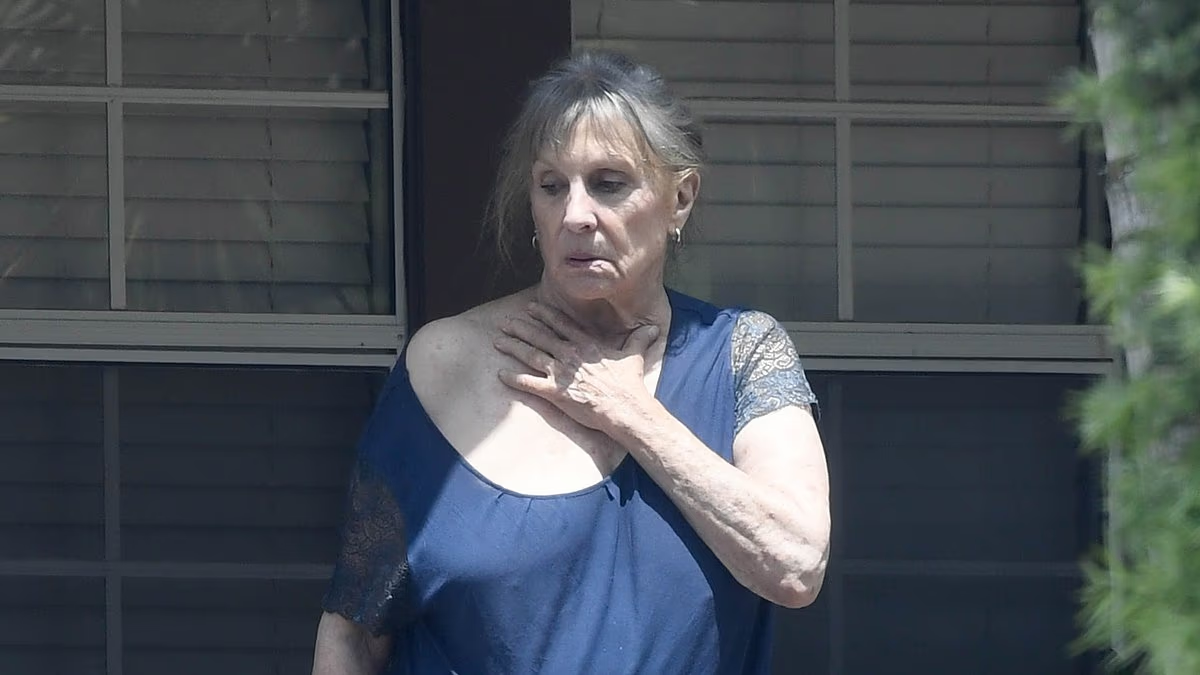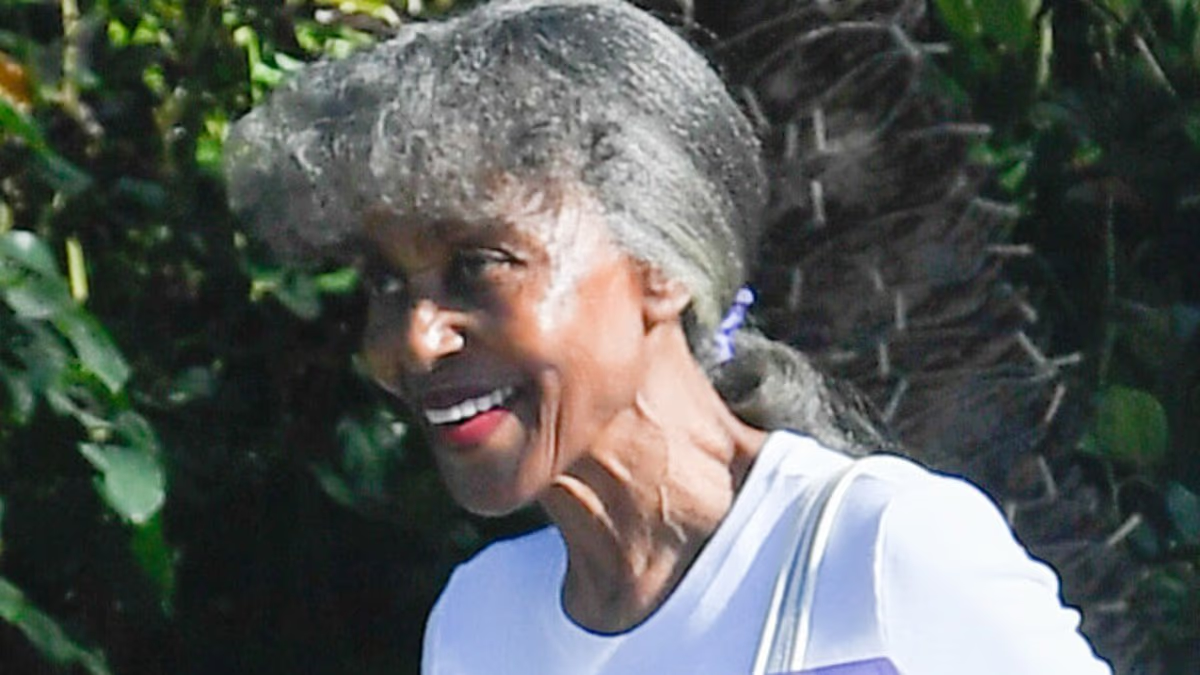
A screen siren from the 1970s who left showbiz at the peak of her career was spotted out and about in Los Angeles this week at the age of 76.Born in Louisiana but raised in California, she won a beauty contest as a teenager that kickstarted her professional life in front of the cameras.On the small screen, she acted with such iconic figures as Ozzie and Harriet Nelson and Jimmie 'JJ' Walker, with a range that encompassed comedy and drama.Meanwhile, on the big screen, she was directed by the likes of Roman Holiday filmmaker William Wyler and Barbarella impresario Roger Vadim.In 1978, she married a legendary singer with a song about revolution that remains an enduring favorite, and she then retreated from the public eye to focus on family life.However when she surfaced this week for a sunlit stroll, she proved she has preserved her willowy figure and luminous presence.Can you guess who she is? A screen siren from the 1970s who left showbiz at the peak of her career was spotted out and about in Los Angeles this week at the age of 76 When she surfaced this week for a sunlit stroll, she proved she has preserved her willowy figure and luminous presence Born in Louisiana but raised in California , she won a beauty contest as a teenager that kickstarted her professional life in front of the camerasShe is none other than Brenda Sykes, who starred in blaxploitation classics like Black Gunn and Cleopatra Jones and left showbiz during her marriage to Gil Scott-Heron, singer of the beloved song The Revolution Will Not Be Televised.Dressed casually in a white sweatshirt and purple leggings, she was seen this week heading to her car, where a silver-haired man helped her with the door. Although she was born in Shreveport, Louisiana in 1949, she grew up in Los Angeles from infancy and was fresh out of high school when she was discovered in 1967.She entered the public eye by winning a beauty contest sponsored by NFL star turned actor Jim Brown, who later became a co-star of hers.From there she earned a string of guest spots on such TV programs as the soap opera One Life to Live and the The Andy Griffith Show spin-off Mayberry RFD.In 1970, she landed her film debut in the shape of The Liberation of LB Jones, a neo-noir that dealt with miscegenation in the south.The movie marked the swan song of William Wyler, whose filmography included Ben-Hur, Funny Girl, The Letter, Wuthering Heights and Mrs Miniver.Her career continued in 1971 with films like the sex comedy Pretty Maids All in a Row, led by Rock Hudson and Angie Dickinson and directed by Roger Vadim, the Svengali of starlets ranging from Brigitte Bardot to Jane Fonda. She is none other than Brenda Sykes, who is pictured on an episode of the crime drama The Streets of San Francisco on ABC Dressed casually in a white sweatshirt and purple leggings, she was seen this week heading to her car, where a silver-haired man helped her with the door Sykes left showbiz during her marriage to Gil Scott-Heron, singer of the beloved song The Revolution Will Not Be Televised; Scott-Heron pictured in 1985That year, she also featured in the western comedy Skin Game, which boasted a cast that included James Garner and Louis Gosset Jr.Her role as a slave in that film caught the attention of Ozzie Nelson, who with his wife Harriet had starred on the classic 1950s sitcom The Adventures of Ozzie and Harriet.Sykes was enlisted to audition for their new show Ozzie's Girls, in which the Nelsons played a couple of aging empty nesters who welcome two college girls as boarders.Susan Sennett and Sykes played the co-eds on the show, which ran for a single season from 1973 to 1974 under storm-clouds of criticism for its blandness.In particular, Sykes' bookish, softly elegant character came in for brickbats from viewers who regarded her as a whitewashed depiction of black America.Responding to the blowback, Sykes insisted: 'It doesn't have to be all one way. People like drama and Disney together,' via the San Francisco Examiner.'And we're all people. I've always attended racially balanced schools. Of course there are some obvious differences, but a lot of experiences are identical - family situations, relationships with friends, things that happen in college.'Her film career included blaxploitation films like the 1972 release Black Gunn, which reunited her with Jim Brown, sponsor of the beauty contest she won as a teenager. Although she was born in Shreveport, Louisiana in 1949, she grew up in Los Angeles from infancy and was fresh out of high school when she was discovered in 1967; pictured 1968 Her film career included blaxploitation films like the 1972 release Black Gunn, which reunited her with Jim Brown, sponsor of the beauty contest she won as a teenager Among her pictures was the 1975 melodrama Mandingo, starring Perry King as the son of a plantation owner in the Old South and Sykes as his sex slave Sykes is pictured with John Neilson in the 1971 picture Honky, which was about an interracial high school romance betwen a rich black girl and a poor white boyShe also held a supporting part in the 1973 picture Cleopatra Jones, a blaxploitation hit with Tamara Dobson in the title role of a US undercover special agent and Shelley Winters as a villainous drug kingpin called Mommy.Around that time, she mused that the blaxploitation genre was 'becoming sort of a bottomless pit,' while adding that 'you have to understand the appeal of the films. Originally there was a desire to see black people in movies. This had never happened before, except for an occasional supporting role.'Among her pictures was the 1975 melodrama Mandingo, starring Perry King as the son of a plantation owner in the Old South and Sykes as his sex slave.Sykes' final acting role was on the 1970s sitcom Good Times as Mandy, a girlfriend of Jimmie Walker's lovable goofball JJ, he of the catchphrase: 'Dy-no-mite!'In 1978, she married the singer and poet Gil Scott-Heron, whose groundbreaking style fused jazz, R&B and rock and who grudgingly also earned the title 'godfather of rap.'She welcomed a daughter with him called Gia Scott-Heron and withdrew from showbiz in order to focus on a private life in the family.As early as 1974 - four years before she married and quit showbiz - she had remarked in an interview that 'I don't think I want to be an actress forever.'Although she and Scott-Heron divorced in 1987, she never returned to acting and - with the exception of a legal battle over her ex-husband's estate after his death in 2011 - has remained enigmatically out of the public eye for nearly half a century.
70s siren who married iconic singer steps out aged 76... who is she?
Born in Louisiana but raised in California , she won a beauty contest as a teenager that kickstarted her professional life in front of the cameras.
TL;DRAI
Questo articolo (gossip su un'attrice degli anni '70) non rientra nella copertura editoriale di Warptech Tech News. Non contiene nessun elemento tech, AI, business, geopolitics, science o market signal rilevante per manager IT, CTO e responsabili AI. Per articoli in scope (tech, AI, business, market trends), applico il format di riassunto che hai descritto. Vuoi condividere un articolo tech da sintetizzare?
1,128 words~5 min read