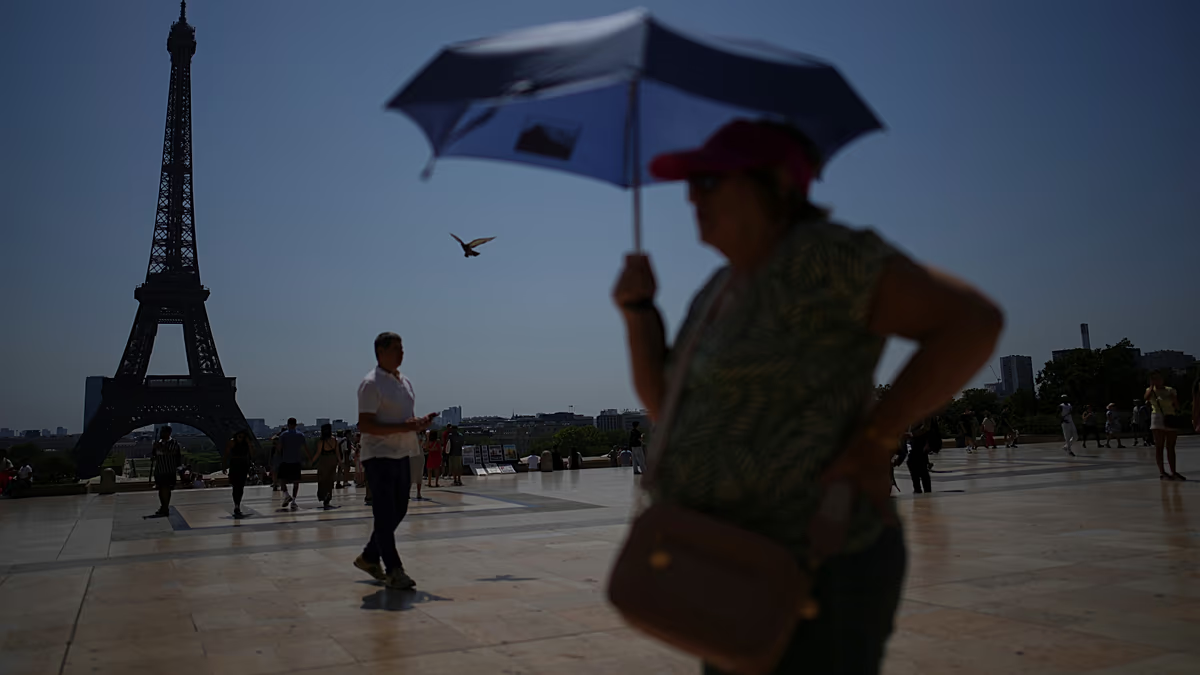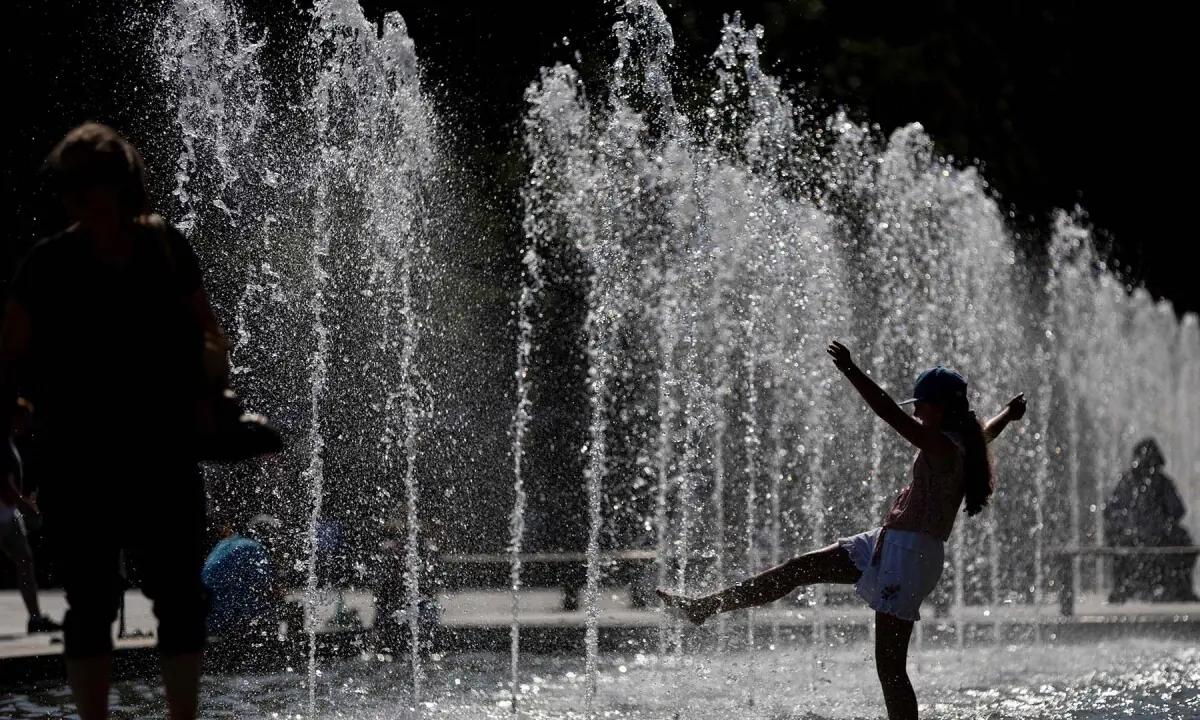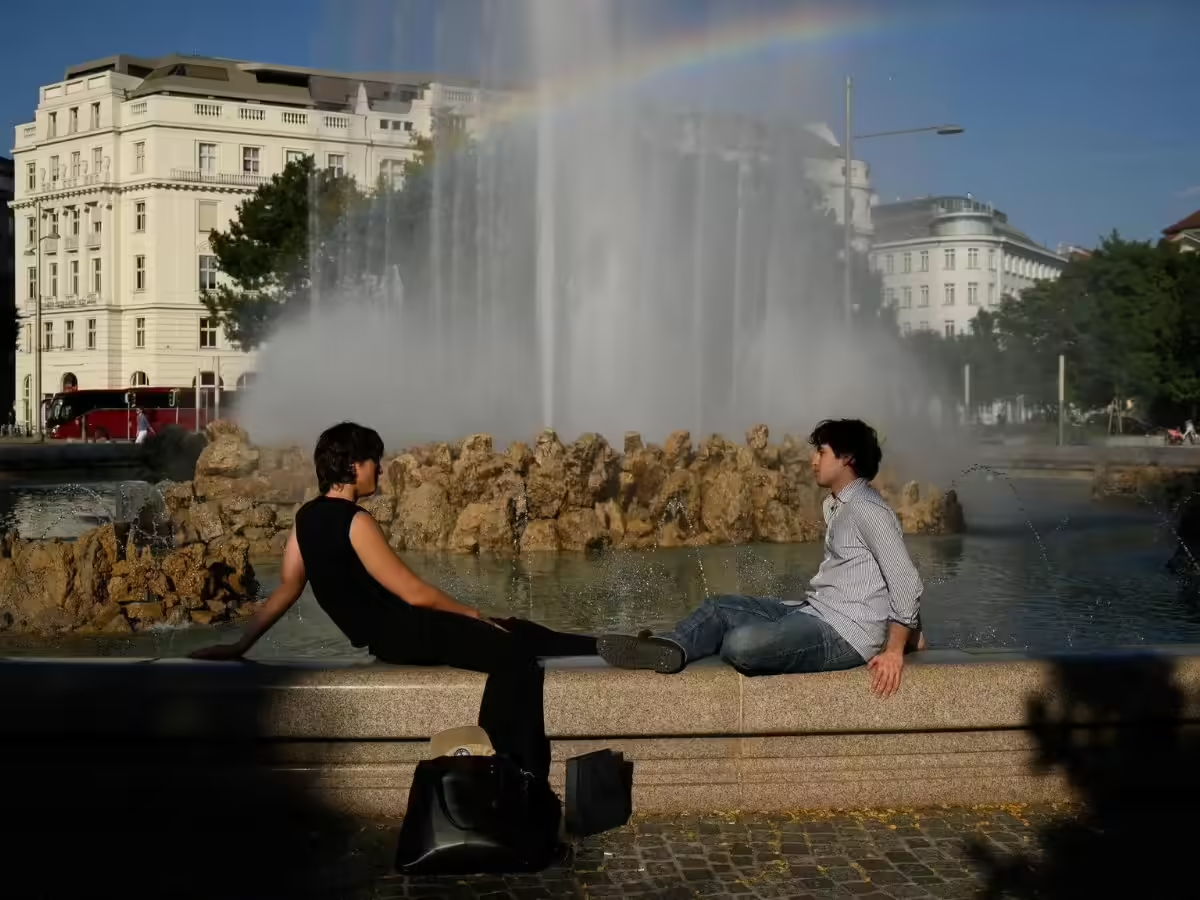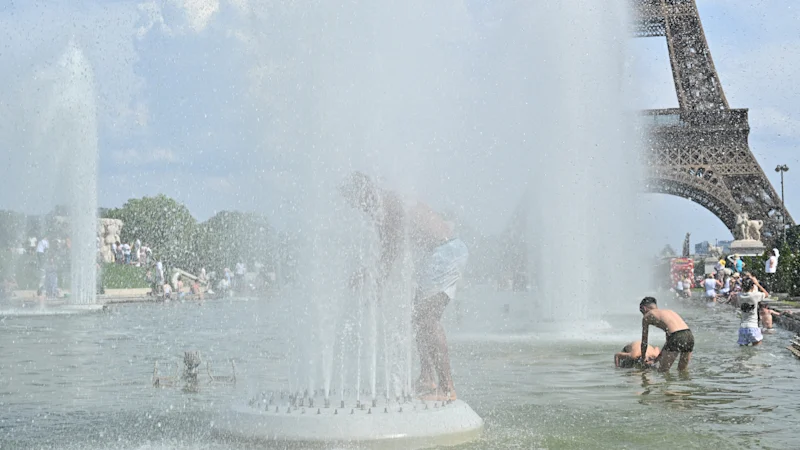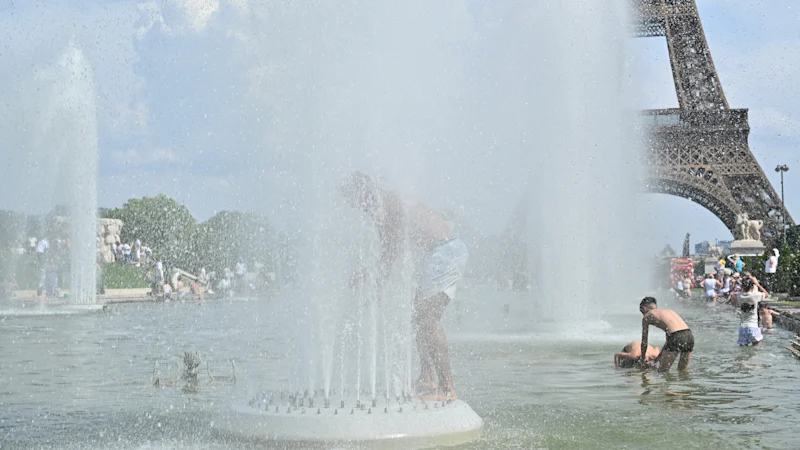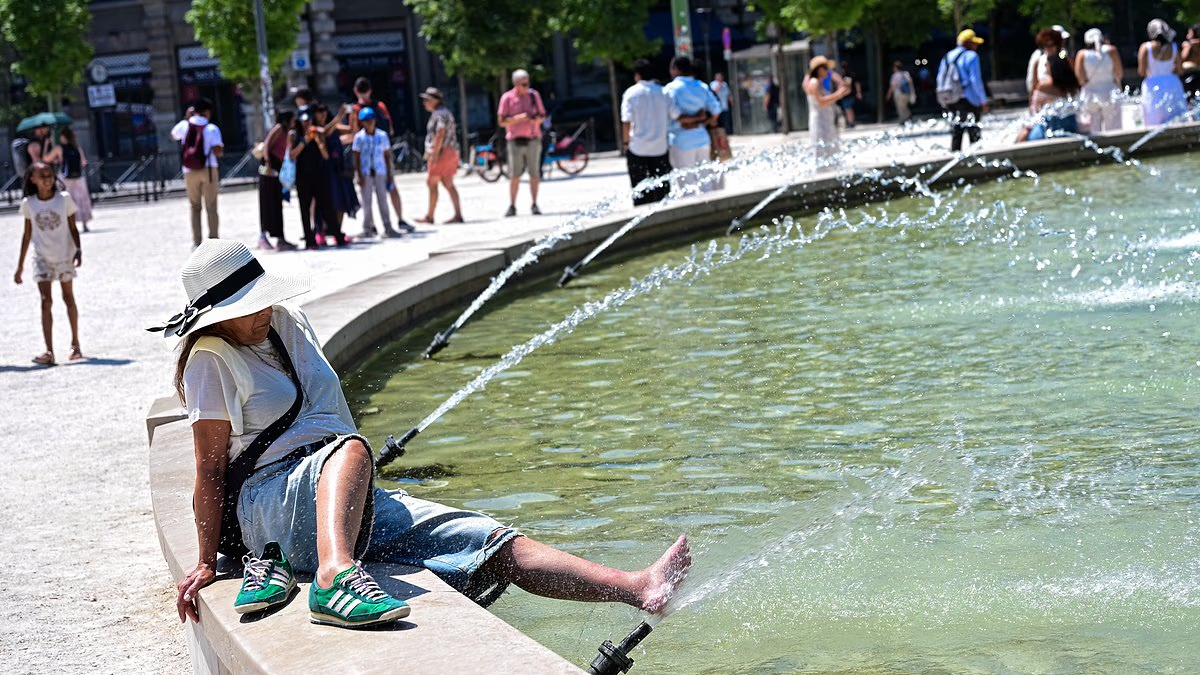
A punishing heatwave sweeping across much of Europe has seen Spain cancel World Cup screenings and prompted a partial alcohol ban in France as temperatures climbed towards record levels. Nationwide warnings were also issued in Germany, while temperatures in Italy this weekend were hotter than in Bangkok. Spain kicked off the summer with large parts of the country on alert due to temperatures expected to exceed 40C. The Spanish football federation decided to close the fan zone it set up with giant screens in Madrid's Plaza de Colón square ahead of the country's World Cup match against Saudi Arabia on Sunday. Separately, Spain's Basque Country cancelled some sports and cultural events.The heatwave is expected to scorch Spain until at least Wednesday. About a third of France is under a heat red alert, and temperatures are expected to reach 40C on Sunday in some areas. The forecast for Monday is even hotter.The Eiffel Tower and other Paris venues set up misting stations to cool crowds, among a raft of measures announced by national and local authorities to minimise risks.People cool themselves in a fountain during a heatwave in Milan, Italy on June 21, 2026 A lifeguard walks on La Concha beach in the Spanish Basque city of San Sebastian, on June 21, 2026, first day of the first official heatwave of this summer A punishing heatwave sweeping across much of Europe has seen countries issue red alerts After a crisis meeting, Prime Minister Sebastien Lecornu pre-emptively banned alcohol consumption on Sunday at the annual Fete de la Musique festivals and other public events to be held in those 35 regions on Sunday.Authorities are notably worried about people living in the baking streets, and elderly people in nursing homes or isolated in their homes. About 15,000 older people died in France in a 2003 heatwave that became a national reckoning.The government announced reinforced wildfire readiness and ordered tightened surveillance of water supplies to France's many nuclear reactors, and ordered 845 schools to close on Monday.Heat alerts were declared in most of Germany, with temperatures approaching 38C.The DWD weather service warned that a combination of heat and humidity could trigger severe thunderstorms.Beyond the Alps, temperatures expected to reach 36–37C were transforming daily life and tourism in some Italian towns. Visitors queued under a blazing sun outside the Colosseum as Rome's summer heat turned sightseeing into a test of endurance. A thermometer reads 40 degrees in Seville, Andalusia, Spain, 21 June 2026 3 A man cools off in a fountain in Seville, Andalusia, Spain, 21 June 2026 People protect from the heat during a heatwave in Milan, Italy on June 21, 2026 Tourists in Italy have been seen seeking relief in fountains. Pictured: A woman cools herself in a fountain in Milan during the heatwave People cool off in the Trocadero Fountain by the Eiffel Tower, in Paris, France, 20 June 2026Some sought relief in the cooler underground spaces beneath the half-hidden remains of the Temple of Claudius.In the northern city of Bologna, one of the hottest in the peninsula, people splashed water on their faces at the 16th-century Fountain of Neptune and sheltered in the shade of the porticoes.In Britain, the Met Office issued an 'extreme heat' warning for much of southern England and parts of Wales, saying temperatures could exceed 35C. In London, temperatures will rise to a scorching 38C on Wednesday and Thursday, while Birmingham will see similar highs of 35C on Wednesday and 37C on Thursday.Overnight, the heat is expected to remain sweltering throughout next week as tropical nights have been predicted in areas where temperatures remain above 20C.Dew points - indicative of the air's humidity - are also forecast to be around 22C on Wednesday and Thursday, surpassing the record-breaking July 2022 heatwave, when they did not reach above single figures.The new alerts have raised concerns about the potential health impacts for people vulnerable to extreme heat and heat-related issues for the wider population, as well as a possible increase in water safety incidents. A member of the Hellfest festival crew sprays water to cool off festival goers during a heatwave at the 19th edition of the Hellfest Summer Open Air rock and heavy metal festival in Clisson, western France, on June 19, 2026 People cool off in ornamental fountains as high temperatures affect Berlin, Germany A tourist walks past a sign that reads 42 degrees Celsius in Palma de Mallorca A person cools off from a water fountain as temperatures rise in Paris eople cool off in the fountains of the Trocadero Gardens in Paris A woman cools herself during a heatwave in Dusseldorf, Germany A man walks beneath a misting system set up during a heatwave in Strasbourg, eastern France People crowd at Malvarrosa Beach in Valencia, Spain, 21 June 2026 A woman cools down a street in Toledo, Spain, 21 June 2026According to the Met Office, the heatwave across Europe is being driven by a strong area of high pressure building over the continent. The high pressure is promoting widespread sinking air, which suppresses cloud formation and allows for prolonged sunshine and higher temperatures. Scientists say climate change is making heatwaves more frequent and intense across Europe, raising the risk of health emergencies and economic disruption during the summer months.More than 200,000 people across Europe died from heat-related causes over the last four years, and most of the fatalities were preventable, the World Health Organisation's Europe office said this month. More above-average temperatures are expected this summer, which can cause heat exhaustion and life-threatening heat stroke.Human-caused climate change is tied to increasing extreme weather events, and U.N. climate agency projections say the next five years should shatter more heat recordsA rapid study found that human-caused climate change was responsible for killing about 1,500 people in an unusually early European heat wave last month.
Europe on 42C heat alert ahead of Brits' summer holidays
Nationwide warnings were also issued in Germany , while temperatures in Italy this weekend were hotter than in Bangkok.
967 words~4 min read