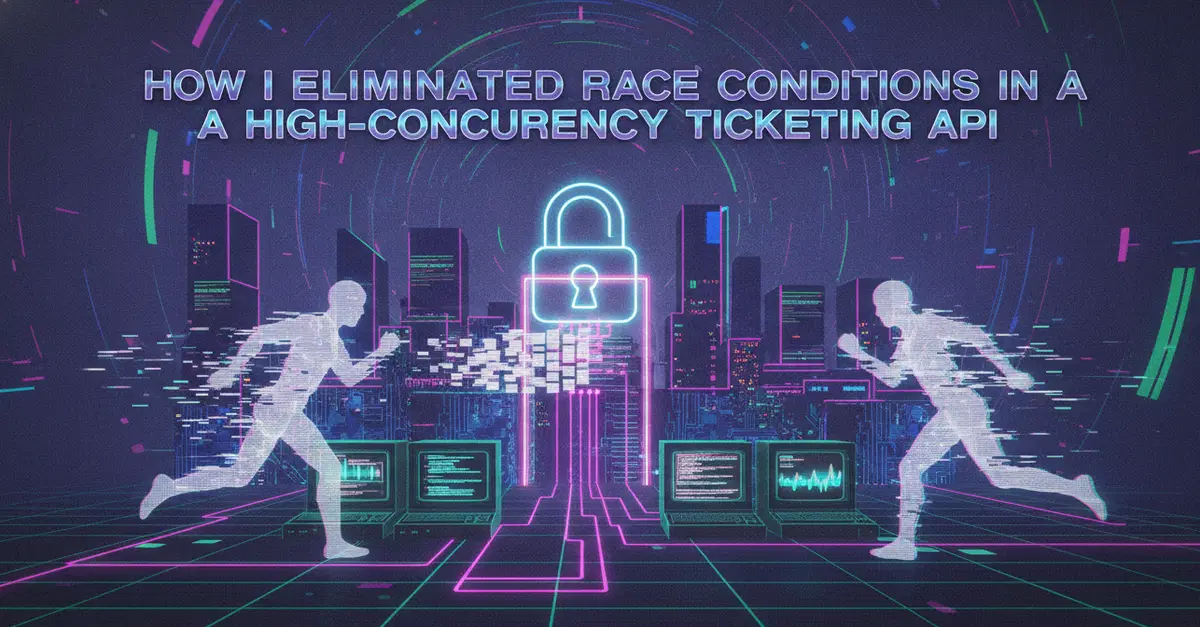
Executive Summary: To eliminate race conditions in a high-concurrency ticketing system, I implemented PostgreSQL's FOR UPDATE clause for row-level database locking alongside Go worker channels for in-memory queue serialization. This approach completely prevents inventory over-selling by guaranteeing singular data mutation execution even under flash-sale load.
If you have ever built an application that handles live event ticketing, flash sales, or limited-inventory drops, you know the dread of burst traffic. The primary engineering challenge isn't just scaling the servers—it's maintaining absolute data integrity when a thousand users attempt to mutate the exact same database row at the exact same millisecond.
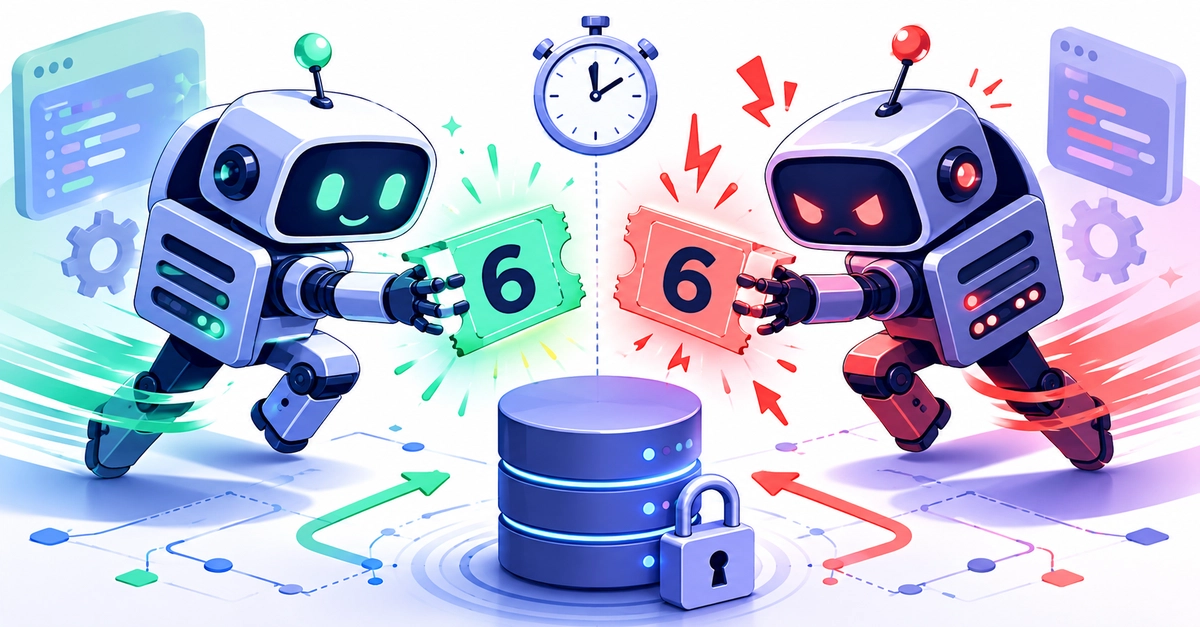
Without strict concurrency controls, you get race conditions. Two users buy the last ticket, the database processes both reads before either write is committed, and suddenly, you have an over-sold event and an angry client. Here is how I solved this problem using Go (Golang) and PostgreSQL.
Why Go?
I chose Go for its concurrency model. Goroutines are incredibly cheap compared to traditional OS threads, allowing the API to multiplex thousands of incoming HTTP requests across a small number of threads. Coupled with the Gin framework, the routing layer easily sustains massive RPS (Requests Per Second) without eating up RAM.