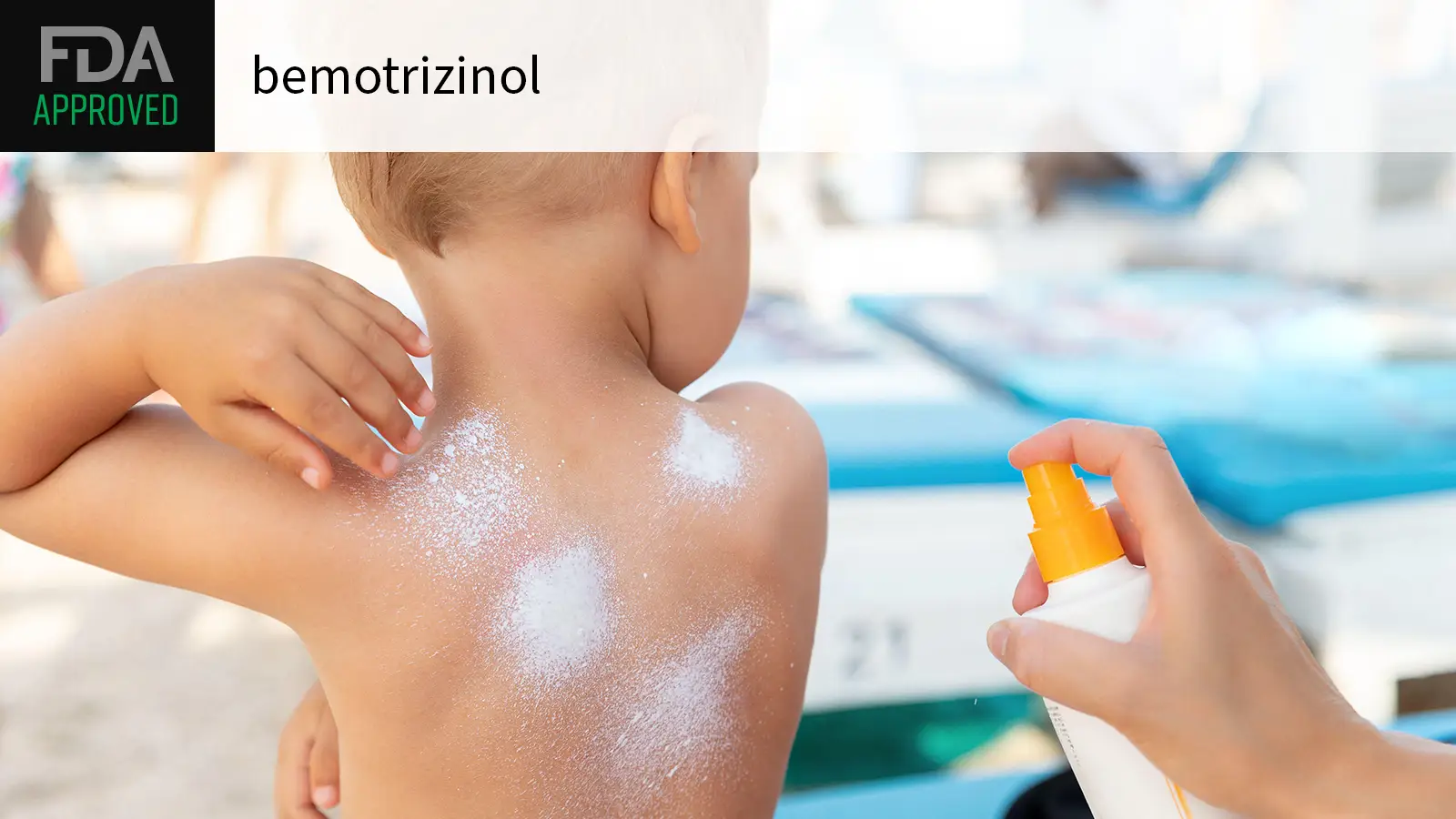
On June 9, 2026, the U.S. Food and Drug Administration approved the first new sunscreen ingredient to be permitted for over-the-counter consumer use in the U.S. since 1999 – a chemical called bemotrizinol.Our planet is irradiated by a yellow dwarf star 93,000,000 miles away that we fondly call the Sun. It radiates light from its surface at a temperature of about 10,000 degrees Fahrenheit.The Earth’s atmosphere blocks most of the Sun’s radiation. Of the rays that get through, about half consist of infrared light – which gives you that warm feeling you feel on a sunny day – and 40% visible light, which you are probably familiar with as daylight.About 10% of those rays are ultraviolet, or UV, light. UV light has the shortest wavelengths of the three types. That makes it the most dangerous – it’s invisible and can damage living tissue.Physicists further categorize solar UV light into several types, based on the wavelength, which is measured in nanometers. About 95% of it is UVA (315-400 nm) and 5% is UVB (280-315 nm). Sunscreens need to be able to block those rays from penetrating the skin.The sun also emits two other types of UV light – UVC (200-280 nm) and vacuum UV (100-200 nm) – but these are stopped by the atmosphere, so sunscreens do not typically need to be able to block them.Scientists previously thought that only UVB rays were dangerous because they cause sunburns, but UVA can also damage the skin. m.malinika/iStock via Getty Images Plus
A better sunscreen has been available in Europe for 25 years. It just became legal to sell in the U.S. | Fortune
Bemotrizinol — already common in Mexico, Canada and South Korea — won FDA approval on June 9, ending a 27-year freeze on new OTC sunscreen ingredients.
928 words~4 min read