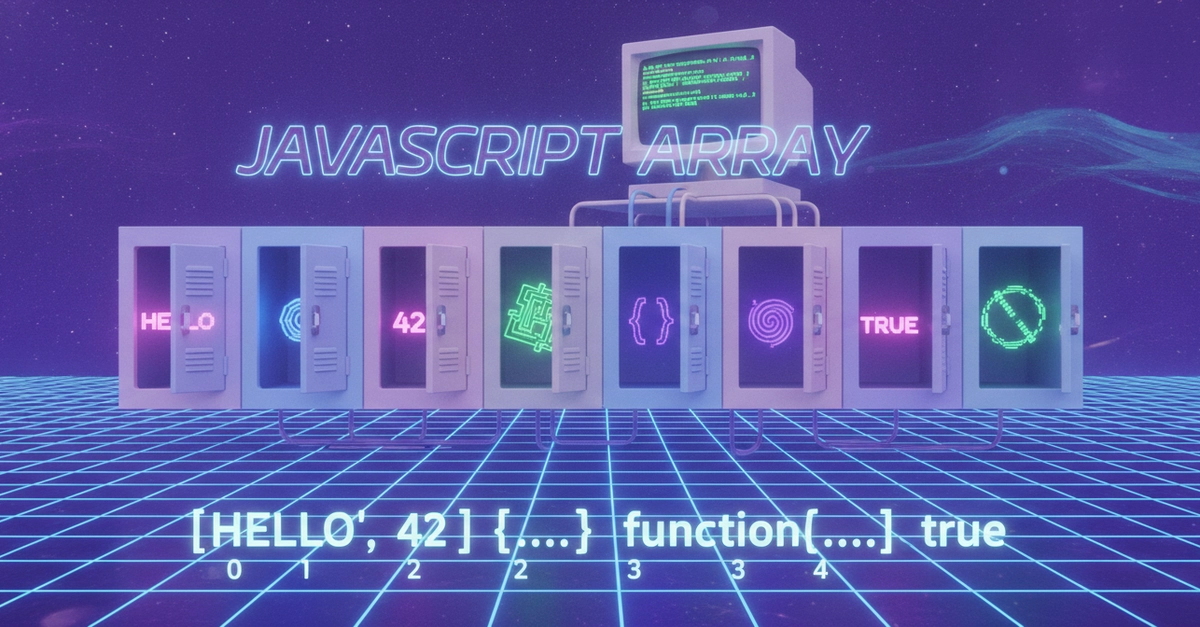
I've written plenty of code that uses arrays. Looped over them, indexed into them, passed them around. But if you stopped me and asked what an array actually is — not the syntax, not the API, the thing itself — I wouldn't have had a good answer. I knew how to use arrays. I didn't actually understand them.
That bothered me enough to start digging, and the question didn't stay contained. It went through the runtime, through memory layout, through the hardware underneath, until it landed on transistors, voltages, and the basic question of how a physical thing can represent information at all.
What started as a single article grew, over about two years, into a longer essay, then into a multi-chapter book, then into something that outgrew a single volume entirely. That's the project now: ARLIZ — Arrays, Reasoning, Logic, Identity, Zero. The name came first, sounding right on its own; the acronym got fitted to it afterward. It's open source, free, and being written in public, chapter by chapter, on GitHub. There's also a small project site if you'd rather browse than dig through a repo.
Why one book needed to become three
An array doesn't really live by itself. Understanding why an access costs what it costs, or why a particular loop order is faster, means understanding three layers stacked on top of each other. So the project split into three volumes, each one a prerequisite for the next: