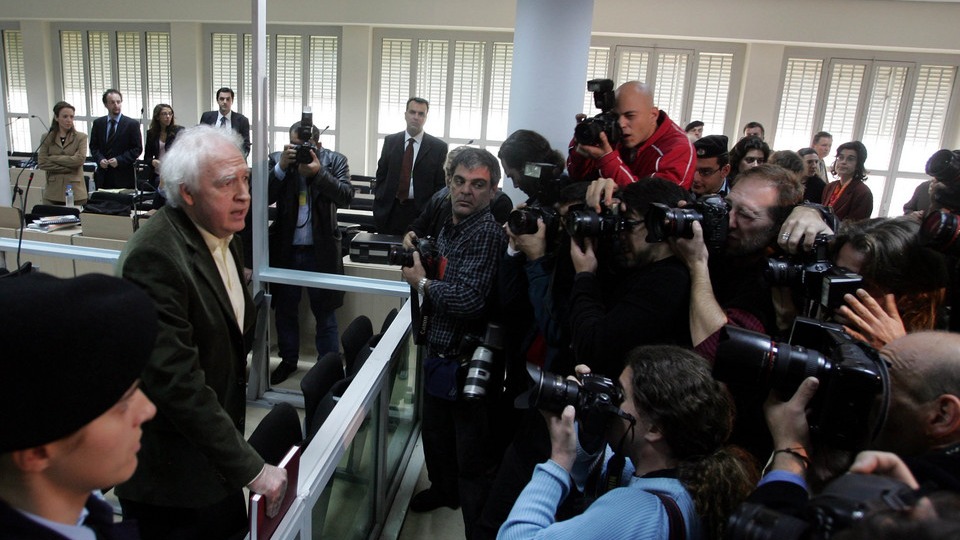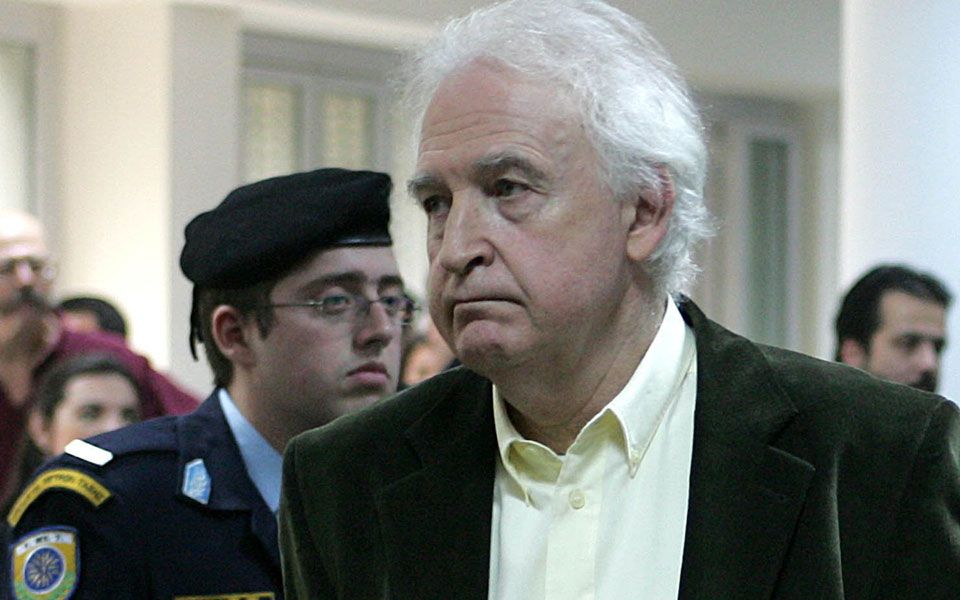
In a controversial decision, the Supreme Court decided to send Alexandros Giotopoulos back to prison after reversing a decree by a council of judges at the Piraeus Court of Appeal. In its reasoning – which has sparked intense legal debates – it questions whether compliance with the terms of furlough, the pursuit of academic studies and the absence of any disciplinary offenses prove that the leader of the November 17 terrorist organization has undergone a “moral transformation.” The Supreme Court basically dismisses all this as a “charade” by Giotopoulos to hasten his release, arguing that while they demonstrated the “good behavior externally,” they do not prove “good conduct.”
The suddenness of the decision and his arrest meant that a place had not been reserved for him at Korydallos Prison and he had to spend the night in a holding cell at police headquarters in downtown Athens. Even if we dismiss the opposition’s claims of interference with the justice system as a conspiracy theory, what happened does not reflect well on the Supreme Court. Both the process and the reasoning lack credibility.
Looking at the reactions on social media, however, there appeared to be an effort from a part of the left to idealize Giotopoulos, possibly driven by the desire to score points against the conservative government. I personally don’t admire him for getting a doctorate in mathematics, nor do I regard him as a good person. He’s a cold-blooded killer with a PhD. What I am saying, though, is that the rule of law dictates that the role of the state is to forgive, not to avenge. It is not to torment an 82-year-old man instead of letting him live his few remaining years of freedom in peace.