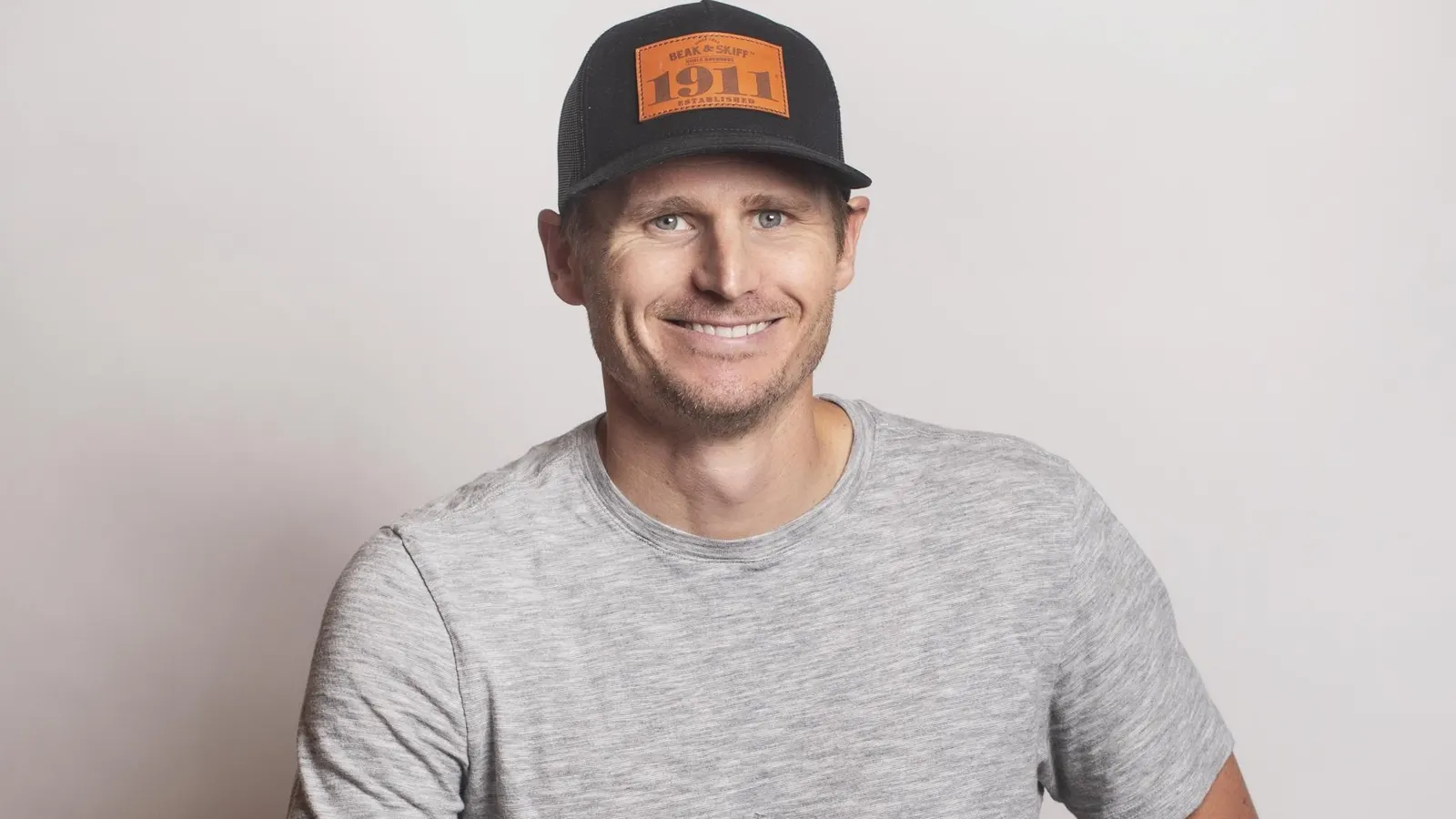
As a delivery truck backs up to the loading dock of a warehouse on a 1,000-acre apple farm in LaFayette, New York, a worker rolls up the door to the cargo area, revealing 35 three-foot-tall bags filled with 5,000 pounds of weed. Eddie Brennan, the 44-year-old president and CEO of Beak & Skiff farm, which is known for its hard cider brand, 1911, and CEO of Ayrloom, the best-selling cannabis company in the Empire State, watches as his employees lug the bags of cannabis towards the door of the extraction lab. Today’s haul will be milled and then put through an ethanol extraction process (the ethanol comes from the distillery facility next door) and turned into vapes. Getting into the legal cannabis industry was a risk, but Brennan’s family business, which historically depended on seasonal apple sales for 80% of its revenue, needed to expand into a fast-growing sector. “Every generation thinks they will be the ones to lose it—fear is part of the business plan,” says Brennan, the fifth-generation co-owner of the family farm. “Nothing is forever and you have to constantly evolve.”Founded in 1911 by his great-great grandfather George Skiff, and a friend, Andrew Beak, the farm grew and sold apples only for decades—Heirloom, Empire, Gala, Fuji, and McIntosh. In the 1970s, it started pressing apples for fresh cider to diversify revenue streams and a decade later, Brennan’s grandfather Marshall Skiff and the Beaks started a pick-your-own business so they could have visitors pay to pick the trees. Pressing Issues: Beak & Skiff introduced 1911 Hard Cider to celebrate its centennial 15 years ago—and it saved the family business, now in its fifth generation.AyrloomThen in the 2000s, two back-to-back bouts of frost killed more than 50% of the farm’s apples, and the business was in trouble. Brennan’s father, Edward, who is the CEO of Duty Free Shoppers, expanded the farm’s fledgling cider and distillery operations and launched 1911, the farm’s hard cider brand, which saved the business from going under. To guard against any future downturns, in 2021, Eddie Brennan decided to apply for a cannabis cultivation and manufacturing license, wagering that cannabis (which was legalized in New York a year earlier) could be the future of the family business. He invested $5 million into building new facilities, cutting down eight acres of apple trees, and preparing to sell products to the state’s first dispensary, Housing Works Cannabis Co.While 1911 had saved the family farm from financial ruin, Ayrloom created a lucrative new revenue stream, doubling the company’s sales and positioning it as a major player in New York’s burgeoning cannabis industry. By 2025, 1911 generated $35 million while Ayrloom brought in $38 million. The economics and land use tell an even more intriguing business lesson: Some 550 acres of the farm is dedicated to apples, but the one acre devoted to marijuana last year was far more profitable. Most family businesses do not make it beyond the third generation and hitting the fifth is almost statistically impossible. Brennan says Beak & Skiff’s mantra is simple: “change or die.”In just five years, Ayrloom has become New York’s best-selling cannabis brand across all categories of products in terms of both sales and units sold, according to New York-based cannabis retail data firm LitAlerts. New York, which launched legal sales in 2022, generated $1.5 billion in sales last year, and Ayrloom has captured about 5% of the market in terms of units sold, according to LitAlerts. Its flagship product is its THC beverage line, the honey crisp flavor being its best-seller. The company also sells vapes, flower, edibles and pre-rolls. “Ayrloom is in a class of its own,” says Rick Bashkoff, LitAlerts CEO and cofounder. Brennan did not grow up on the family farm, but he spent his summers trimming apple trees and moving irrigation pipes. His maternal grandfather, Marshall Skiff, would take him around the farm, explaining that the weather can make or break your entire harvest. A farm typically can only sell 50% of its apples to grocery stores, while the rest needs to be pressed into juice or fermented into hard cider. One day, while the two of them were riding around the orchards, Skiff told his grandson that he had discovered some cannabis growing in a cornfield he had leased to another farmer and had promptly destroyed it. “I vividly remember him calling the marijuana ‘evil weed,’” says Brennan. “Still, I think he would be proud of what we are doing [if he were still alive], and we can’t rely on apples.”High Volume: In addition to THC beverages, gummies and vapes, Ayrloom produces 10,000 pre-rolled joints a day.AyrloomBrennan grew up bouncing around the country due to his father’s position at Duty Free Shoppers. Born in Georgia, Brennan then spent time in Connecticut, then the first years of high school in Hawaii and the other half in California. After attending Colgate University in New York, he moved to Manhattan to work at Bloomingdales, where he was training to become an executive. He wanted to follow his dad, and his father’s father Ed—who was the CEO of Sears during the 1980s and early ‘90s—into retail. But by 2013, his father had bought out the majority of the fourth generation of the family running Beak & Skiff and revitalized the business with the expanded cider operation. “After apple season ended there was nothing to sell to them the rest of the year,” says Brennan. “My dad had a vision.”Every week, Brennan’s father would call him and ask if he was ready to move to the farm and take over. After about one year, Brennan was convinced. He became president of Beak & Skiff when his father moved back to Hong Kong to return to his position at Duty Free Shoppers in 2014. The company was making between $2 million a year to $3 million a year. Brennan’s first day on the job he spent in a conference room near the apple packing line, convinced he was in over his head. The second day he flipped over a forklift in a ditch. He realized he was not needed on the labor side, so he started to focus on expanding the business. Near the pick-your-own orchard on a vista known as Apple Hill, which overlooks Syracuse, Brennan got his first idea—to build a music venue. Now Beak & Skiff hosts artists, including Noah Kahan, Violent Femmes, Modest Mouse and Wilco, attracting about 4,000 people a show. In 2017, after New York launched its hemp pilot program, Brennan had another idea. Brennan and Beak & Skiff’s CFO at the time, Mack Hueber, who is now the president of Ayrloom, expanded the farm into hemp. (Hemp is the same species as marijuana—cannabis sativa—albeit with lower amounts of THC, the cannabinoid that actually gets people high.) They applied for a license and dedicated eight acres to hemp plants, bought extraction equipment, started making CBD beverages and convinced New York-based grocery chain Wegmans to buy it. But the day after the first beverages made it off the assembly line, New York State Department of Agriculture and Markets raided the farm and told them they were not allowed to sell CBD-infused cold brew coffee. “It would’ve been cooler if they came with guns,” says Brennan. “But they just told us we had to shut it all down and show proof of destruction.” But a few years later, New York legalized recreational marijuana and Beak & Skiff was ready. “We were a distressed farm,” says Brennan. “Our apple crop wasn’t sustaining us. And cannabis was another crop.”Ayrloom was a calculated bet. But it was a good bet. The second legal marijuana product ever sold in New York State in December 2022 was a bag of Ayrloom edibles. Now, Ayrloom sells more products than any other company in the state.As Brennan walks through his THC beverage facility, with six 4,000-gallon fermentation tanks and a machine that fills and packs cans of beverages. A conveyor belt ferries the cans to employees, who put them into boxes and onto pallets. In another room, about 20 employees are rolling infused joints—producing about 10,000 a day. He walks out of the building into the 90-degree June heat, past the irrigation pond, points out the house his grandfather lived in his whole life, and walks towards rows of Honey Crisp apple trees. Finally, he arrives at a fenced-in two-acre patch of dirt where his team will be sowing 20,000 new cannabis plants in a week, which will be ready for harvest in the fall. (Ayrloom was recently approved to plant a second acre of cannabis, which will double its capacity.) Brennan recalls that his grandfather spent most of his time outside, tending to the apple trees and tracking the weather. He would often take young Eddie to the edge of the property and show him the buffalo grazing on the Onondaga reservation next door and tell him how planting an apple tree was something you did for the next generation, not for yourself. Heirloom apple trees for instance—which is where Ayrloom gets its name—take seven years to bear fruit. The biggest lesson his grandfather taught him was how important it was to be connected to the land. “The land doesn’t give a shit about your quarterly earnings,” says Brennan. “It just keeps asking you: are you worthy of this place?”MORE FROM FORBES:ForbesThe Inside Story Of The World’s First Cannabis-Based PainkillerBy Will YakowiczForbesHow Nabis Became The Amazon Prime Of The Cannabis IndustryBy Will YakowiczForbesHow Sluggers Became A Heavy Hitter In Pre-Roll JointsBy Will YakowiczForbesThe Godfather Of Sour Diesel Pot Returns To New YorkBy Will Yakowicz
A New York Apple Orchard Bet The Farm On Cannabis. Now Ayrloom The State’s Best-Selling Brand
Beak & Skiff has been producing apples for more than a century, but its fifth-generation co-owner saw a lucrative growth opportunity in the $30 billion weed industry.
TL;DRAI
Beak & Skiff's Ayrloom became New York's top cannabis brand, reaching $38M in 2025 from a 2021 launch. A single cannabis acre outperformed 550 apple acres; for diversifying enterprises, regulated emerging markets prove superior ROI vs legacy operations.
1,601 words~7 min read