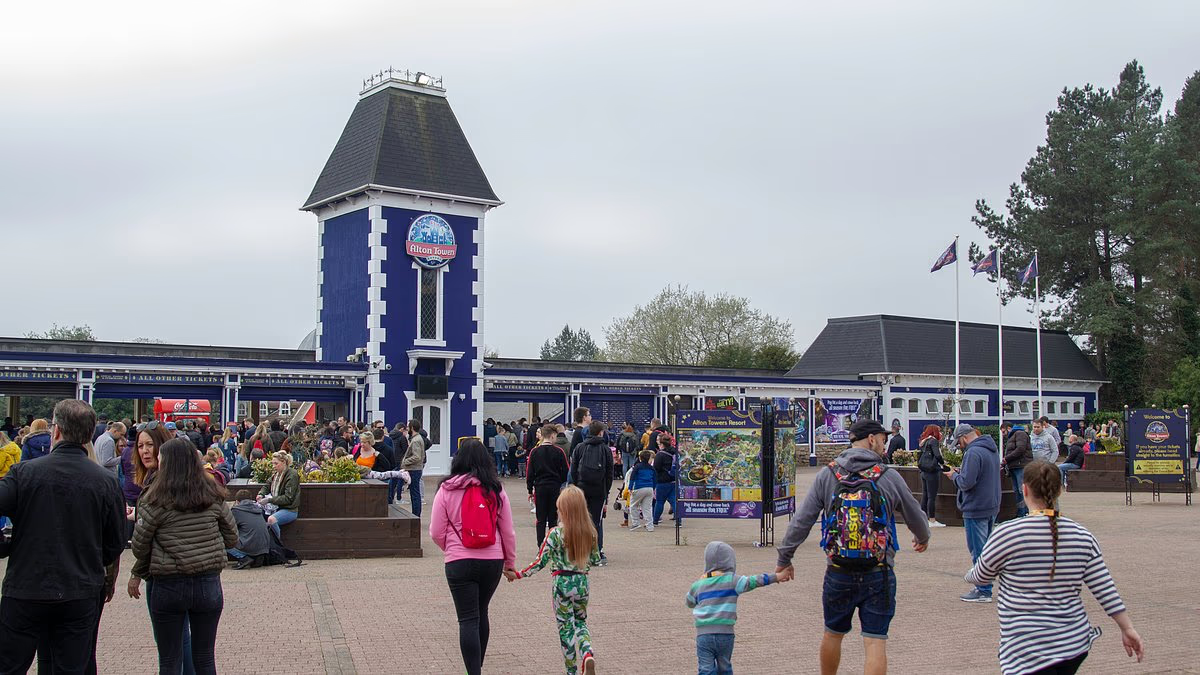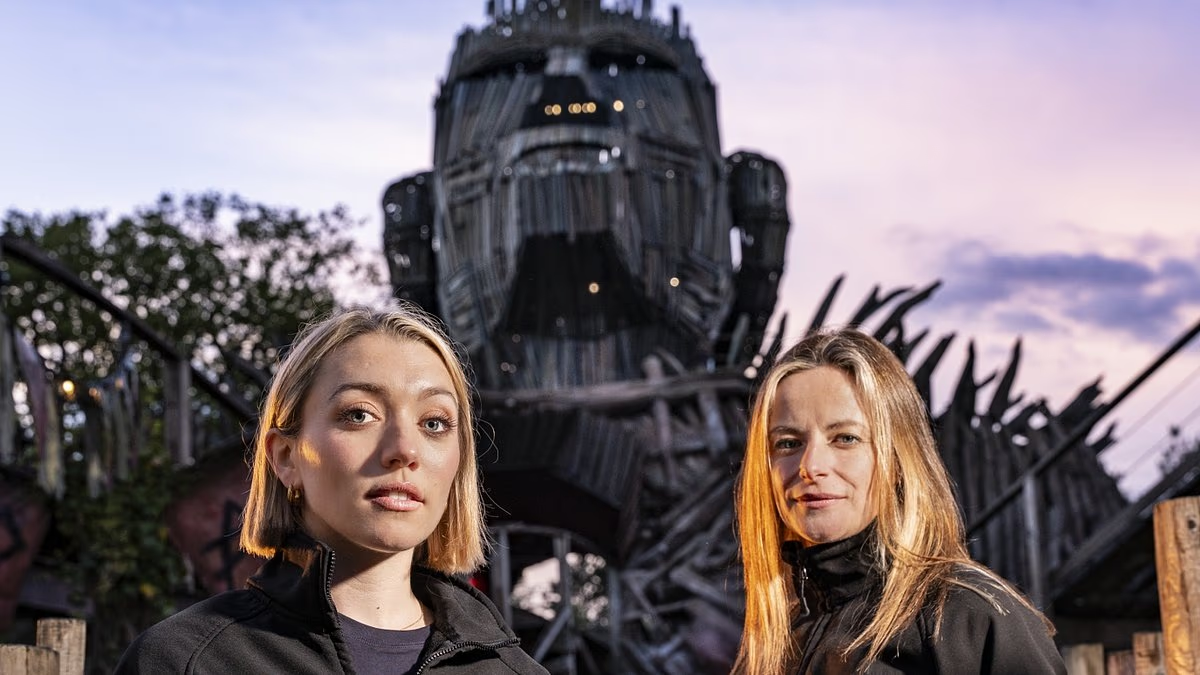
From multiple loops to lightning speeds and soaring heights, rollercoasters employ a range of techniques to make riders experience a heady mix of excitement and fear at the same time. The thrills are addictive to many, who tour the country - and even the world - trying to get their next big ride hit, with Thorpe Park's Hyperia and Alton Towers' Oblivion amongst the UK's most nerve-shredding.But how exactly are rides designed? The Daily Mail asked Alton Towers' 'thrill architects', Claire Mavin and Miranda Stewart, to lift the lid on how a kernel of an idea can become a main attraction. Stewart, who is a creative strategist for the popular theme park, tells the Daily Mail, 'As Creative Strategists, we bring behavioural science, neuroscience and human insight to the creative process.'Firstly, they begin with the 'audience need-state' and identify the 'emotional tension or unmet psychological need'.The team then goes on to apply this to 'the story world' when developing the ride.'The strategy informs creative development, and the team make the physical ride mechanics echo the narrative to create a cohesive and impactful experience,' she adds. Miranda Stewart (left) and Claire Mavin (right) reveal what goes into creating thrilling rides The pair work for Alton Towers, Britain's most popular theme park and part of the Merlin stableA range of techniques are used, and the team have applied the concept of teenagers having 'intensely curious brains' that are 'neurologically wired for discovery, risk and sensation-seeking'.With this insight, they aimed to 'answer that need through unpredictable and unprecedented thrills'.Another technique they use is creating a 'shared thrill' for riders through deliberate, key moments crafted into the experience. These include 'near misses, like skimming past the rocks on Nemesis Reborn, to sudden drops on Wicker Man', Mavin, a product strategy director, explains. Each moment is 'engineered to spark those instinctive hand-grabbing reactions' which leads to a connection between riders who are experiencing the thrills twists, turns and drops together.This, Mavin says, 'triggers a collective emotional response that intensifies the sensation of the ride itself, making the experience feel even more exhilarating and memorable'.Rollercoasters also create a phenomenon called 'eustress' which is when both fear and excitement exist at the same time, in a 'pleasurable form', according to the two experts. Deliberate moments are added to rides, like 'sudden drops on Wicker Man', Mavin explains Mavin, pictured, works as a product strategy director for the biggest theme park in the UKStewart explains how, 'Riders temporarily surrender control, experiencing anticipation, adrenaline and relief in quick succession.'She adds, 'It is essentially engineered emotional release, with the dopamine hit making the thrill compulsive and keeping riders coming back for more.' When walking around a theme park, it's common to hear delighted (and fearful) shrieks and screams as riders whizz around overhead. It turns out, the 'thrill architects' reveal, that screaming is an important factor that goes into rollercoaster designs and their scare factor too. If the brain can't figure out where the screams are coming from and they present as 'emotionally ambiguous' the brain then 'defaults to interpreting it as danger, a survival mechanism designed to prioritise threat over nuance', says Mavin. As a result, framing the scream 'is everything' for the designers. 'In the context of the theme park, where riders can see the track, understand the environment and observe other people enjoying the experience, screams acoustically signal excitement and pleasurable fear,' she adds.'Remove those visual cues and plunge the park into darkness, however, and the screams begin to signal terror.' Passengers racing overhead on rollercoasters are common sights in theme parks, and it's all part of the plan Nemesis Reborn (pictured) is Mavin's favourite ride at the theme park, because of its ability to deliver 'on so many levels'The brain then 'emphasises' with what it is processing, and riders end up catching screams from one another.Mavin says, 'The reduced visibility heightens uncertainty and amplifies the sense of perceived risk, making screaming together, particularly in the dark, a crucial part of what makes rides feel scarier.'Popular rides at Alton Towers like TH13TEEN and Wicker Man both tap into this concept effectively and use the dark, indoor concealment as well as things like 'misdirection and sensory deprivation' to help create the fear factor and anticipation. Many thrill seekers will be able to relate to standing in long lines for their favourite rollercoaster, but the queueing is all part of the design too. 'We often weave queues beneath the track or close to key ride moments because watching other people experience fear heightens anticipation and social proof,' reveals Stewart. Instead of the thrills starting when passengers are being buckled into their seats, she insists 'the emotional experience begins long before the restraint comes down'. Stewart gives Nemesis Reborn as an example, explaining how it 'deliberately exposes moments of acceleration to people waiting in the queue line underneath, turning spectatorship into part of the build-up'. Stewart, who works as a creative strategist, and Mavin pictured in front of the Wicker Man rideBoth Mavin and Stewart have a favourite ride at Alton Towers, inspired by its fear factor and fun. For Mavin, 'Nemesis delivers on so many levels'. The rollercoaster takes passengers to Forbidden Valley at speeds of up to 81kph.She says it offers the 'perfect cocktail of nostalgia, thrill, story and atmosphere'. Mavin adds, 'Waiting in line you are enveloped by the roar of the coaster mixed with the screams of riders and lingering mist which creates this incredible anticipation priming you brilliantly for the intensity of the ride itself. 'The track itself behaves like the creature. The twists, whip-like inversions and intense near-misses make it feel as though it is physically thrashing around beneath you.'But Wicker Man is what appeals to Stewart, who prefers rides that are heavy on theming and transport riders 'into another world'.'My favourite for this is Wicker Man because it taps into ancient archetypal storytelling that people immediately understand,' she says.'You are entering a ritualistic world you’d recognise from horror takes on folklore, and the finale moment is original... the ride culminates with you racing through the chest of the burning effigy.'
Alton Towers' architects reveal how they make rides so scary
'Thrill architects' Claire Mavin and Miranda Stewart, who work for Alton Towers, reveal just what goes into making an exhilarating rollercoaster.
1,017 words~5 min read