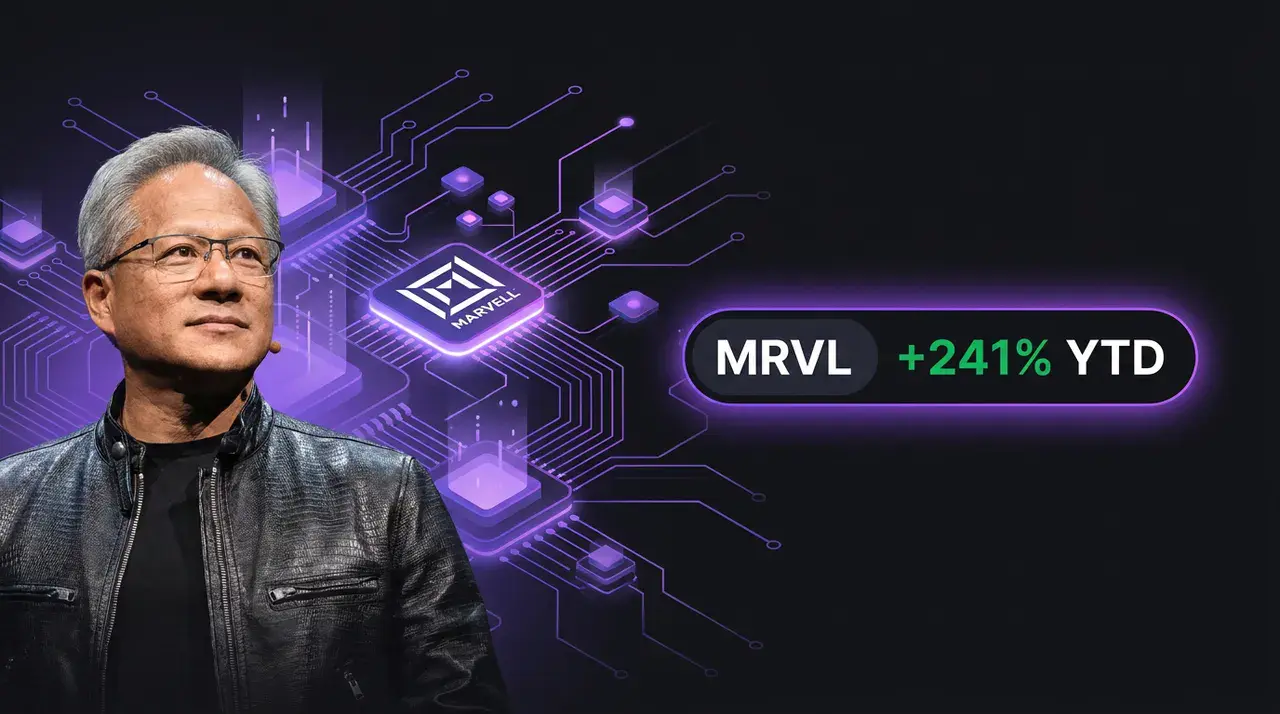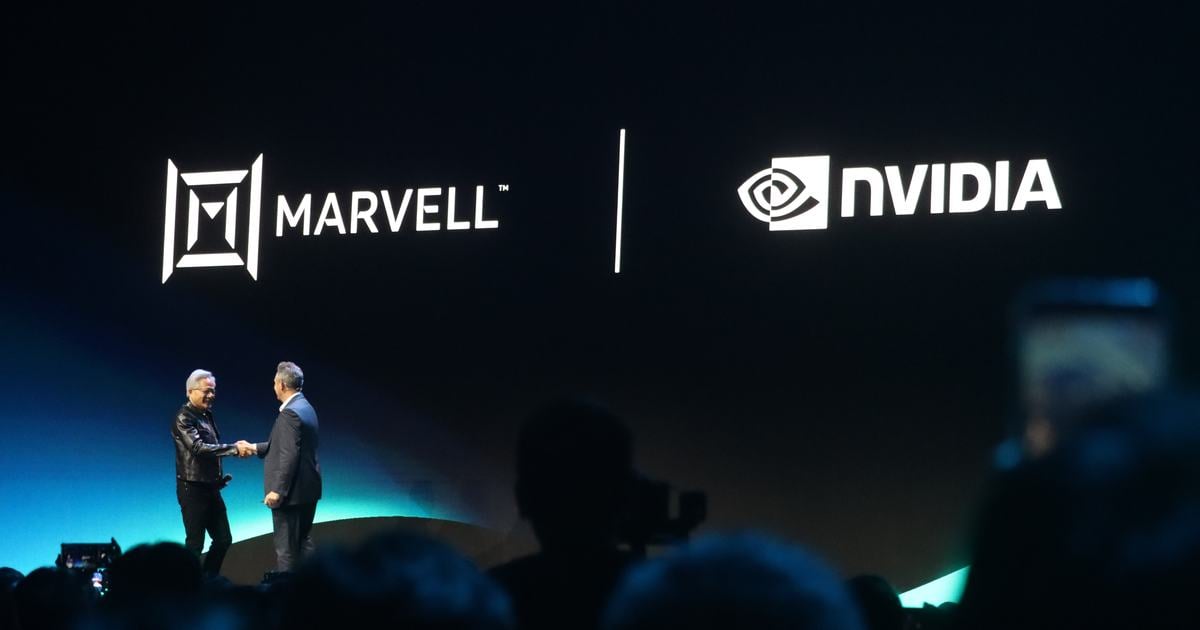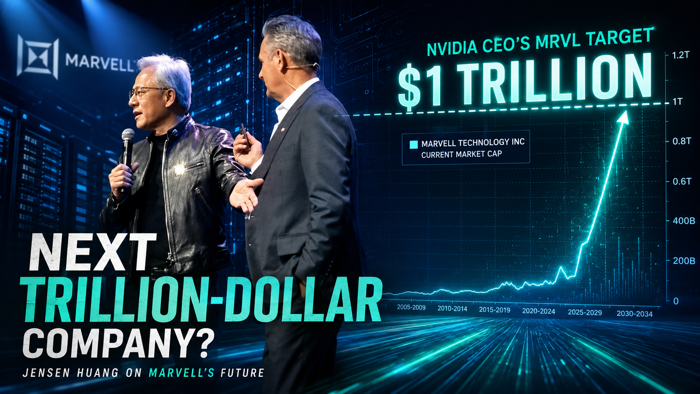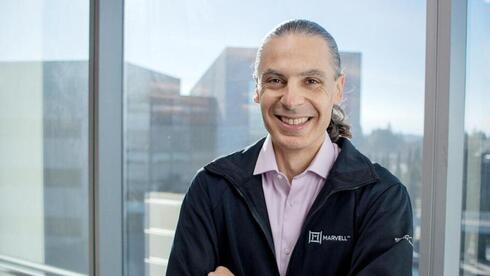
Noam Mizrahi says AI’s next leap depends not only on processors but on the networks connecting hundreds of thousands of them, as Marvell rides Nvidia’s endorsement, surging demand and Wall Street’s AI boomSophie Shulman/CTech|Nvidia’s Jensen Huang is not only the king of technology today, sorry Elon Musk, but also a kingmaker.In early June, at the Computex conference, Huang declared that Marvell, a relatively sleepy chip company until recently, would be the next member of the trillion-dollar club. That same day, the stock jumped 33% in New York, and since the beginning of the year it has surged 250%.2 View gallery Noam Mizrahi Marvell’s Israeli CTO (Photo: Marvell)Marvell’s stock will enter the S&P 500 this week and, after its meteoric rise, has become one of the market’s most richly valued companies by revenue and earnings multiples.And after all those gains, it is still worth “only” $270 billion. In other words, if you trust Huang, anyone investing in Marvell today could theoretically expect the company to quadruple in value before reaching the trillion-dollar threshold.That may sound ambitious, but in today’s AI-driven market, it is not unprecedented. Just ask investors in Broadcom or Micron, two other AI-chip players that rapidly climbed to trillion-dollar valuations and, in Broadcom’s case, even approached $2 trillion.Even today, at its current valuation, Marvell trades at richer multiples than Nvidia itself and Broadcom. But if everything Huang believes will happen does indeed materialize, that valuation gap could quickly narrow.The person largely responsible for the vision that has turned Nvidia into both an investor in Marvell and a major partner is Noam Mizrahi, Marvell’s Israeli chief technology officer. Few people remember today that Marvell was responsible for one of the first major exits in Israeli high-tech history. In October 2000, at the height of the Second Intifada, it paid $2.7 billion for Galileo Technology, the company founded by then little-known entrepreneur Avigdor Willenz.The acquisition put Willenz, who later completed a series of major exits, on the global semiconductor map for the first time and laid the foundation for Marvell’s development operations in Israel.At the time, Mizrahi was an electrical and computer engineering student at the Technion who worked part-time at Galileo. He effectively found himself at Marvell almost immediately after the acquisition, aside from a brief stint at Intel before returning to Marvell.The company later expanded its Israeli footprint through additional acquisitions, including DSPC from Intel for $600 million in 2006 and RADLAN from the Rad-Bynet Group in 2007 for approximately $50 million.Today, based on those acquisitions and subsequent growth, Marvell operates Israeli development centers in Petah Tikva and Yokneam, employing about 500 people out of the company’s global workforce of roughly 8,000.2 View gallery Nvidia’s Jensen Huang (Photo: Bloomberg)Noam Mizrahi, why is Huang so enthusiastic about Marvell that he is publicly praising the company and helping fuel such a dramatic rise in its stock price?
Marvell’s Israeli CTO: ‘The AI market has reached the bottleneck we solve’
Noam Mizrahi says AI’s next leap depends not only on processors but on the networks connecting hundreds of thousands of them, as Marvell rides Nvidia’s endorsement, surging demand and Wall Street’s AI boom
TL;DRAI
Marvell solves AI infrastructure's critical connectivity bottleneck as market finally catches up to decade-old strategy; Nvidia-endorsed, stock +250% YTD, $270B valuation heading to $1T. Shift from copper to optical communications in data centers signals connectivity infrastructure becoming the next IT capex priority alongside GPUs—echoing Mellanox's role before Nvidia's $7B acquisition.
1,952 words~9 min read