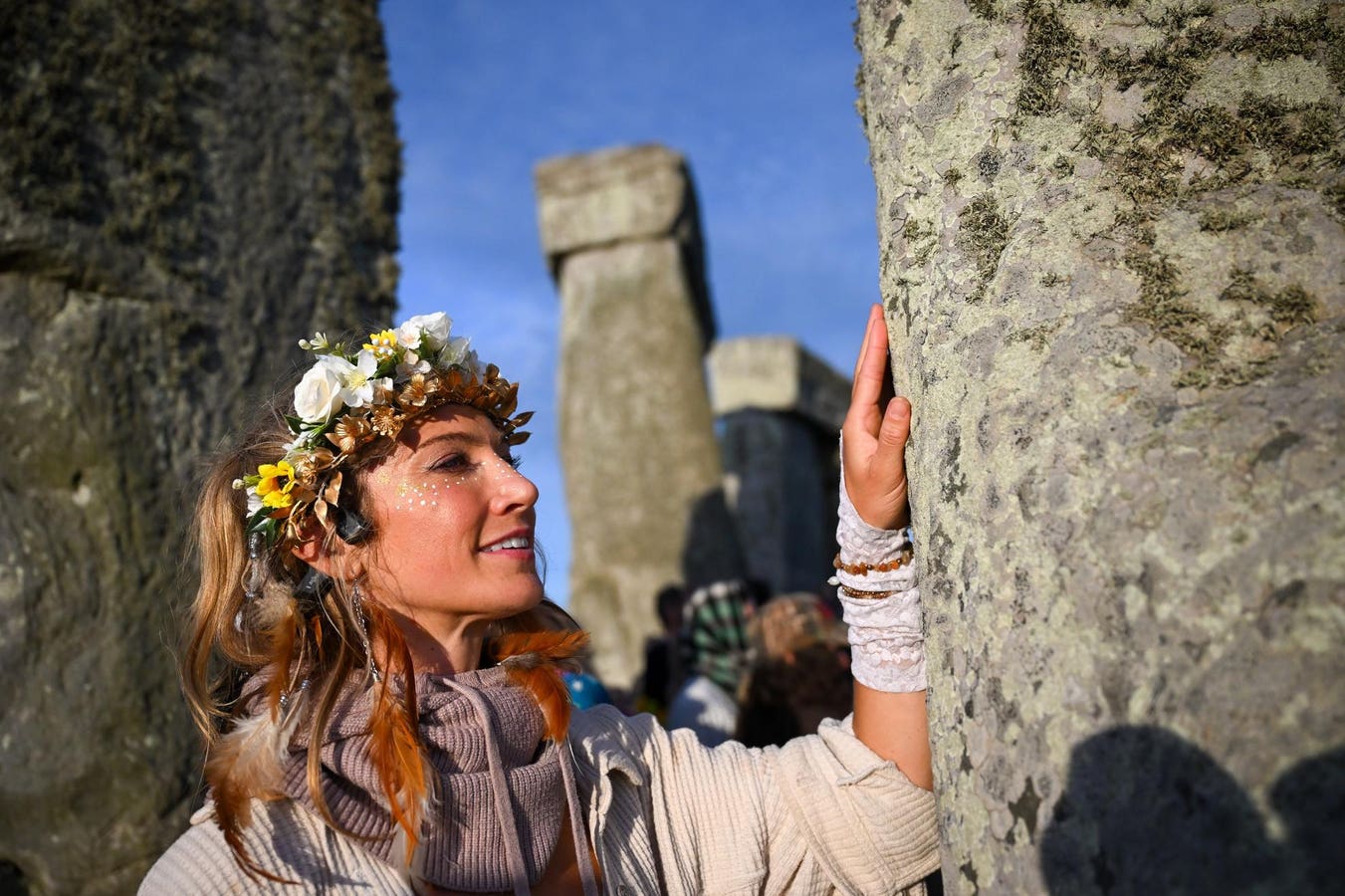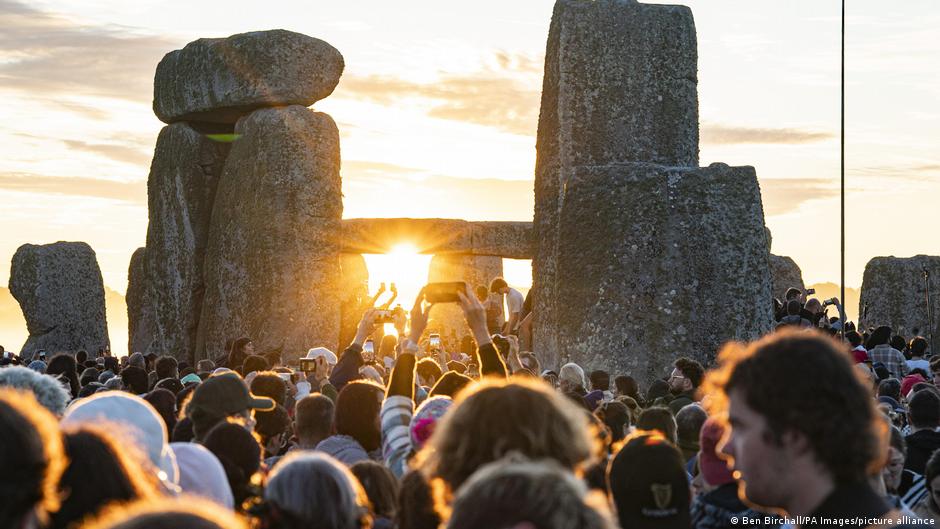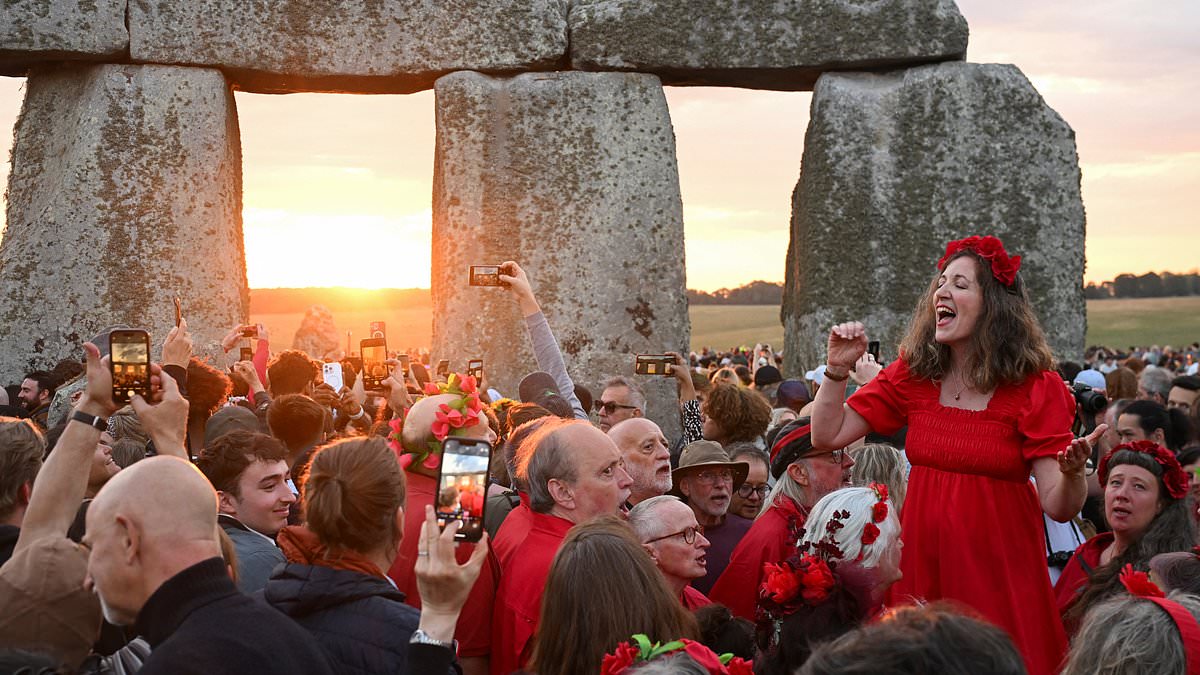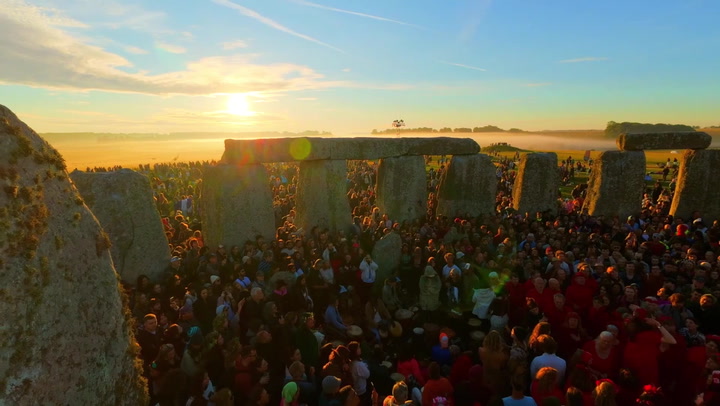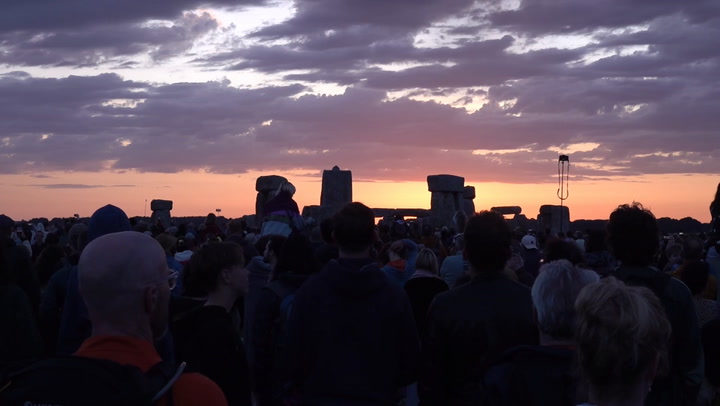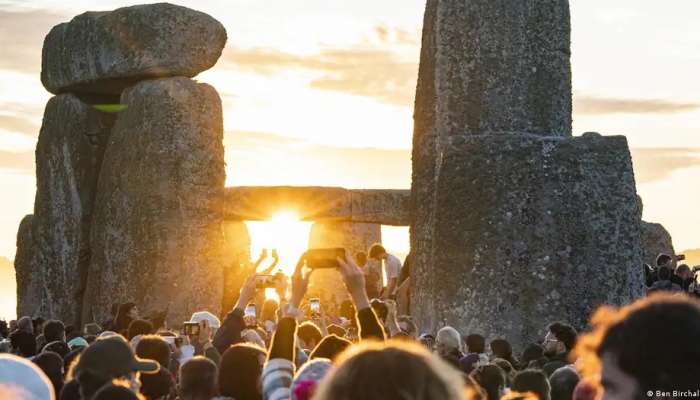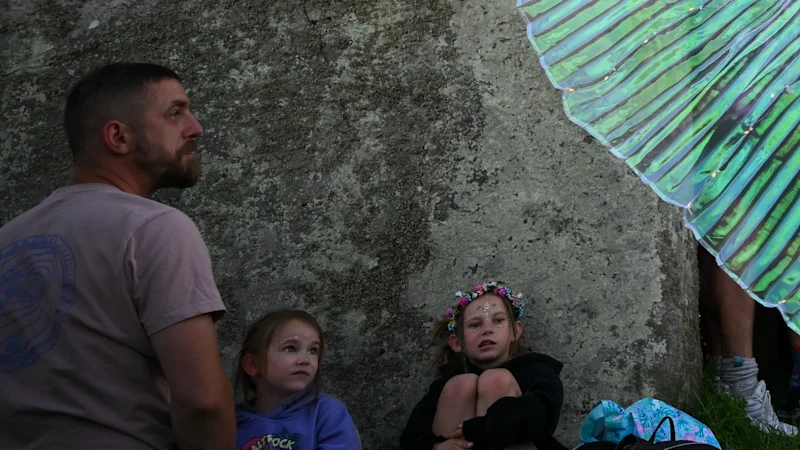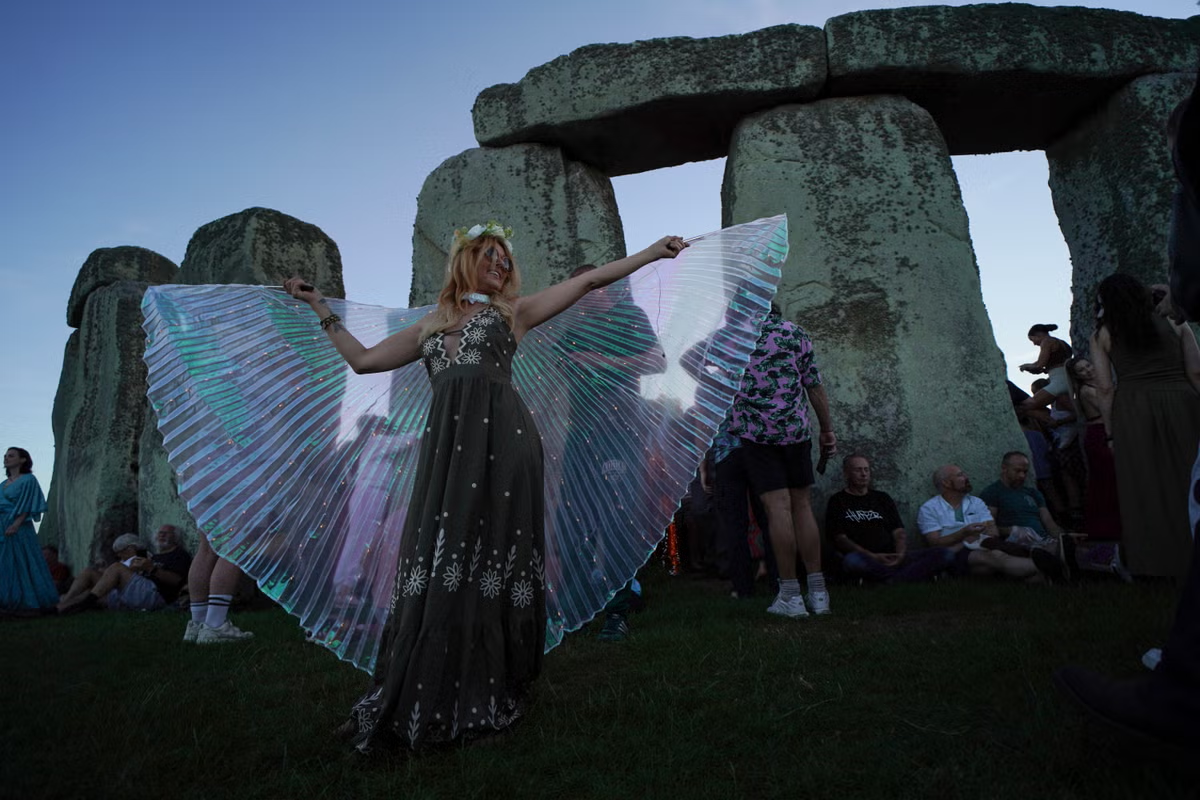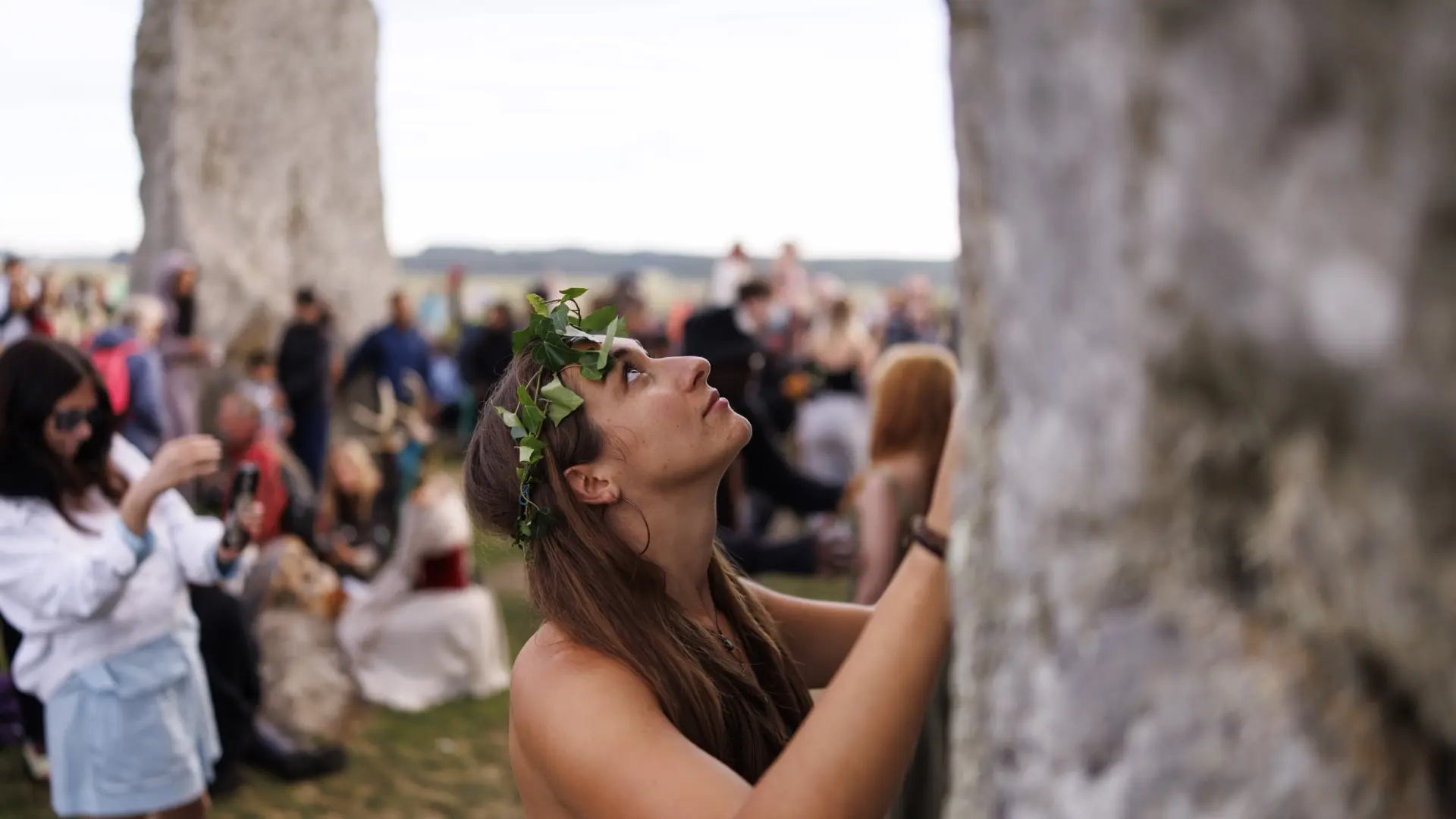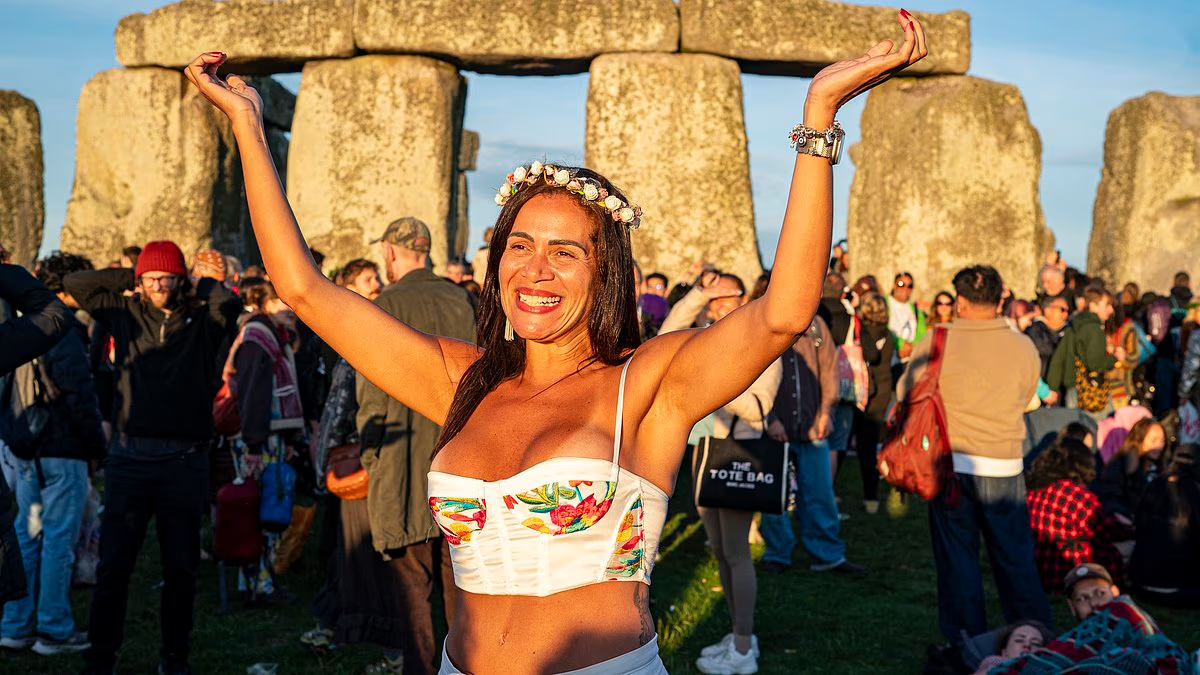
Thousands of sun-worshippers have flocked to Stonehenge to celebrate the summer solstice, as the sun rises on the UK's longest day of the year.Around 20,000 people gathered on Sunday morning to the neolithic site, located on Salisbury Plain in Wiltshire, to watch sun-up on the year's longest day to mark the ancient astronomical phenomenon.Spectators were pictured standing around the monument's 'heel stone' or entrance to witness the 4.52am sunrise, with astronomical solstice itself is expected to occur at 9.24am.Marking the occasion, visitors put on a purple light display before dawn, and were captured placing their hands on the ancient structure, playing traditional instruments and taking pictures in celebration as the sun began to stream through the morning fog into the centre of the stones.Constructed around 3100BC, Stonehenge was built in accordance with the Northern Hemisphere's midsummer sunrise and the midwinter sunset. The summer solstice, which takes place on June 20 or 21st annually, occurs when the Earth's axis has its maximum tilt toward the sun as it reaches its highest position in the sky, ensuring the longest period of daylight for the year.Solstices are widely believed to have been observed at Stonehenge for thousands of years, with Midsummer celebrations traditionally marked through outdoor events that include displays of dancing, bonfires and feasting. Georgia Butters, English Heritage's head of Stonehenge, said the summer solstice 'brings people together.' Around 20,000 people gathered on Sunday to watch the sunrise at Stonehenge, marking the beginning of the summer solstice Spectators were pictured standing around the monument's 'heel stone' or ancient entrance, to witness the 04.52am sunrise Midsummer celebrations have traditionally been marked through outdoor events that include dancing, drumming, bonfires and feasting A light display took place at Stonehenge shortly before dawnShe said: 'Coming together at this iconic monument for the summer solstice is a tradition that brings people together from near and far.'It was wonderful to see families and friends taking part in this joyous experience.'We look forward to welcoming returning and new visitors to Stonehenge for next year's summer solstice.'Elsewhere around the country, the beginning of summer solstice was marked from London, to Loch Ness, to Suffolk and Sunderland.On Parliament Hill in London, spectator Anna Dudziak viewed the sunrise for the first time as part of a Polish group that organises events throughout the capital. She told the BBC: 'The summer solstice is a big tradition in Poland, too, where it's celebrated with people dancing around a fire. It's celebrated a day after celebrations in the UK.'And revelers - including Stonehenge's sunworshippers - can expect hot weather to mark Britain's longest day as temperatures in Salisbury are set to reach 28C on Sunday.The beginning of Midsummer has coincided with Britain's upcoming heatwave, with the Met Office issuing a severe high temperature warning for the East and West Midlands, east and south west of England, Wales and London. Stonehenge's sunworshippers can expect hot weather to mark Britain's longest day - as temperatures in Salisbury are set to reach 28C on Sunday Solstices are widely believed to have been observed at Stonehenge for thousands of years Visitors were captured placing their hands on the ancient structure in celebration of the sunrise The summer solstice occurs when the Earth's poles has its maximum tilt toward the sun as it reaches its highest position in the sky, ensuring the longest period of daylight for the yearOn Saturday, Met Office Deputy Chief Forecaster Steven Keates, said the heat across England 'will expand and intensify' into next week. Mr Keates said: 'While heatwave criteria will be met for some in the south and southeast of England over the weekend, with temperatures into the low 30s Celsius possible, the warmth will expand and intensify at the start of next week, which, coupled with high temperatures overnight and high humidity, leads to potential impacts.'Temperatures are forecast to reach 32°C on Monday, climbing further to 35°C on Tuesday and Wednesday. 'By Thursday temperatures are currently forecast to drop slightly, with a peak of 34°C more confined to the southeast of England. 'Importantly high humidity will also mean this feels close, warmer and more uncomfortable for many. 'Tropical nights, where the temperature doesn't drop below 20°C are also likely for some, especially in urban areas.'
Sun-worshippers flock to Stonehenge to celebrate summer solstice
Around 20,000 people gathered on Sunday to the neolithic site, located on Salisbury Plain in Wiltshire, to watch sun-up on the year's longest day to mark the astronomical phenomenon.
703 words~3 min read