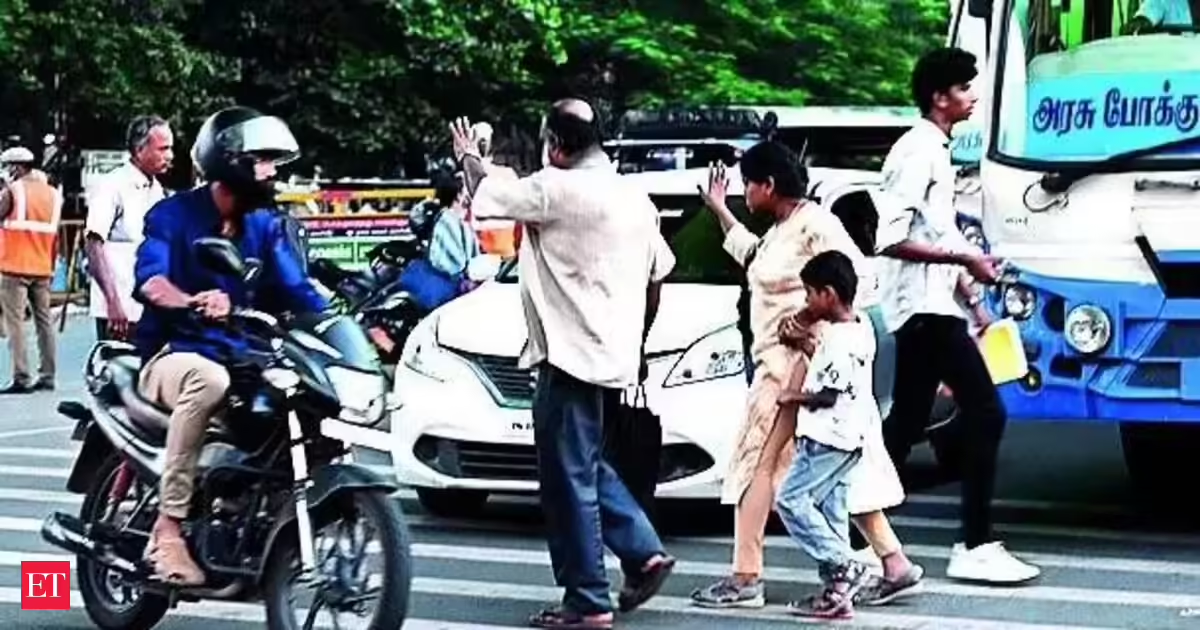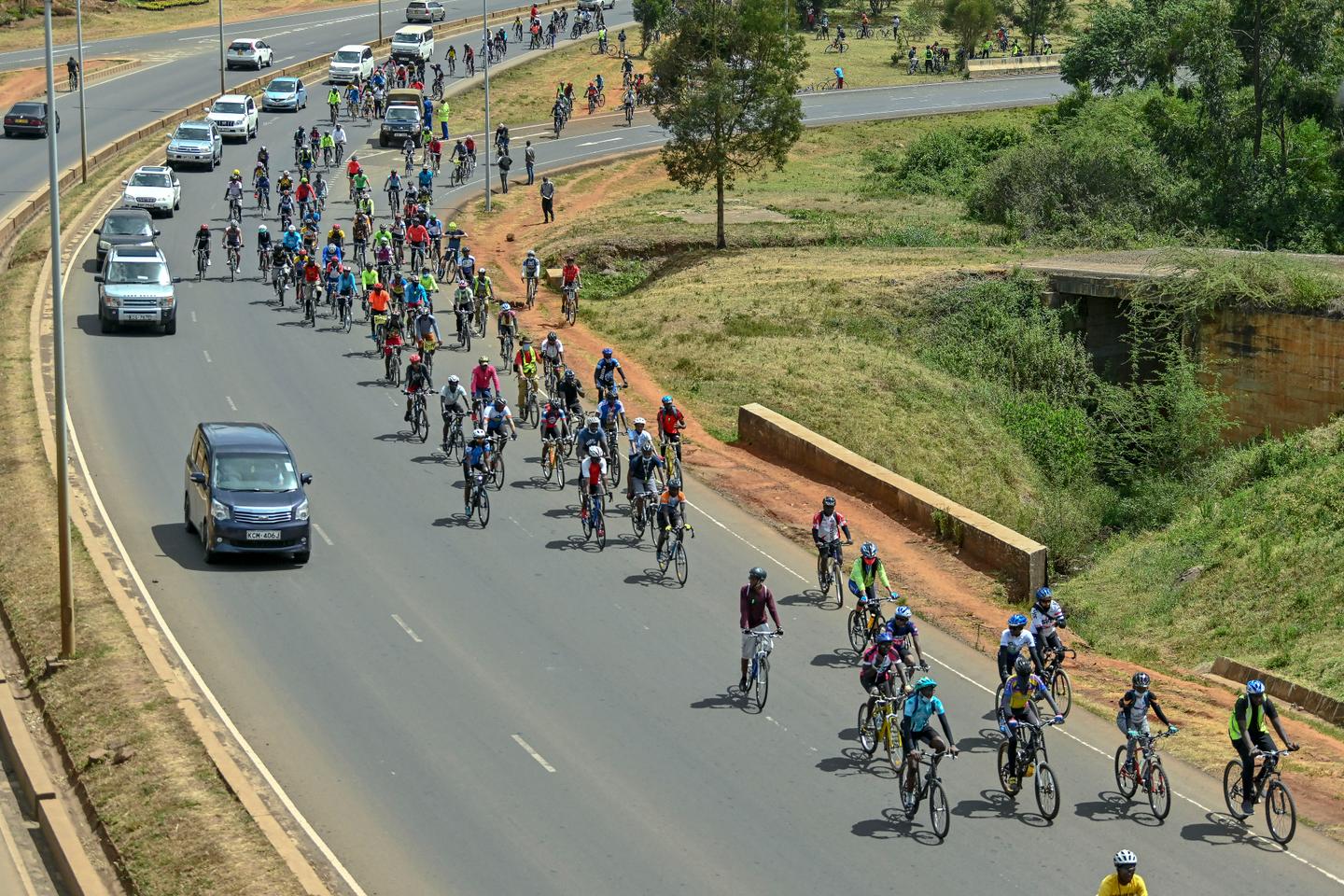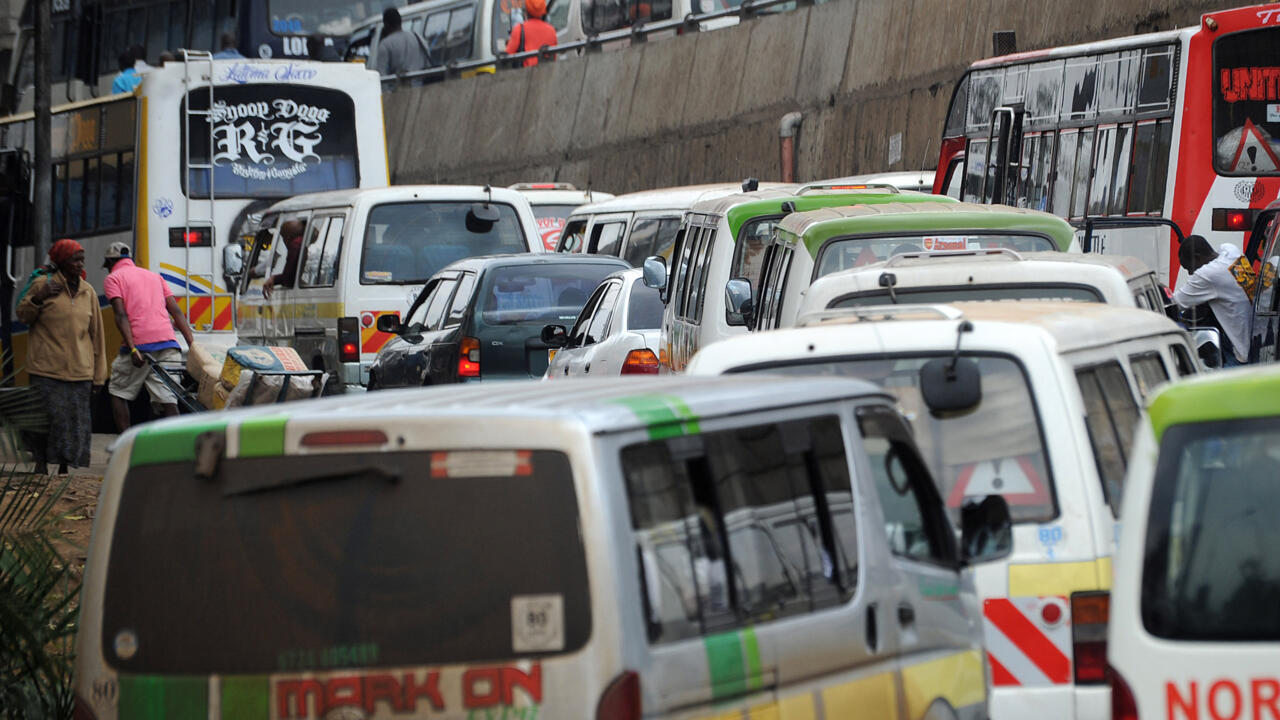
With pedestrians accounting for up to half of road deaths in Kenya, experts say the rapid expansion of the country's capital Nairobi's road network has failed to take into account how many journeys still begin on foot.
James Mwangi leaves his house in Kayole, a low-income neighbourhood in the east of Nairobi, at 5:47am every day, for the 20-minute walk to the bus stop. Those 20 minutes require his full concentration – no matter how early the rise. The walk takes him along a stretch of Kangundo Road where the pavement disappears entirely for around 400 metres, with a ditch on one side and moving traffic on the other, the ubiquitous boda boda motorbike taxis weaving in and out in both directions. "The boda bodas come very close,” said James. “You learn to pay attention all the time. You don’t look at your phone.” Over the four years he has been making this commute, he has developed a mental map of where on his journey he is most likely to be killed. "I've seen three people knocked down on this road in the last two years. Sometimes when it rains you have to choose between walking in the drainage ditch or walking in traffic. We know it's dangerous, but there isn't another way to get to the [bus stop]," he added. Locals frequently report crashes involving motorcycles and pedestrians on this road. They say they are no longer surprised when they hear about accidents – the circumstances are always the same, only the names of the victims change. In March, a pedestrian was killed near the Mama Lucy Hospital on Kangundo Road after being struck by a vehicle – an incident which renewed calls for safer crossings and improved pedestrian infrastructure along the corridor. Meet the Kenyans on a roll, manufacturing the electric vehicles of the future Pedestrians left behind Around 560 people die annually on Nairobi’s roads, according to Bloomberg Philanthropies’ Initiative for Global Road Safety. Kenya's National Transport and Safety Authority reports an average of 13 deaths on the country's roads per day in 2024. With comparable population sizes, Italy and South Korea see an average of nine and seven deaths per day, respectively. Pedestrians account for an estimated 35 to 50 percent of road traffic deaths in Kenya, according to National Transport and Safety Authority data and WHO estimates, making them the most vulnerable road user group. “A vehicle at urban speed can turn a crossing into a fatal encounter,” says engineer Tom Opiyo, a transport policy expert with the Kenya Urban Roads Authority. “That is why modern safety strategies focus on speed management and street design.”