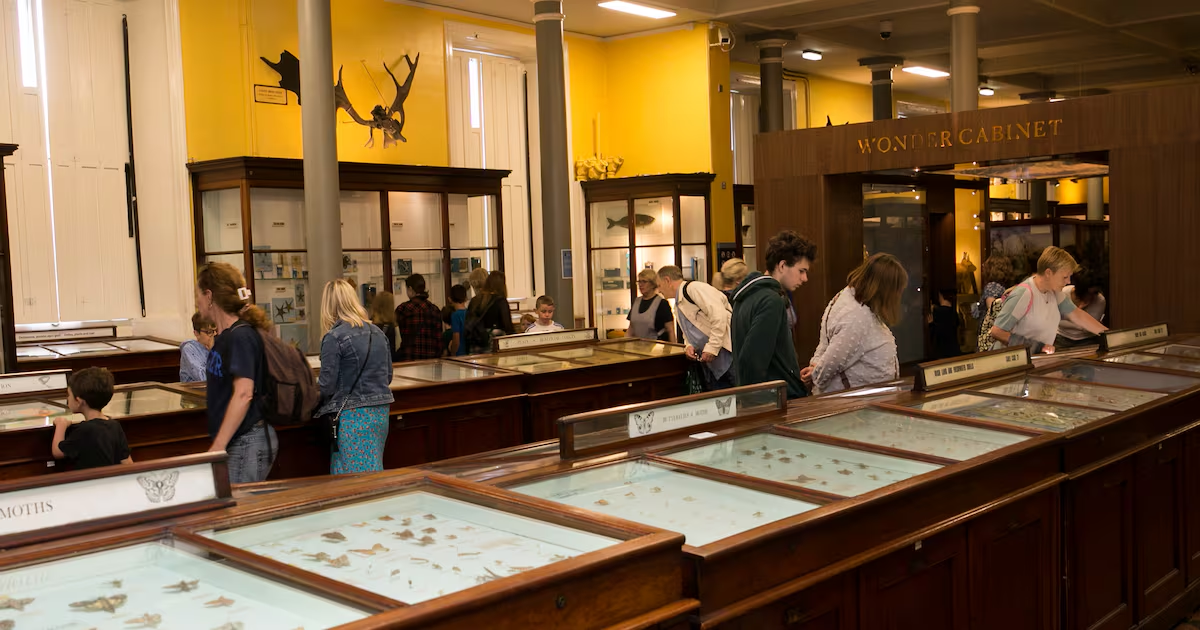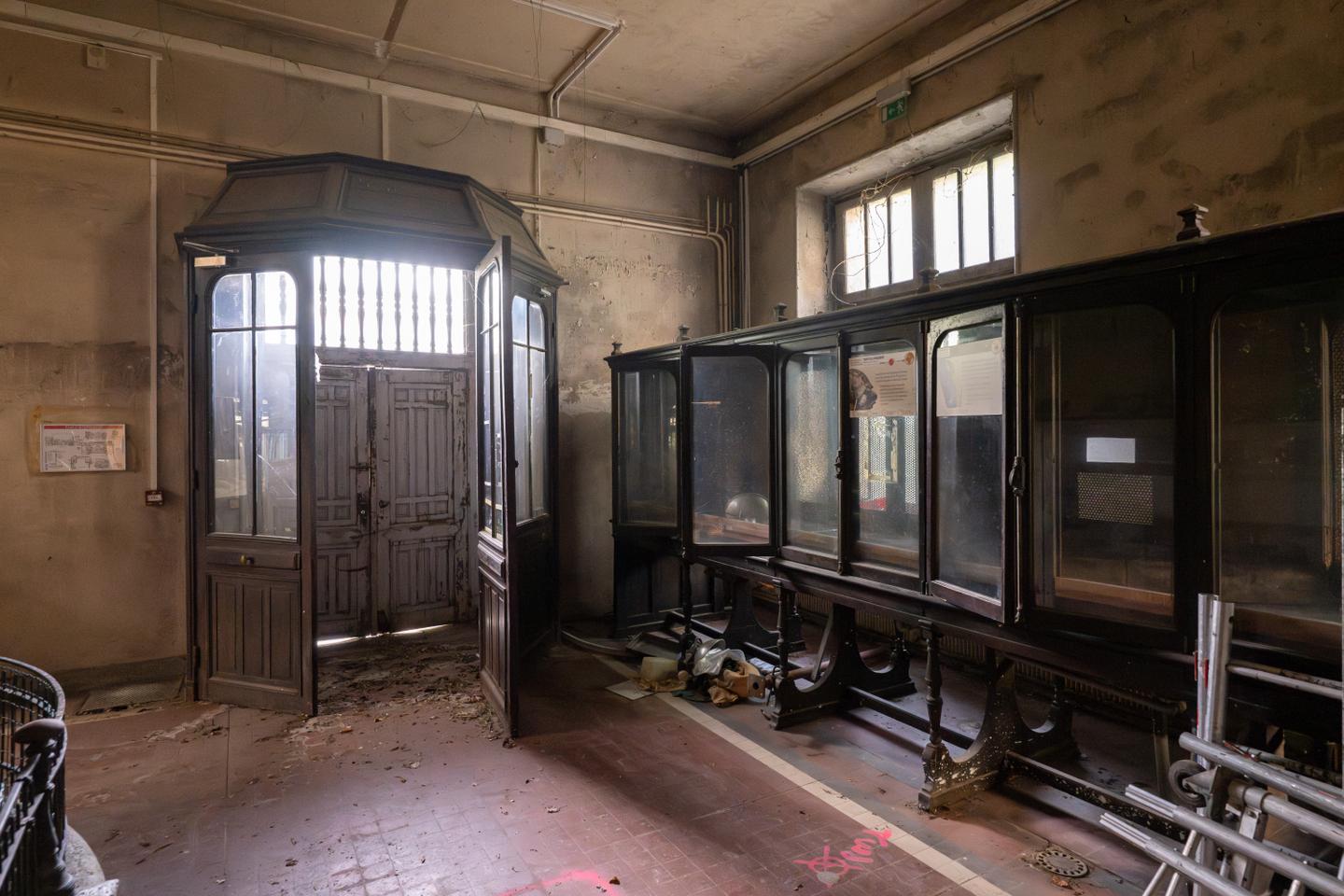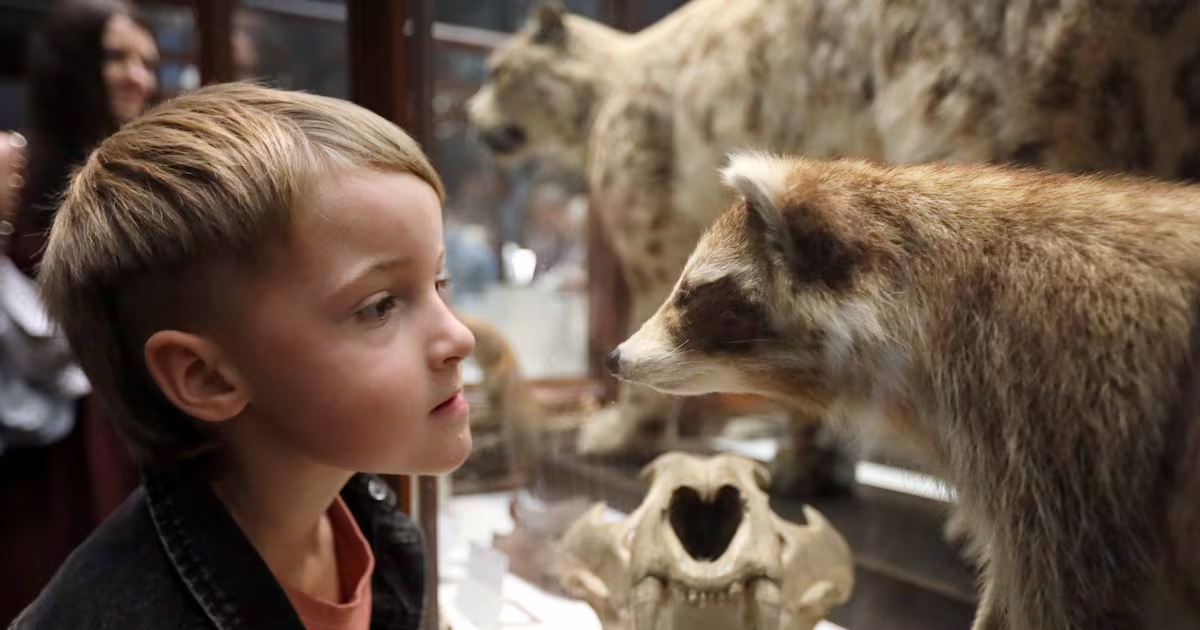
Reading this week about the fate of the Natural History Museum – which has been closed for refurbishment since September 2024 and does not yet have a rough date for reopening – I had cause to reflect, as I often do, on my favourite museum exhibit of all time. As with any relatively cultured and well travelled person, I have visited (not to brag) quite a lot of famous and important museums over the years. I’ve seen the Ishtar Gate of the ancient city of Babylon at the Pergamon Museum in Berlin. I’ve seen the Rosetta Stone and the Parthenon Sculptures and the bust of Rameses the Great at the British Museum. I have seen Michelangelo’s David in Florence and the Venus de Milo in Paris and the ancient Egyptian Temple of Dendur in New York’s Metropolitan Museum of Art. At the Mykola Syadristy Museum of Microminiatures in Kyiv, I have seen, through a microscope, a preserved flea, all but invisible to the naked eye, on the end of whose dangling hind legs were affixed two tiny and impossibly ornate golden shoes. But none of these objects resides anywhere near as close to my heart as a certain artefact that once filled me with giddy delight as I gazed into a cabinet on the upper floor of our own Natural History Museum: a dead tarantula in a small plastic container on whose transparent lid was visible, in raised print, the message: “MICROWAVE OVEN SAFE.”The microwave-safe tarantula at the Natural History Museum I’m not sure how long this tarantula was on display in the museum. I first saw him in 2016, on a visit with my then-toddler son, and was so intrigued and amused by it that, on a handful of subsequent visits over the years, I made a point of checking to see it was still there – which it was. The tarantula in the microwave-safe container was charming in itself, of course, but its presence also seemed to encapsulate something of the ramshackle and haphazard charm of the museum itself. It was bizarre and funny and you couldn’t quite tell whether it was due to the lack of some expensive tarantula-display resource, or a joke on the part of some unsung absurdist in the archives.Apart from the microwave-safe tarantula, what I mostly loved about the museum – and I suspect I am by no means unique in this – is that it wasn’t just a museum, but a kind of meta-museum: a skilfully and uncannily preserved artefact exemplifying what a museum of a previous historical era looked like. When the museum closed in 2024, it was to facilitate major refurbishments to a building that hadn’t seen much in the way of such things since its opening in the 1850sYou didn’t go to the Natural History Museum – or the Dead Zoo, to give its preferred title among Dubliners – simply to peruse its somewhat random menagerie of preserved fauna and flora. You went because it felt like walking into the mid 19th century. It even smelled, somehow, of the mid-19th century. As with so many of the best things in life – print magazines, books, universities, art galleries, theatres – if places like the Dead Zoo had not existed for hundreds of years, it would be impossible to imagine successively pitching the idea from first principles today. The whole notion of the place is utterly, and wonderfully, at odds with the algorithmic business park of contemporary culture.[ Dead Zoo: 20,000 animal specimens removed ahead of repair worksOpens in new window ]Speaking of anachronism, I’m wavering hesitantly, I realise, between the past and present tenses here, perhaps because the museum has been closed for so long by now that it already feels as though it is slipping into the past. (Not entirely, to be fair: a selection from the museum’s holdings has, since last summer, been partially on view at the “Dead Zoo Lab” in Collins Barracks.) When the museum closed in 2024, it was to facilitate major refurbishments to a building that hadn’t seen much in the way of such things since its opening in the 1850s. An entirely new roof was required, along with adjustments to make it accessible to people with impaired mobility. According to report in The Irish Times, the Department of Culture’s overall indicative costing for the project is between €50 million and €100 million, so presumably a lot of other stuff needs doing too. That said, this is Dublin in 2026 we’re talking about, so after the roof and accessibility issues are sorted – and once, say, the toilets have been spruced up and the place given a coat of Farrow & Ball – there may not be much change out of a hundred million.I must admit that when I read the report, my heart sank. This is down to the seemingly wild cost of the refurbishment, and the fact that, after nearly two years of closure and an expenditure already of more than €3.3 million, construction had yet to even begin. It’s also due to the fact, worst of all, that not even a rough timeline for the completion of the work could be given. It all seems so dully familiar, so unsurprising, so representative of the incapacity of the Irish State to pull off even modest infrastructure projects without eye-watering overspend and timelines more appropriate to the field of geology than of construction. See also MetroLink. See also, needless to say, the national children’s hospital. See also the truly embarrassing timescale of the roll-out of contactless payment on Dublin’s public transport. (The National Transport Authority first announced the plan for a “Next Generation Ticketing program”, and the awarding of an associated contract, in early 2019; according to the most recent estimates, the system will be in place some time in 2028. That’s more time that it took to construct, for example, the Channel Tunnel, the entire Copenhagen Metro system, and the Hoover Dam.)[ Natural History Museum reopens after staircase collapseOpens in new window ]I hope the Dead Zoo doesn’t remain closed for too much longer, and that the State gets something approaching its money’s worth for whatever eye-watering amount it does wind up spending on it. I have another hope, too, that might well be in some kind of logical conflict with the latter: that when it does eventually open its doors again, it will be largely unchanged, that it will still be the museum of a museum it always was. I hope that tarantula makes it out the other side, too, preserved and resplendent in its little microwave-safe sarcophagus.
Mark O'Connell: Dublin’s Dead Zoo is home to the funniest exhibit of all time. Please let it return soon
We’ve been here before: the seemingly wild cost of refurbishment and the fact that, after nearly two years of closure and an expenditure of over €3.3m, main construction has yet to begin
TL;DRAI
Questo articolo non rientra nella mission di Warptech Tech News. È un pezzo culturale/opinione sul Natural History Museum di Dublino, privo di contenuto tech, AI, business o implicazioni per manager IT e CTO. Non è adatto a un brief editoriale della testata. Vuoi che lo sintetizzi comunque a titolo esercitativo, oppure hai un articolo tech/business da riassumere?
1,098 words~5 min read