See more Daily Mail on Google - save us as a Preferred SourceBy LUKE CHAFER, HEALTH REPORTER Published: 01:00 BST, 21 June 2026 | Updated: 14:00 BST, 24 June 2026
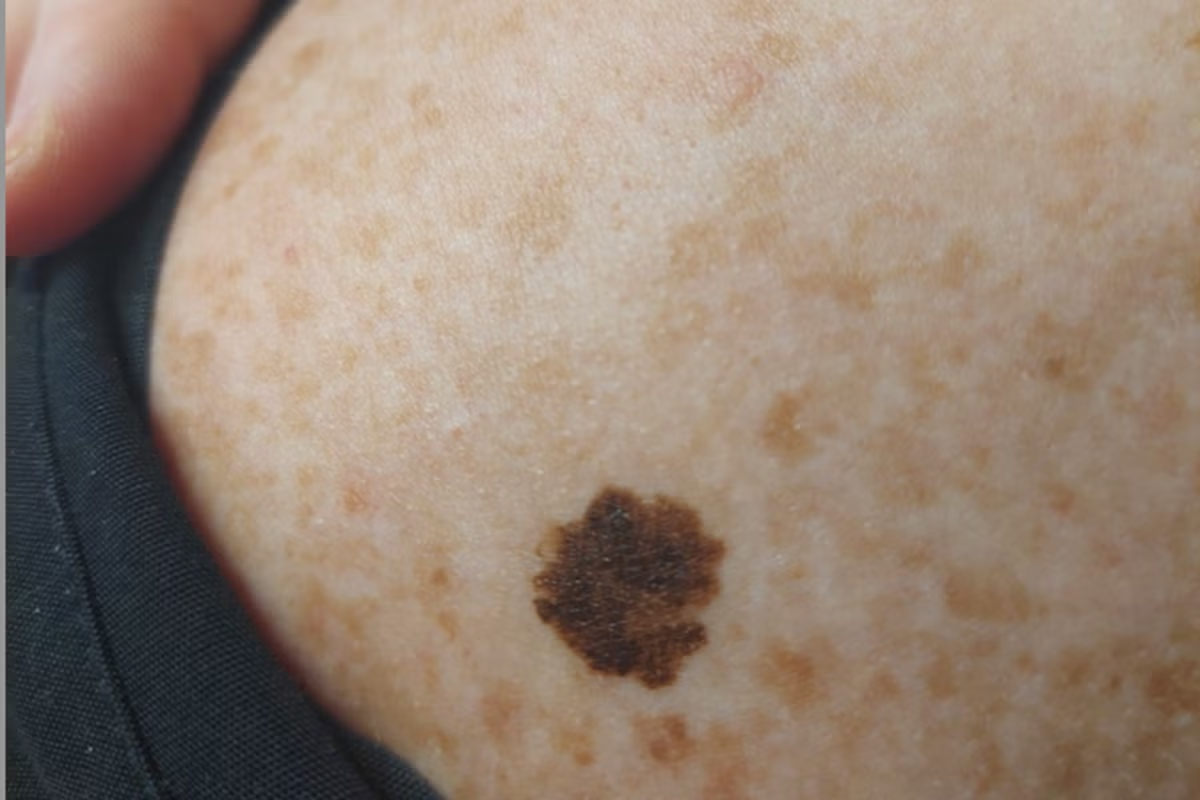
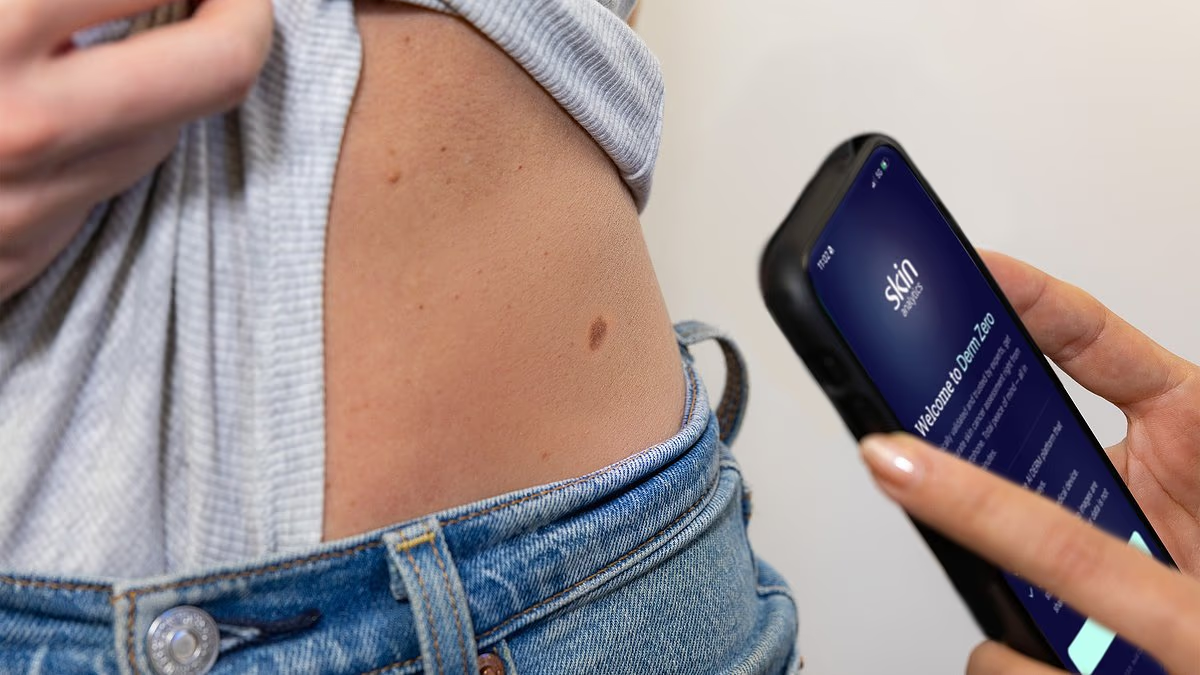
Deadly skin cancers can now be diagnosed by a revolutionary new smartphone app that is predicted to slash NHS waiting lists.The health service has used an earlier version of the technology, known as Derm Zero, to detect 20,000 cancers in more than 230,000 patients.However, it required a special camera lens attachment which the latest version – which has just received the highest level of medical device approval in Europe – does not need.It means patients will be able to get a clinical-grade check in seconds at a pharmacy or GP, without needing a hospital appointment.The software, developed by British healthcare firm Skin Analytics, has been trained on thousands of images with known diagnoses.It uses artificial intelligence to analyse photographs of moles and skin lesions to identify patterns linked to skin cancer and other conditions. Those of no concern are definitively marked as such, while suspect lesions are flagged for clinical review.The software has an accuracy of 98.9 per cent. This means that, out of 100 patients, it correctly identifies skin cancer in 97. The software has an accuracy of 98.9 per cent. This means that, out of 100 patients, it correctly identifies skin cancer in 97Every year about 20,000 people develop melanoma – the most aggressive skin cancer, which causes more than 2,300 deaths annually.Most cases are caused by exposure to ultraviolet radiation from the sun or sunbeds.Last year, rates of the cancer reached a record high in the UK, with new diagnoses having increased by almost a third in just a decade.The main sign of the condition is either a new mole or one that has changed size or shape. Melanomas can appear anywhere on the body but are more common in areas that are often exposed to the sun.Dr Alexandra Kemp, consultant dermatologist and cancer clinical director at Amersham Hospital, said: 'I've assessed thousands of skin lesions for potential skin cancer.'Since we first employed Derm in our skin cancer pathway, there has been a great impact on our clinical capacity, and it has made a real difference to the efficiency of the care we can provide. 'When it comes to skin cancer, we know early diagnosis means better outcomes.'To see this technology available on a smartphone, with no specialist equipment required, creates huge possibilities for expanding patient access and enabling earlier diagnosis.'