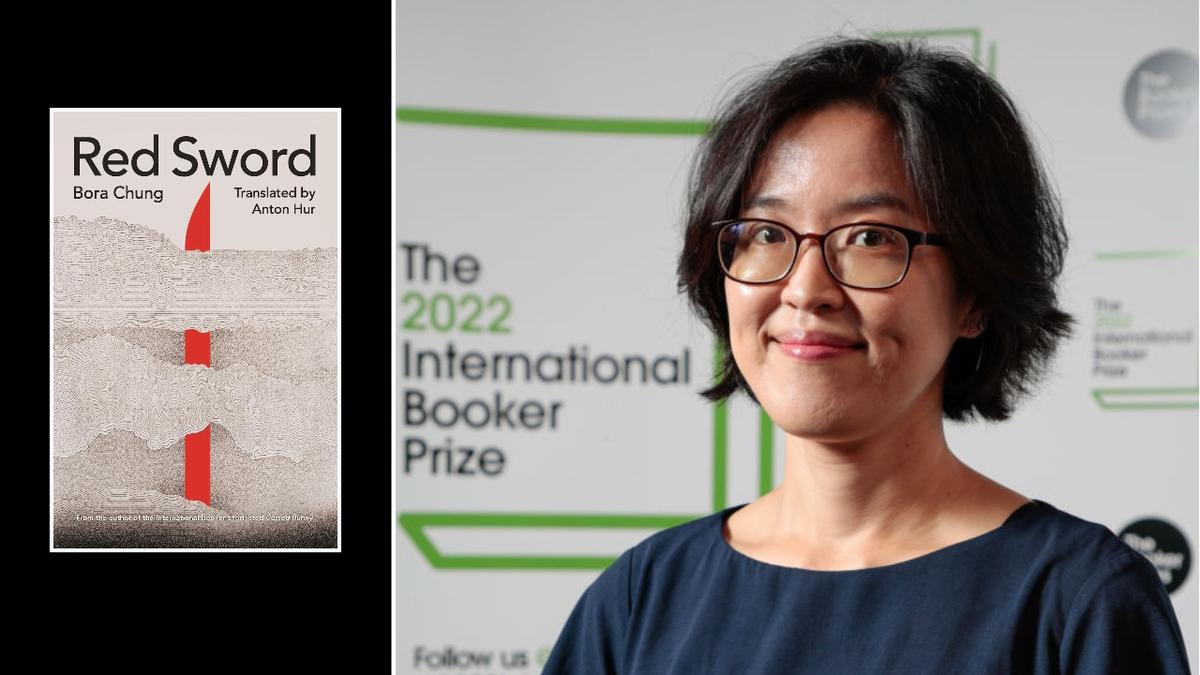
In Bora Chung’s new novel Red Sword, Chrisna, a slave/ warrior of the colonising “Imperials”, is forced to fight, for unclear reasons, a monstrous enemy referred to as the “white aliens”. The novel is a rinse-repeat sequence of imperial oppression; sword-versus-laser fights; escape-and-capture from either aliens or Imperials; clones dealing with Xeroxed memories; and a few matter-of-fact sex scenes.The book’s blurb makes no mention of any of the above features, but it does helpfully note that the story “draws upon” the Korean history of the Qing Empire forcing Koreans to battle Russia. I would have inferred no such allegorical connection from the novel itself. This is probably indicative of my limitations, not the novel’s. What I know of Korea mostly comprises stuff I’ve watched on TV (dreamy androgynous romances, zombie outbreaks in medieval Korean kingdoms, a colonial legacy, and exactly one K-Pop song — Psy’s ‘Gangnam Style’).The novel’s repetitive, monotonous narration makes it a hard read. It was Vonnegut who said, I think, that reading some novels can feel like being married to a perpetually ill spouse. I didn’t enter into that sort of intimacy with Chung’s novel, translated from the Korean by Anton Hur. But I hovered on the threshold, admiring the patient’s intractability, and stoically awaiting the arrival of the last chapter.Trauma of warThere are two kinds of unreadability when it comes to novels. The first variety is the product of an author’s incompetence and the other stems from their originality. Now, any single novel can’t prove an author is incompetent. But a body of work is more revealing. Originality is a persistent ailment; incompetence is not. Authors generally improve with practice; the truly original have no such hero’s journey.In Chung’s case, I believe it is her originality, not incompetence, which characterises her peculiar stories. She’s got a style that doesn’t care about characterisation, plot realism, place specificity or emotional warmth of any kind. Her paper people go through traumatic events, they suffer, they have sex, they die; sometimes in non-causal order. She tells us they feel this emotion or that, but it all feels unreal. Her characters are presented as human, but there is a singular lack of depth to their actions and experiences which leaves one uncertain they are human.
Review | Bora Chung’s Red Sword is audacious and often baffling
Bora Chung’s Red Sword challenges readers with its audacious style, blending trauma and originality in a baffling narrative.
847 words~4 min read