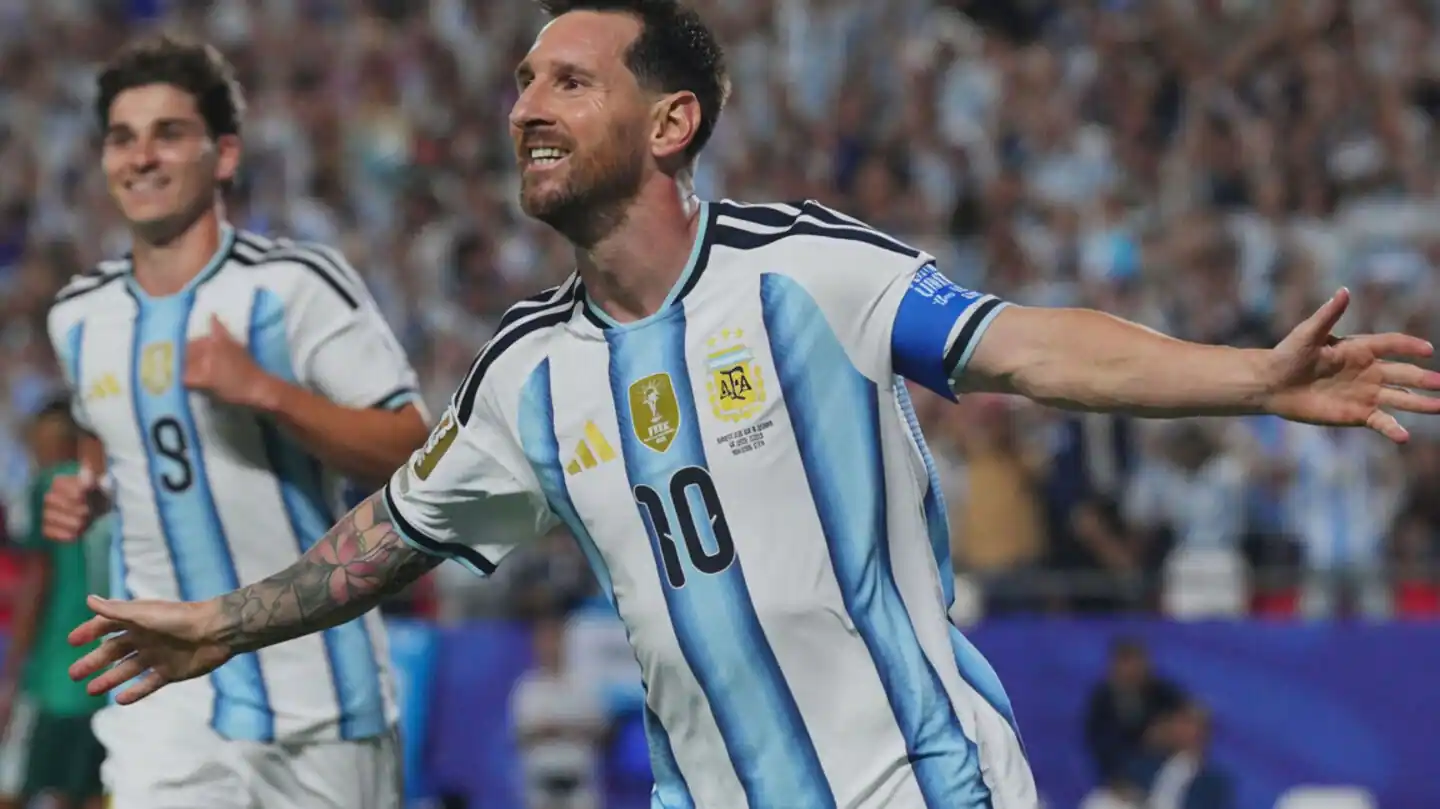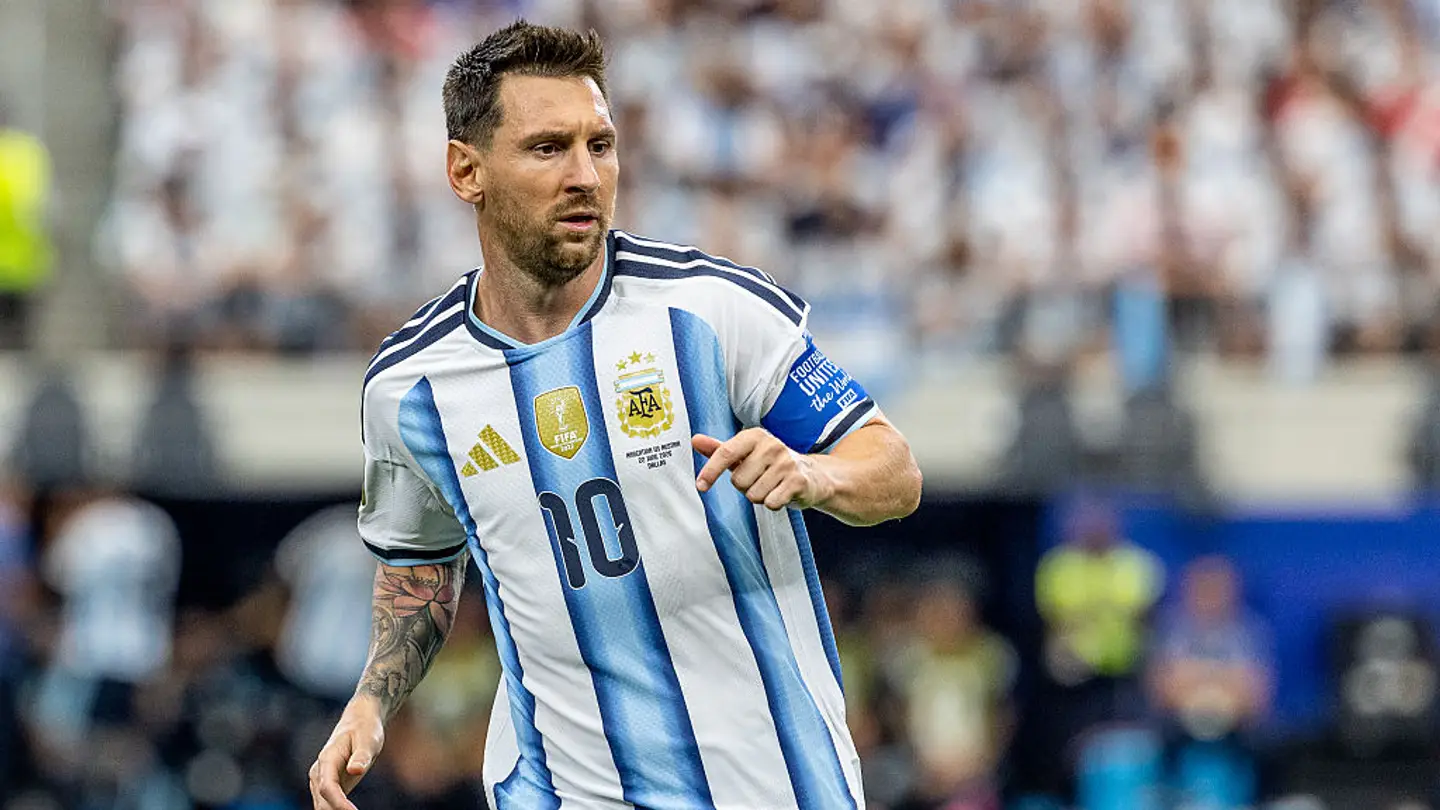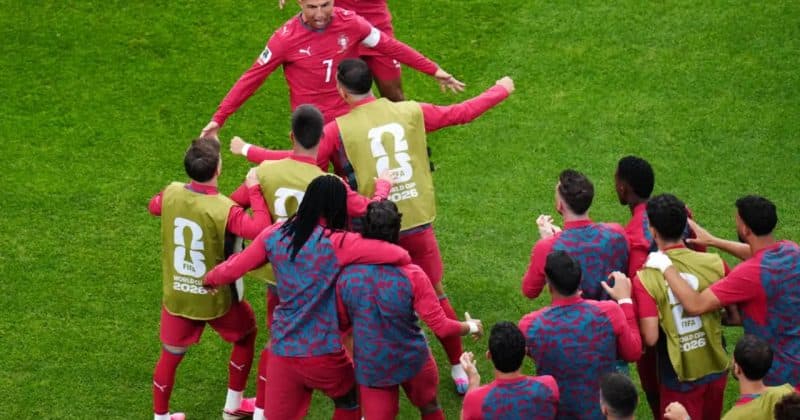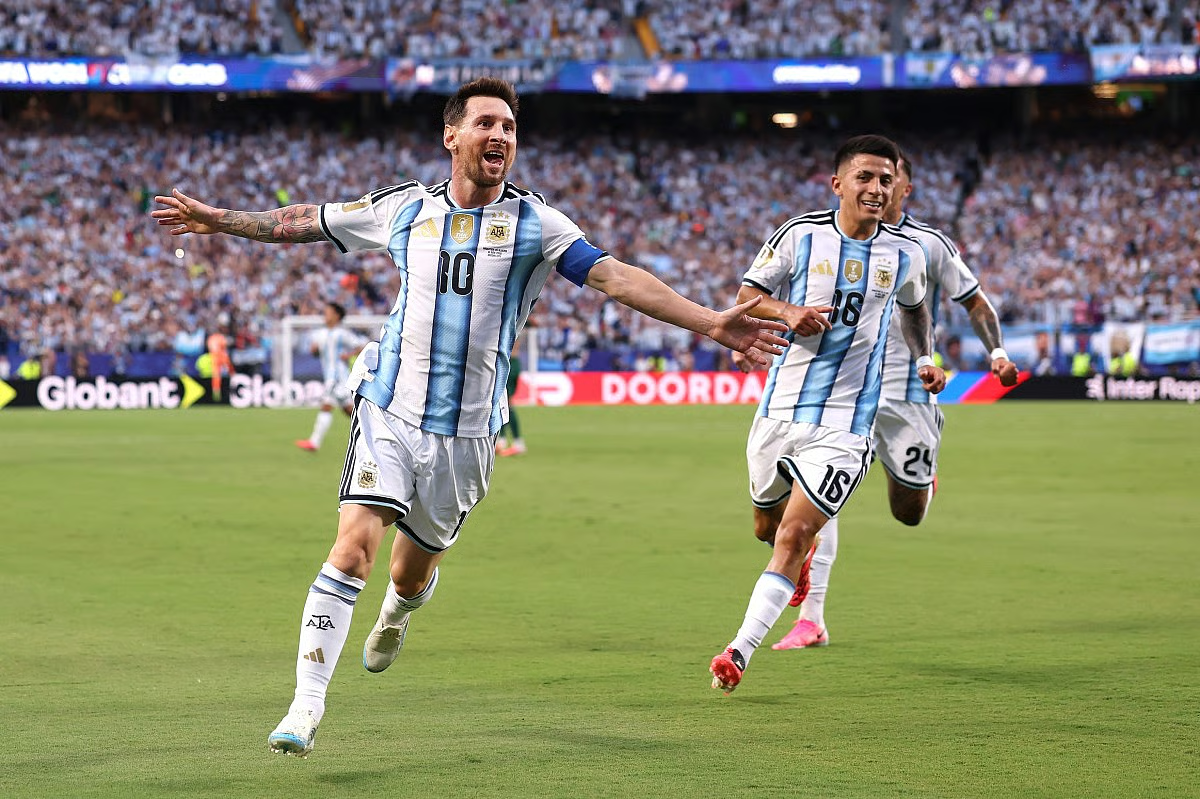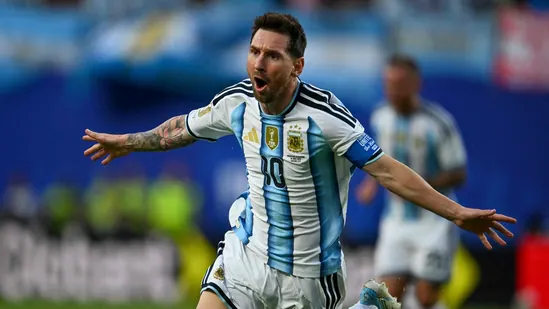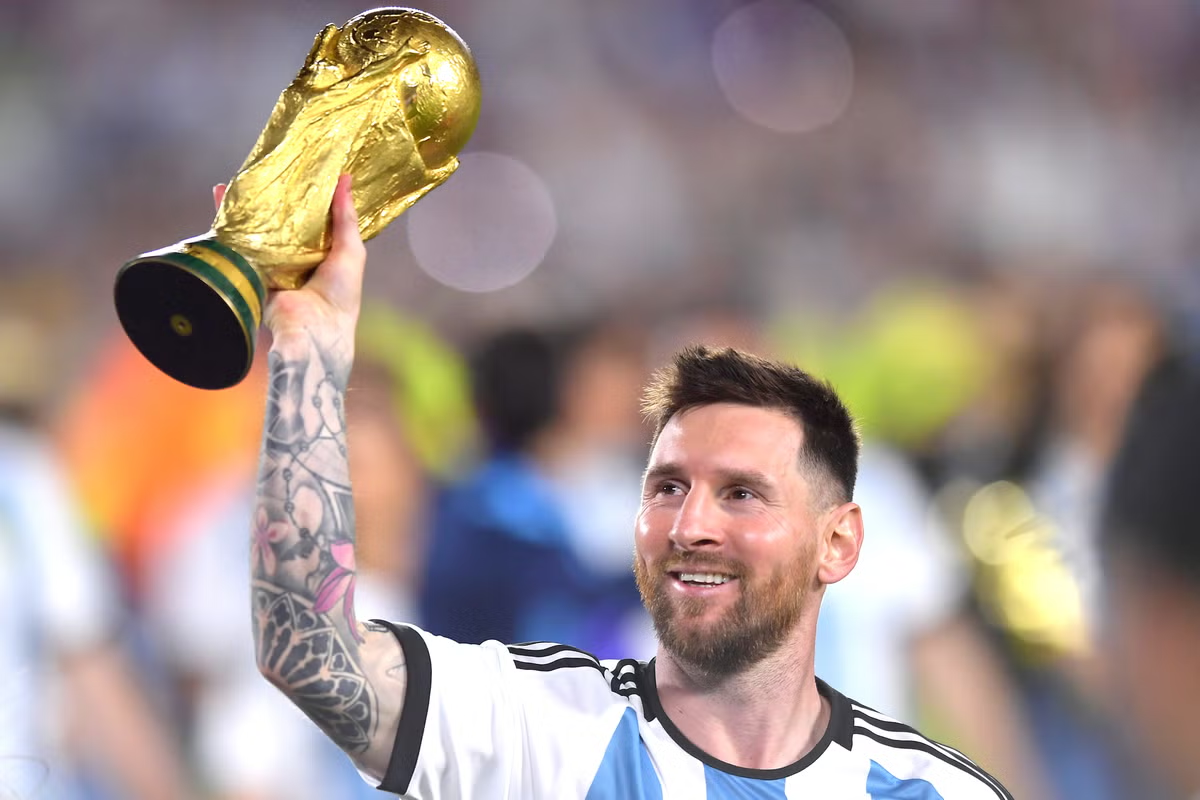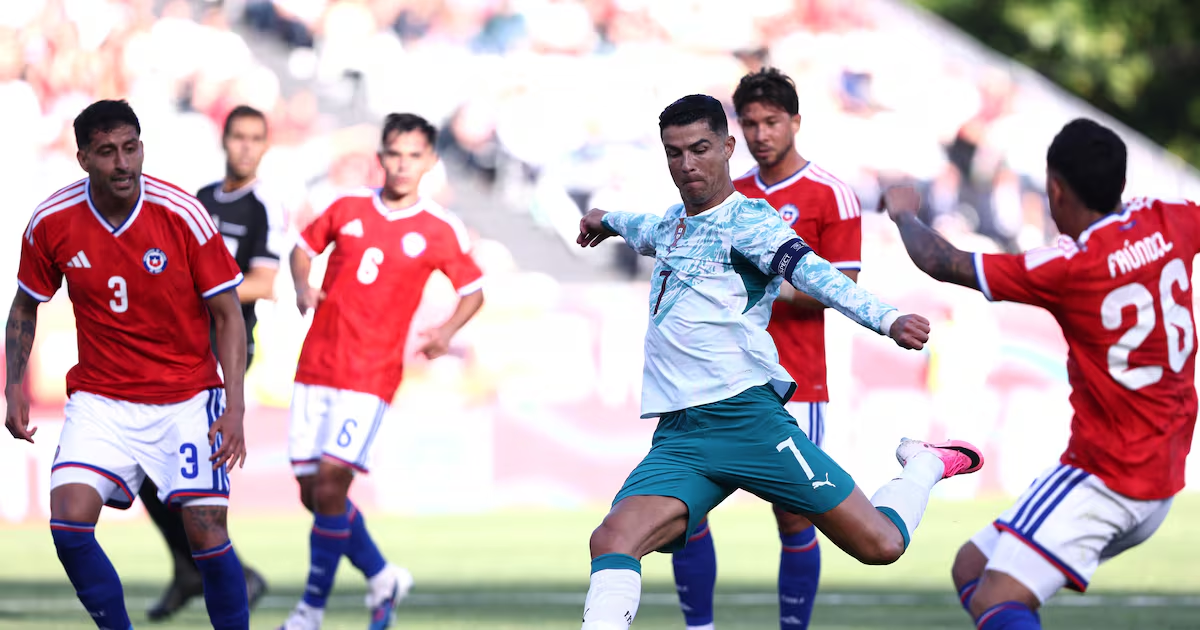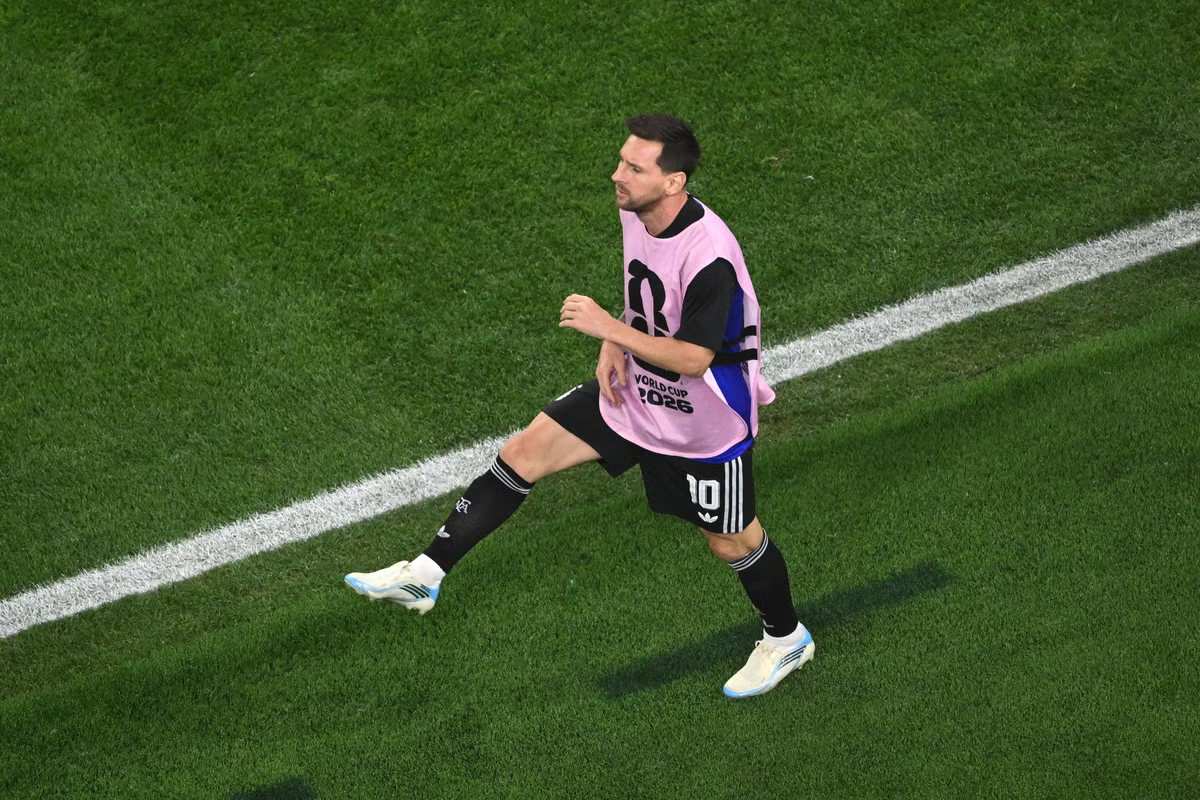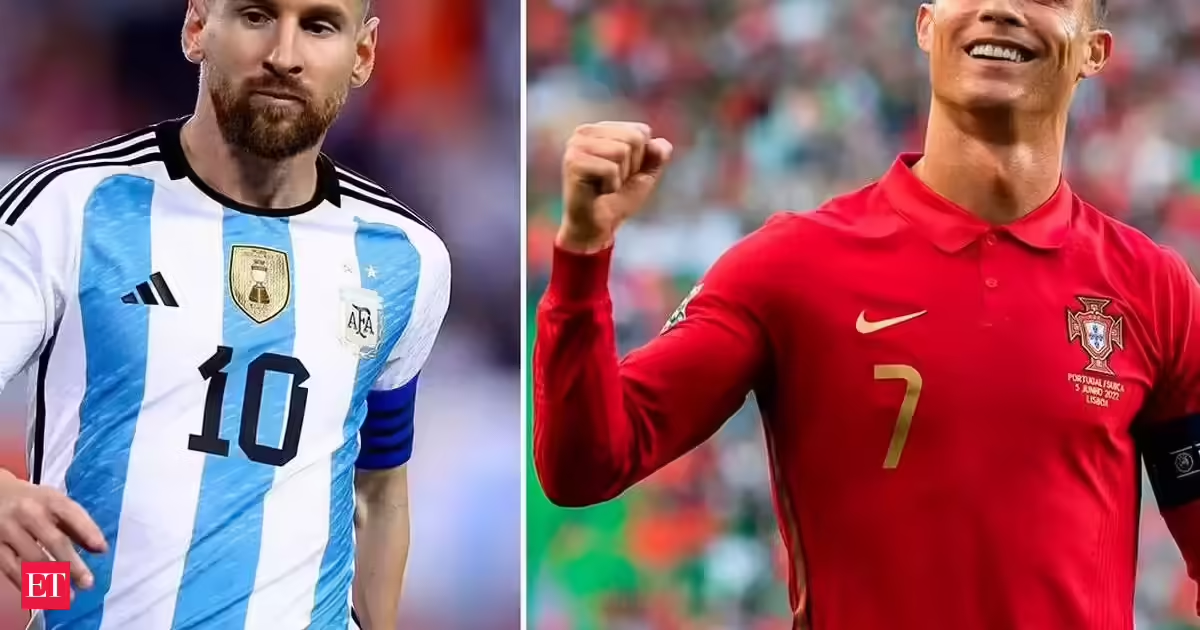
Behold, Lionel Messi. 38, 39 on Wednesday, he now plies his trade in the football backwaters of Major League Soccer (MLS), still The Man, still magic, still unstoppable. If there was one thing missing from the cosmic dance of his résumé — star-clustered with league titles, record-breaking numbers of goals and assists, a meteor shower of Ballon d’Ors, and a World Cup trophy — it was a hat-trick at a World Cup. Duly completed at 38 years and 357 days, in Argentina’s opening match against Algeria, 20 years to the day since he made his World Cup debut with a goal against Serbia and Montenegro.It was a performance so suffused with the extraordinary, so wrapped in perfection, that it immediately put to rest any lingering doubts over whether one of the greatest players in football history still had it in him to make the Argentina team sparkle.Also Read: FIFA World Cup 2026- A football festival that could change the game in the US foreverMoving as little as possible in a game where running is everything has always been a Messi trademark. But in the Algeria game, as befits his ageing body, he was almost immobile. He stood, for most of the match, in his little pocket to the right of the midfield, metres away from the box. He was an island of his own, an invisible spectre in a game where, by necessity, players need to track others who are moving.With his preternatural ability to read the game — to know exactly where his teammates and opponents are, and how the patterns around him are unfolding — Messi only needed to receive the ball before he knew where the space was. And then it was over: one step, one shot, goal. Pep Guardiola once said about Messi’s game: ‘Right, left, left, right (Messi scanning the environment), he smells who is the weak point of the back four, and after 5, 10 minutes, he has the map.’ In a famous example from a Barcelona-Real Madrid derby, Messi ran for just 4 minutes, walked for more than 80, and still created 9 chances, made an assist, and scored a goal.Also Read: FIFA World Cup 1000th match- A look at milestone matches in tournament's historyThat was in 2017, at the height of his powers. This is 2026, nine long years later, in what is likely the final year of his career. But Messi is like that line from a Bob Dylan song: ‘I was so much older then, I am younger than that now.’ There’s something about the spectrum of age in athletes that’s endlessly fascinating.Perhaps it lies in the allure of the unknown and the unexpected: a player in their peak years is simply where they belong, but the one who is either very young or (supposedly) over the hill becomes an unfamiliar entity. We want to know what they are capable of, how far they can go, what they still have up their sleeve, what kind of stories they will write — in their debuts or swansongs. The story Josimar José Évora Dias, a.k.a. Vozinha, a.k.a ‘Little Granny’, is writing will go down as a classic. The 40-year-old journeyman goalkeeper was the giant rock shielding tiny Cape Verde as the island nation pulled off a miracle draw on their World Cup debut against the mighty Spain.Vozinha did it all — reflex saves, diving stops, invincible hands tipping rocket shots over the crossbar or beyond the posts, marshalling the defence, plucking crosses out of the air with authority and smothering the ball off onrushing forwards — neutralising Spain’s 74% possession with 7 saves and 20 interceptions.Born in Mindelo, a port town of 70,000 people famed for its colourful cultural life, Vozinha was first named Valdano, after the Argentina striker Jorge Valdano, by his father. But an island naming law ruled the choice unsuitable. So, he was instead named Josimar, after the Brazilian striker. His father really wanted him to be a striker. Instead he became the goalkeeper who would put Cape Verde on the football map. He cried at the end of the 90 minutes that turned him into legend, saying, ‘I have worked my whole life for this moment. I’m 40 years old. I started playing football professionally when I was 25, in 2012. I thought about leaving, but I continued because of this dream.‘I cried because I grew up with my grandparents and unfortunately they were not here; they died a few years ago. I also cried because my mum didn’t manage to be here because of the visa. Because of the money we had to pay for the visa, we didn’t manage to [get it done] on time. I would like her to be here.’Two days later, the US granted Vozinha’s mother a visa after a Chinese businessman Lin Jie living in Cape Verde arranged her travel. On the other side of the spectrum is the difficult narrative unfolding around Cristiano Ronaldo — like Messi, one of the greatest in the game’s history, and playing in a record sixth World Cup. That’s where the similarities end, because the game has left Ronaldo, and it is all too clear on the pitch. It’s not his fault that he is still in this Portugal side; that responsibility lies with the manager. Yet, the best thing that the great Portuguese striker can do now is to call it a day.Only 7 players aged 40 and over have ever featured in the men’s World Cup in its 96-year history. The 2026 edition alone can surpass that. Ronaldo, Croatia’s Luka Modric, Germany’s Manuel Neuer, Bosnia’s Edin Dzeko and Vozinha — all over 40 — have already played a game at this tournament. Scotland’s Craig Gordon, Mexico’s Guillermo Ochoa, and Uruguay’s Fernando Muslera are also 40, but are yet to play. Here’s to ageless wonders.(Disclaimer: The opinions expressed in this column are that of the writer. The facts and opinions expressed here do not reflect the views of www.economictimes.com.)
Age against the machine: Messi & Vozinha, unlike Ronaldo so far, have shown that they can make a mountain out of ‘over-the-hill’
Age is just a number for football legends as Lionel Messi, at 38, delivered a stunning World Cup hat-trick, proving his enduring magic. Meanwhile, 40-year-old goalkeeper Vozinha became a national hero with a heroic performance for Cape Verde against Spain. In contrast, Cristiano Ronaldo's presence in his sixth World Cup highlights a different, more challenging narrative for aging stars.
994 words~5 min read