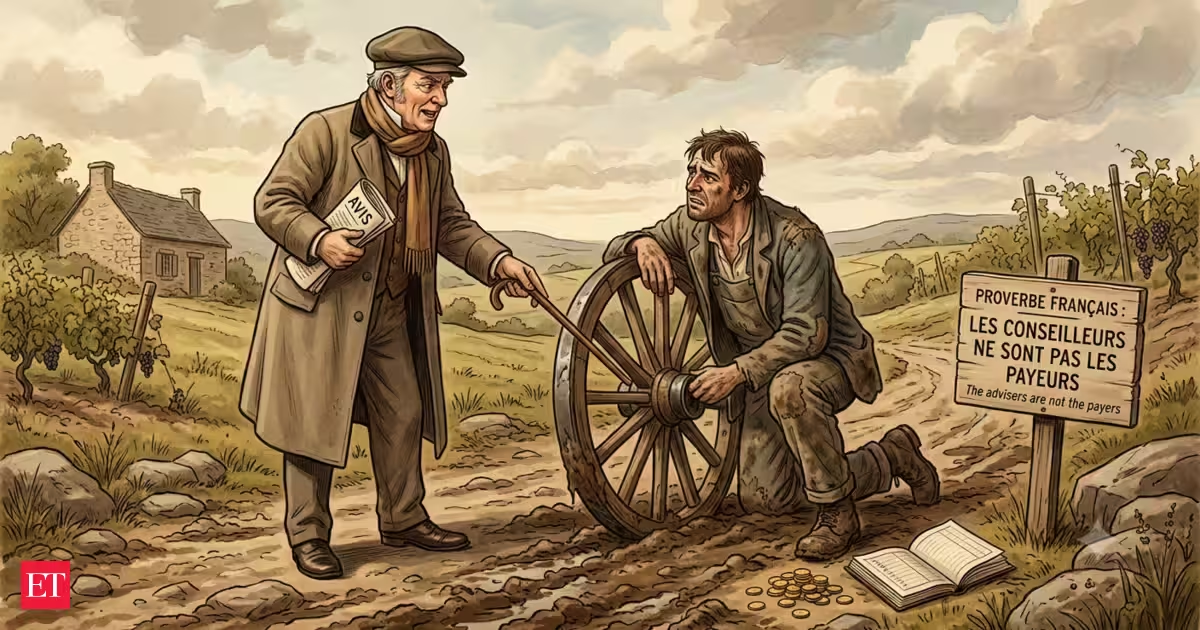
French Proverb of the Day highlights a traditional saying that reflects patterns of human experience, self-reliance, and the role of personal responsibility in everyday life. The proverb “You are never served better than by yourself” offers insight into how individual effort and initiative shape outcomes more effectively than depending entirely on others. It suggests that people often achieve more reliable and consistent results when they take responsibility for their own needs and actions rather than waiting for external assistance. Many people turn to such proverbs to better understand human behavior in simple, relatable terms. These sayings are often rooted in practical observation and lived experience, passed down through generations. Over time, they have become part of daily reflection, reminding us that success, control, and effectiveness are shaped not only by external support, but also by one’s own effort, independence, and willingness to act.French Proverb of the Day — Why self love matters“You are never served better than by yourself”French proverb of the day highlights a timeless idea about self-reliance, personal responsibility, and the importance of independence in everyday life.The first part of the proverb suggests that relying on oneself often leads to better outcomes than depending entirely on others. It challenges the assumption that external help will always be available or sufficient, instead shifting attention toward individual effort and capability.The second part emphasizes how personal initiative shapes success and resilience. It suggests that when people take responsibility for their own needs and actions, they are more likely to achieve reliable results. In this sense, depending too heavily on others can limit growth, while self-reliance strengthens confidence and problem-solving ability.Together, the proverb teaches that outcomes are often stronger when individuals take charge of their own actions. While support from others can be helpful, true reliability and effectiveness come from one’s own effort, discipline, and willingness to act independently.Why You Should Be Your Own Support SystemBeing your own support system is important because it builds emotional strength, independence, and resilience in everyday life. While friends, family, and others can offer help and encouragement, they may not always be available when you need them most. Relying solely on external support can create vulnerability, especially during challenging or uncertain times. When you learn to support yourself, you develop the ability to manage emotions, solve problems, and stay motivated without depending entirely on others. This does not mean isolating yourself, but rather strengthening your inner foundation so you can handle difficulties with confidence. Self-support also improves decision-making, as you become more aware of your needs and capable of guiding your own actions. Ultimately, being your own support system empowers you to stay steady through life’s ups and downs, while still appreciating the value of support from others when it is available and genuinely helpful.Life lessons from the proverbThe proverb carries practical lessons about independence, responsibility, and how individuals approach challenges in daily life.1. Self-reliance builds confidence Relying on oneself strengthens belief in personal ability and decision-making.2. Responsibility leads to growth Taking ownership of tasks encourages learning, improvement, and maturity.3. Dependence can limit progress Over-reliance on others may slow down action and reduce personal initiative.4. Action creates reliability When individuals take charge, outcomes become more predictable and controlled.Why this proverb is still relevant todayIn modern life, this proverb extends beyond personal tasks and independence. It applies to careers, education, entrepreneurship, and even everyday decision-making where people are often required to act quickly and independently.The proverb encourages self-awareness and accountability. It reminds us that while collaboration and support are valuable, personal effort remains the foundation of achievement. In many situations today, those who take initiative rather than waiting for help are better able to adapt, solve problems, and move forward. Ultimately, it teaches a simple but powerful truth: self-reliance is not about isolation, but about having the strength and responsibility to take charge of your own path.English equivalent and related expressionsOther English expressions that reflect similar thinking include:“Self-help is the best help.”“Rely on yourself first.”“Action speaks louder than dependence.”“Don’t wait for others to build your life.”Each of these highlights the idea that self-reliance, initiative, and personal responsibility often lead to stronger and more dependable outcomes than relying entirely on others.
French Proverb of the Day: “You are never served better than… — Life lessons on independence, initiative, accountability, resilience, and why you must love yourself
French Proverb of the Day highlights the meaning of “You are never served better than by yourself.” The saying reflects how outcomes are often shaped by self-reliance, personal responsibility, and the ability to depend on ones own effort rather than relying entirely on others. It suggests that people may achieve more consistent and reliable results when they take initiative and handle their own needs directly, instead of waiting for external help.
693 words~3 min read