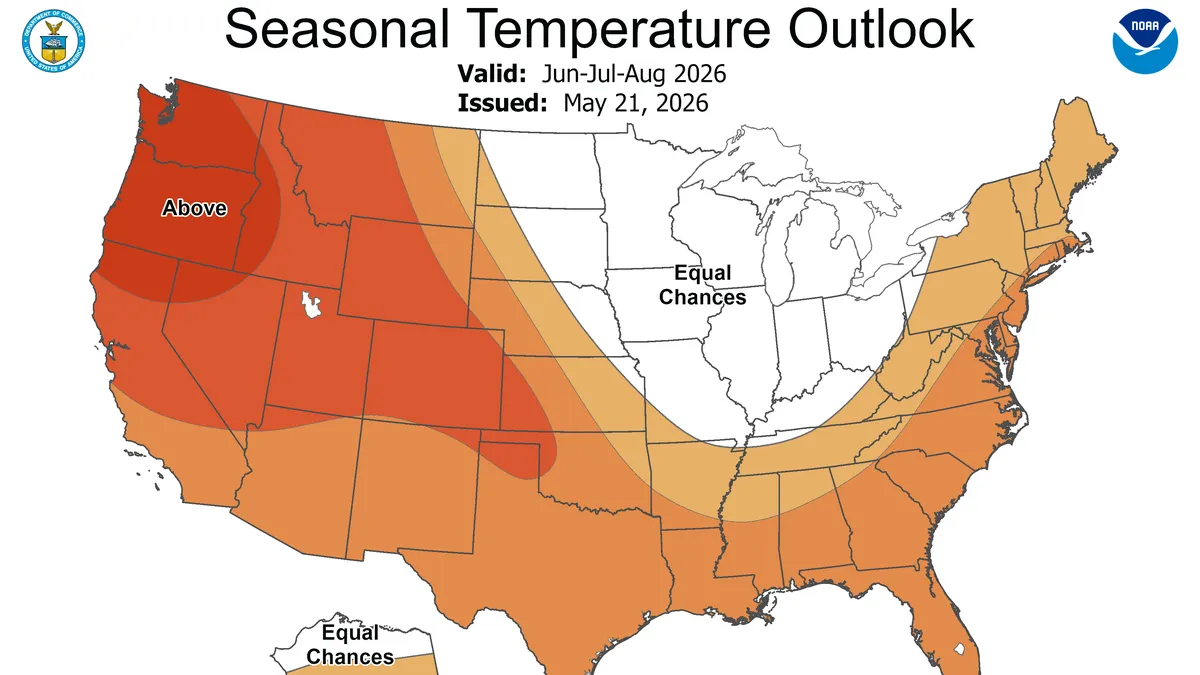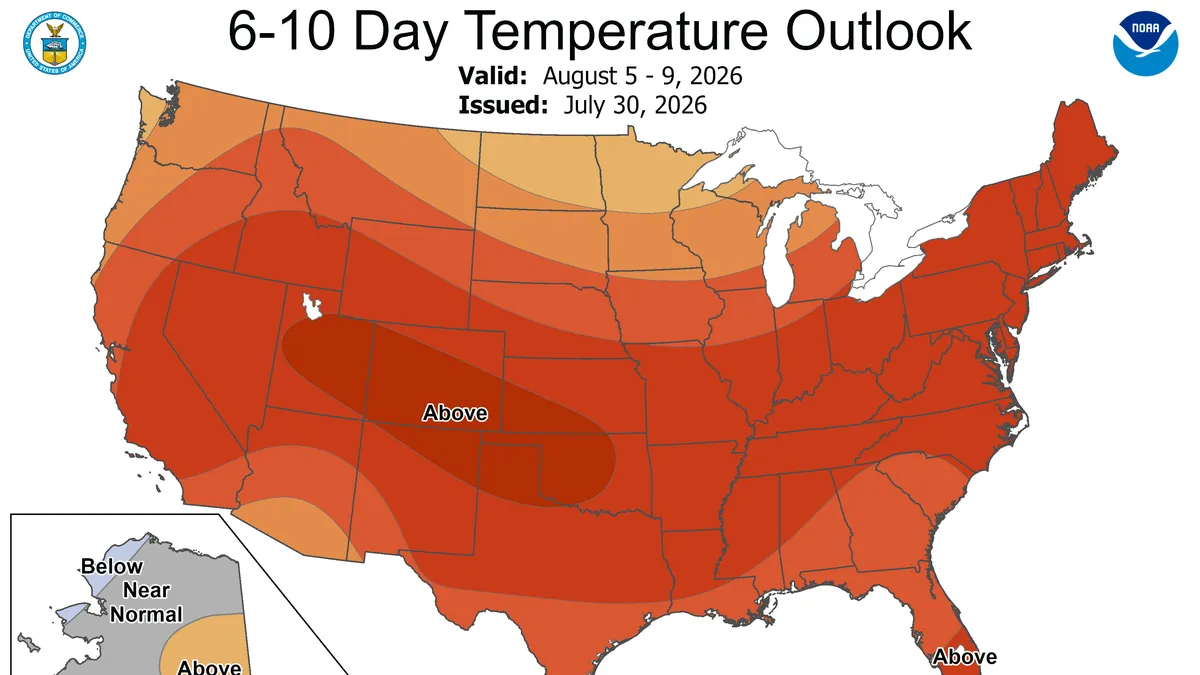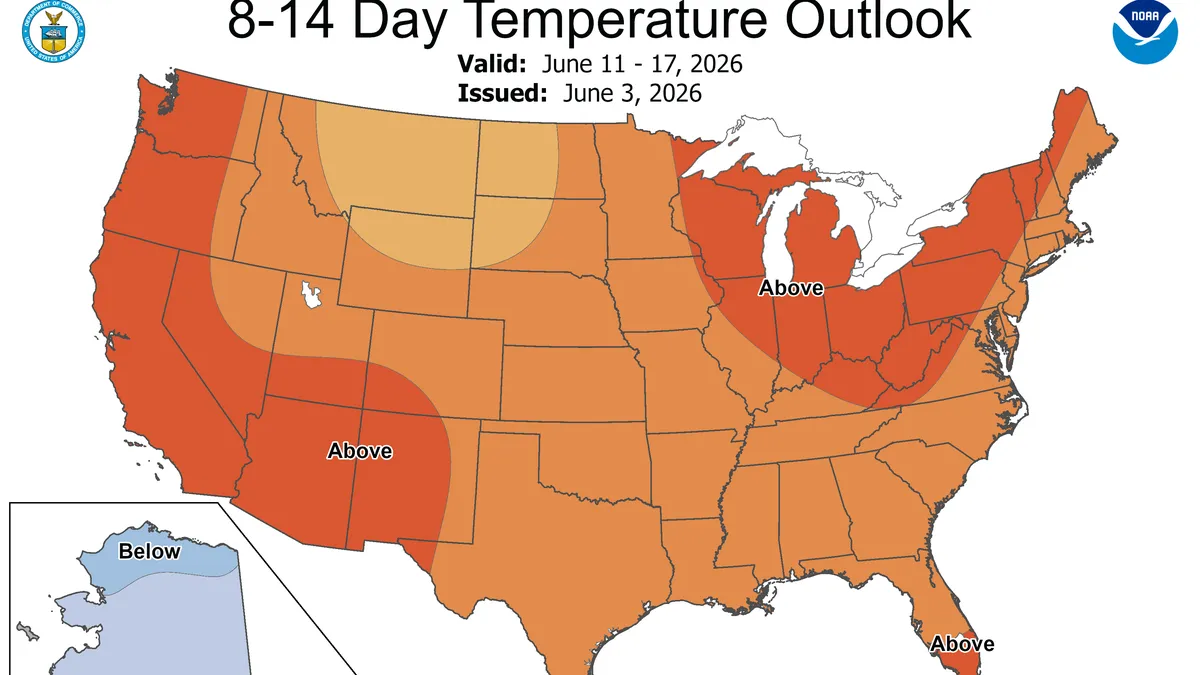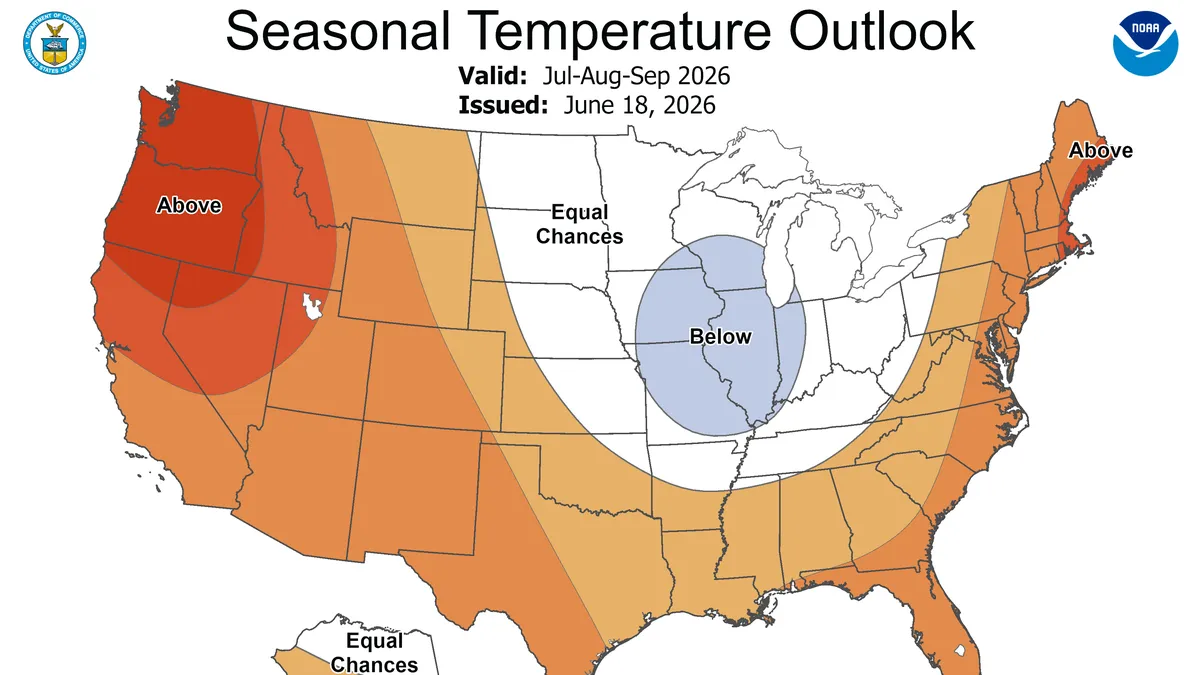
The three-month forecast released June 18 by NOAA's Climate Prediction Center shows a widespread likelihood of above-normal temperatures.Show Caption
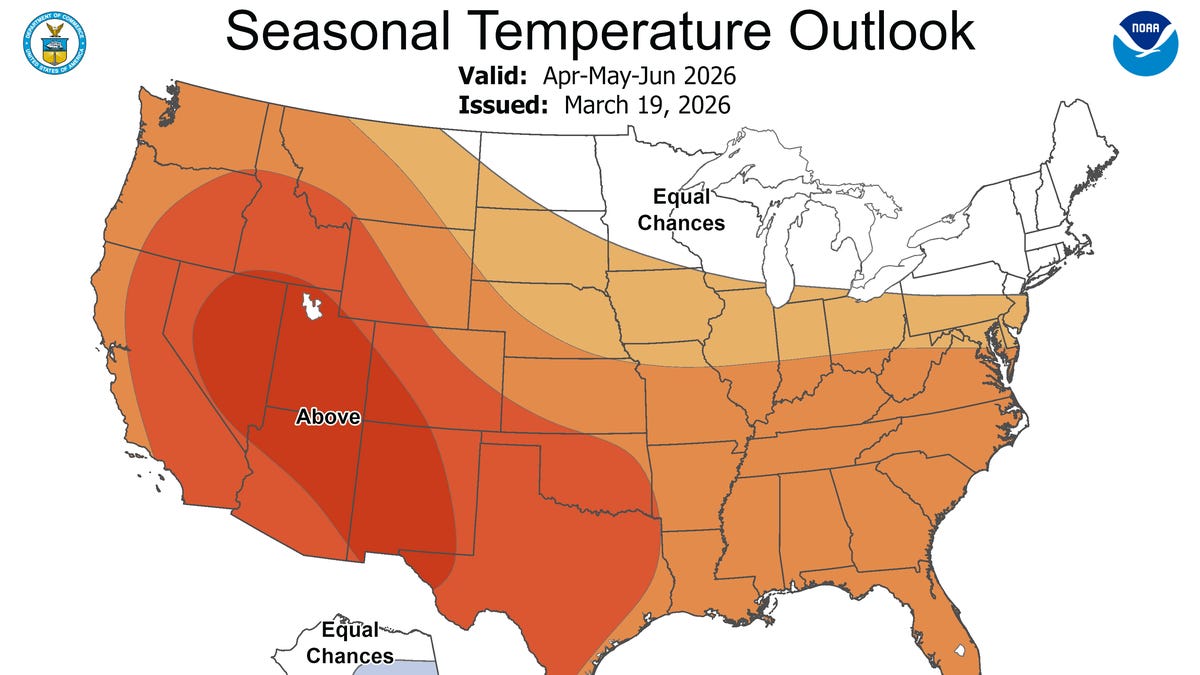
Summer officially starts June 21 – and with it, so does the heat.The three-month forecast released June 18 by NOAA's Climate Prediction Center shows a widespread likelihood of temperatures reaching above the historical average for a majority of the country. Oregon and Washington have the highest probability of exceeding the "normal" temperature in July, August and September.Illinois and parts of Wisconsin, Iowa and Missouri are the only states in NOAA's forecast that have an approximately 30% probability of being below the historical average temperature, which is created with data from 1991 to 2020."What we're seeing for the July, August, September time period is that for the majority of the country the trend has been warmer," National Weather Service meteorologist Scott Handel said.Summer 2026 brings fire, drought riskPrecipitation for the next three months is expected to show little change in comparison to historical averages for most of the United States. However, Southern California, Utah and Arizona along with parts of Nevada, Idaho, Wyoming, Colorado and New Mexico have an "above average" precipitation forecast, which would be particularly beneficial for drought-stricken and wildfire-prone areas.Chad Merrill, a senior meteorologist at AccuWeather said that the predicted above-average rainfall in those states is from a combination of monsoon moisture and one to two east Pacific tropical storms.AccuWeather's long-range weather forecast identified a higher-than-average fire risk throughout the fall season in the Northwest, as that area is both warmer and drier than average.The drought is expected to intensify across the northern part of the Rockies, according to Merrill, who added that dry thunderstorms could spark wildfires during the beginning of the monsoon season in the Southwest.Increased moisture present from late July into August could quickly turn the threat of wildfire into flooding."The southwest can see a big target that's the summer going from very dry, very hot, with a wildfire risk to all of a sudden having episodes of flooding," Merrill said. "We also see an elevated flooding risk from northern Texas all the way into the Midwest."