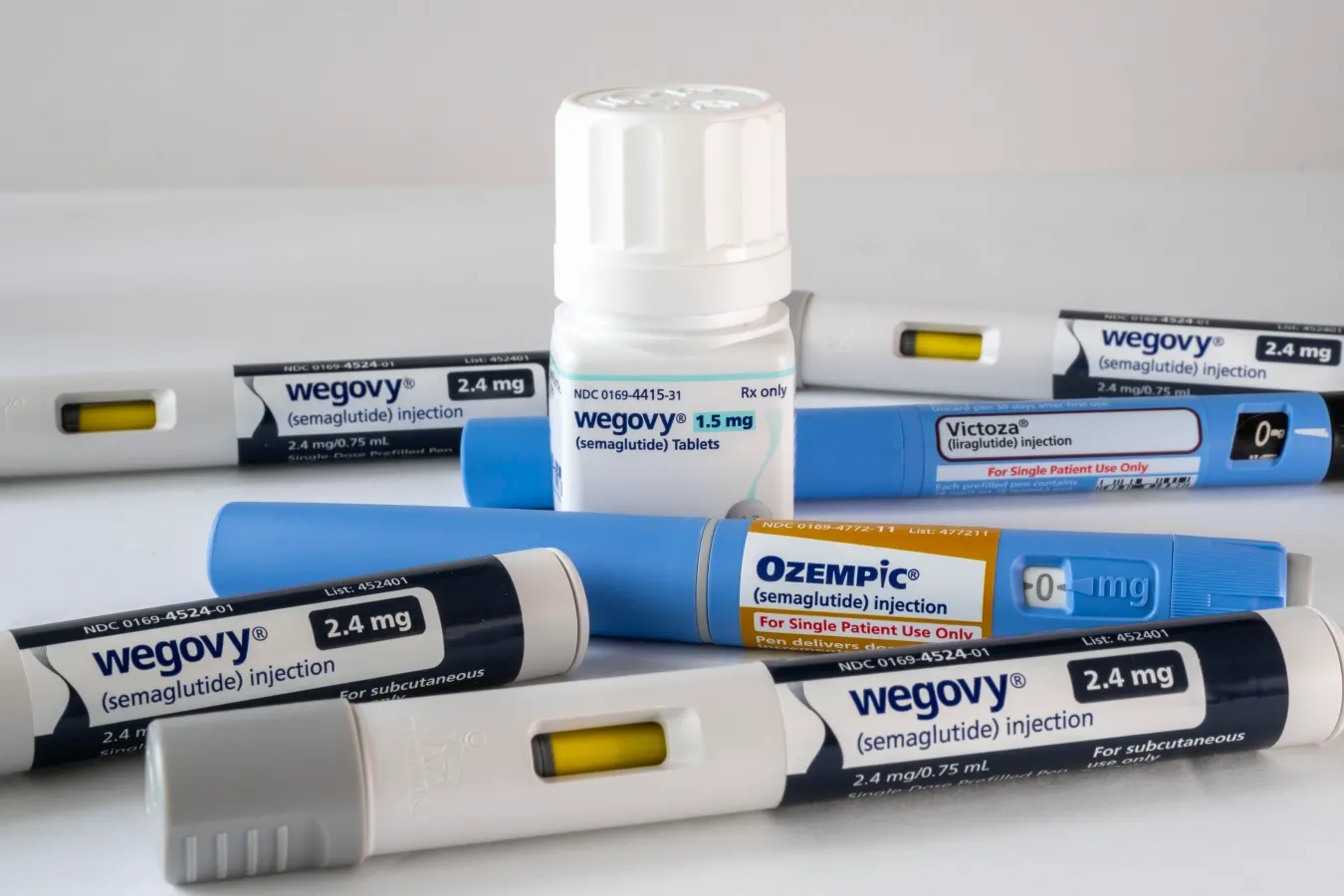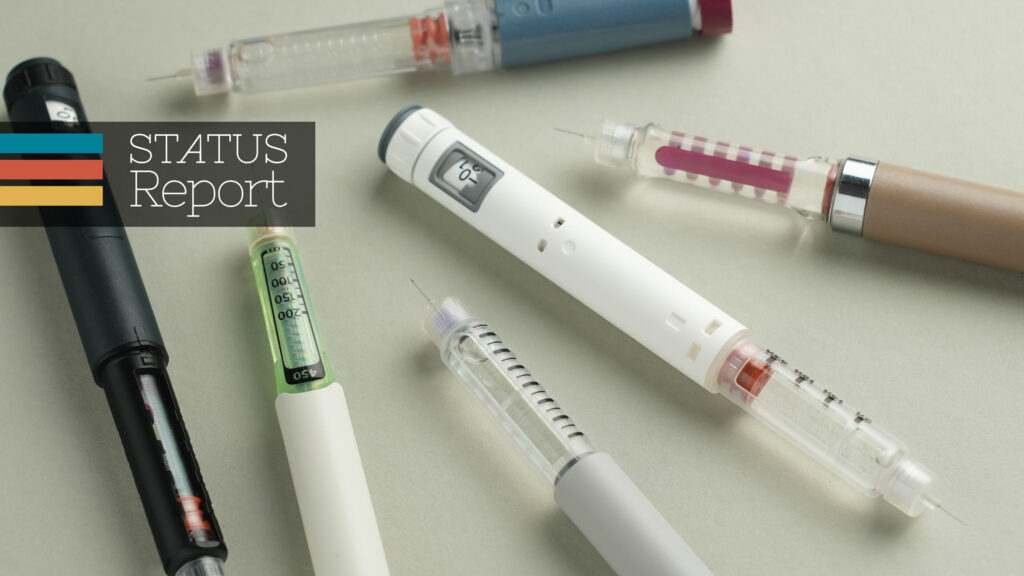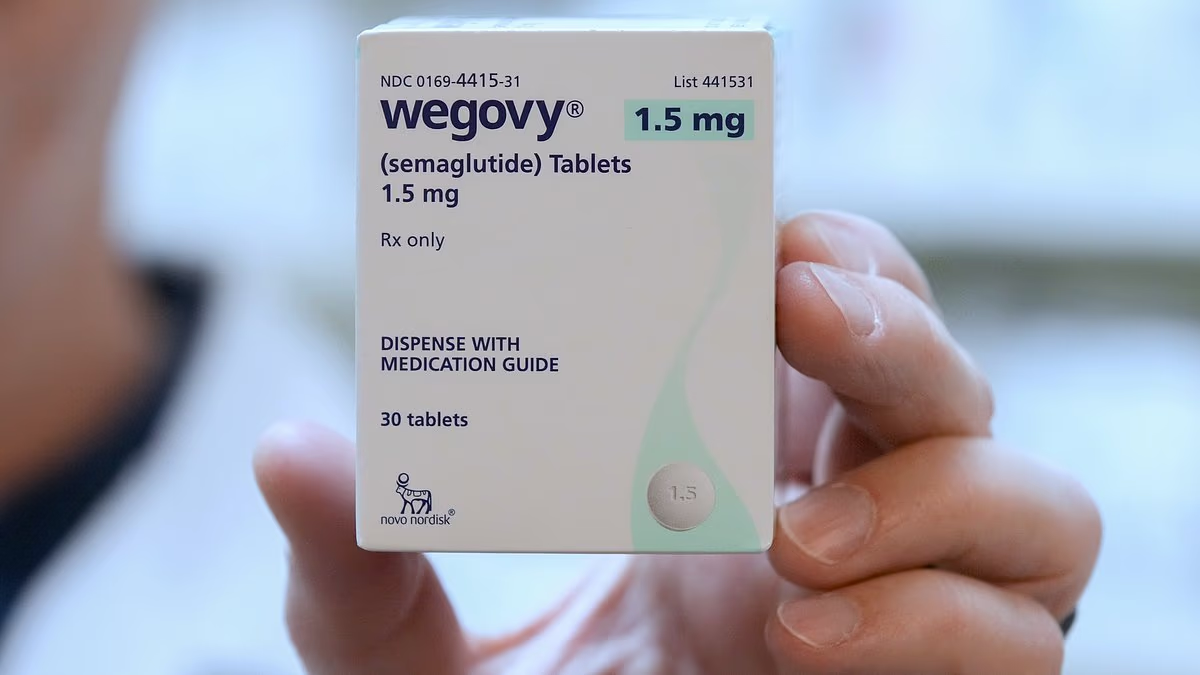
GLP-1 drugs have been around for more than two decades, having first been introduced in the US as a treatment for diabetes.But since the beginning of the 2020s, after patients noted how much the medications suppressed their appetites - they have been relicensed and rebranded for use as weight loss drugs, with obese and overweight people injecting them either daily or weekly.Wegovy, Ozempic, Zepbound and Mounjaro have gone from relative obscurity to household names, with at least 1.6million Britons using the jabs today. And another shift is coming. Last week it was confirmed that the Wegovy Pill - an oral, once-daily version of the injectable Wegovy pen - has been approved for use in the UK, and a wave of potentially groundbreaking new drugs are also on the horizon. With more than 3million adults said to be considering taking the medications - and evidence suggesting they could even help tackle serious conditions ranging from cancer to kidney disease - experts say Britain's health could look vastly different in the years ahead.Abdal Alvi, chief clinical officer at Simple Online Healthcare, says we 'are at a genuinely exciting moment in obesity medicine'.He added: 'A more accessible and diverse treatment landscape, one that meets more people where they are, could be genuinely transformative for the UK's health future with very real benefits for individuals' health, and at a larger, societal scale.'So, what do we know about the next generation of GLP-1 drugs - and when could they be coming to the UK? The Wegovy Pill - an oral, once-daily version of the injectable Wegovy pen - was approved for use in the UK on ThursdayThe Wegovy Pill: Coming imminentlyThe biggest GLP-1 development last week was the approval of the Wegovy Pill for use in Britain - a move first revealed by this newspaper the week before. While details are still developing, so far we know that the drug could cost as little as £79 a month for the lowest 1.5mg dose, with UK patients able to get their hands on it from early July.Do you want to lose a stone in six weeks?Hi, I'm Emma Bardwell, a nutritionist with more than 15 years' experience helping people improve their health and lose weight.I've been there. I was overweight, unhappy with my skin and stuck in a rut. Then I changed the way I eat. You can now do the same with my tried-and-tested healthy eating plan. And for DailyMail+ subscribers, it's completely free. Click here to sign up and start your journey It has not yet been approved for NHS use, meaning that for now it will only be prescribed privately to patients with a body mass index (BMI) of more than 30, or those with a BMI of between 27 and 30 who also have a 'weight-related' medical condition.Its approval by the Medicines and Healthcare products Regulatory Agency (MHRA) follows it being greenlit in the US and the United Arab Emirates. The UK is the first European nation to approve it.Like the once-weekly Wegovy injection, the pill contains the same active ingredient, semaglutide. It works by reducing the body's appetite by mimicking a hormone in the gut which is released after eating. In turn, semaglutide reduces hunger and makes patients feel fuller for longer - which is why patients tend to have reduced appetites, consume fewer calories, and go on to lose weight.Trial results show that participants taking the pill lost around 17 per cent of their body weight, meaning it is slightly less effective than the jabs, which tend to trigger up to a 20.7 per cent reduction for the highest dose.The starting dose for the pill is 1.5mg, rising to 4mg, 9mg and the maximum of 25mg. Patients are required to remain on each dose for at least one month before increasing.Those already taking a 2.4mg injection of Wegovy, however, are allowed to switch directly to the 25mg form of the tablet.Unlike the weekly jab, the pill must be taken once a day on an empty stomach with a small amount of water. Following the approval of the Wegovy Pill, attention is already turning to orforglipron - a rival pill developed by Eli LillyOrforglipron: Expected this yearFollowing the approval of the Wegovy Pill, attention is already turning to orforglipron.The rival pill, developed by Eli Lilly, the manufacturer of Mounjaro, has delivered promising results in clinical trials and is seen as a challenger to the Wegovy Pill.In a study involving almost 1,700 people with type 2 diabetes across Argentina, China, Japan, Mexico and the US, patients taking orforglipron saw greater reductions in blood sugar levels and lost more weight than those given oral semaglutide.Participants were randomly assigned orforglipron at doses of 12mg or 36mg, or oral semaglutide at doses of 7mg or 14mg. They took their medication daily for a year.The results showed that both doses of orforglipron outperformed semaglutide when it came to lowering blood sugar levels. Patients taking the Eli Lilly drug also lost more weight.Type 2 diabetes patients are recommended to lose between 5-15 per cent body weight to help manage their condition, with a more than 10 per cent reduction having disease-modifying effects including potential remission.And up to 43 per cent of participants on orforglipron were able to drop at least 10 per cent body weight in the trial, while only 21 per cent of those on semaglutide dropped enough weight to slash their risk of heart complications.Orforglipron can also be taken with food, making it potentially more convenient than semaglutide, which needs to be taken on an empty stomach.The drug was approved in the US in April, and a decision is set to be made for its use in Britain later this year.Retatrutide: Promising but still a way offAlongside the approval of the Wegovy Pill, retatrutide also made headlines this week with a hugely impressive results in a trial.Like existing weight-loss drugs, retatrutide targets the GLP-1 hormone. But unlike its rivals, it also targets another two - GIP and glucagon - earning it the nickname of a 'GLP-3'.Phase three trial results released this week showed that the drug helped people with type 2 diabetes lose an average of 15.3 per cent of their body weight - around 33lbs - while also lowering blood sugar levels down to near-normal ranges. Nearly 90 percent of participants achieved good blood sugar control and almost three-quarters of those with pre-diabetes reversed the condition entirely.While retatrutide's weight-loss affects in diabetes patients is impressive, the drug's full potential appears to be even higher.A phase two obesity trial found that people without diabetes lost an average of 24.2 per cent of their body weight - about 52 pounds - on the 12 mg dose, significantly higher than the diabetes trial. While Ozempic also targets GLP-1 and GIP, the addition of targeting glucagon is what makes retatrutide unique. While GLP-1 and GIP primarily suppress appetite and slow digestion, glucagon may also increase energy expenditure and promote fat burning, potentially leading to greater weight loss than current options.Retatrutide is still some way from approval, however, as it remains in the trial phase. The drug has not yet been authorised anywhere in the world, although applications to regulators are expected once the final studies are complete.Mazdutide: China's potential answerWhenever there is pioneering in the world of medicine, China is never far behind. Last week, researchers in Beijing unveiled eye-catching results for mazdutide, a next-weight-loss injection that, like Ozempic, targets two receptors. Mazdutide acts on the GLP-1 to suppress appetite, but it also targets glucagon, which experts believe may increase the body's energy expenditure and encourage it to burn more fat. In the phase three trial, involving 461 Chinese adults with obesity - and a small number of patients with type 2 diabetes - participants taking a 9mg weekly injection of the drug lost an average of 16.7 per cent of their body weight after 60 weeks. Almost seven in 10 patients lost at least 10 per cent of their body weight, while more than four in 10 shed over 20 per cent. In those only with obesity, patients lost an average of 9.6 per cent of their body weight, with almost half losing more than 20 per cent.However, perhaps even more intriguing were the wider health benefits.Not only did the drugs deliver impressive weight loss in the trial, participants also saw improvements to blood sugar, cholesterol and waist circumference. The drug even tackled high blood pressure effectively.Mazdutide has already been approved in China, but it has yet to receive regulatory approval in Britain, the US or Europe, with submissions expected in the future, after further studies have been completed.
The obesity medications that could soon be coming to the UK
Since the beginning of this decade, GLP-1 medications - which have been prescribed in Britain primarily as injections - have taken over as blockbuster drugs for weight loss.
1,432 words~7 min read