Acclaimed television director James Burrows leaves behind an unmatched legacy. With his death, the world has lost one of the architects of the modern-day sitcom. Burrows’ career was exceptional. He directed more than 1,000 television episodes including those of Cheers, Frasier, Will & Grace, The Big Bang Theory and perhaps the most memorable one across generations: Friends.
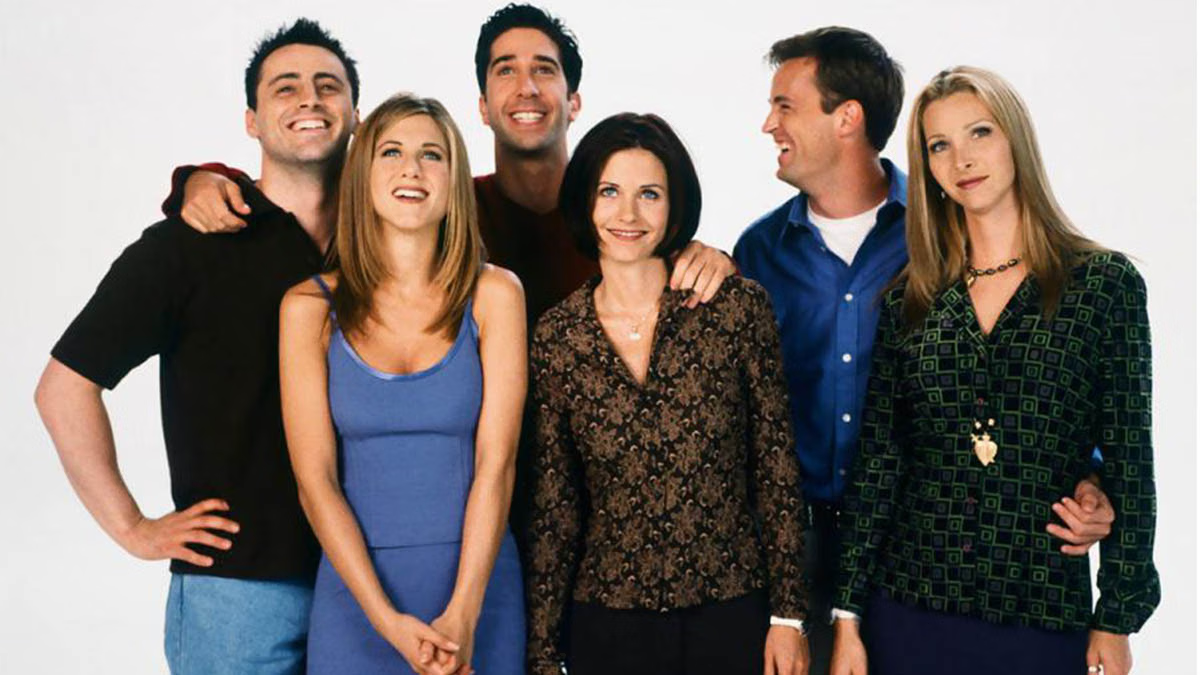
He directed about 15 episodes of the show, including the pilot that introduced us to the six friends. As they were figuring out and often failing at adulthood, we fell in love with them. It is fitting that as tributes pour in for Burrows, many are revisiting what made Friends endure long after the last episode aired in 2004.The answer is not nostalgia alone. Created by David Crane and Marta Kauffman, Friends was never really about coffee shops, catchy one-liners or even the love stories. At its core, it was an homage to adulthood: Messy, uncertain, and often ridiculous.
From the very first episode, you understand that these characters are not role models, they are archetypes. There is Rachel Greene, who walks away from the life that was planned for her and discovers that independence is far more complicated than she imagined. Ross Geller, who is highly educated yet emotionally chaotic. Monica Geller, often seen as the emotional anchor of the group, is ambitious but insecure. Chandler Bing hides behind humour or as he likes to say “I make jokes when I am uncomfortable”. Joey Tribbiani dreams big, while struggling to make ends meet. Phoebe Buffay survives through resilience and eccentricity.They come from different worlds: Hospitality, academia, corporate offices, creative industries, minimum-wage jobs and everything in between. What unites them is that life has not worked out according to plan. And that is why audiences, like myself, connected with them.