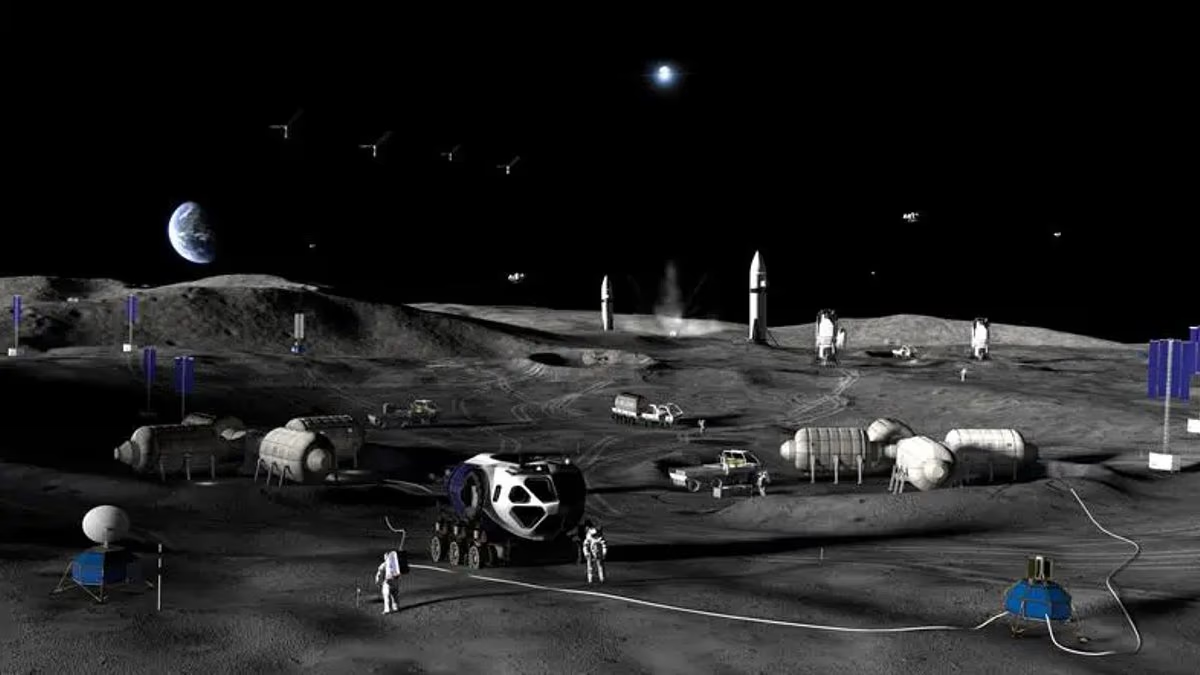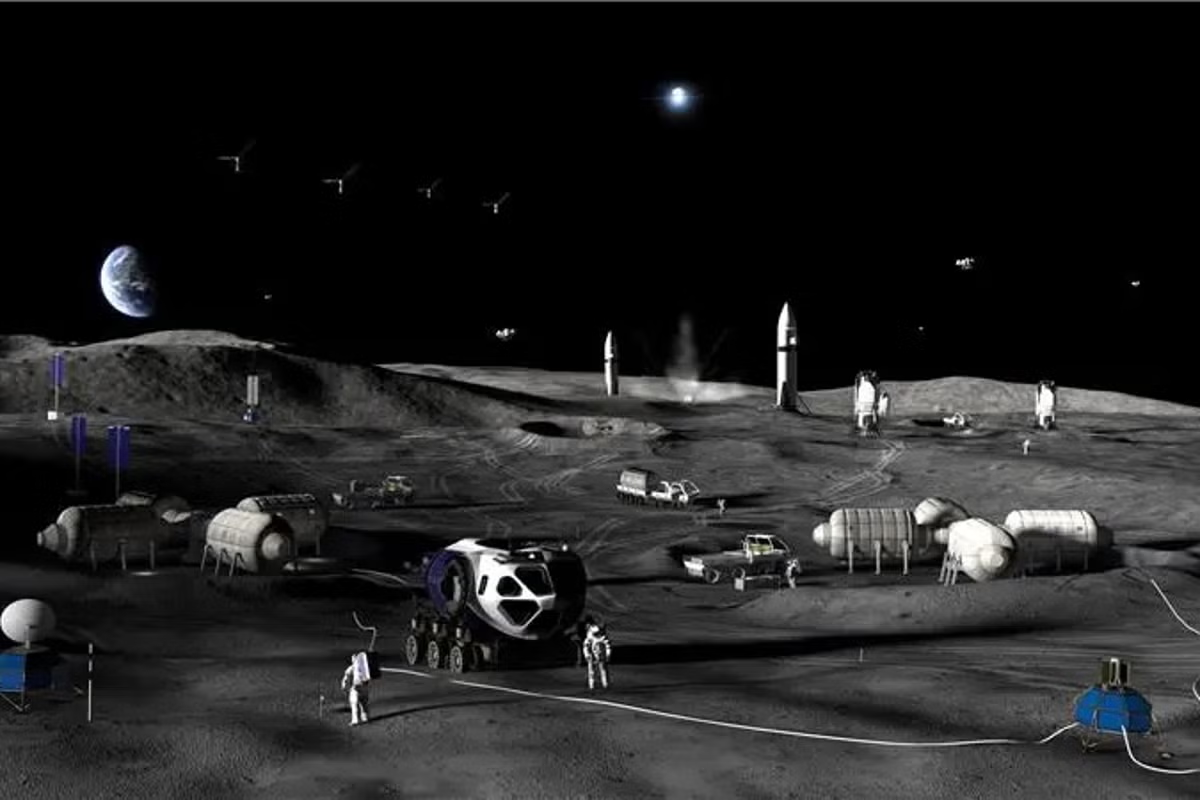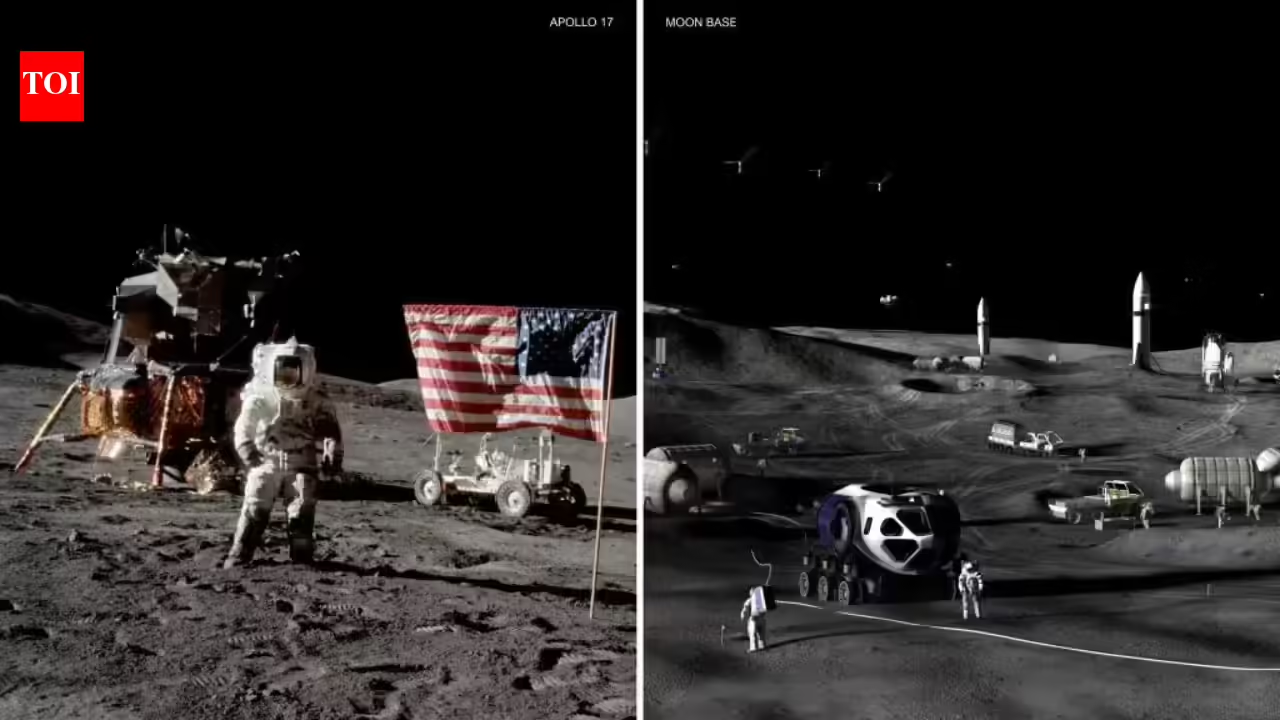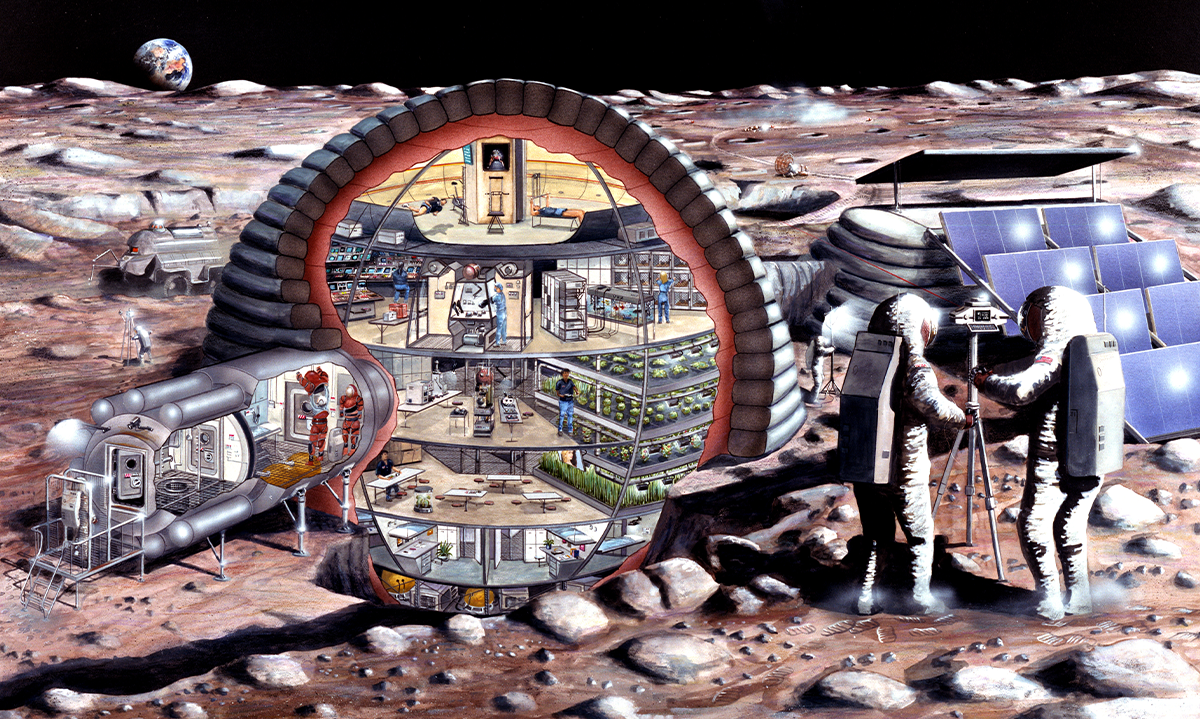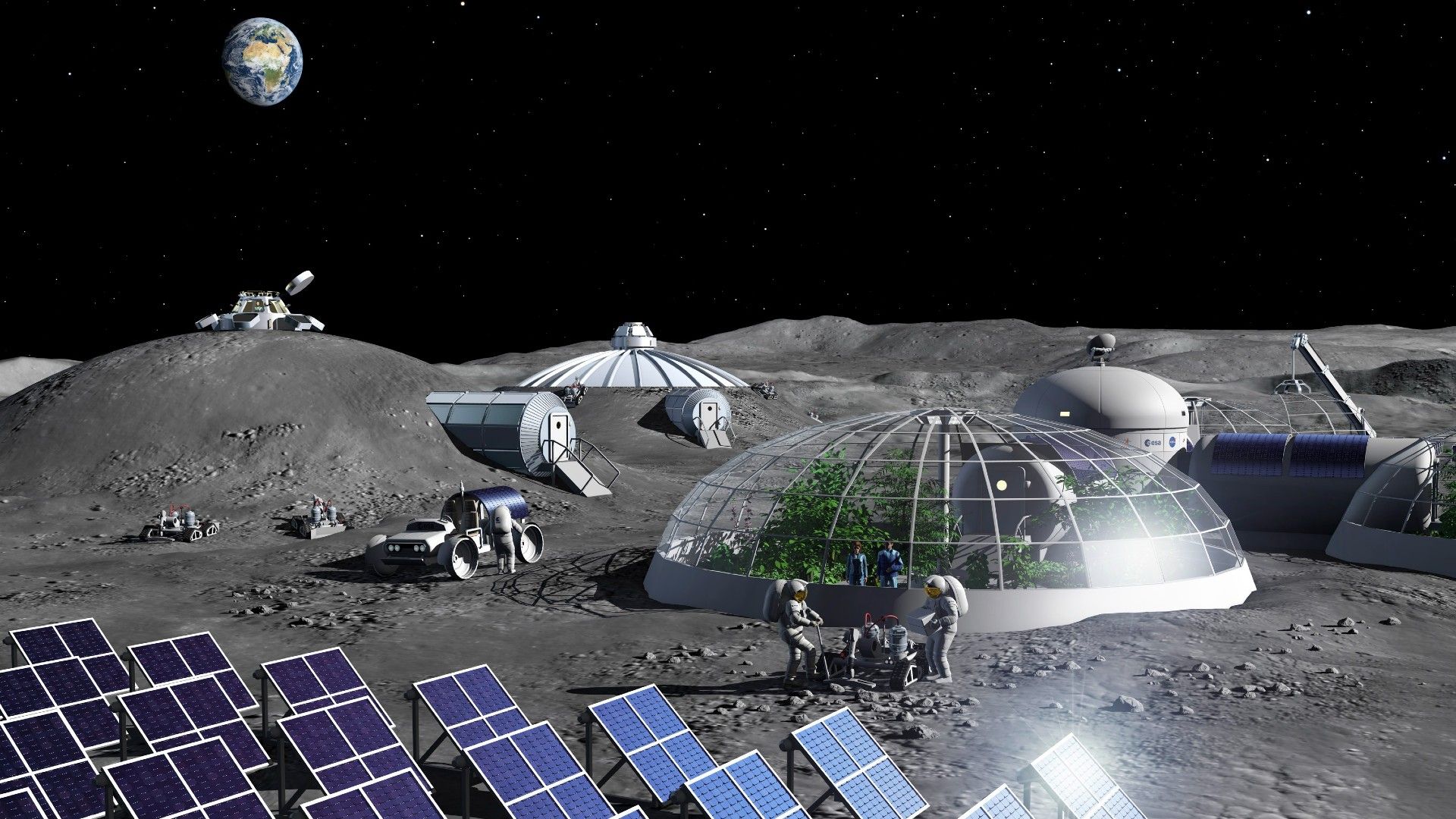
A notional illustration of a moon base.
(Image credit: NASA)
GOLDEN, Colorado – Here on Earth, centuries of accumulated engineering knowhow, hard-learned lessons, and societal evolution have shaped a robust framework of building standards that govern how we build and maintain buildings today.But now, as humanity prepares to put in place a "sustained presence" on the moon, how do we guarantee the safety and integrity of structures built in an environment for which no such tradition exists?At the 26th Space Resources Roundtable held June 2-5 on the campus of the Colorado School of Mines, one expert says what's needed is a lunar building code, the development of specific design criteria for the moon.What's shaking? Both NASA and China's space agency are planning to build habitats, landing pads, equipment shelters, and tall towers on the moon. But all that construction could be off to a shaky start, suggests Nerma Caluk, an engineer and lunar specialist for Skidmore, Owings & Merrill, an architecture and structural engineering firm in San Francisco, California.Caluk said there's a need to leverage terrestrial building experiences."On Earth, structural systems rely on strong gravitational acceleration to resist seismic lateral forces through both foundation friction and overturning stability. However, on the moon, the gravitational field strength is reduced to just one-sixth of Earth's surface gravity," Caluk told Space.com.Because seismic inertial forces are governed purely by a structure's mass rather than its weight, the lateral demand on a structure remains fully active while its gravitational restoring capacity is substantially diminished, Caluk added."Low-profile surface structures risk translational sliding across poorly characterized regolith interfaces, while taller vertical structures face significant overturning vulnerability, as the moon provides only a fraction of the gravitational restoring moment available in a terrestrial seismic environment," said Caluk.Here on Earth, structural engineers routinely design typical building systems to yield, crack, and sustain permanent inelastic deformation during a design-level seismic event.They intentionally leverage "inelastic energy dissipation" as the primary mechanism for managing seismic demand, Caluk said. But this design philosophy is fundamentally incompatible with a crewed lunar environment, she said.Take for example a hatch distortion or pressure seal misalignment. They constitute a mission-critical failure, and any structural breach risks catastrophic depressurization, said Caluk.