Part I — Runtime Governance Engineering
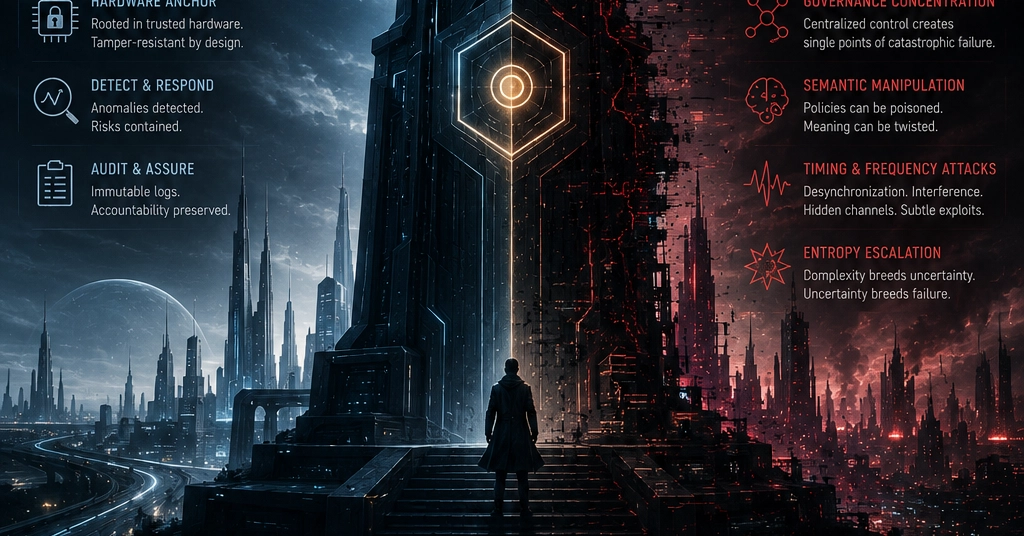
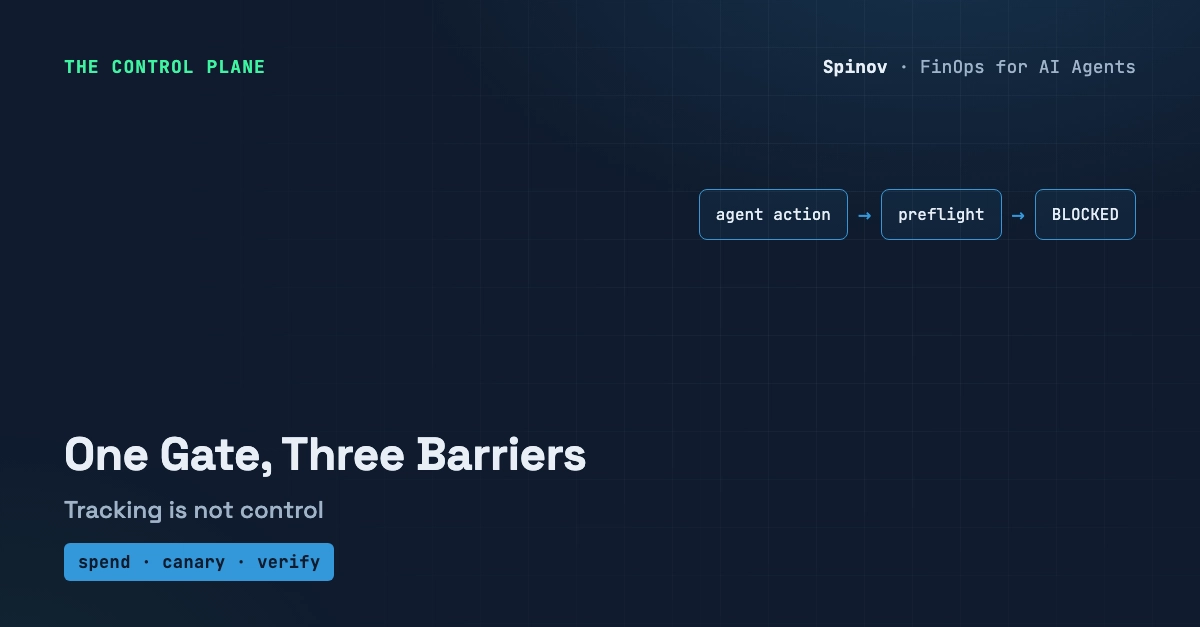
The runtime governance control plane begins with a non-negotiable premise: governance cannot operate as a post-hoc advisory function. Advisory governance depends on observability layers and probabilistic alerts triggered after state mutation has already occurred. This architecture accepts that unauthorized actions can execute before intervention. That latency is systemic risk. Governance evaluated after execution is telemetry. Telemetry is not enforcement. To mitigate systemic risk, governance must exist as a deterministic constraint evaluated strictly before any state mutation occurs.
When an execution framework treats governance as an external observer rather than a foundational constraint, it inevitably permits untrusted compute nodes to initiate actions that must subsequently be mitigated. True governance demands deterministic enforcement at the execution boundary, ensuring that an agent physically cannot execute a disallowed command. By shifting the evaluation entirely to the pre-execution phase, the system guarantees that no network packet leaves the agent enclave and no database transaction is initialized without explicit cryptographic authorization. The intelligence layer determines its intended action, but the physics of the control plane dictate what is physically possible to execute.