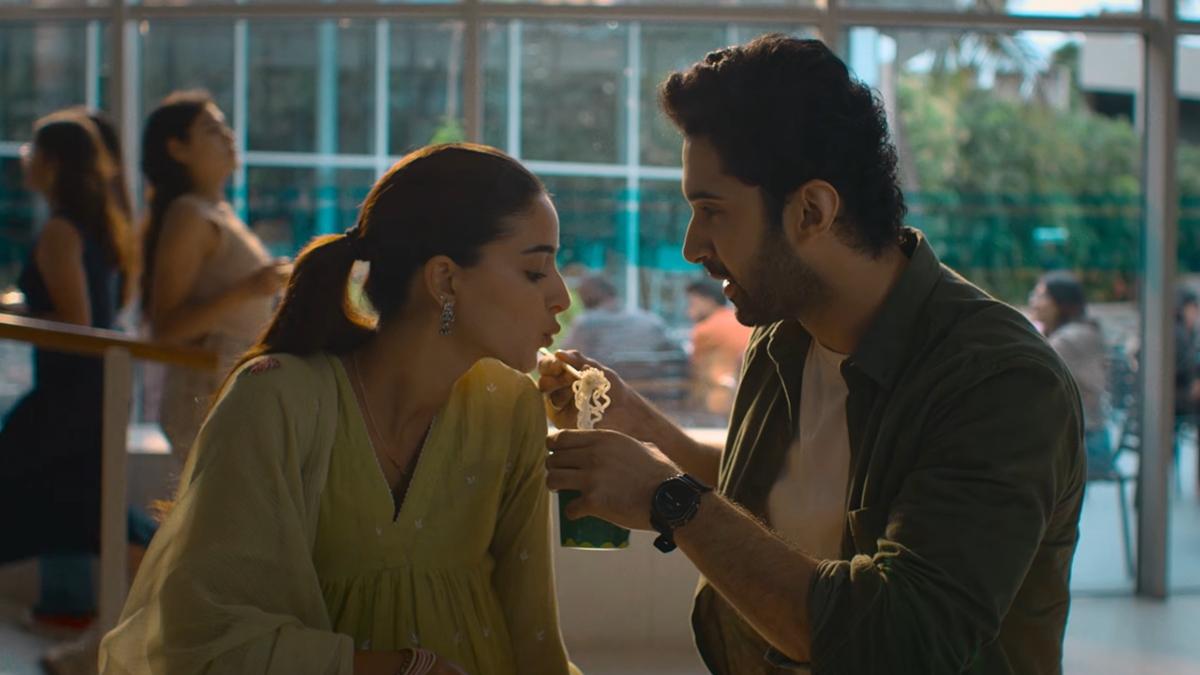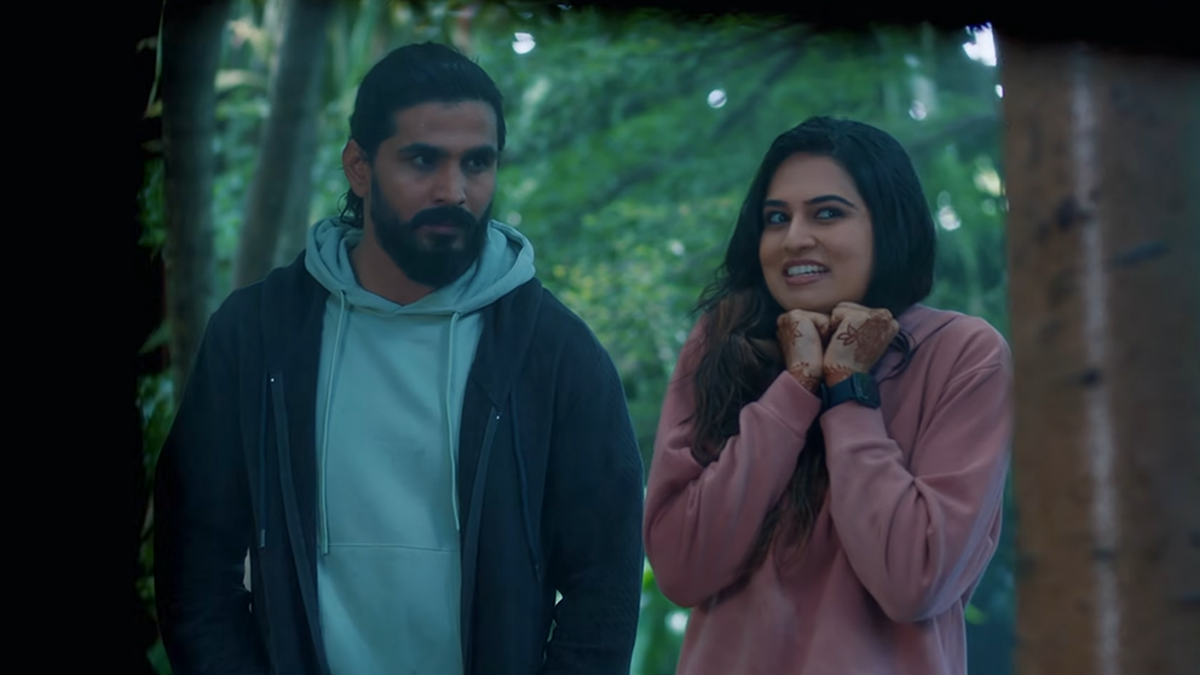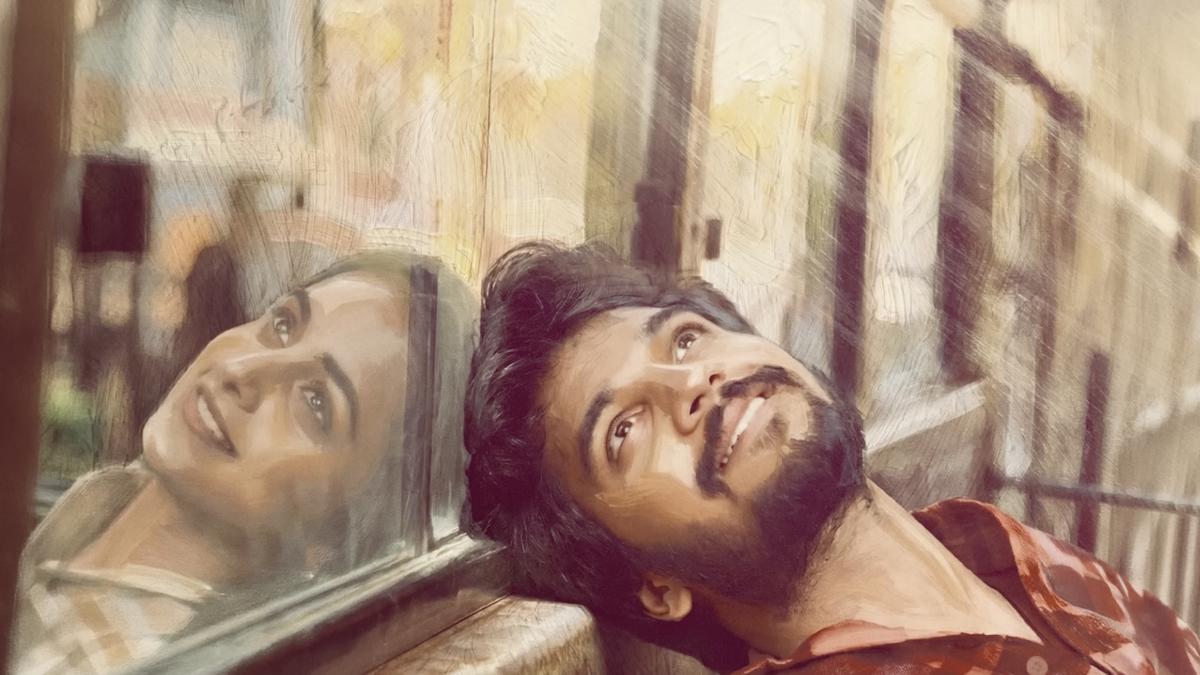
It has been a long time since Telugu cinema normalised stalking as a form of love, where women inevitably respond in the affirmative to a man’s tireless pursuits. From Idiot to Arya, and Sarrainodu to Peddi, every film-watching generation has experienced this to some degree. It is disheartening that not much has changed with emerging voices in the industry too, the latest addition being Deewana.However, there is a momentary relief when Munna (Harshith Reddy), a wastrel, relentlessly woos Amulya (Smeha Manimegalai), a government employee, and she puts him in his place. When Munna gives a handful to those troubling Amulya at work, she asks him, “What makes you think you are different from them? All of you make me equally uncomfortable.”This phase does not last long, as Amulya’s stance softens and their romance blossoms. Deewana deals with contrasting themes in its two halves. It begins as a problematic and banal love story set in a lower-middle-class neighbourhood; the love story gradually serves as a catalyst that helps Munna find purpose in life.Munna does not pretend. Before finding love, he says his life revolves around ‘cigarette, mandu, maarpeet’ (smoking, alcohol and street fights). Despite his parents’ repeated efforts to instill some sense into him, all he does is sit by a local cafe and while away time with his childhood buddies Vikram and Sai. Even after ‘love at first sight,’ his erratic behaviour invites trouble.Deewana (Telugu)Director: Sreekanth SangishettyCast: Harshith Reddy, Smeha ManimegalaiRuntime: 143 minutesStory: A wastrel’s life takes a new turn when his love interest puts forth a condition to take their relationship forward.While a disinterested Amulya ignores Munna’s advances, her best friend plants the idea of love in her mind, as if she were speaking on behalf of the man. Male supremacy is on full display when Munna tells Amulya, ‘I am your protector, and I am not useless.’ Director Sreekanth Sangishetty smartly diverts the audience attention from this mess with a reveal timed for the intermission.Thankfully, the film then transitions into an effective coming-of-age story where love serves as an emotional undercurrent. When it looks beyond romance, Deewana works well as a story that captures the daily realities of community living. Men and women stand by one another when the chips are down, finding happiness in each other’s success and having hard conversations whenever necessary.Meanwhile, the way Munna chooses his next goal-post appears impulsive. Everything falls into place so quickly. Though one may attribute it to the character’s flair for the career choice, or as a sweet comeback for the time he spends at a police station, the struggle is minimal and the roadblocks are crossed with ease. Hence, the impact gets diluted.One of my favourite stretches is the time Munna takes to understand his parents better; he moves past his youthful rebellion and becomes a responsible adult. The conversation between Munna, Amulya and their friends towards the end also brims with warmth. Though the film indicates that it wants to avoid making its characters as objects of pity, it falls into that very trap.The narrative gives ample time for Munna to evolve from a manchild to an adult, but Amulya and their other friends do not enjoy such liberties. The film focuses well on male friendships but fails to do so in showcasing female bonhomie where the focus is beyond the man.The film is vastly better in the second half, driven by some purpose and finding a balance between emotional heft and lighthearted storytelling. The song ‘Uruku Be’, shot like an indie video, is inventive, driving the tale forward. In the initial hour, the catchy lyrics and visualisation of the ‘Tella Pori’ number, which literally explores how Munna is head over heels in love, also stands out. Eswar Chand’s songs work much better than the background score that feels basic at times. Cinematographer Vamsi Patchipulusu’s frames move past the narrow streets of Munna’s colourful neighbourhood swiftly, mirroring its realities in a raw form.Harshith Reddy and his on-screen friends Narsing Wadekar and Tony are among the film’s key strengths. Their easy camaraderie adds mischief to the lighter moments and depth to the emotional sequences. Beyond his tough exterior, Harsh portrays his character with a warm, boyish innocence and makes his presence felt in the climax.Smeha Manimegalai’s role has potential, but it is disappointing how the writing looks at her in a one-dimensional light, not caring to establish her identity beyond her love for the protagonist. Jhansi, Naresh Vijaya Krishna and Raghu Karumanchi’s presence brings strength to the lineup.Deewana works when it functions as a story of a young man’s self-discovery rather than as an unconventional love story. The inexperience in the writing shows in the romance. Had this portion had been handled differently, it would have given the audience a better chance to appreciate the film.
‘Deewana’ movie review: Harshith Reddy shines in this part-fun, part-problematic romance
‘Deewana’ Telugu movie review: Harshith Reddy shines in this part-fun, part-problematic romance
797 words~4 min read