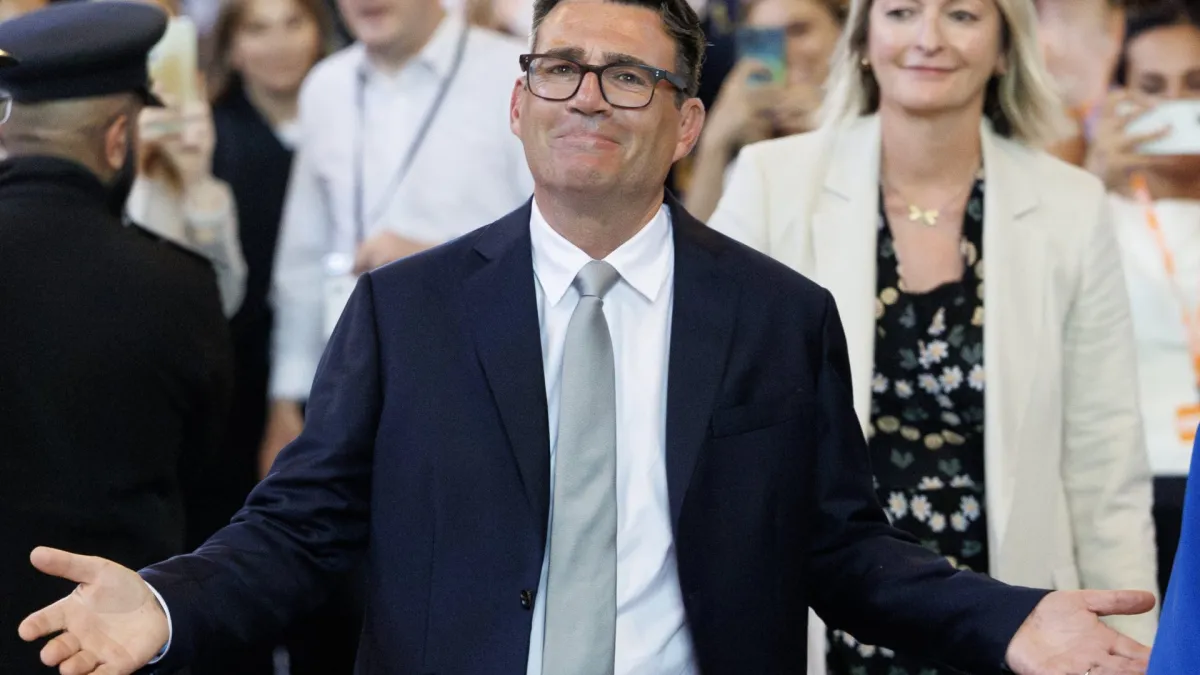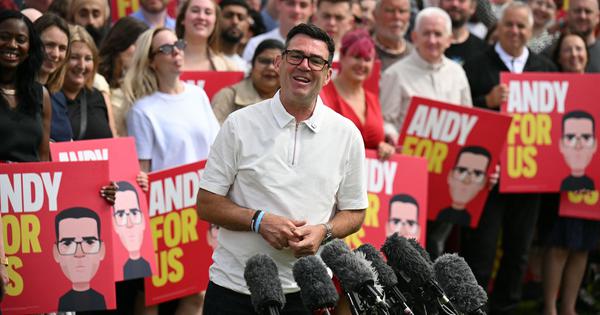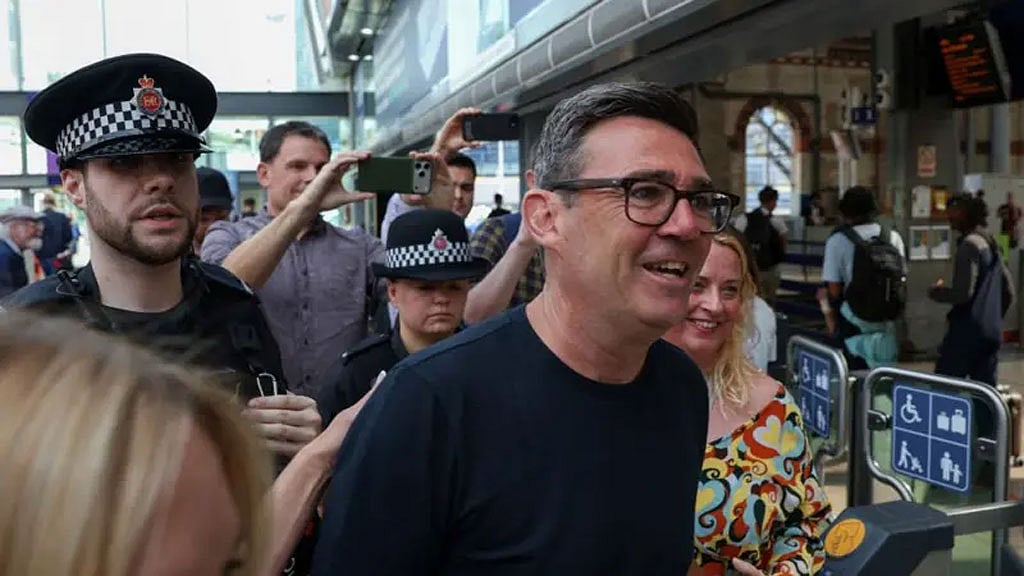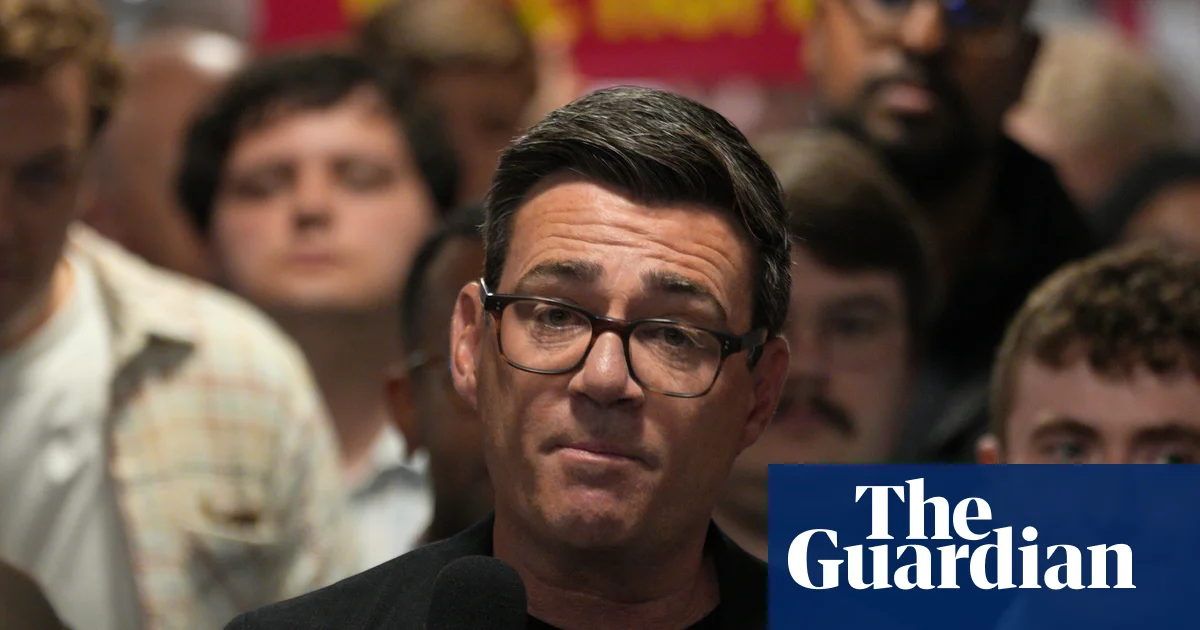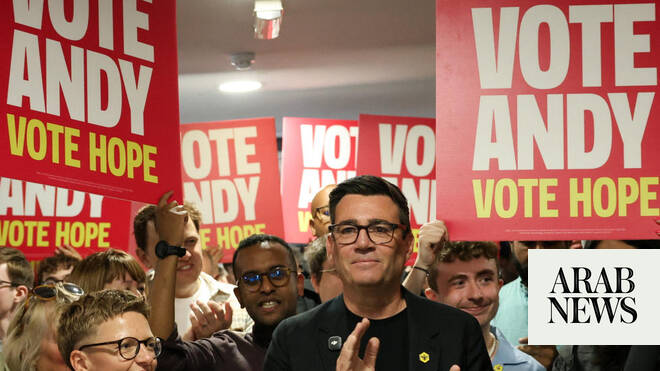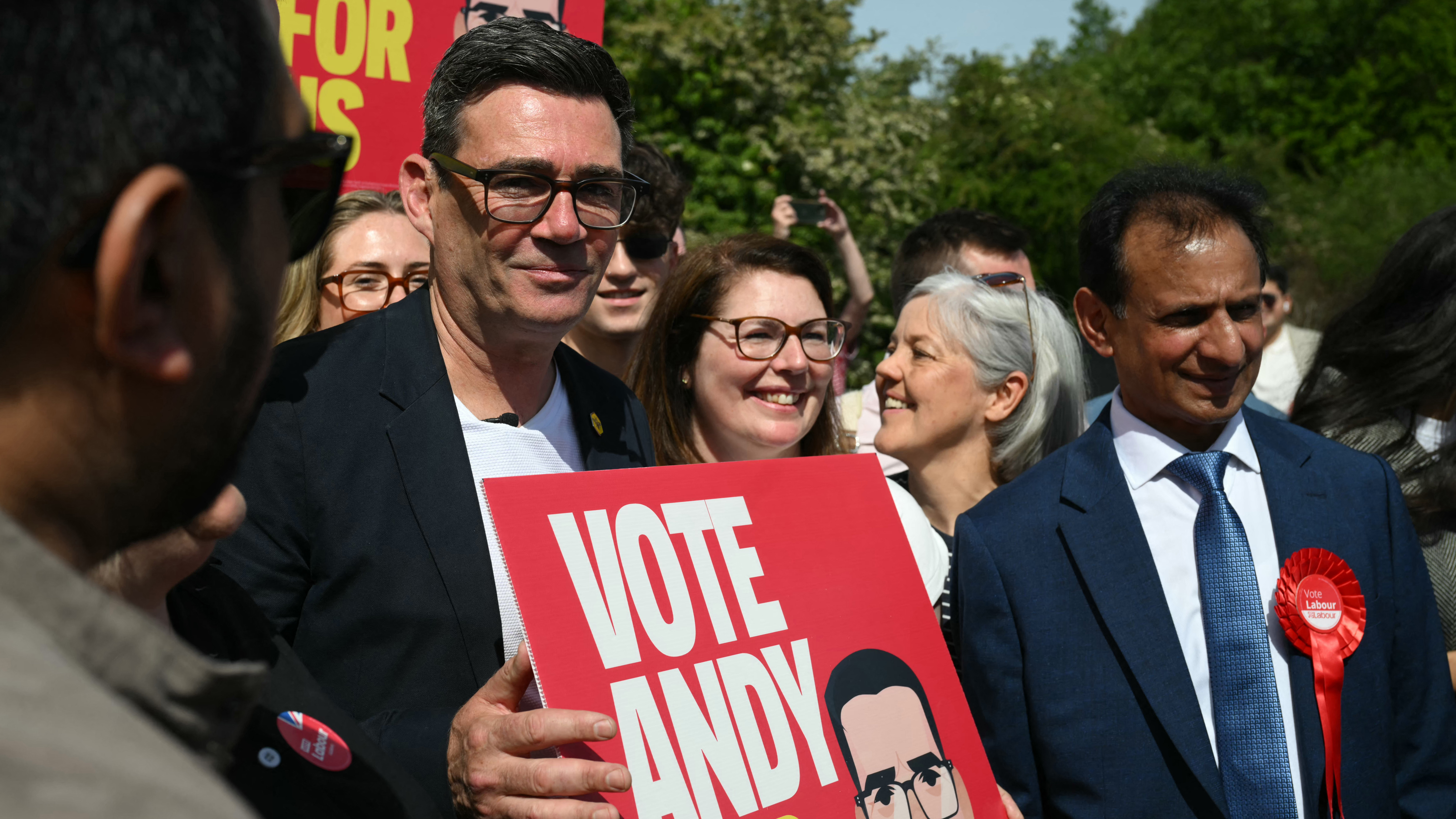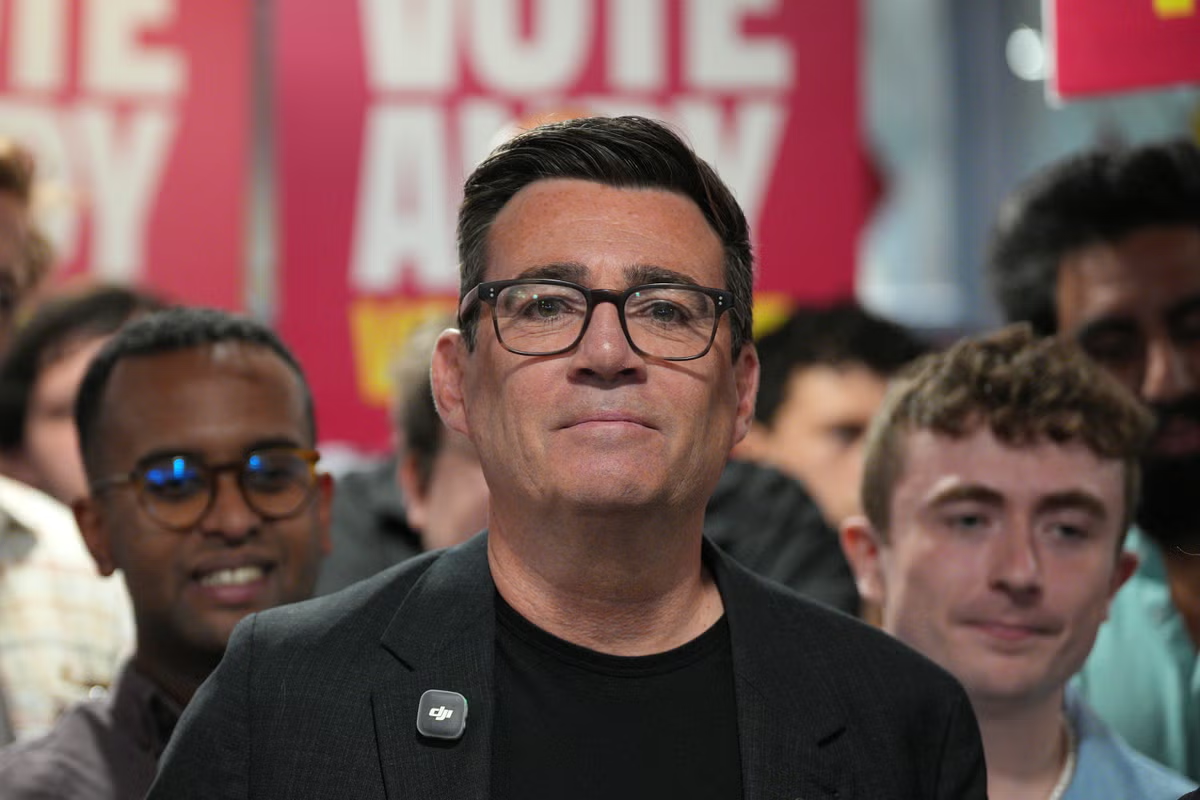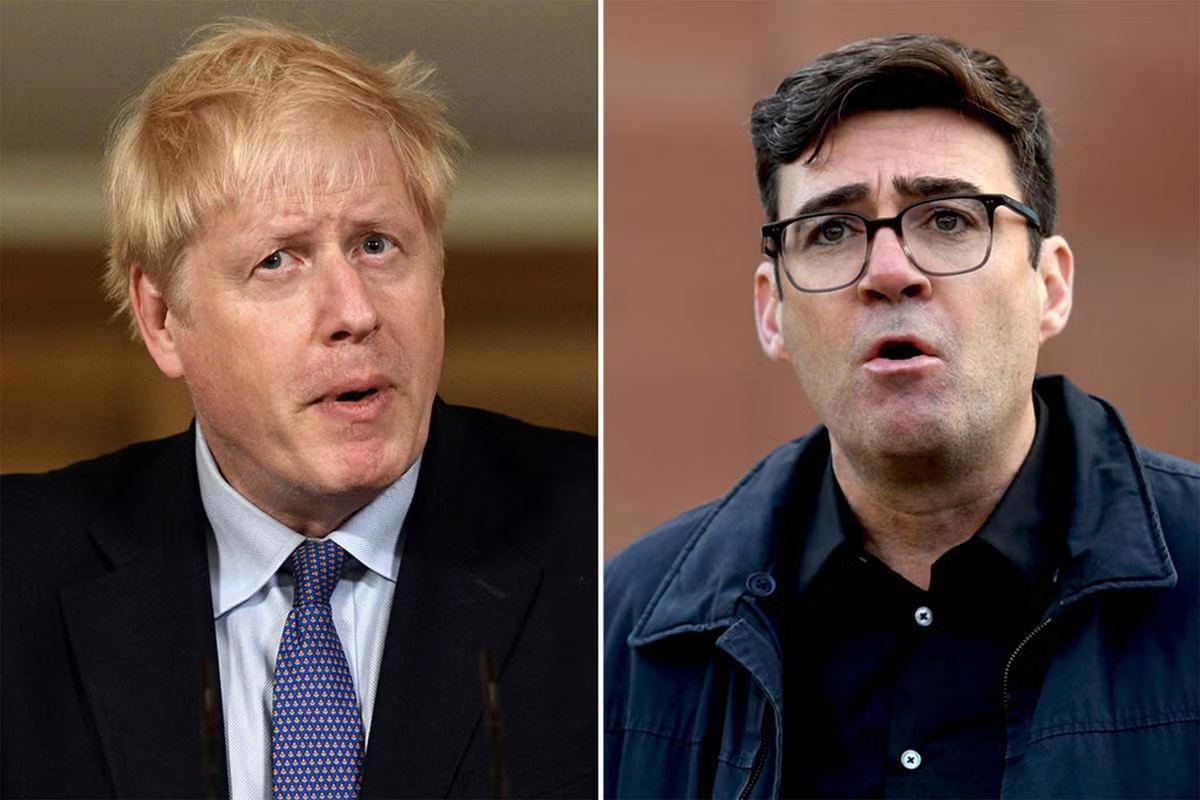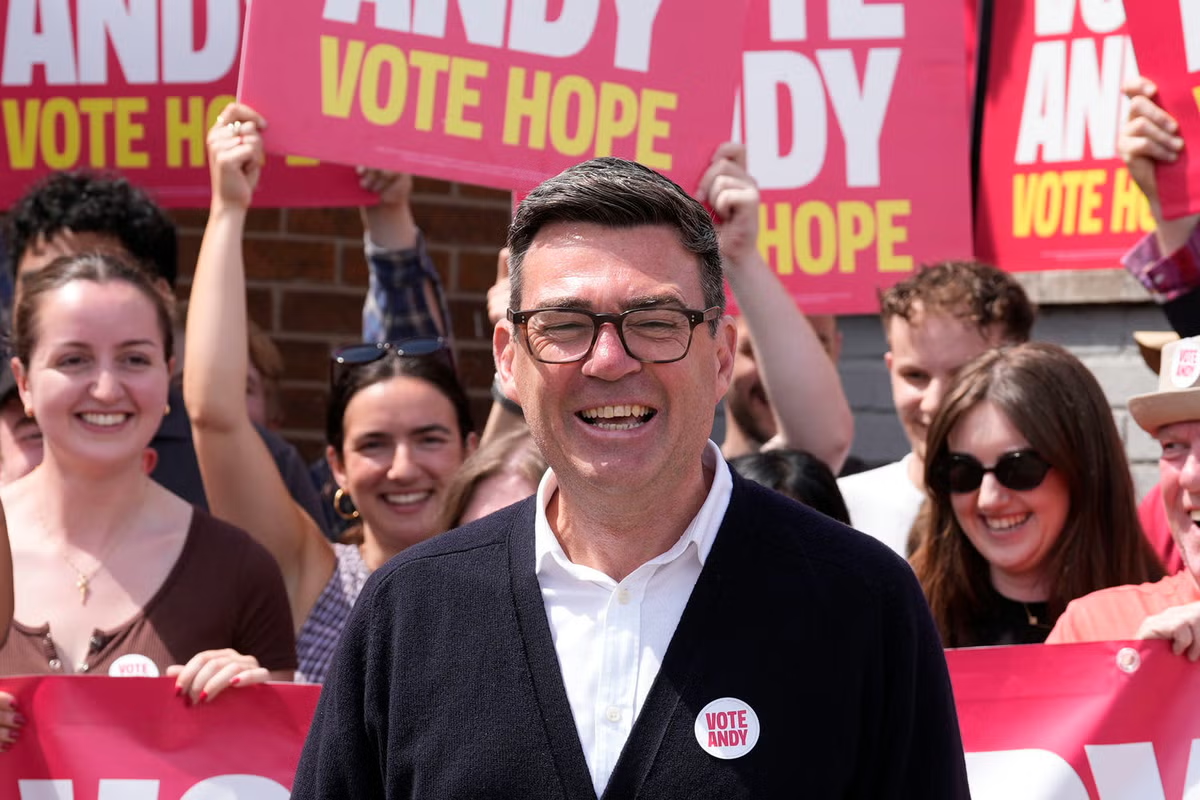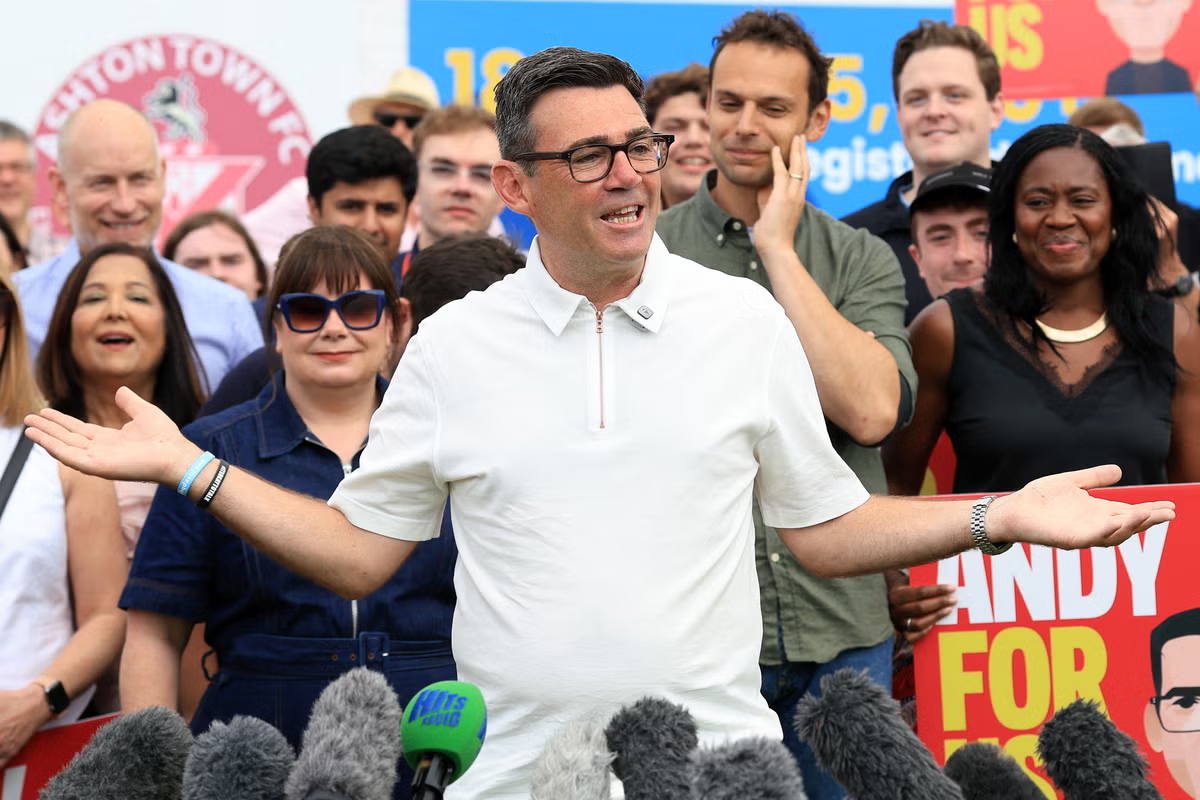
Andy Burnham is seizing his second chance to change history. That’s just as well, because the first time, he bottled it.That was back in 2009 when Burnham was a member of Gordon Brown’s cabinet. Brown was struggling as prime minister, much as Keir Starmer is struggling today. There was dissent in his cabinet, just as there is today. And in early June 2009, that dissent led to the resignation of a Blairite tribune. Then it was James Purnell playing the role most recently assumed by Wes Streeting in the Starmer era.Purnell and Burnham were close friends. They had both been special advisers in the Blair government, both parachuted into safe Labour seats in the northwest of England in their early thirties, both risen to cabinet before 40.2009: Gordon Brown applauds his health secretary, Andy Burnham, at the Labour conference (Getty)The Purnell resignation electrified Westminster. Had he been followed out of cabinet by Burnham, there was a decent chance that Brown would fall and be replaced by David Miliband.All eyes turned to Burnham. Would he gamble and try to bring down a failing leader? As it happened, Burnham chose to remain in office, and even got a promotion to health secretary.Some Labour figures of that vintage still wonder how history might have been different had Brown been removed in 2009 and David Miliband had stepped in. If Burnham had made another choice, could Labour have clung to power at the 2010 general election, preventing David Cameron, austerity and Brexit? It's a question for future historians to ponder.That anecdote from 2009 is a key part of the charge sheet against Andy Burnham, quietly drawn up by some of his old colleagues. To them, Burnham’s later reinvention of himself as the “King of the North”, champion of Manchesterism, enemy of Westminster consensus and “neoliberalism” all rings a bit hollow. They recall him as a pro-market Blairite who was entirely at home in the political village. The detractors describe Burnham as too quick to tell people things that they want to hear. This is why he has assembled a large and not always coherent collection of would-be ministers and advisersThe case against Andy Burnham also involves analysis of his time as mayor of Greater Manchester. For most of the time that Burnham has occupied the mayoralty, Labour has controlled all of the local authorities in the Greater Manchester area, meaning he has faced no effective political opposition. The media environment in Manchester is also very different to that in Westminster – the mayor is not subject to the same sort of scrutiny that senior parliamentary politicians are. The mayoralty is a relatively small job, overseeing a budget of less than £3bn, most of which is already consumed with fixed spending items such as policing. Then there’s the question of political character and instincts. The detractors describe Burnham as too quick to tell people things that they want to hear. This is why he has assembled a large and not always coherent collection of would-be ministers and advisers. The result is a large body of half-promised policies and a lot of people with dangerously high expectations of jobs in a Burnham administration. Some of them are going to be disappointed, but is Burnham a man willing to disappoint?Is he too sensitive to criticism? While many other Labour politicians have pulled back from social media and from X in particular, Burnham has remained a very active user. Over the last decade or so, while running a successful mayoralty, he’s also found quite a lot of time for arguing with people on X, responding to even minor criticisms from relatively obscure users. Man of the people: an old colleague painted a picture of a man eager to be liked (Reuters)“Andy’s a nice guy, but he wants to be liked a bit too much,” says one old colleague. “I think he’ll get the job [as PM] but it’ll make him miserable. He doesn’t know what it’s like to be hated and he won’t enjoy it.”This, then, is the case against Andy Burnham, the conventional wisdom among old Westminster hands about how he might struggle as prime minister.And yet. That analysis is incomplete. It fails to take account of something that cynical political thinking often struggles to account for: charisma. Whatever you think of Andy Burnham, he has inarguably demonstrated an ability to connect with people, to tap into their emotions and help them feel that he is on their side. Back when he was a cabinet minister, he grabbed hold of the issue of justice for Hillsborough families and campaigned on it effectively. Others had built the campaign, but he made himself its champion.And as mayor, it is entirely true that he has not originated or even necessarily driven many of the changes that have taken place in the area during his tenure. But that’s not really what mayors are for. Yes, the officials and the councils and the advisers did the detail and the planning, but he gave it a face and a voice and a vision, gave Manchester a feeling that someone was driving the project forward for Manchester and for its people.Now in Makerfield, he has proved that he has a winner’s ability to charm and excite.A comparison must be drawn with Boris Johnson. Johnson was also a high-profile mayor before becoming prime minister. He is, among other things, the only Tory ever to win the capital. In that job, he successfully made himself the leader, the voice, the face, the representative of the city. He gave London a sense of energy and buzz, much as Burnham has done for his patch.Such credit-taking showmanship is a core function of political leadership. It's complicated and messy, emotional and even irrational. But it matters. The best politicians aren't just administrative managers, CEOs of the public sector. They are leaders. They take people with them on an emotional and political journey. Burnham has undeniably built a buzz around himself – something Keir Starmer has failed to do (Getty)Keir Starmer has failed in this aspect of the premiership. He has been unable to form any emotional connection with the electorate, to give people a sense that he is on their side and pursuing an agenda in their interests. As a result, Labour has drifted, a party bereft of charismatic leadership, lacking that elusive magic spark of charm. And Britain, led by a man unable to conjure a sense of optimism, has languished, sinking further into gloom and anger.“Andy” – the very fact that some people refer to him by his first name is hugely important – could just be Labour’s best bet for rediscovering that spark of optimism. His election in Makerfield will surely make him PM in due course, because it confirms he has the star quality that all successful politicians need. Of course, charisma can only do so much. It cannot, as Johnson painfully demonstrated, compensate for fundamental failures of judgement or administration. But politics is, in the end, about persuasion, winning people to your side and your story. Burnham has spent the last decade since leaving Westminster telling people a story about himself that they find persuasive. He has just won a by-election that any other Labour candidate would have lost. He’s done it by beating Reform, a party that not so long ago looked unstoppable, in a place where all the numbers said it should win comfortably. It takes a lot to wipe the smile off Nigel Farage’s face these days, but the Makerfield result has definitely done it; maybe he’s not invincible after all. Andy Burnham has his flaws and limitations, which will all be on display when and if he’s installed in No 10. But he may still be what a party in despair needs to change its fate. And who knows? He might just make an unhappy country feel a little bit better about itself, too.
What sort of prime minister would Andy Burnham be? Just look at Boris Johnson
His resounding win in Makerfield surely makes a leadership bid inevitable. But, despite his undeniable charisma and a reinvention as a mayoral man of the people, James Kirkup says that Burnham’s actually back where he always belonged
TL;DRAI
Questo articolo non è rilevante per Warptech Tech News — è un pezzo di analisi politica britannica senza legami con tech, AI, business o economia digitale. Non rientra nel scope della testata. Se è un errore di invio, scartalo. Se invece lo desideri comunque riassunto per un altro uso, dimmelo e fornisco il testo seguendo il template.
1,314 words~6 min read