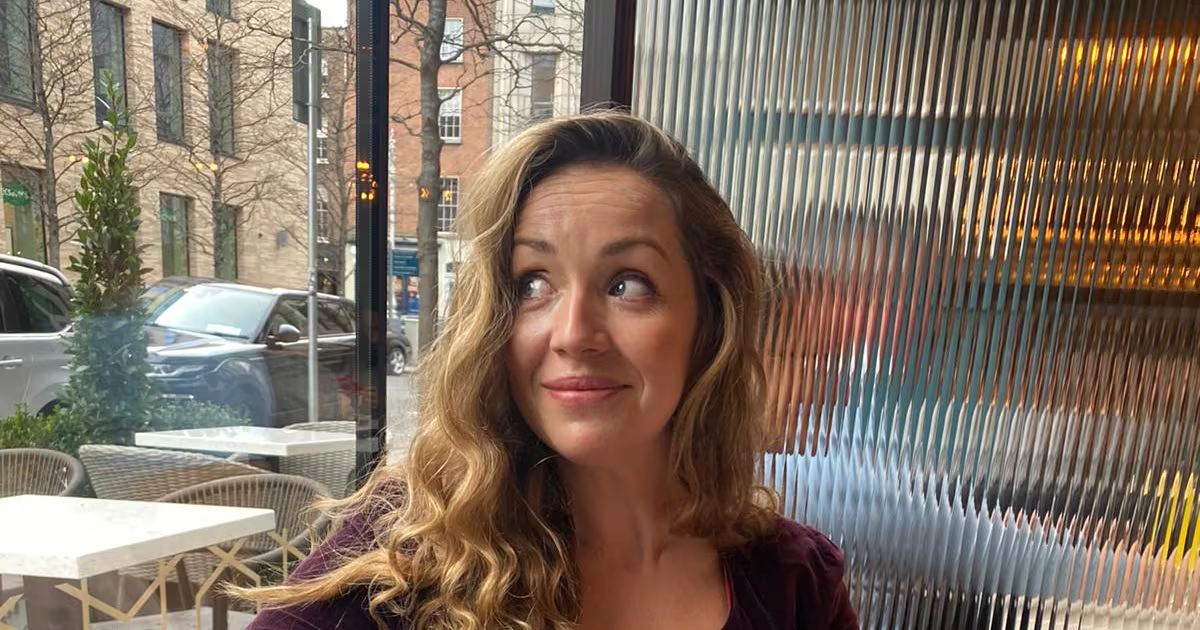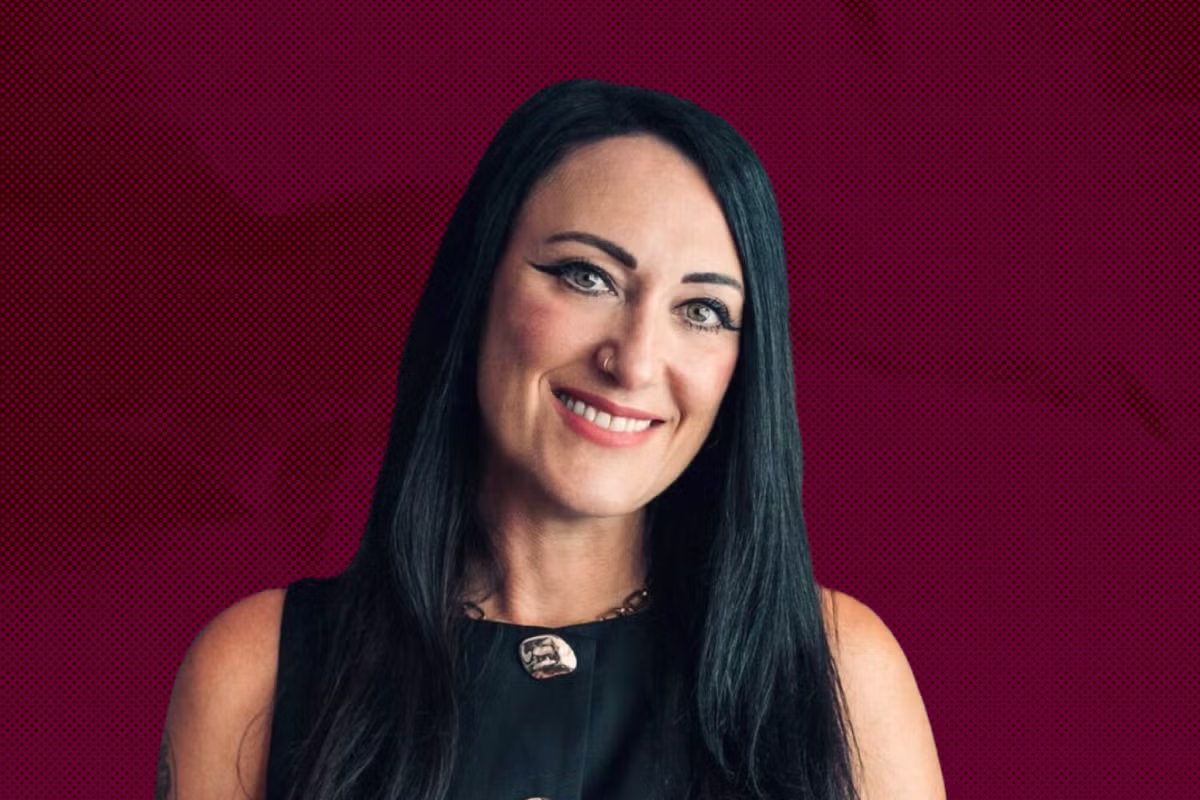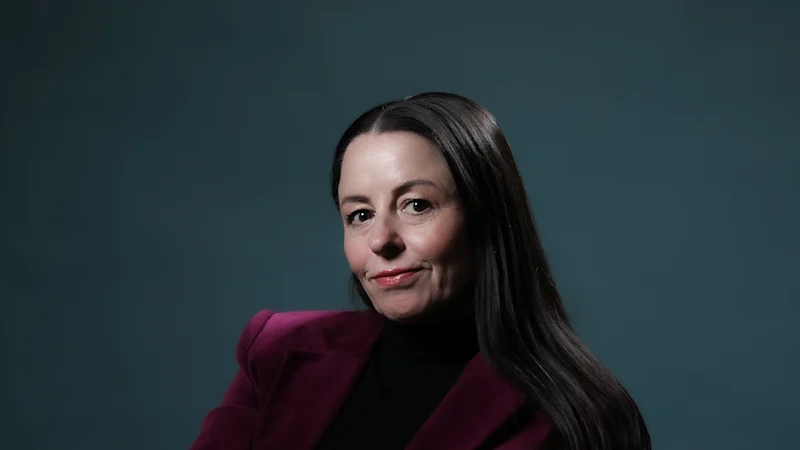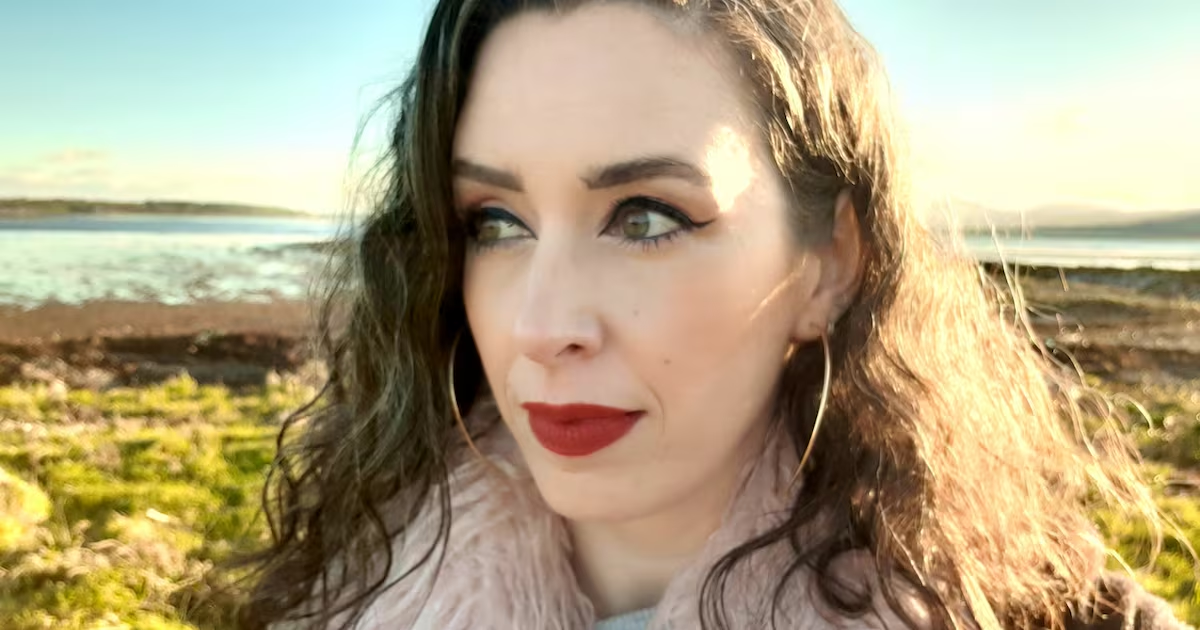
The Cork poet on her relationship with being agreeable, her acquaintance with anger, and fond childhood memoriesWriter Victoria Kennefick John O'ConnorSat Jun 20 2026 - 06:00 • 5 MIN READHow agreeable are you? I think I am agreeable on a case-by-case basis and have a general sense of agreeableness. I think very much of where [agreeableness] comes from and why. Especially women being brought up to be agreeable as a baseline hides a lot of authenticity and truth. What is your middle name and what do you think of it? Mary and Margaret. They’re there for a very particular reason. When my mother had me, she was in hospital in Cork and hadn’t named me yet. And this nun came in; there were nuns running the hospital at the time. [The nun] said that “you really have to name this child,” and gave her a book of saints and martyrs. [The book] just opened on Victoria. I had a few religious members in my family, two nuns and a priest, and they were horrified that I was going to be called Victoria – colonial connotations. Just in case, my mother added Mary and both my grandmothers were Margaret. It is a lovely alliterative centre of my spiky sandwich of Victoria Kennefick. It’s quite creamy in the middle. Where is your favourite place in Ireland?There are loads of chambers in my heart that have different parts of our beautiful country. But probably Ballinwilling Beach, very near Shanagarry [Co Cork]. It is a beautiful, long sandy beach. It feels like a local beach for local people. It was a very special place as a child going there and having sandy sandwiches and going swimming in the rain. I feel rejuvenated and at peace by the sea. Describe yourself in three wordsPassionate, curious and goofy. Passionate really encapsulates sensitivity and intensity, both of which I’ve been accused of being. It’s probably that intensity and that passion that drives a lot of my work because it’s a lot to carry in one’s body. In the strange line of work I’m in, I’m writing about the nature of being human. What it means to experience all the things we do and how we channel or transform them into something meaningful and make them into something we can share with others – one can tend to take oneself too seriously. I feel very lucky I grew up in a family where there was a very high expectation of silliness and playfulness. I feel very connected to my kid self. I think that’s integral to being a happy person. [ Victoria Kennefick: My then spouse, the person I considered to be my husband, came out as a trans woman during lockdownOpens in new window ]When did you last get angry?Such a fascinating emotion. I’m obsessed with boundaries at the moment and, as Robert Frost says: “good boundaries make good neighbours”. And the fact that [boundaries] can be fortresses, but also nice fences that you can move around and actually are conducive to very happy and healthy relationships. I think I have shielded away from my anger and been a little bit afraid of my own anger in the past and I am very much getting acquainted with it now. When I feel like boundaries are being crossed. I tend to turn [anger] towards myself. [Anger] implodes inwards rather than explodes but there are so many healthy ways of expressing anger because it is a healthy emotion. Women’s anger is something that is very underexplored and misunderstood and maybe not given enough credence or space. It’s a powerful emotion.What is your strongest childhood memory?I remember so much. I think [with] being an intense and very sensitive child that a lot of memories are imprinted [in my memory] because they’re associated with such strong feelings. I have gorgeous memories of just every single milestone of my life being marked by such a clot of people coming together to support and guide me. I didn’t realise then how fortunate I was to have that level of love in abundance. So many of them have passed away in the intervening years and I miss them so much. I remember those big gatherings and all of those milestones that we passed and just being so privileged to have all of that reflected around me and by lovely people who cared about me. Where do you come in your family’s birth order and has it defined you?I am from what is called a double-barrel family. My dad got married very young and had two gorgeous girls and my older brother. My dad’s first wife got very ill and passed away and then he met my mum and they got married and had myself and my younger sister. I find that a fascinating way to exist in a family because it extends it so much but also complicates it in so many ways that are ultimately for the good. I am particularly close with the youngest, Susie; I feel as bridge children we’re bridging this kind of interesting different version of the same family. [ Getting over Audrey Hepburn: I was pressing pause on my womanhoodOpens in new window ]What have you lost that you would like to have back?So much of being an artist or a poet is trying to hold on to things. I think a lot of the arts is about the difficulty of letting go. But, my first instinct is my dad. I was so lucky to have such an incredible dad and I felt the loss of his presence so profoundly as a backbone, as a protector, as a champion, somebody who was always in my corner. When do you think you were happiest?I think I’m happiest now. I tends towards being quite melancholic and then incredibly giddy and silly. I swing between the extremes of insane joy and overwhelming delight and then quite dark despair and blackness. It’s an interesting thing to negotiate and learn how to manage as I have gotten older. So I’m learning to embrace and love and listen to those parts of myself and making better choices about the life I want to live and how I want it to feel. What do you think happens when we die?I truly believe in some sort of after existence. Energy cannot be created or destroyed. My dad died in 2010 and I feel him all the time. He sends me messages all the time. Different symbols that have come to represent him for me. Just in the most unexpected moments, I see something and I’m like “Oh, dad. Dad’s here.” Which actor would play you in a biopic about your life?I’m going to say Elizabeth Taylor. It would certainly be an amusing watch. What is your biggest career/personal regret?I think that I have very intentionally rethought the notion of failure. Everything leads you to where you’re supposed to be. I could go, “Oh, if only I’d done this or changed that or why didn’t I do this?” But then my life would be very different. Everything happened for a reason, there is an element of truth in that as there is in every cliche. IN THIS SECTION
Writer Victoria Kennefick: ‘Women’s anger is very underexplored and misunderstood’
Cork poet Victoria Kennefick on her relationship with being agreeable, her acquaintance with anger, and fond childhood memories
1,201 words~5 min read