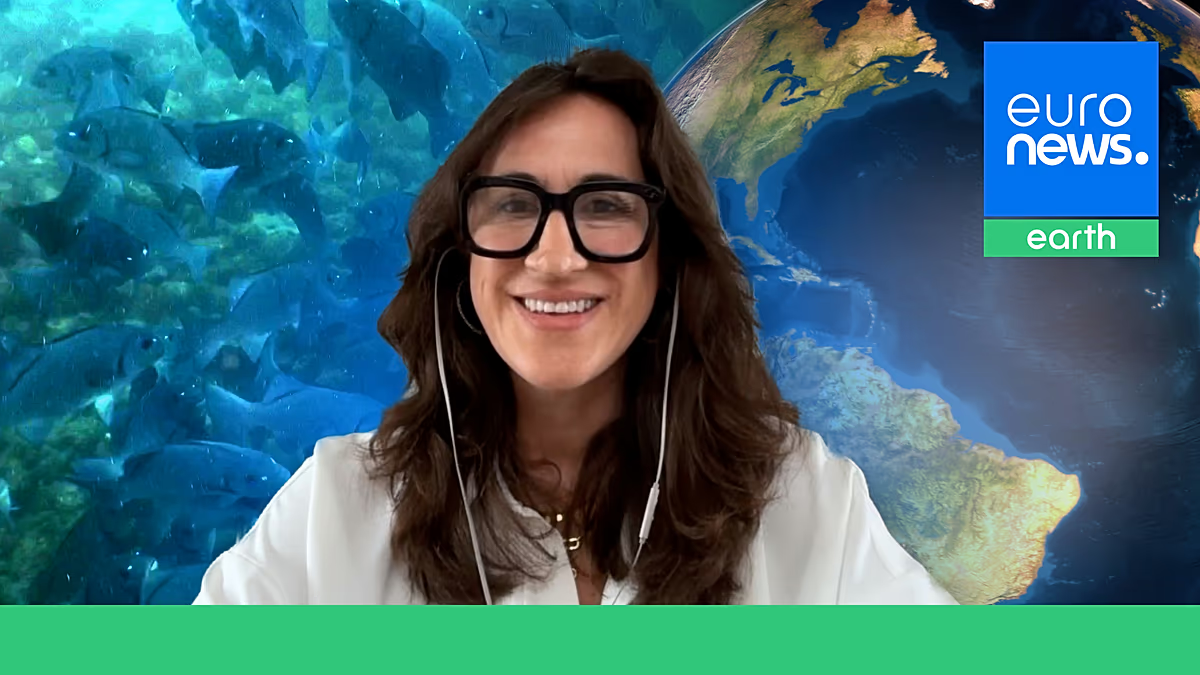
"The high seas cover two thirds of the global ocean. That's almost half the planet," Nathalie Rey, Senior Strategy Advisor at the High Seas Alliance, tells Euronews Earth.
But until January this year, there was no legal framework dedicated to protecting these international waters and sharing their resources fairly among nations.
The High Seas Treaty – formally the Agreement on the Conservation and Sustainable Use of Marine Biological Diversity of Areas Beyond National Jurisdiction, or BBNJ – entered into force on 17 January 2026.
It is the first binding international agreement focused specifically on protecting biodiversity in waters beyond any country's jurisdiction, covering an area that makes up two thirds of the global ocean and nearly half the surface of the Earth.
The high seas begin where national waters end – beyond 200 nautical miles, roughly 370 kilometres, from shore. "To put that into perspective, that's about the distance between London and Paris," says Rey.