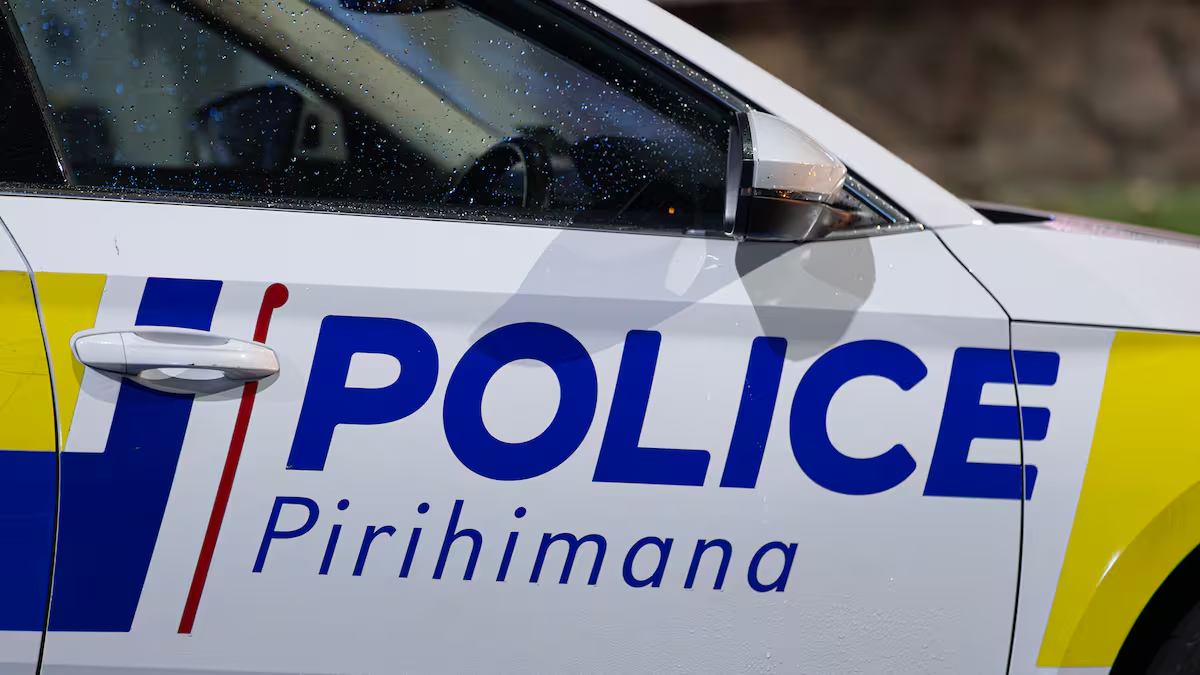
I wish to express serious concern about the new practice by the Samoa Police of publishing the mugshots and personal details of individuals on their Facebook page immediately after drug raids and arrests, and before those individuals appear before a court of law. It is now six months since it started, and it appears it is an acceptable practice by our law enforcement institutions with zero accountability.In my humble view, the principle of justice in any democratic society is that a person is presumed innocent until proven guilty. When law enforcement agencies publicly display photographs of suspects and effectively present them as offenders before a court has determined the facts, serious questions arise regarding the protection of constitutional rights, due process, and the right to a fair trial.Publicly identifying suspects at such an early stage can cause irreparable damage to their reputations, employment prospects, family relationships, and standing in the community. Even if charges are later withdrawn or the person is acquitted, the stigma created by widely circulated social media posts often remains. A person's reputation can be destroyed long before any evidence is tested in court. Are we now trialling suspects in the court of public opinion to shame them even if they are later acquitted?I also note that other jurisdictions in our region and beyond, including Australia, New Zealand, and Fiji, face many of the same challenges in combating the illegal drug trade and the situation in those jurisdictions is far worse than in Samoa. Yet their law enforcement agencies generally do not routinely publish mugshots of suspects on social media immediately following arrests and before court proceedings have commenced. These countries continue to pursue drug offenders vigorously while maintaining respect for the fundamental legal principle that individuals are presumed innocent until proven guilty. This raises an important question: why should our approach differ when it risks undermining the very rights and protections that form the foundation of a fair and democratic justice system?This important issue deserves scrutiny. What safeguards are in place to ensure that the rights of suspects are protected? Has there been any legal assessment of whether such publications are consistent with constitutional guarantees, privacy rights, and established principles of natural justice?It is also disheartening that there is silence from institutions that exist to uphold accountability and the rule of law. Where is the Ombudsman's Office on this matter? Where is the Law Society and the wider legal profession? These bodies have an important role in safeguarding civil liberties and ensuring that state agencies exercise their powers within legal and constitutional boundaries. Their voices should be heard whenever fundamental rights are at risk, regardless of the nature of the alleged offence.The fight against drugs and crime is very important and necessary. Communities deserve protection from the harm caused by illicit drugs, and law enforcement agencies should be supported in their efforts to combat criminal activity at all costs to protect our future generations. However, the pursuit of justice should never come at the expense of the constitutional rights and legal protections that belong to every citizen. Respect for the rule of law requires not only that offenders be prosecuted, but also that suspects be treated fairly until their guilt has been established by a court.If we allow public shaming to replace due process, we risk weakening the very principles of justice that distinguish a democratic society from arbitrary rule. The rights guaranteed by the Constitution are not reserved for the popular or the innocent; they exist to protect every Samoan citizen and to provide an avenue for civil lawsuits against the Government if these rights are breached.I hope this issue will generate informed public discussion and encourage the relevant authorities to review these current practices in the interest of justice, fairness, and constitutional accountability.Yours faithfully,Concerned citizen
Publishing pictures of drug suspects is unfair
Dear Editor,I wish to express serious concern about the new practice by the Samoa Police of publishing the mugshots and personal details of individuals on their Facebook page immediately after drug raids and arrests, and before those individuals appear before a court of law. It is now six months ...
631 words~3 min read