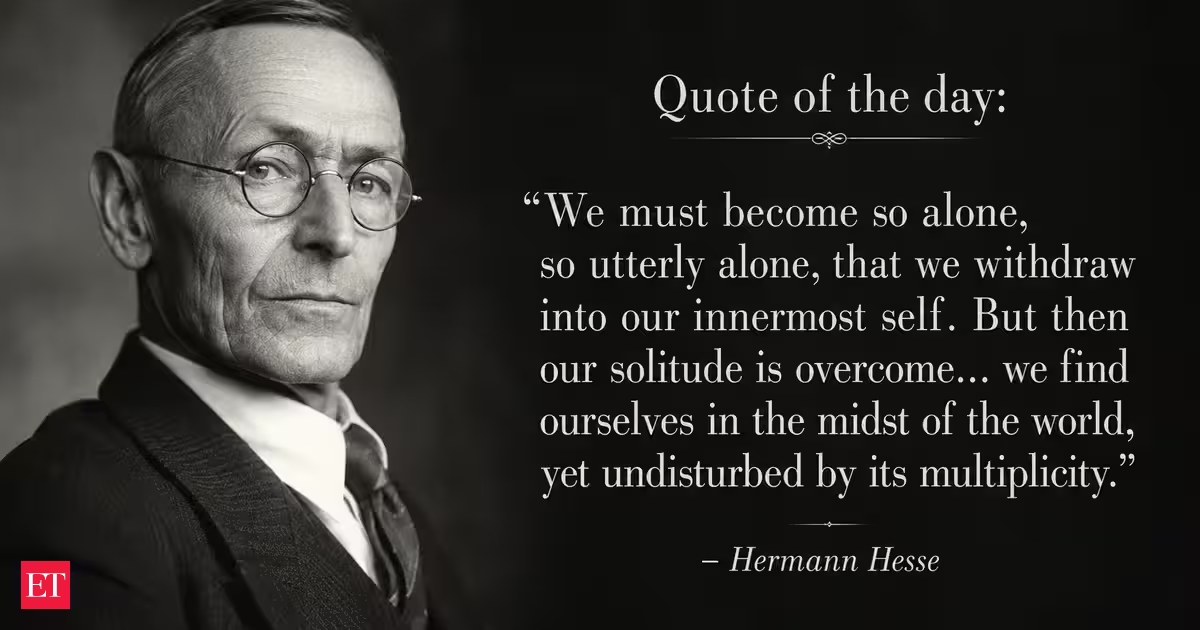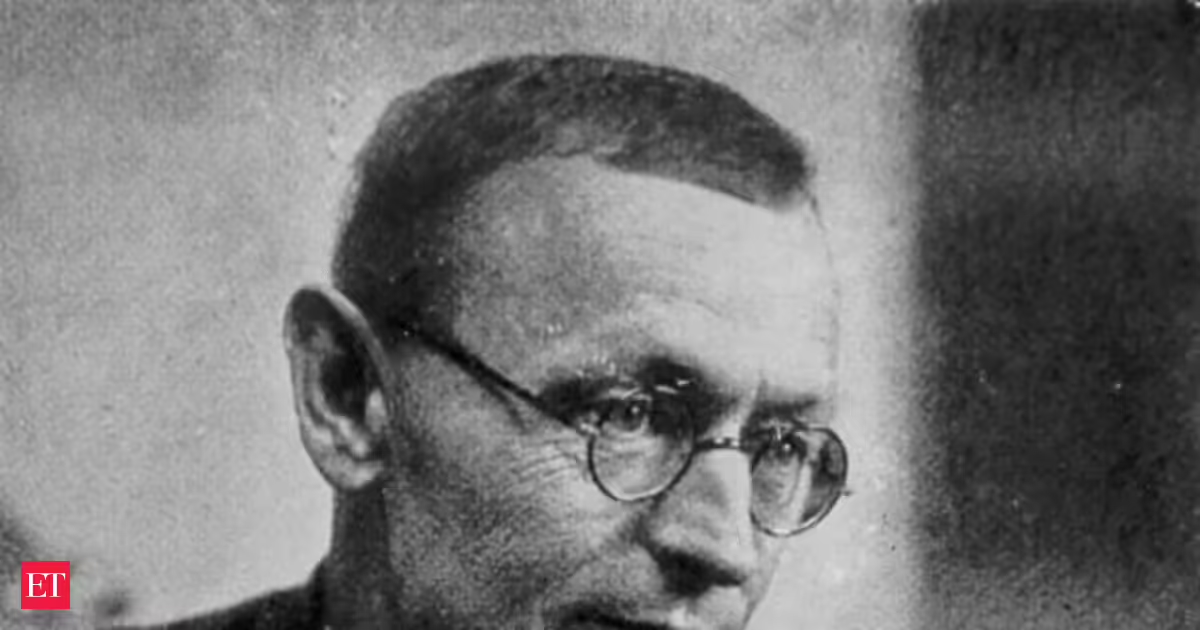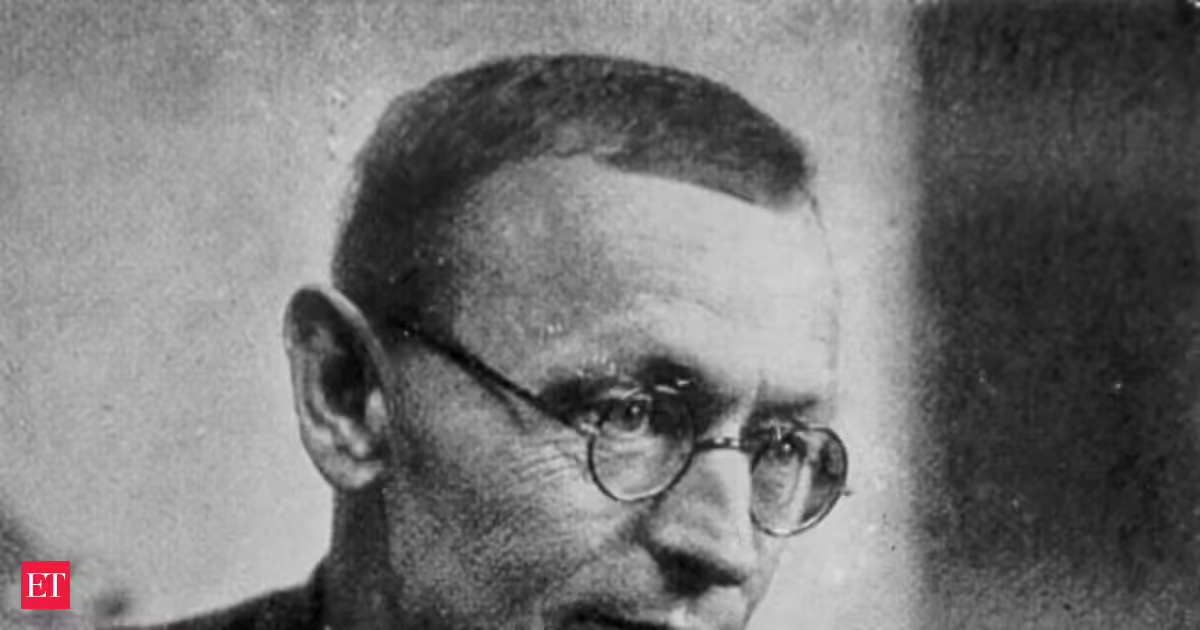
Remember F. Scott Fitzgerald's The Great Gatsby? Jay Gatsby spends years building an extraordinary life around a single hope: that he can reclaim the past and return to the moment when he and former lover Daisy were together. He believes that if he holds on tightly enough to that dream, everything he has lost will come back.Most people have faced a moment when they thought holding on harder could save a fading relationship, only to discover that no amount of grip can make someone stay who has already chosen to leave. But still we hold on to relationships that have changed. To disappointments that still sting. To plans that no longer fit the people we have become. We tell ourselves that letting go means giving up.But does it? If we ask ourselves, how often do we mistake attachment for strength? How often do we carry something long after it has stopped helping us grow?Perhaps the greatest courage is not found in refusing to release the past. Perhaps it lies in knowing when to loosen our grip and make room for what comes next.Quote of the Day by Hermann Hesse: ‘Some of us think holding on makes us strong but sometimes it is letting go’Also Read: Quote of the Day by Derek Parfit: ‘We might neglect our future selves because of some failure of belief or imagination’ - A warning on self-sabotage from the philosopher most people have never heard ofThis quote is widely associated with German-Swiss novelist and Nobel Prize winner Hermann Hesse. Decades after his writings first reached readers, the idea never died because it speaks to a challenge nearly everyone faces at some point in life: knowing when persistence helps us grow and when it simply keeps us stuck.What the relationship quote is actually suggestingAt first glance, the quote might seem simple. Most people are taught that endurance, loyalty, and persistence are signs of strength. Often, they are. But Hesse's message points to another kind of courage.Sometimes people hold on to situations that no longer serve them. It could be a painful relationship, a grudge, a failed plan, unrealistic expectations, or guilt from the past. Holding on may feel brave because it requires effort. Yet that effort can also drain emotional energy and prevent growth.Letting go does not necessarily mean giving up. Instead, it can mean accepting reality, learning from an experience, and creating space for something healthier.The quote reminds us that wisdom lies in recognizing the difference. Strength is not always about resisting change. Sometimes it is about embracing it.In everyday life, this idea appears in many forms. A parent learns to let a child become independent. A professional moves on from a job that no longer brings purpose. A person releases resentment to find peace. And a lover knows when it's better to let go to save both of them. In each case, letting go is not weakness; it is a conscious choice to move forward.About Hermann HesseHermann Hesse was born in 1877 in Calw, Germany, into a deeply religious family connected to missionary work and Indian theology. From an early age, he encountered both Western intellectual traditions and Eastern spiritual ideas, influences that would later shape his writing and philosophy.His youth was marked by struggles against rigid educational systems and expectations. Hesse dreamed of becoming a poet and often resisted pressures to conform. Those personal conflicts led him to explore questions about identity, freedom, individuality, and spiritual growth.His breakthrough came in 1904 with the publication of Peter Camenzind, which allowed him to pursue writing full time. Later, he settled in Switzerland and became a Swiss citizen in 1923.As Europe experienced the upheavals of World War I and the rise of Nazism, Hesse openly opposed German nationalism. Instead, he focused his work on the psychological and spiritual struggles facing modern society.Influenced by thinkers such as Friedrich Nietzsche and Arthur Schopenhauer, as well as Eastern philosophy, Hesse produced some of the twentieth century's most celebrated literary works, including Siddhartha, Demian, Steppenwolf, and The Glass Bead Game. His contributions to literature earned him the Nobel Prize in Literature in 1946.Also Read: Quote of the Day by Romanian philosopher Emil Cioran: ‘Write books only if you are going to say in them the things you…’ - why true writing begins where comfort and secrecy endHermann Hesse’s thinking style and philosophy behind the quoteHesse spent much of his career exploring inner transformation. His novels frequently follow characters who leave familiar paths in search of deeper understanding and self-discovery.Rather than celebrating conformity, he encouraged readers to examine their own beliefs and find authentic meaning in life. Many of his characters experience personal crises that force them to abandon old identities before they can grow into new ones.That perspective is reflected in this quote. Hesse understood that personal development often requires release. People cannot embrace new possibilities while remaining tightly attached to everything from the past.His exposure to Eastern philosophy also shaped this outlook. Ideas about acceptance, detachment, and inner peace appear throughout his writing, making the concept of letting go a natural extension of his broader worldview.Why this idea still matters todayModern life often rewards constant striving. People are encouraged to keep pushing, keep working, and keep fighting for what they want.While perseverance remains important, Hesse's quote offers an equally valuable lesson. Not every battle deserves to be fought forever.In workplaces, it can mean leaving an unhealthy environment instead of enduring endless stress. In relationships, it may involve accepting that some connections have run their course. In personal growth, it can mean releasing perfectionism, fear of failure, or unrealistic expectations.The idea is especially relevant in an age when many people struggle with burnout, anxiety, and the pressure to constantly achieve. Knowing when to step back, move on, or make peace with circumstances can be just as important as determination.Hesse's words remind us that strength comes in different forms. Sometimes it is found in holding on. Sometimes it is found in letting go. The real challenge is knowing which one a particular moment requires.
Quote of the Day by Hermann Hesse: ‘Some of us think holding on makes us strong but sometimes it is letting go’ - why some relationships are meant to be released
Quote of the Day by Hermann Hesse challenges the notion that persistence always equates to strength. The article explores how clinging to past disappointments, relationships, or failed plans can hinder growth. True courage, it suggests, lies in recognizing when to release what no longer serves us, making space for healthier futures and embracing change.
1,002 words~5 min read