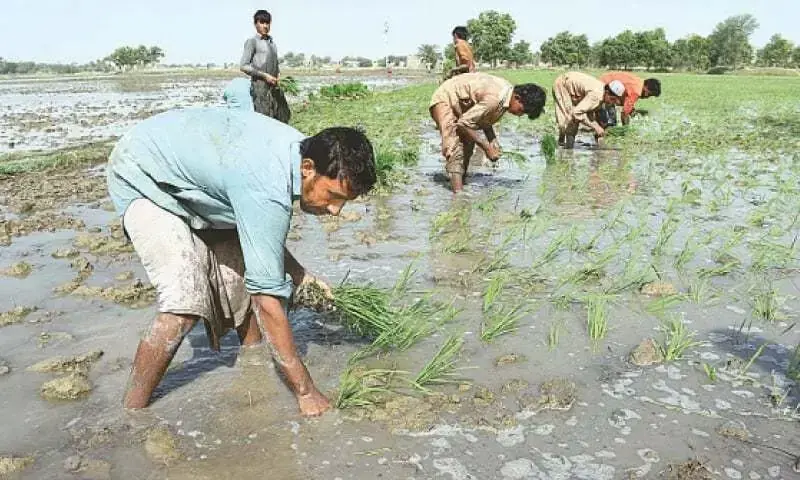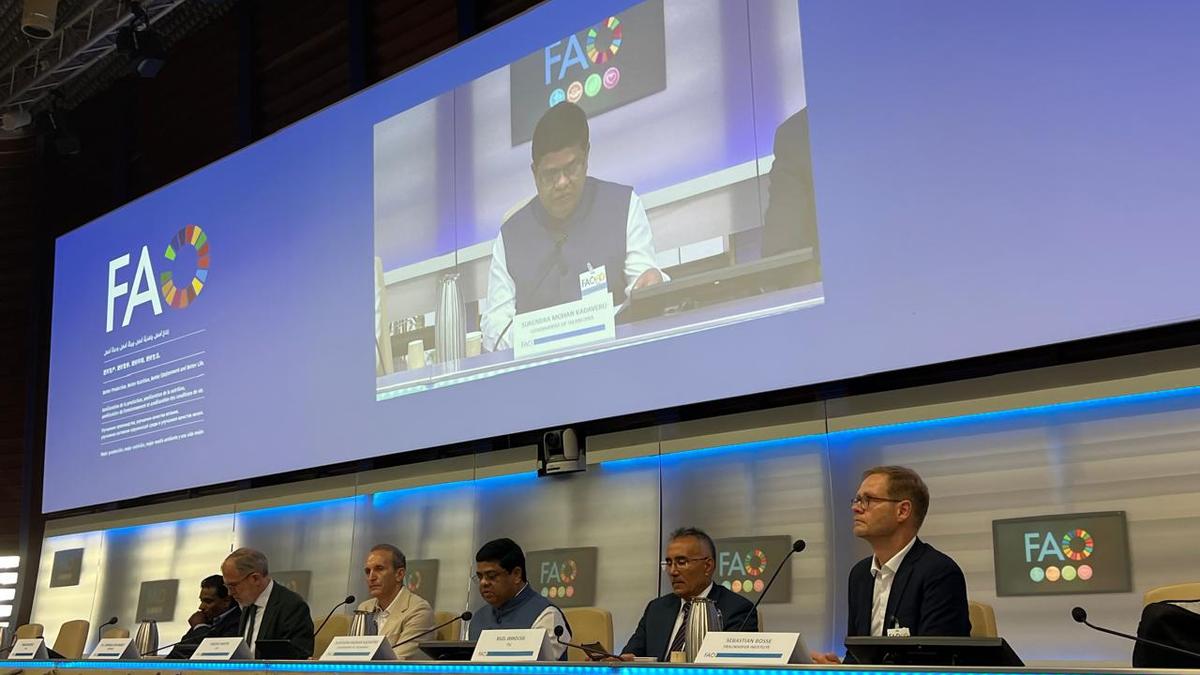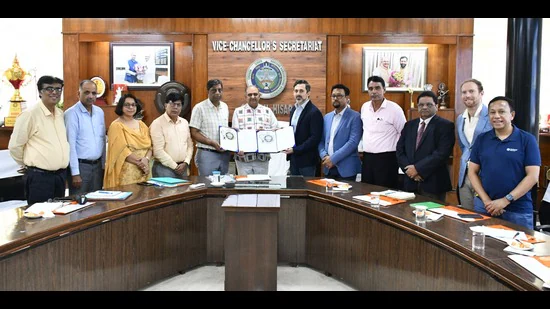
In an attempt to encourage Haryana farmers to adopt the direct seeded rice (DSR) technique by making it more profitable, Chaudhary Charan Singh Haryana Agricultural University (HAU), Hisar, has signed a memorandum of understanding (MoU) with the food and agriculture organisation (FAO) of the United Nations, Bangkok.The collaboration aims to DSR cultivation through biological seed treatment technologies and strengthen farmers’ access to climate-resilient and sustainable agricultural practices. (HT Photo)The collaboration aims to DSR cultivation through biological seed treatment technologies and strengthen farmers’ access to climate-resilient and sustainable agricultural practices.Speaking with HT, HAU vice-chancellor, BR Kamboj said the collaboration marks an important milestone in advancing sustainable rice cultivation. “The DSR technology has emerged as an effective alternative to traditional paddy cultivation, particularly in states facing groundwater depletion and rising input costs. The partnership will facilitate joint research, farmer training programmes, technology demonstrations and knowledge exchange to promote wider adoption of the technique”, he said.On why the farmers were least interested in DSR, the V-C said that the DSR is very popular among the farmers as it not only requires less water, but it is also very cost effective as it cuts expenditure on labour, fertilisers and puddling.“Now under this collaboration, we will be working on the challenges being faced by the farmers with the help of the latest technologies. The biological seed treatments improve seed germination, enhance early plant growth, and reduce dependence on chemical treatments. These benefits contribute to environmental protection while increasing farmers’ incomes”, he added.Kamboj said that the initiative would be a significant step toward making agriculture more sustainable and resilient in the face of climate change. Under the project, farmers will be introduced to modern, eco-friendly technologies through training programs, technical support, and field demonstrations.According to Rajesh Gera, nodal officer of the project and dean, college of basic sciences and humanities, the biological seed treatment improves soil health, promotes the activity of beneficial microorganisms, and enhances crop productivity.He added that the technology would help maintain ecological balance by reducing the use of chemical inputs in agriculture. Under the joint initiative, demonstration plots will be established in selected locations to encourage the adoption of advanced direct-seeded rice technologies.
Haryana agri varsity, Bangkok firm ink pact to promote climate-resilient farming
Speaking with HT, HAU vice-chancellor, BR Kamboj said the collaboration marks an important milestone in advancing sustainable rice cultivation
360 words~2 min read