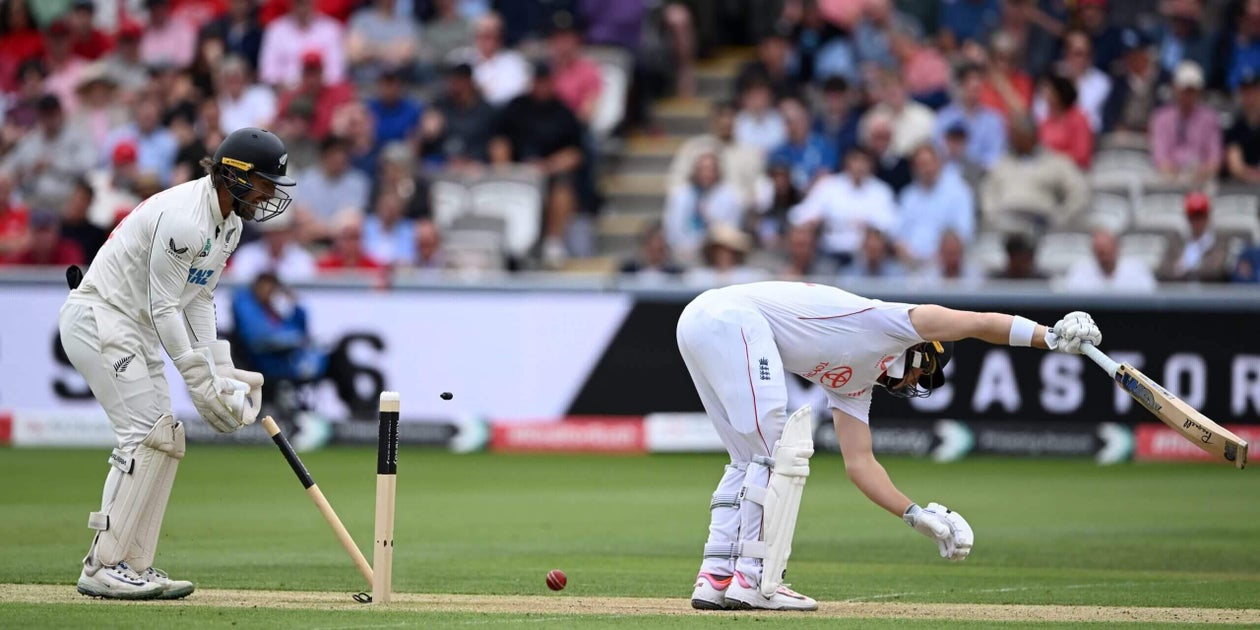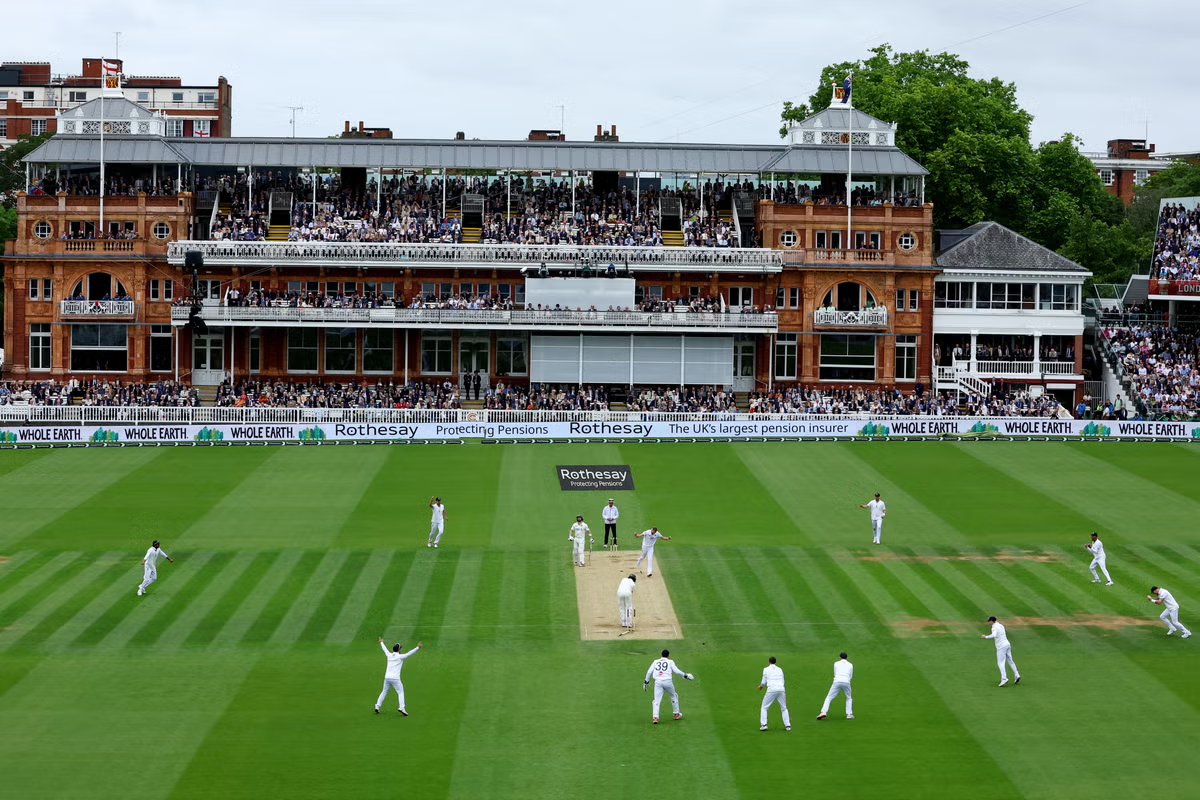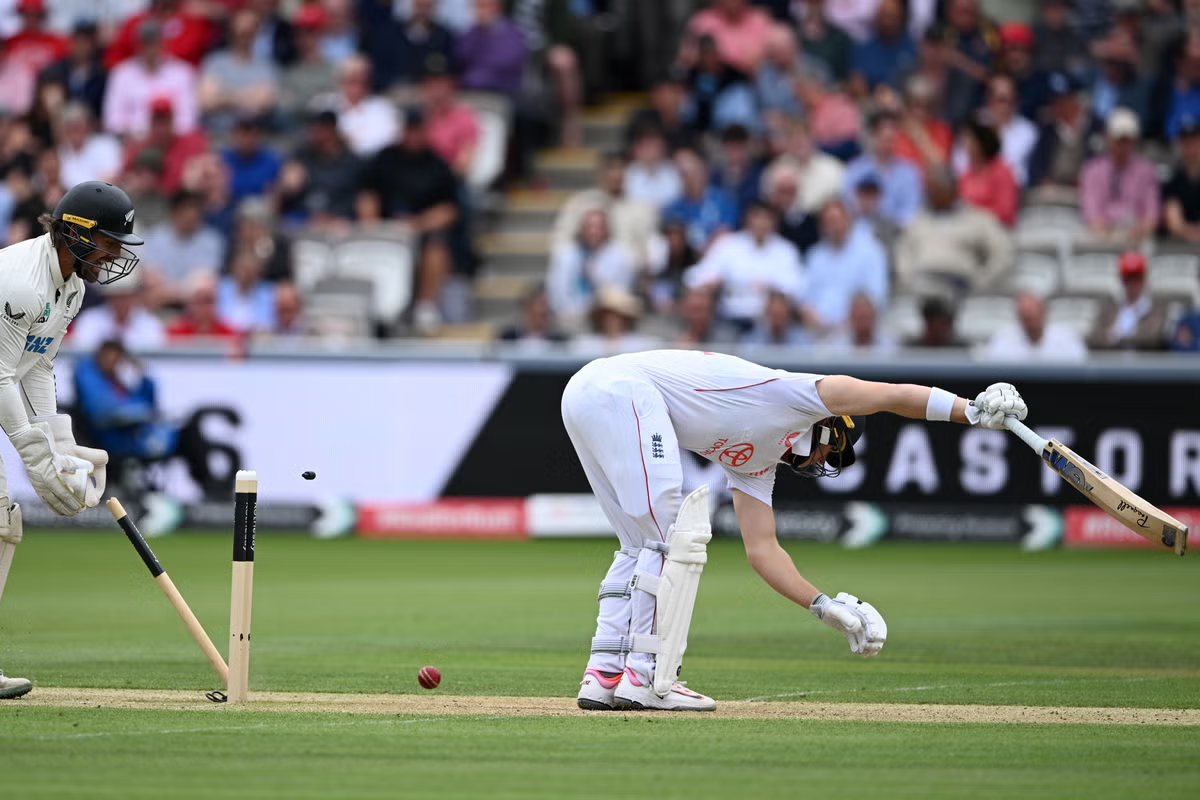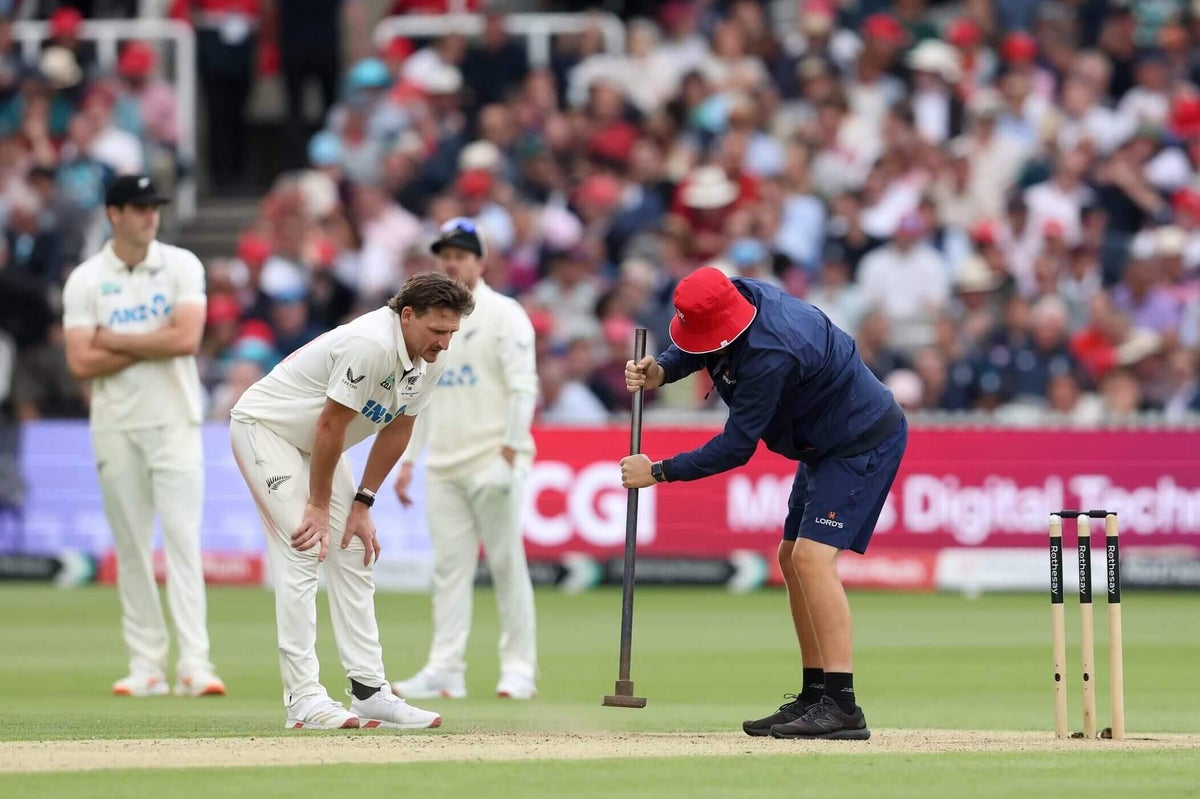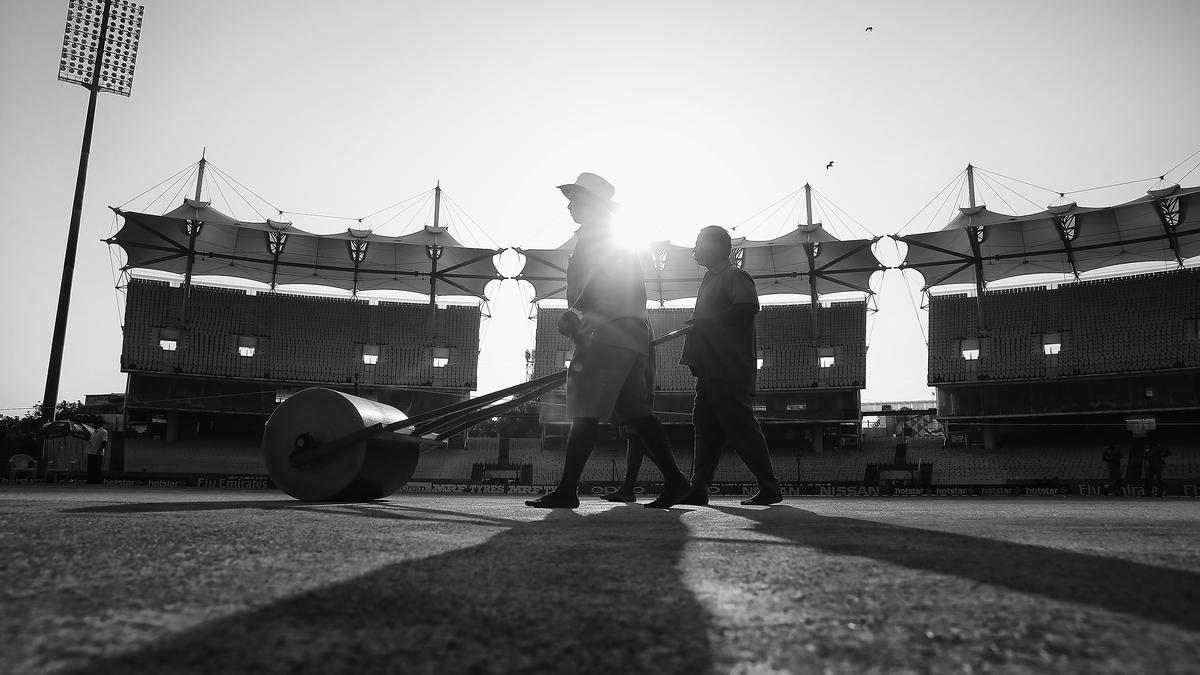
In the first week of June, a men’s Test between England and New Zealand lasted just 166 overs, prompting unpleasant comments about the variable bounce of the Lord’s surface. While no curator intentionally sets up bad wickets, what does go wrong when a pitch goes wrong?What is a pitch made of?A cricket pitch is clay, water, and grass. The clay supplies the hardness, the grass provides the strength, and the water determines its pace.Clay is a type of heavy soil composed mainly of aluminosilicate minerals. Clay particles are very small and flat, allowing them to slide past each other when they’re wet or harden and bond when they’re dry.Curators generally choose between two main types of clay: black and red. Black soil mainly has smectite and montmorillonite minerals. It is common in Australia and parts of India. It is stickier and harder when dry, creating the wide cracks seen on day-5 pitches. But because the particles bind so tightly, the pitches can offer pace and bounce.Red soil, more common in Chennai and some Caribbean islands, consists of kaolinite and illite. It doesn’t crack as dramatically but tends to break into smaller, finer particles more quickly, leading to rough surfaces that help the ball grip for spin and facilitate reverse swing sooner in a match.How is a pitch laid?Curators begin by selecting and laying the soil to contain clay. In the U.K., pitch loams are typically 25-35% clay; this together with higher silt levels encourage the seaming conditions famous in England. In Australia, the soil can exceed 60% clay, creating the bounce of Perth and Brisbane. According to former pitch curator P.R. Viswanathan, the clay content in India is usually 50-60%.Curators also use heavy rollers, weighing a few hundred kilograms to over a tonne, to apply a large amount of pressure when the soil has just the right amount of moisture, forcing the clay particles into their most packed arrangement.Since a heavily rolled pitch will be smooth, a ball striking the surface will suffer less friction and retain more kinetic energy. This is part of why Curtly Ambrose was able to pick up seven wickets for just one run in a spell against Australia in Perth in 1993.Moisturising routine: Curators use a process called deep saturation to ensure moisture penetrates 75-100 mm down, allowing the clay to settle and pack.
What makes a Cricket pitch go wrong? The science behind bounce, grass, clay & deterioration
Discover the science behind cricket pitches and why some surfaces produce dangerous or unpredictable bounce. Learn how clay, grass, moisture, rolling techniques, and pitch preparation influence pace, spin, deterioration, and match outcomes, with insights from Lord’s, Perth, Chennai, and other iconic Test venues.
1,176 words~5 min read