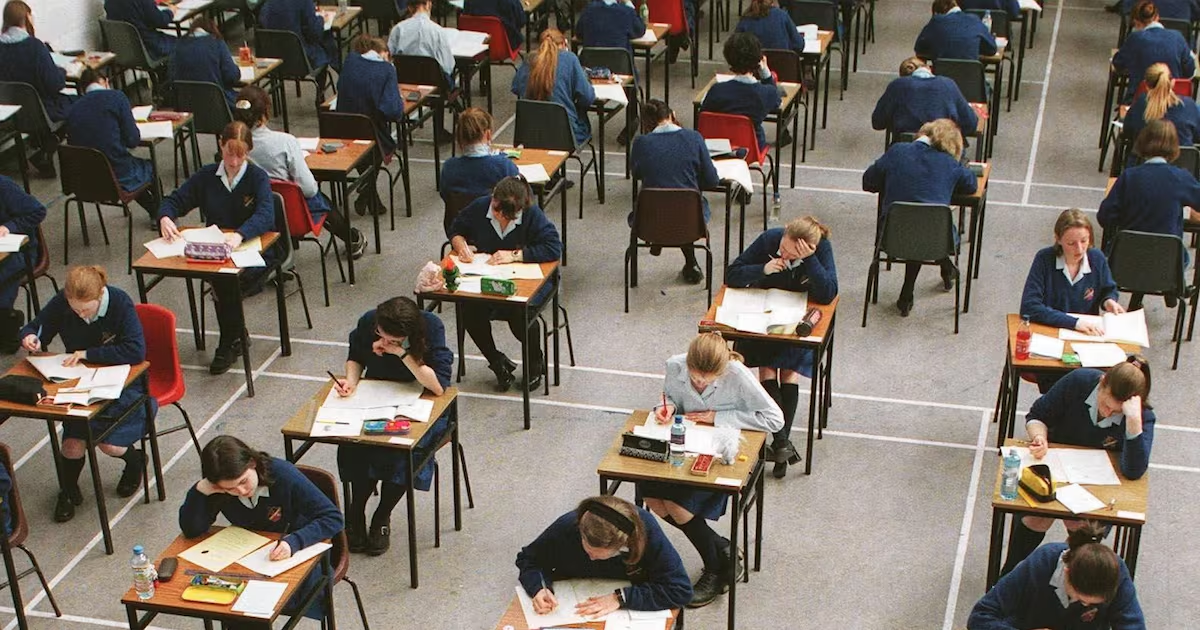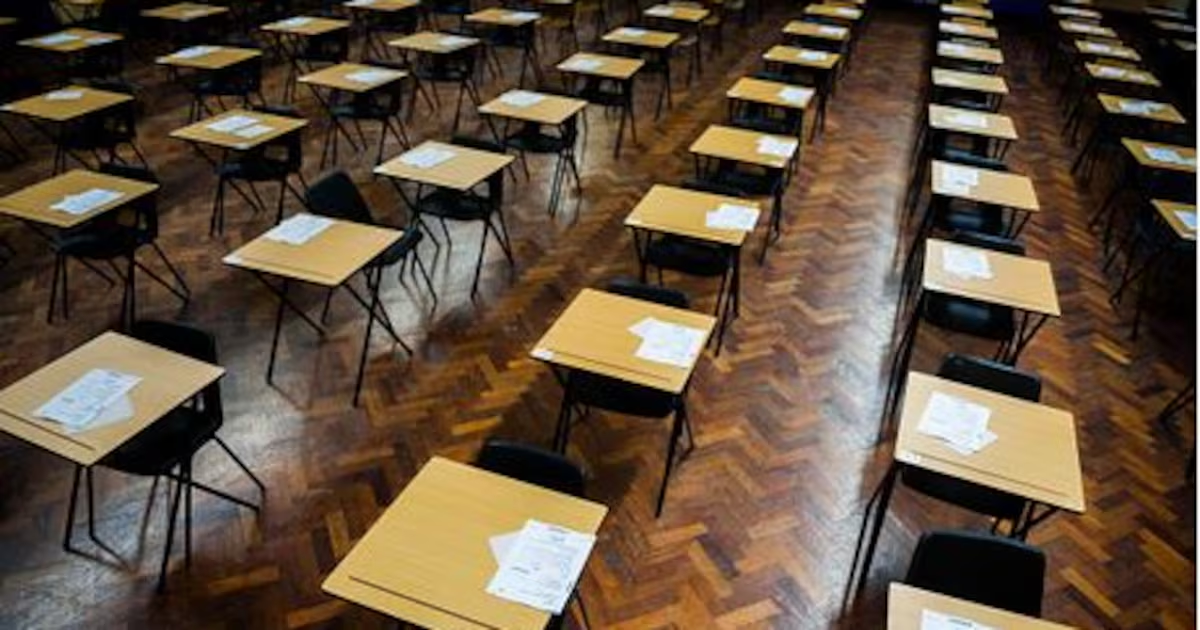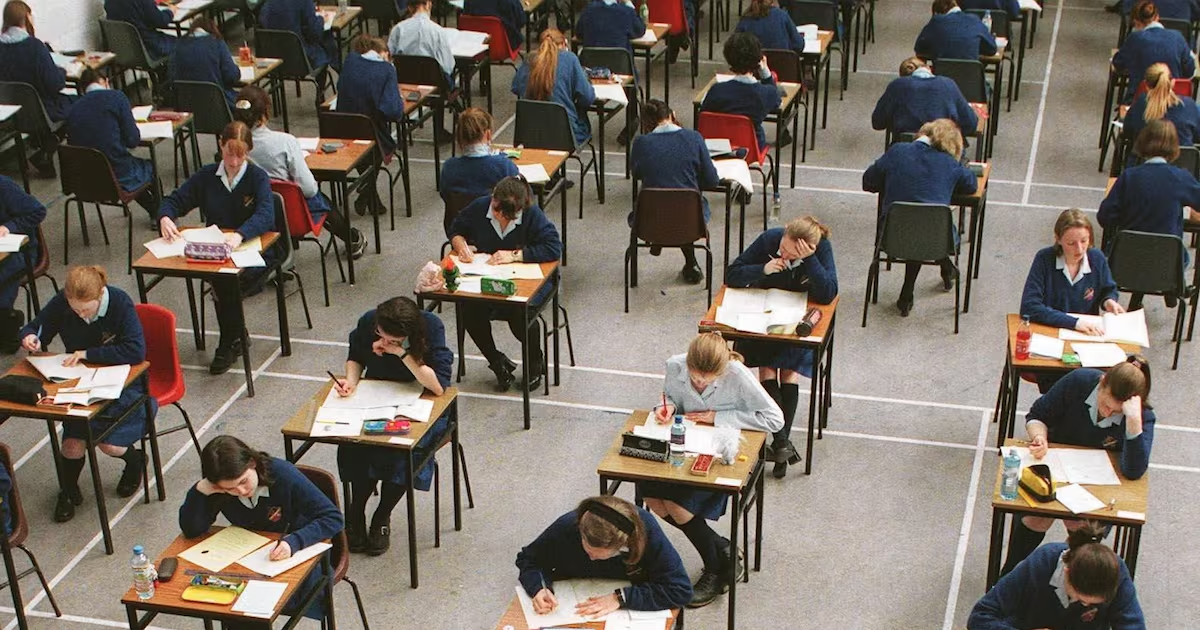
Wordy questions leave students tight for time in 150-minute exam The paper was topical and rewarded students who paid attention to current affairs, said teachers. Photograph: Peter Thursfield
Peter McGuireFri Jun 19 2026 - 16:58 • 3 MIN READThis year’s higher-level economics paper was topical and accessible, although the questions took their time getting to the point, teachers have said. “Ultimately, today’s paper was a student-friendly, highly topical paper which mirrored the current Irish and global economic climate and would have suited the current affairs-savvy student very well,” said Máiréad Farrell, an economics teacher at Glenstal Abbey.“Students enjoyed the opinion-style questions but mentioned that there was a lot of writing on the paper as they developed points, so they were writing up to the very last minute.”Diarmuid Canning, a teacher at St Andrew’s College, Booterstown and a member of the Business Studies Teachers Association of Ireland, said that the paper was accessible and topical.“My only criticism is the amount of reading required for each question within a 150-minute exam,” he said.“It was wordy and students were left tight for time.”Rob Kiernan, an economics teacher with the Institute of Education, said that students would have left the exam wondering where the time went. “At the best of times, economics is a race against the clock, but this paper included long introductions and enough conceptual framing that pushed this pace even further,” he said.“Students will likely have paused for 30 seconds before committing pen to paper, and over the course of the whole exam those added up.”The paper itself was topical and rewarded students who paid attention to current affairs, the teachers said.“Music streaming and events, The Cork/Tipp All-Ireland Hurling Final, theme parks such as Disney and Legoland, TikTok, Chinese electric vehicles in the EU, dereliction, gym membership and AirBnbs all appeared, while the paper maintained reliable staples like international trade, globalisation, national income, national budget and taxation,” said Farrell.“In section A, every effort was made to engage students. As a whole, the paper heavily rewarded those who kept a sharp eye on the global financial and economic climate over the last two years as there were many international references to the US, China and the EU this year.”Kiernan said that those who relied heavily on past papers may have been thrown in places, with Kuznet’s Curve appearing for the first time and imperfect competition appearing for the second year in a row.“A student who entered this exam hoping for a repeat of the past papers will have struggled in this exam,” he said.“However, those who went in ideas-first and were always attentive to the underlying forces will be happy.”Canning said that about 70 per cent of the paper focused on macroeconomics, with 30 per cent on microeconomics. “I think this balance is wrong, and there should be more microeconomics,” he said.On the ordinary level paper, Canning said that there was the same balance between macro and microeconomics.“But the paper was approachable and fair,” he said.“There were good hooks to most questions, with sport, branded bags and the hidden economy all appearing.”Try this one at home: Leaving Cert Economics, higher levelQ3(b) Irish Rail has imposed €100 fines for passengers who play videos or music without headphones on its trains.Outline one reason why this passenger behaviour is an example of market failure.IN THIS SECTION