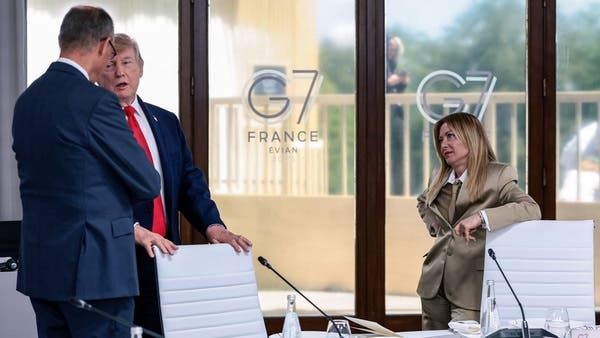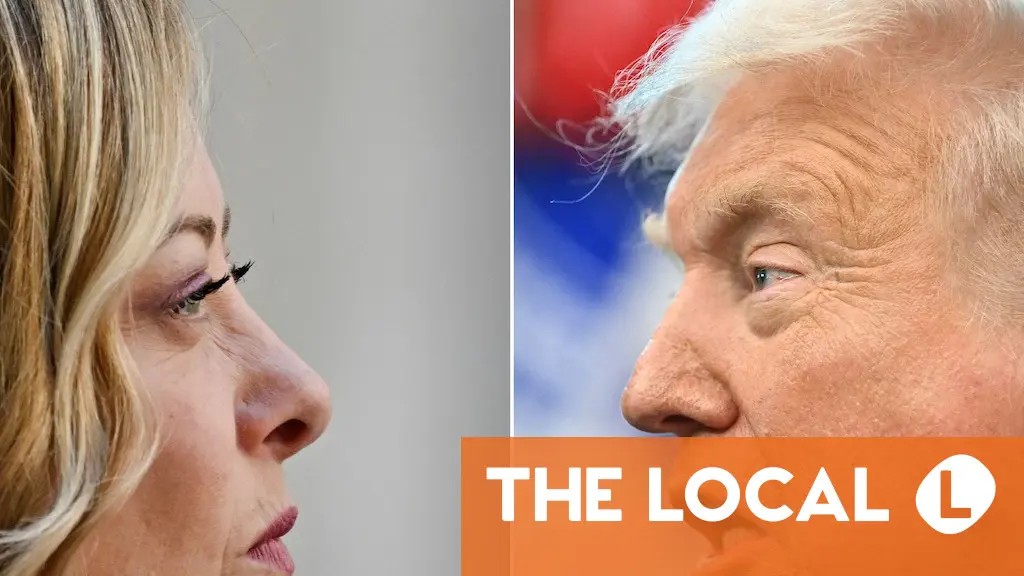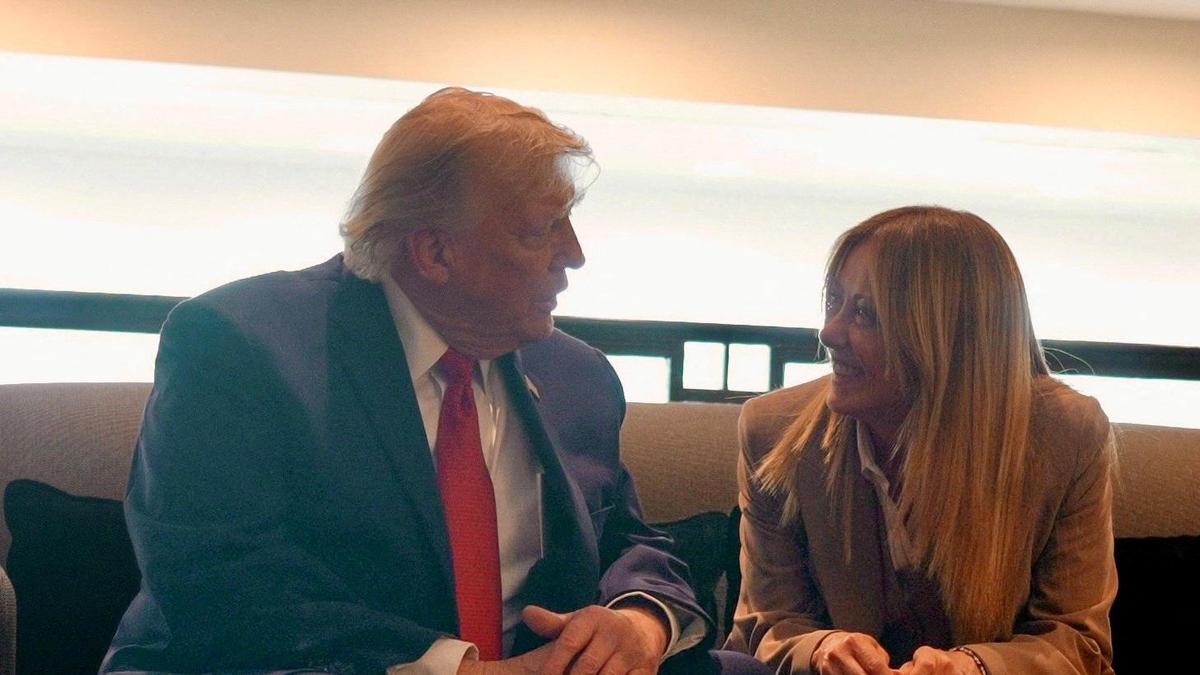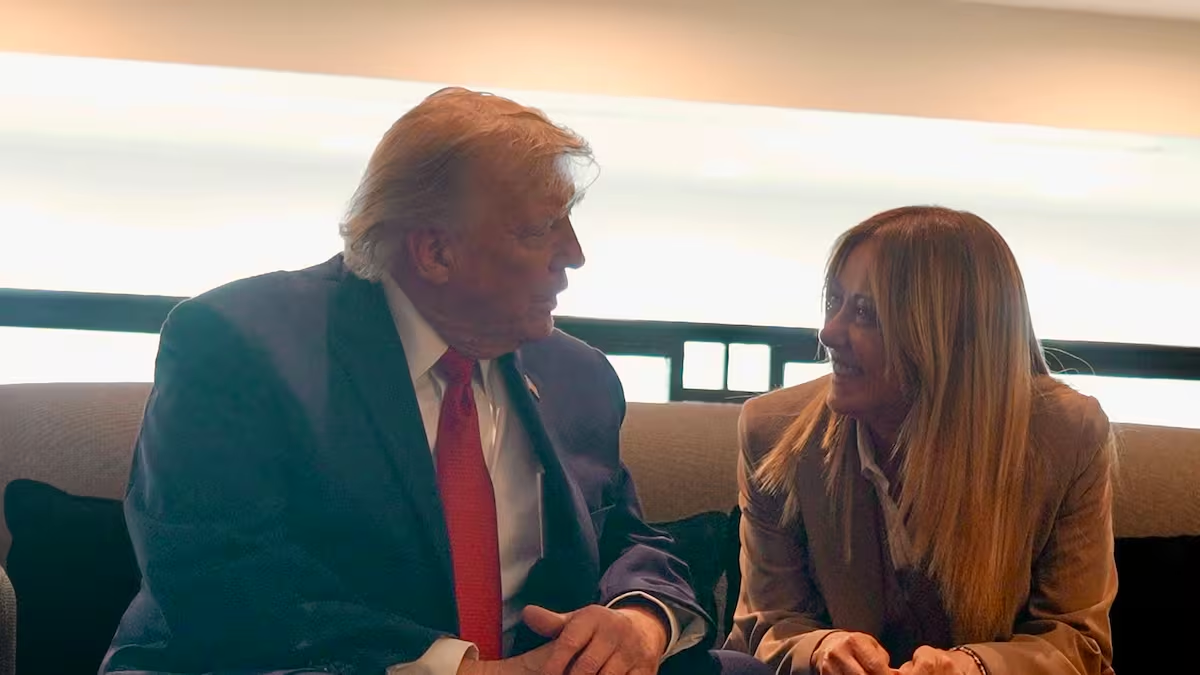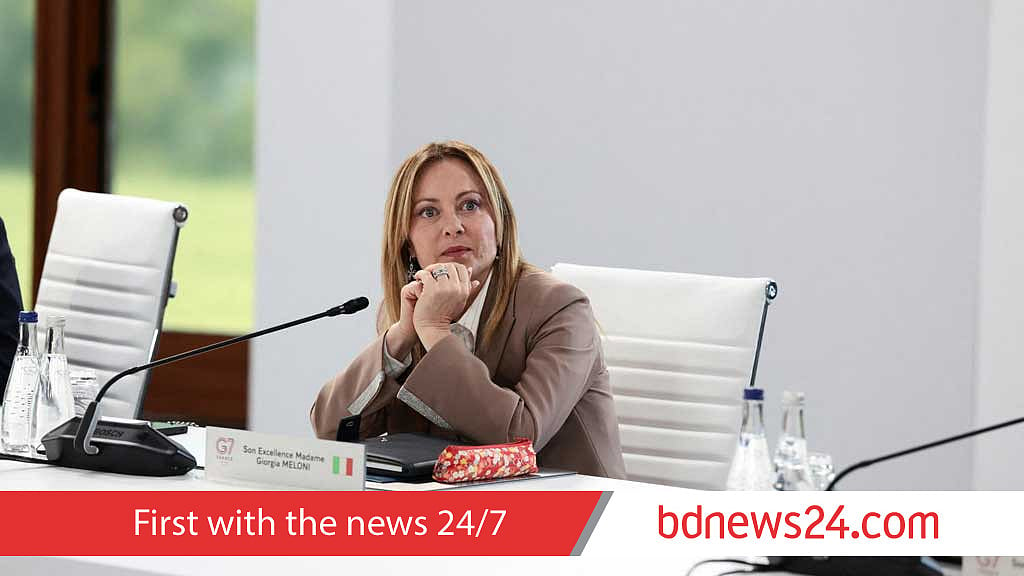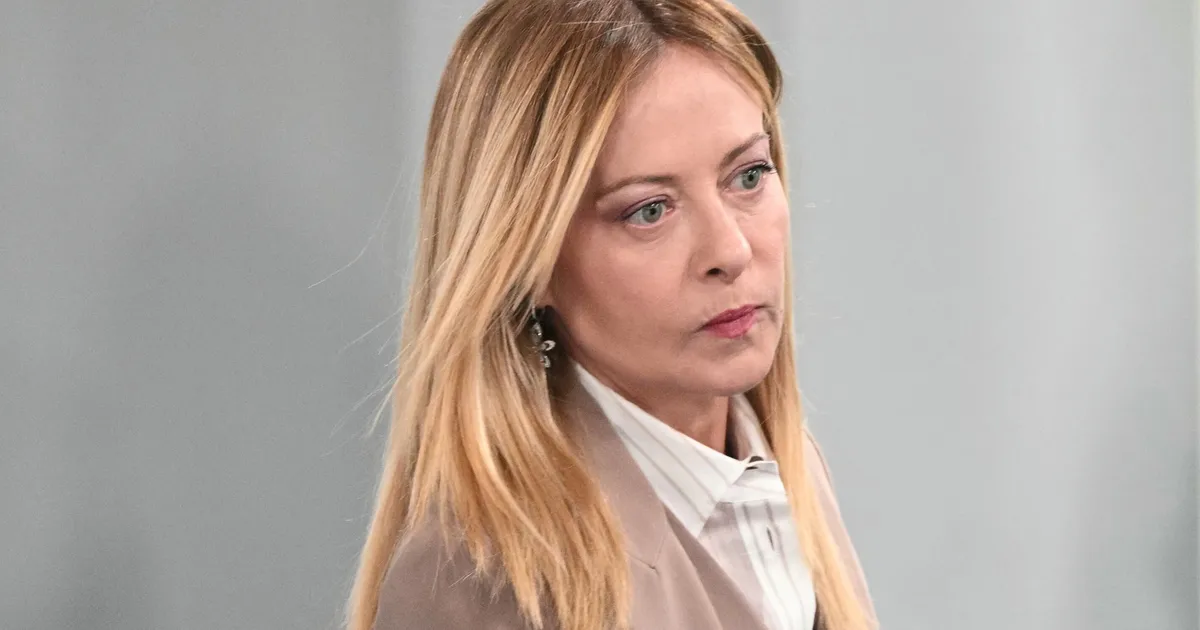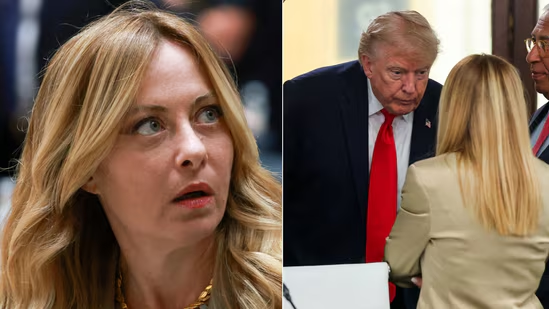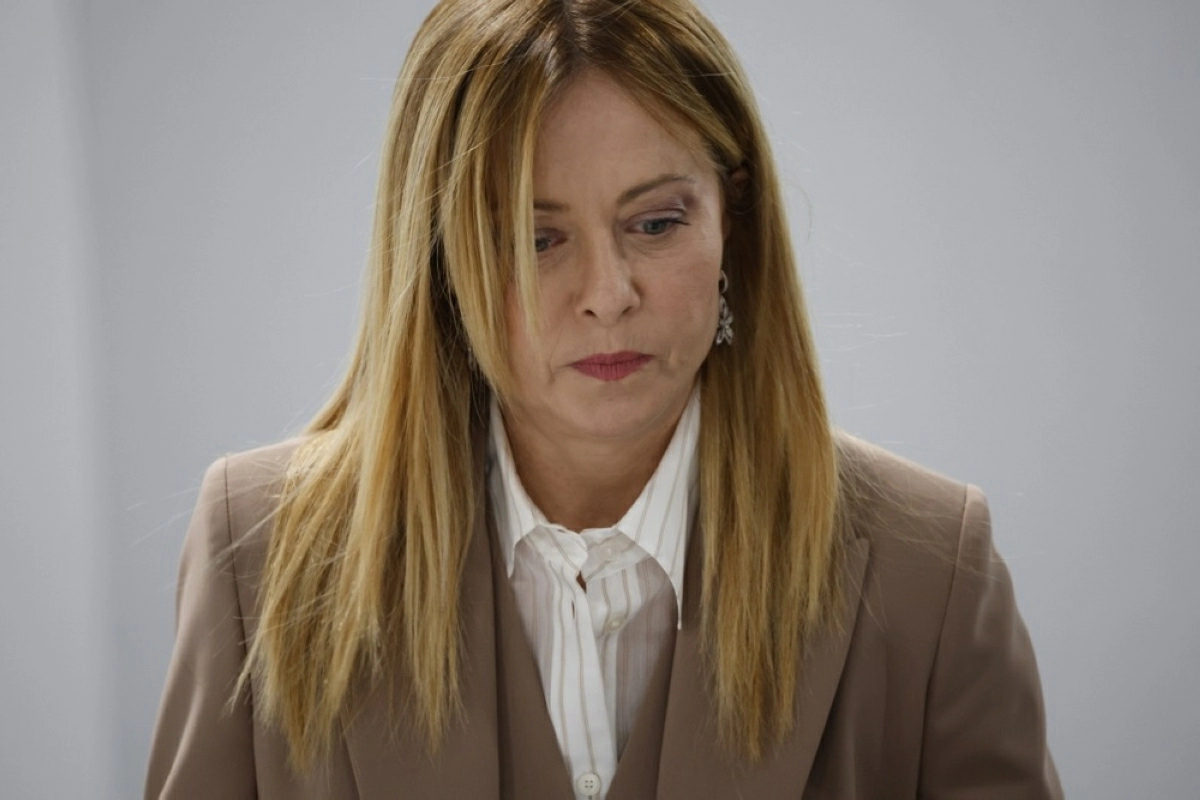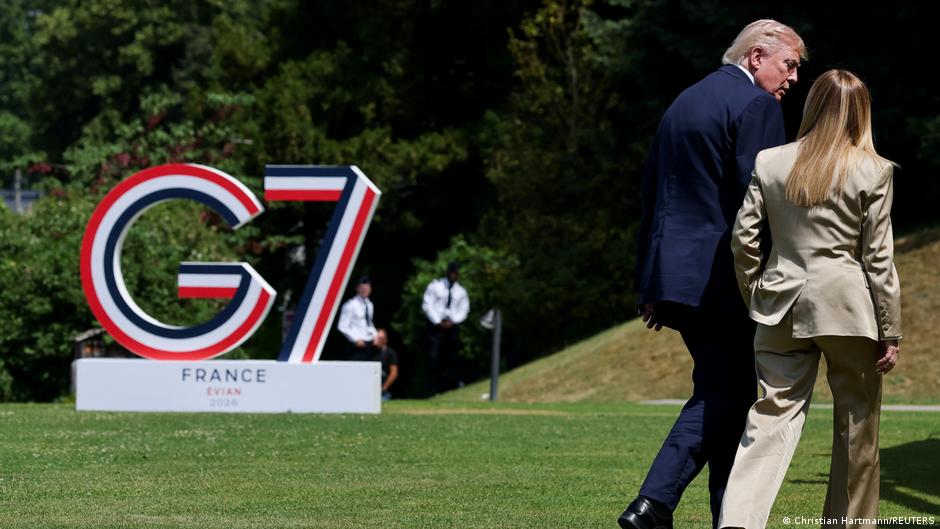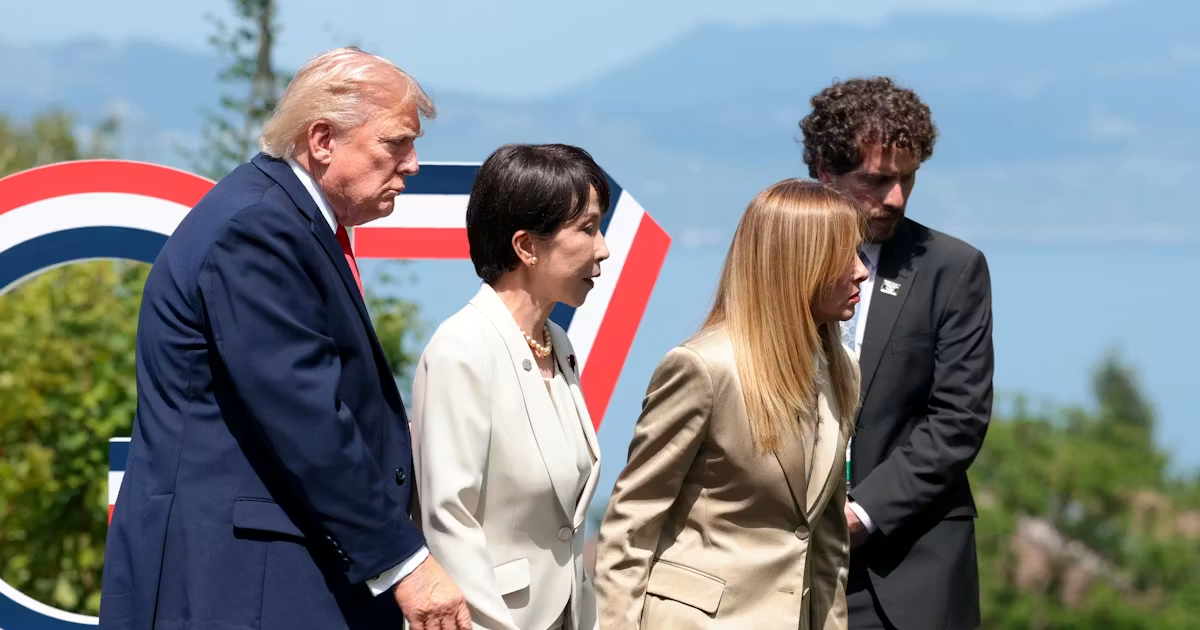
President Donald Trump has sparked a diplomatic crisis with Italy after insulting Italian Prime Minister Giorgia Meloni on television.The president told an Italian TV channel Meloni “begged” to take a picture with him. “She wanted a picture with me so badly. I wouldn’t have taken it, but I felt sorry for her,” Trump said, according to Reuters.Meloni responded with her own video, captioned, “Io e l’Italia non imploriamo mai,” which translates to “Neither I nor Italy ever beg.”Io e l’Italia non imploriamo mai. pic.twitter.com/sTpKlqWB67— Giorgia Meloni (@GiorgiaMeloni) June 19, 2026 “Donald Trump’s statements are completely made up,” Meloni said, writes Reuters. “I am frankly astonished. I don’t know why the president of the United States behaves like this towards his allies: It is not the first time, moreover.”Trump’s flippant comment had immediate diplomatic consequences. Italian Foreign Minister Antonio Tajani canceled his upcoming trip to the U.S., writing on X, “The serious and offensive words of President Trump towards Prime Minister Giorgia Meloni offend all of Italy,” according to the platform’s translation.Other Italian politicians are also coming forward in support of Meloni, including Deputy Prime Minister Matteo Salvini.“Whoever attacks @GiorgiaMeloni attacks all of us,” Salvini wrote, as translated by X.Trump and the right-wing Meloni used to be close allies, but recently sparred over Trump’s tirades against Pope Leo.Meloni’s political ally, Italian Senator Giovanbattista Fazzolari, put it well: “It is unclear whether out of intent or ineptitude [Trump] is wrecking the historic relations between the United States and Europe,” he told Reuters.Editor’s Pick:President Trump’s pick to be acting director of national intelligence showed up to work on Thursday, one day earlier than he was expected, and asked for a list of every employee in his office so he could decide who to fire.His visit to the office caught everyone off guard, CNN reports, including outgoing director Tulsi Gabbard, who only got a brief notice that Pulte was coming. Trump had previously said that Pulte would start his job on Friday.On Thursday, Pulte reportedly met with lawyers and staff. Pulte alarmed intelligence officials last week when, in his only other briefing with the Office of the Director of National Intelligence, he asked if he could bring the President’s Daily Brief to his house, one intelligence source told CNN. That includes sensitive, classified information on national security issues. (Another intelligence source disputed this account, saying that the brief is provided electronically.)At that briefing with the ODNI, Pulte also asked about his security clearance level, and whether he’d get access to a government plane, even though the meeting was supposed to be about explaining the ODNI’s main mission.Pulte has reportedly asked about the use of a plane numerous times, and wants to know his schedule so he can travel between D.C., Florida, and Chicago, as he splits his time between three places. He also asked for a protective security detail before starting his job at the ODNI, according to CNN.This seems oddly familiar to anyone who has followed the career of FBI Director Kash Patel, who has flown around the country on government jets partying instead of focusing on his job running the government’s preeminent law enforcement agency.Earlier this month, Trump said to The Wall Street Journal that he wanted Pulte to shrink the ODNI because he thought it was “too big.” The president added that as acting director, Pulte would have more freedom to gut the office before a director confirmed by the Senate assumed the position.Trump’s choice of Pulte drew almost immediate backlash from Democrats as well as Republicans. Pulte had used his previous position as head of the Federal Housing Finance Agency, as well as the finance companies Fannie Mae and Freddie Mac, to pursue mortgage-related criminal charges against Democrats and others who opposed Trump’s agenda.Democrats sought to block extension of Section 702 of the Foreign Intelligence Surveillance Act to prevent Pulte’s appointment, leading Trump to announce a formal appointment to the directorate, U.S. Attorney for the Southern District of New York Jay Clayton, in order to pass the national security measure. (Trump has since unilaterally “postponed” Clayton’s confirmation hearing.)Trump is now holding up FISA in order to force his voter restriction bill, the Save America Act, through Congress, even though it stands no chance of passing the Senate. It’s all a big mess, with Trump hoping for a loyalist at the ODNI to get rid of the people who might have inside information about him, while also leveraging a national security bill to restrict voting so his party doesn’t get massacred in November’s midterms. Will Republicans in Congress cave and give him everything he wants? Editor’s Pick:Now that President Donald Trump has signed an agreement with Iran that caves on many of his initial demands, you would be forgiven for hoping he’s learned a valuable lesson.Trump’s main takeaway? There are “no limits” to his power, as he declared on “The Axios Show” on Thursday.Never mind that he went in with the goal of “unconditional surrender,” and left with a memorandum of understanding that provides a $300 billion fund for Iran’s reconstruction and opens the door to ending sanctions, in return for no real limits on Iran’s nuclear program.Axios’s Marc Caputo asked the president whether he learned there are limits to his power after the war.“I haven’t learned that lesson yet,” Trump replied. “I know there are, but there are no limits. We defeated them totally militarily.”🔋 EXCLUSIVE: On the next episode of The Axios Show, President Trump tells @marcacaputo that in the aftermath of the Iran war, there are "no limits" to his power. pic.twitter.com/QrNPh3wPX1— Axios (@axios) June 18, 2026 To Trump, his power is comparable to conquerors and dictators of history, according to a new book from The New York Times’ Maggie Haberman and Jonathan Swan. In the book, Trump shows off a document that argues he’s more powerful than Alexander the Great, Genghis Khan, Napoleon, and Hitler.“They didn’t have airplanes, right? You couldn’t travel around,” Trump said of Alexander the Great, the Caesars, and William the Conqueror, according to the authors.Grimly, Trump also seemed to take “evident pleasure” in “the company of Mao, Hitler, and Stalin.”Trump also posted the document on Truth Social on Thursday. Whether comparing himself to Genghis Khan or saying he’s “the boss” of other G7 leaders, it’s clear that Trump sees power as the ability to submit other nations to your will. Editor’s Pick:Vice President JD Vance’s weird attempt to be woke just made it clear how little he thinks of working class people. In an interview published Thursday, The New York Times’s Ross Douthat cornered Vance about how the Trump administration’s tone of “aggressive uncharity” contrasts with its purported brand of Christian politics.Vance immediately started flailing, calling the interviewer’s claim “fundamentally unfalsifiable.” The vice president argued that there were plenty of “clips” of administration officials that would read as Christian or un-Christian, shamelessly plugged his new book, and then pivoted to something even more surprising.DOUTHAT: Let's be honest -- the tone of the administration is not consistently a Christian tone. There is a tone of aggressive uncharity JD VANCE: Tonal arguments are ways of, frankly, policing working class ways of communication, and covering them in elite preferences pic.twitter.com/YwFVAAVJBC— Aaron Rupar (@atrupar) June 18, 2026 “The tone argument is in some ways, I think, people see what they want to see. I also think that tonal arguments are ways of, frankly, policing working-class ways of communication and covering them in elite preferences,” Vance said.If that argument sounds a little “woke” for Vance, that’s because tone policing is most often used to prevent marginalized individuals and groups from sharing their experiences. The term typically refers to policing emotional language—not overt cruelty.Vance suggested that if he was coming across as uncharitable, that was because he was speaking for a working class that was totally onboard with it. How little he must think of working class people to imagine that they’d co-sign gutting social programs and shuttering humanitarian aid. Not to mention all of the wildly un-Christian things Vance himself has said, including making up racist lies, defending an unjust war, and hating thy neighbor.But it should come as no surprise that the “tone” of an administration headed by a billionaire is not representative of the working class. Rather, it represents the elite.Editor’s PickAt the opening of his presidential center in Chicago Thursday, former President Barack Obama did not shy away from criticizing Donald Trump.While he did not mention him by name, Obama criticized Trump throughout the speech. He noted that the 250th anniversary of the Declaration of Independence was coming up, and that it emphasized that “we are all created equal, endowed by our creator with certain unalienable rights. And that in the newly independent United States, there will be no kings or lords, no serfs or subjects, but only citizens,” perhaps alluding to the “No Kings” protests or Trump’s constant referral to himself as king.*Obama on the message of the 250th: "In a newly independent US, there will be no kings" pic.twitter.com/JtgCpDZNxl— Aaron Rupar (@atrupar) June 18, 2026 Obama pointed out that the exhibits in the presidential museum “focus not just on policies, but on the shared values that make democracy possible. A belief in the intrinsic dignity and worth of all people and that no one is above the law or beneath its protection.”The former president then listed several principles outlined in the Constitution that Trump has flouted throughout his time in the Oval Office.“A belief in checks and balances in our government and an accountability that comes with it. An independent judiciary and a robust free press. A belief that our military and law enforcement owe allegiance not to any president or political party, but to the people and our Constitution,” Obama said. “A belief in the peaceful transfer of power after the people have spoken in fair and free elections, recognizing that in a large, complicated society like ours, no group or faction gets its way 100 percent of the time.”Obama pointedly highlighted Republicans hated by Trump who also believed in these values.“These are the values and traditions I believe in. And they are not Republican or Democratic values. They are American values we can all share regardless of party. Values every president here today, as different as we are, has tried our best to uphold. Values that John McCain and Mitt Romney believed in no less than I did,” Obama said.Obama praised one of the biggest acts of defiance against Trump so far in the latter’s second presidential term: The local resistance opposing ICE and Operation Metro Surge in Minnesota’s Twin Cities. He said that “those ordinary people in the Twin Cities who braved frigid temperatures, risked their own safety, standing shoulder to shoulder to look out for their neighbors and sometimes look out for strangers because they knew that was the right thing to do” were among the best of America.Obama shouts out "those ordinary people in the Twin Cities who braved frigid temperatures, risked their own safety, standing shoulder to shoulder to look our for their neighbors and sometimes for strangers because they knew that was the right thing to do" pic.twitter.com/whuly2Szni— Aaron Rupar (@atrupar) June 18, 2026 Trump wasn’t invited to the opening of the presidential center, although Obama Foundation CEO Valerie Jarrett said he is welcome to visit in the future. Thursday’s event was a reminder that at one time, presidents used to speak about America’s unifying values.Watch Obama’s full remarks here: * This article originally mistranscribed Obama’s speech.Meanwhile:
Italy’s Meloni Slams Trump Over Made-Up Story She “Begged” for Photo
Trump, as self-obsessed as ever, has now sparked a diplomatic crisis with Italy.
1,911 words~9 min read