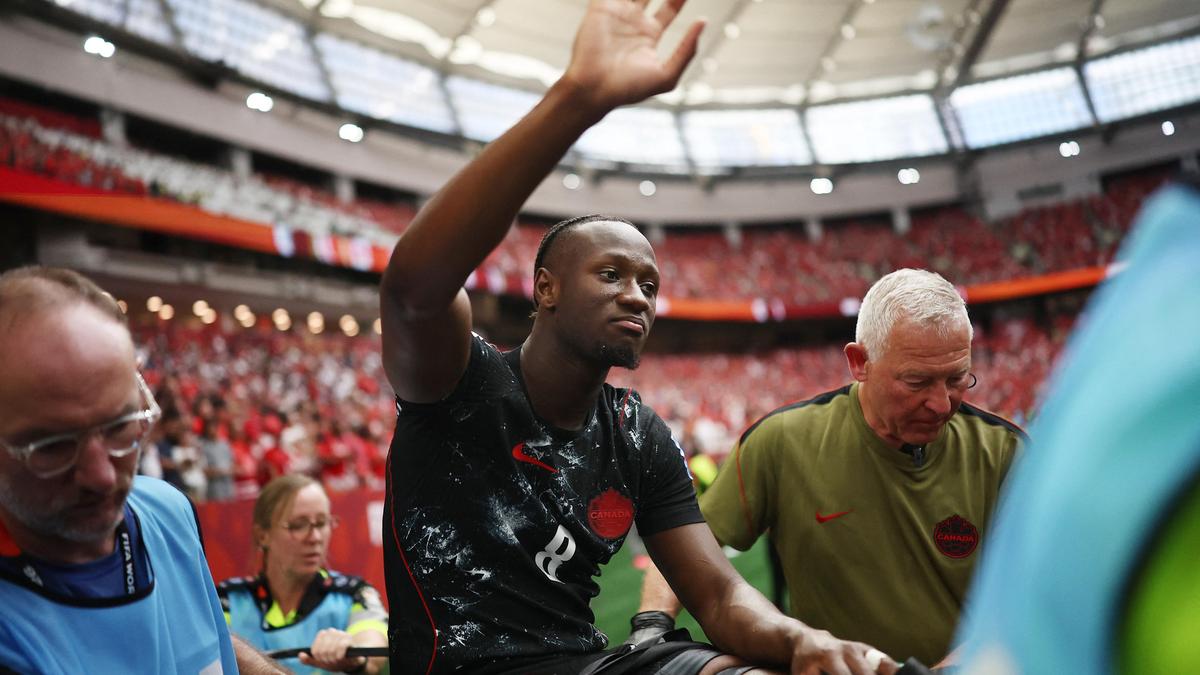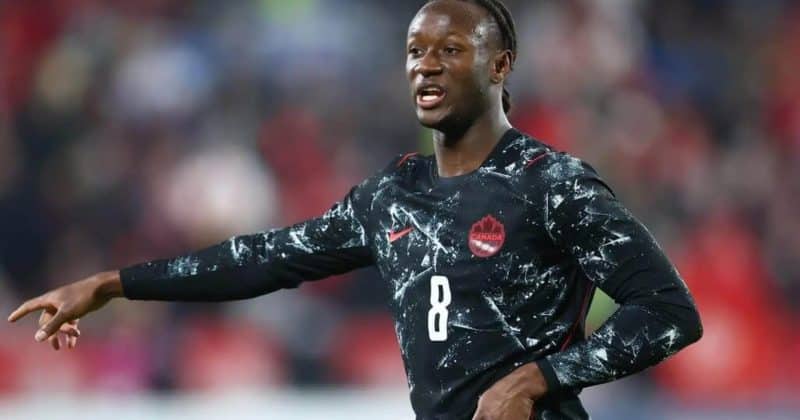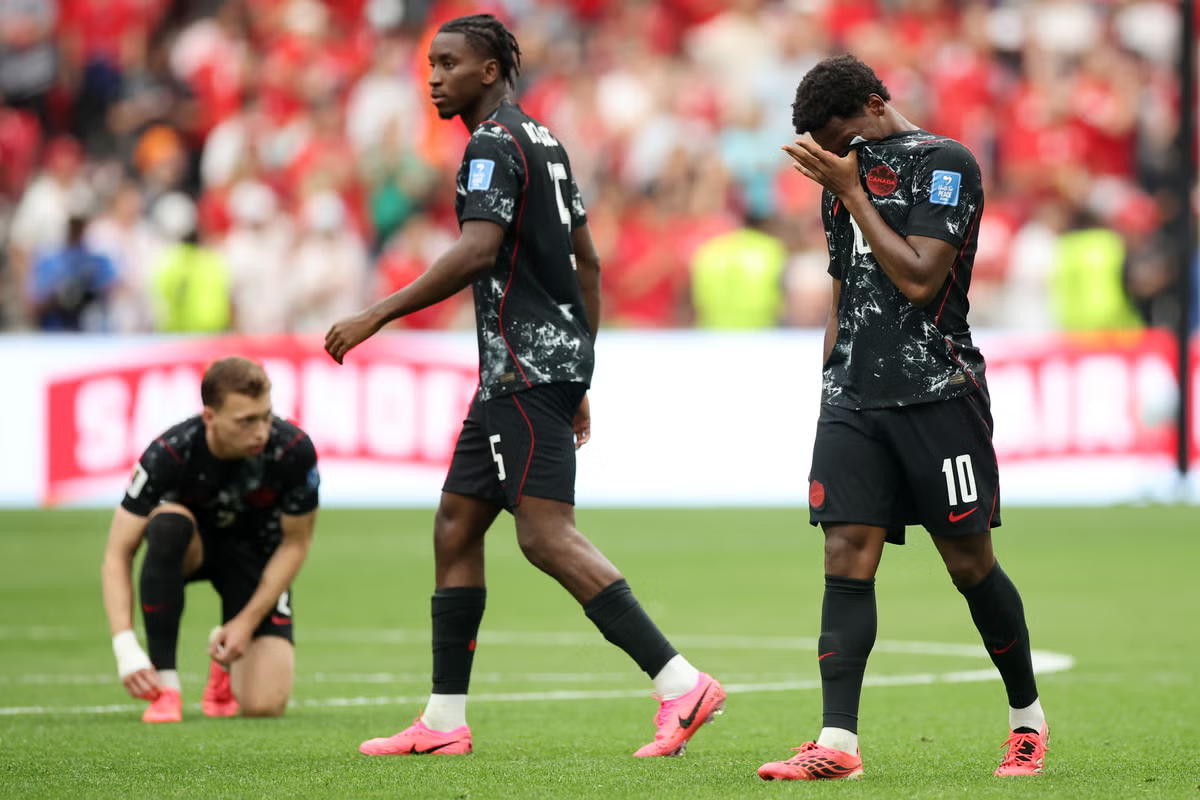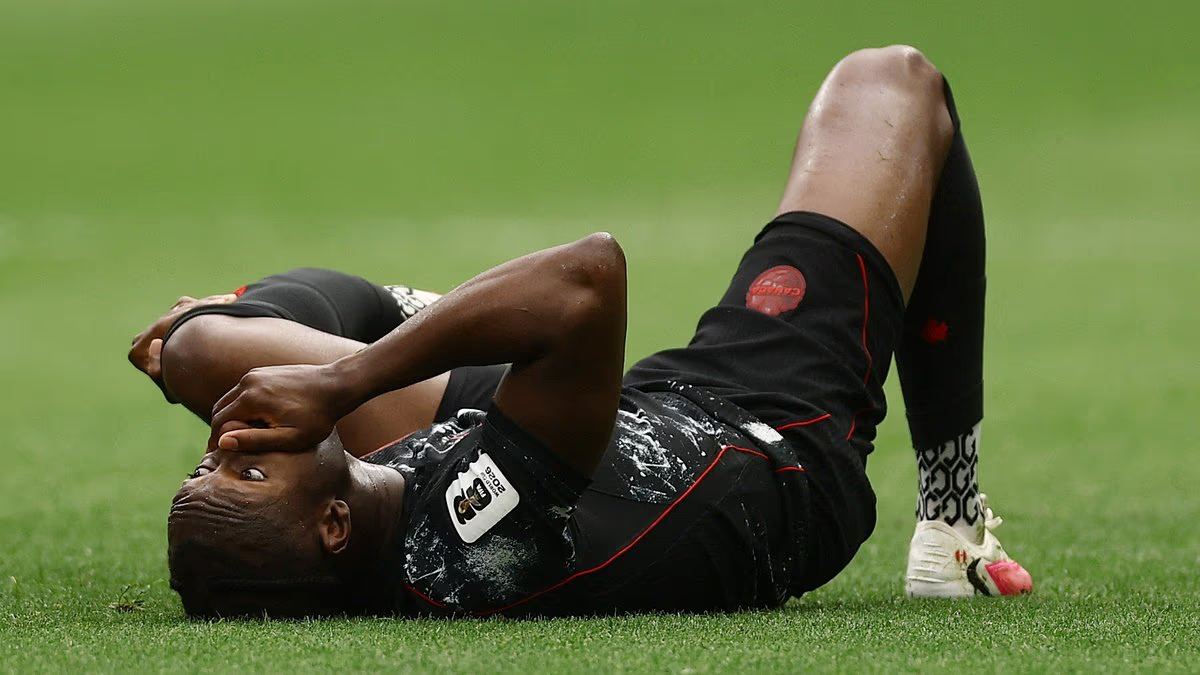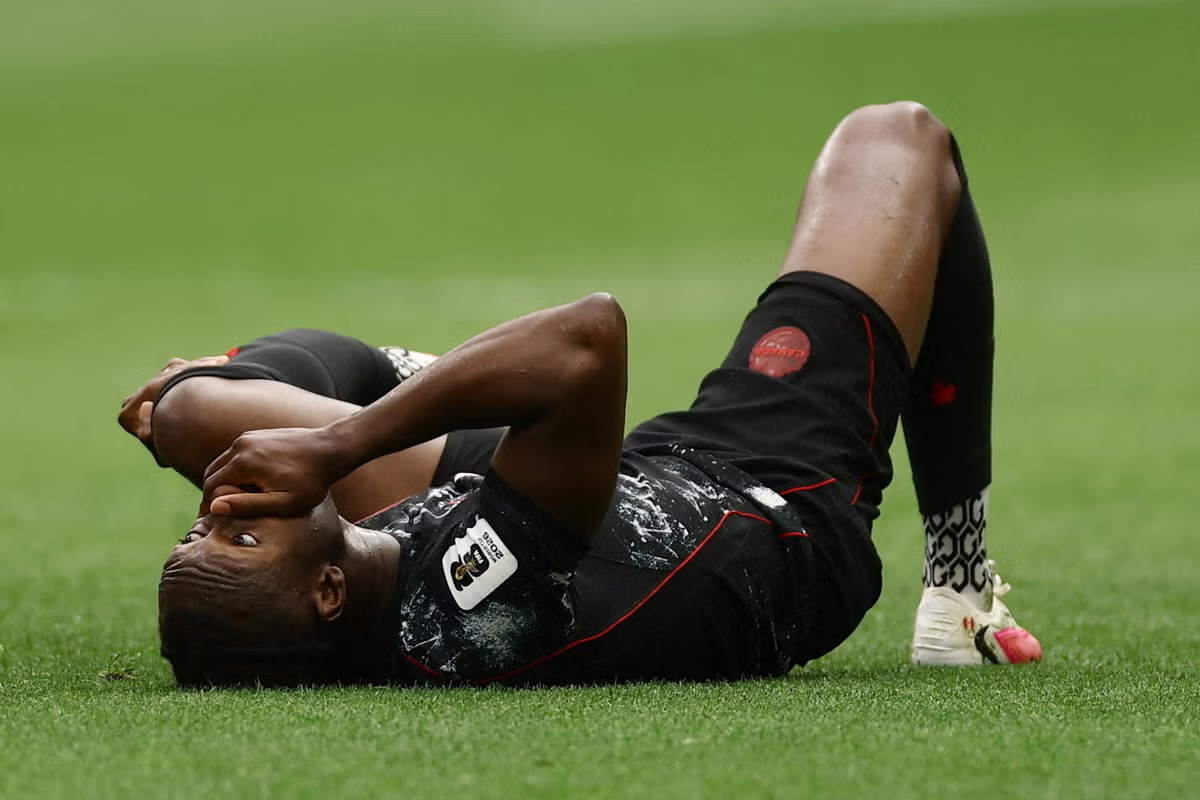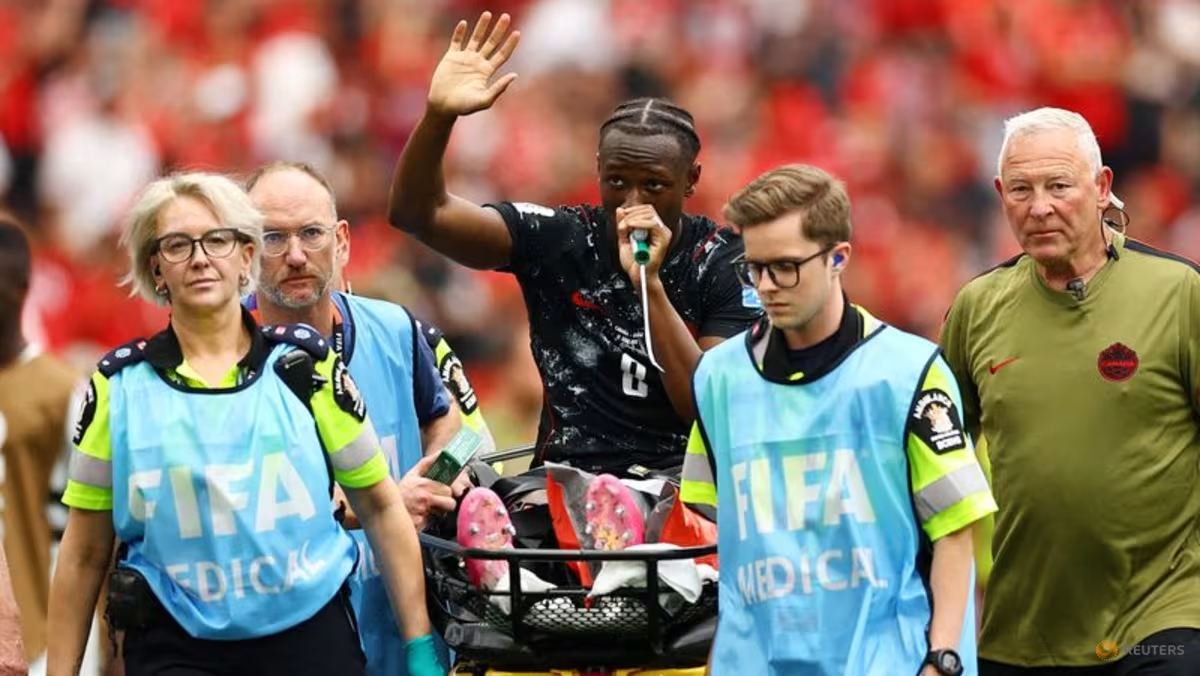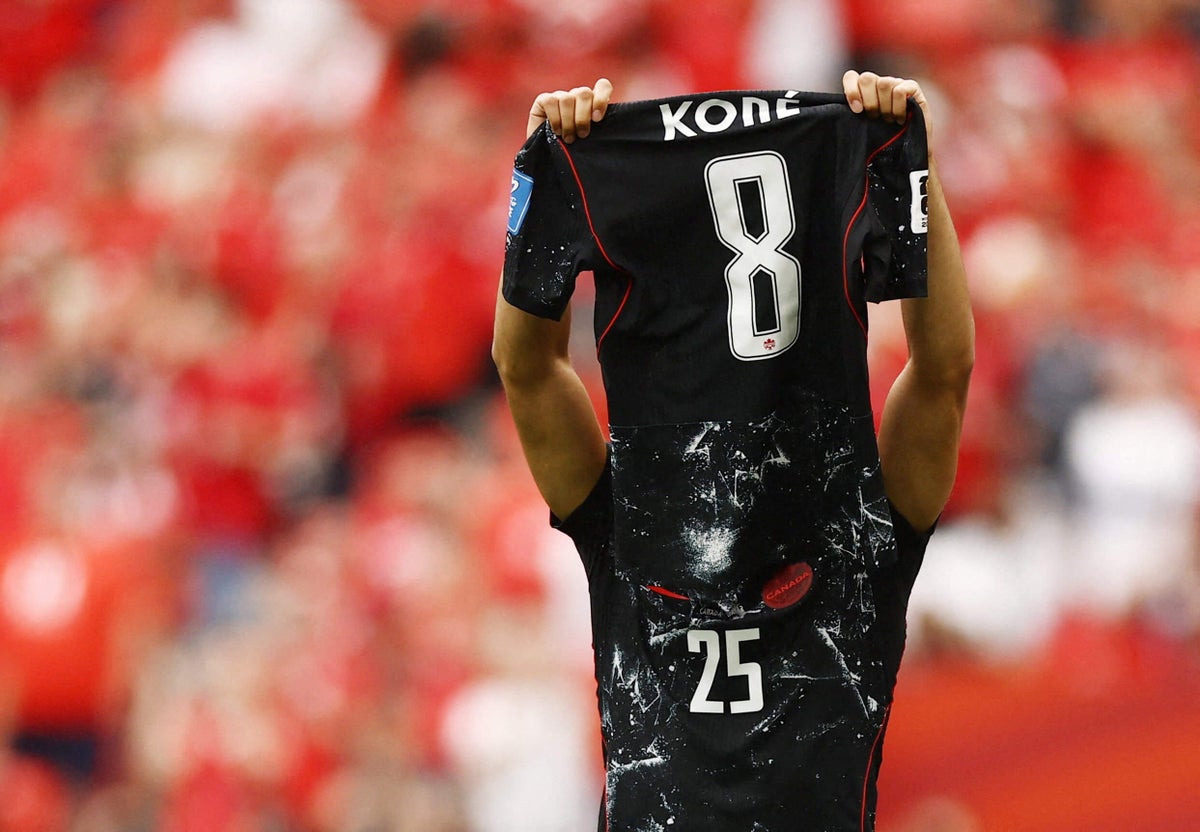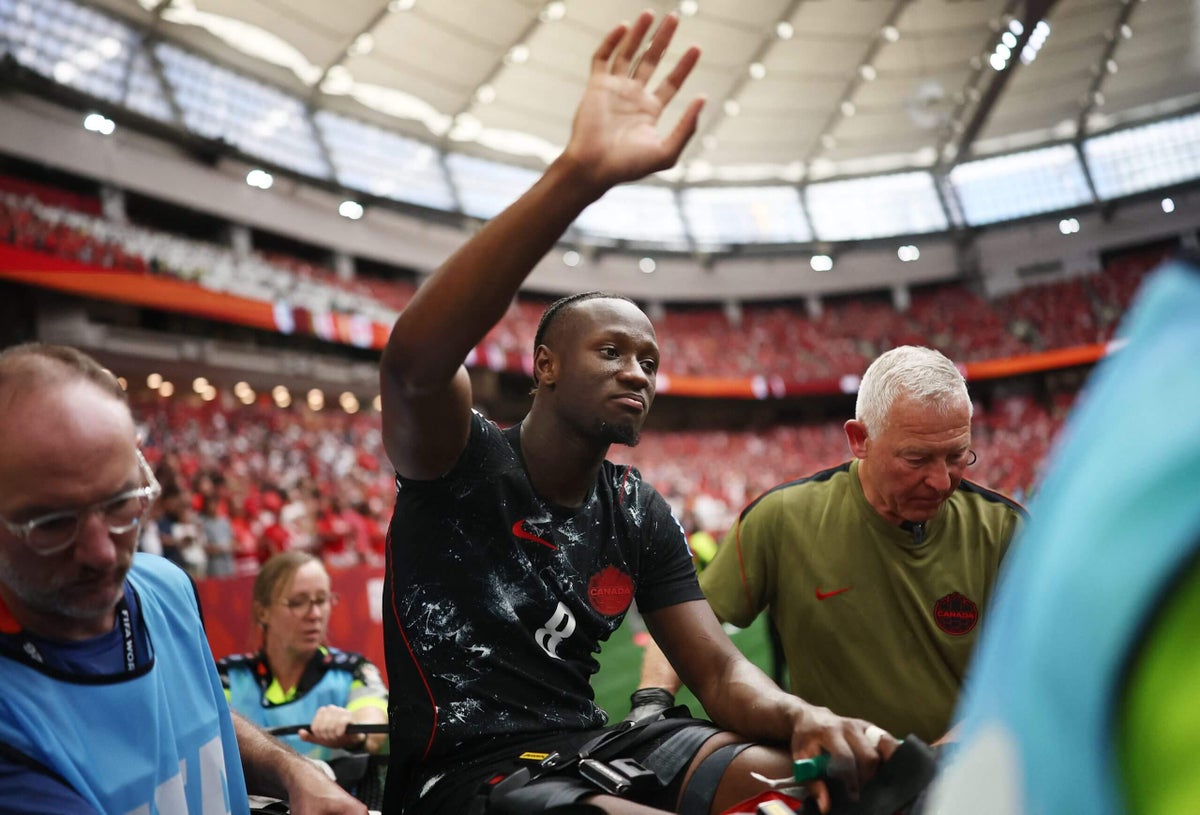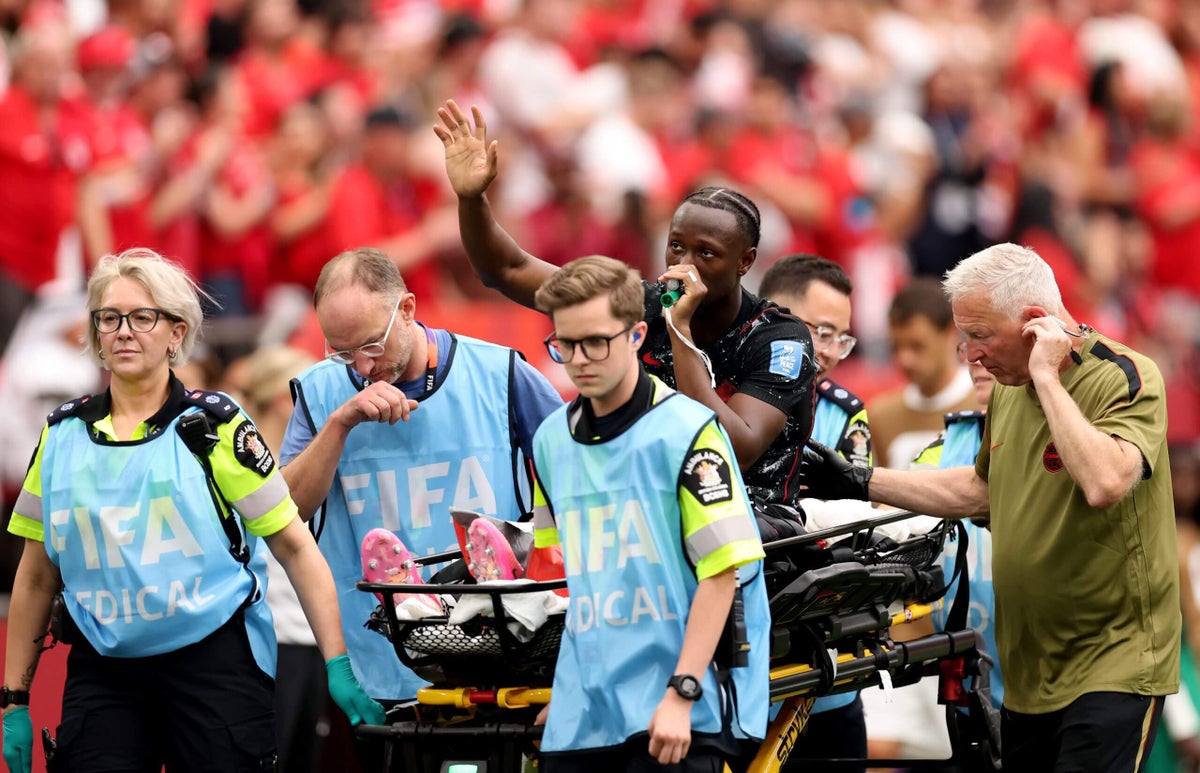
Mixed with the jubilant celebrations of Canada’s first World Cup win was the cruel reality that one of their star players would play no further part in the tournament, and may not return to a pitch for a long time.Ismaël Koné, the beating heart of the Canada midfield, left the field on a stretcher in the second half after suffering a serious injury to his left leg. The 24-year-old, who plays for Sassuolo in Italy, was fouled by Qatar’s Assim Madibo, who was sent off and left the pitch in tears. At the time, Canada were 3-0 up, and they went on to win 6-0 against nine men, with Qatar having been reduced to 10 in the first half.The scenes were harrowing. Canada head coach Jesse Marsch said after the game that he could “hear Koné’s bone snap” from the dugout and that he would need to have surgery. Stephen Eustaquio added that the extraordinary result “feels so empty” after watching his midfield partner leave the pitch in such devastating circumstances.Koné was joined in hospital after the game by Moïse Bombito, who can relate to his team-mate’s pain better than anyone. Bombito broke his leg in October 2025 playing for Nice in France. The injury required surgery and sidelined him for most of this domestic season. After working hard to return in time, Bombito made his first World Cup appearance as a second-half substitute on Thursday.Moise Bombito posted this picture of himself with Ismael Koné on Instagram @m.bombitoKoné’s World Cup is done, but he did not leave without making one hell of an impression. He was named player of the match in Canada’s opening 1-1 draw with Bosnia and Herzegovina, displaying all the physical and technical qualities that make him so important to Marsch’s side.Born in the Ivory Coast before moving to Canada at age seven, he was at the heart of the team’s offensive and defensive efforts, registering the second-most touches of any Canada player (79, behind centre-back Derek Cornelius’ 87), as he dropped back to receive passes and push his team up the field.Before his afternoon in Vancouver was cruelly curtailed, he was right up there again with 61 touches, just two short of his midfield running-mate Eustaquio (63).Central midfield is a key area for any team, but it has particular importance under Marsch, who asks an awful lot from his engine room.Koné’s ability to pass through the lines and hit attacking team-mates was especially integral to breaking teams down. On that front, he had done a fine job, leading his team in successful passes (completing 50 out of 59, an 89 per cent success rate) against Bosnia and completing 90 per cent of his 50 passes before his injury against Qatar.Here’s an example of Koné driving the ball through the midfield, before playing a nicely-weighted pass into Tani Oluwaseyi against Bosnia.Koné has great qualities with the ball, but Canada will also miss his industry and aggression out of possession.As detailed in the graphic below, Koné was everywhere for Marsch’s side against Bosnia, playing an important role in helping the team build their attacks in Canada’s half, sustain attacks in Bosnia’s, and control the game in the middle.He has near-unmatched physical capacity in the squad, a crucial attribute to Marsch’s two-person midfield system. Without Koné’s energy, Canada may be easier to overrun. They may be a less formidable, and less threatening, pressing side.In the clip below, Koné closes down his opponent to win a ground duel, allowing Canada to sustain their attack in Bosnia’s half.Here’s another example from Canada’s pre-tournament 2-0 friendly win over Uzbekistan, with Koné pushing ahead to force the opposition back.Against stronger opponents in the knockout stages, Canada will likely surrender possession and therefore require discipline and energy from its midfielders. Not having Koné available is undoubtedly a blow to their chances of deep progression.“Ismael is such a great kid,” Marsch said after the game. “He’s so imperfect, but that’s part of why we love him. He can do things that nobody else can do, and then in the next moment, he loses concentration for a second. But he really embodies a lot of what this team is. It’s a huge loss for us.”Encouragingly, Nathan Saliba came into midfield as Koné’s replacement and made an immediate impression. The 22-year-old, who plays for Anderlecht in Belgium, scored an excellent free-kick and provides composure and skill in possession. Marsch and Canada’s coaching staff have long been believers in Saliba. He broke out at last summer’s Gold Cup, scoring two goals in his first two games.Speaking with The Athletic before the World Cup, Saliba said he “learned how to be faster and grew a lot on the ball” this past season in Belgium.“That’s where the national team helps a lot because the way we want to press and be aggressive. The staff over there and my team, they really helped me and gave me confidence with my dribbling, to be more direct in breaking lines and taking on space with the ball at my feet.”Saliba said Marsch had been “telling me a lot to be more vocal and be more of a leader in the middle of the field to help the guys around me. This is something I try to work on and it’s going to be a big part of my game.”Saliba is, in many ways, an almost ideal replacement for Koné, but he may now be relied upon to play every minute in every game for Marsch, who demands hard running, with only Jonathan Osorio and Mathieu Choinière as central-midfield back-up.But, as shown by his team-mates’ reaction and post-match comments, Koné’s injury means Canada have not just lost a player but a beloved character. If there is any silver lining, it gives his band of brothers another reason to make this World Cup a memorable one.
Ismaël Koné’s World Cup is over. This is what Canada will miss – and how Jesse Marsch may move on
The 24-year-old midfielder suffered a serious leg injury in Thursday's 6-0 win over Qatar, Canada's first World Cup victory
TL;DRAI
Questo articolo riguarda il calcio (Canada al Mondiale, infortunio di Ismaël Koné), non la tecnologia. Non rientra nella tematica di **Warptech Tech News** dedicata a manager IT, CTO e responsabili AI. Desideri che: - Lo riassumo comunque per testare il formato di sintesi? - Hai un articolo tech da riassumere con questo template? Sono pronto in entrambi i casi — chiariscimi l'intento e procedo.
971 words~4 min read