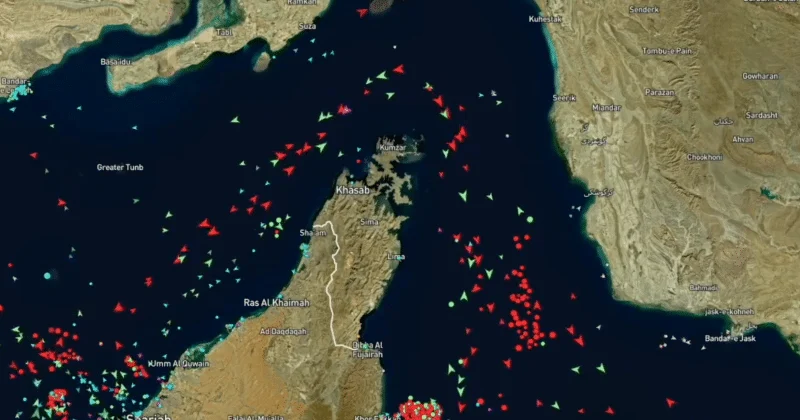
It could take months for gas prices to fall to pre-war levels and economies to fully recover even after the U.S. and Iran signed a memorandum of understanding to end the war on Wednesday, analysts tell TIME, dashing hopes that countries around the world may find instant relief.Stock markets rallied this week, with crude oil prices falling around 10%. Gas prices dipped below $4 a gallon for the first time since March, as of Friday morning, a drop from this year’s peak of $4.56. Shipping companies have begun moving liquefied natural gas ships back to the Strait of Hormuz. The Strait, which Iran militarized at the start of the war in retaliation for U.S.-Israeli strikes on Feb. 28, carried around a fifth of the world’s oil trade before the conflict began.Despite some progress, analysts tell TIME that it may take weeks or even months for shipping through the Strait to return to pre-war levels, especially as physical risks persist. That means the price of oil and gas—as well as fertilizer, other commodities, and downstream products—will likely see a gradual, rather than sudden, drop. Traffic through the Strait has ticked up in recent weeks, and 26 vessels transited the Strait on Wednesday, according to maritime data firm Windward. Other counts vary, but they are all significantly less than the 138 vessels that typically passed through the waterway each day prior to the war. Many shipping companies appear to be approaching the Strait with caution due to the risks of mines or resumed attacks, according to Windward.Still, experts say even a cautious resuming of traffic in the Strait would be beneficial.“Every extra day [of the Strait’s closure] was putting us deeper in the food insecurity trenches,” Elyssa Kaur Ludher, a visiting fellow at the Singapore-based ISEAS-Yusof Ishak Institute specializing in climate change and agriculture, tells TIME. Many Asian countries, especially in South and Southeast Asia, that rely on Middle Eastern energy and fertilizer supplies, have faced fuel crunches and higher prices for household goods and food in the past three months.The economic fallout has been felt far and wide. Last month, a U.K. lawmaker warned that the world was on the brink of a “global food crisis” if the Strait didn’t reopen.The securing of a U.S.-Iran agreement, and its emphasis on the full reopening of the Strait, has offered some reassurance, but significant obstacles remain.Risks to shipping persistSeveral physical risks remain for ships transiting the Strait. Iran is suspected to have mined the main traffic route through the Strait that lies between Iran and Oman. Before many shipping companies and insurers will commit to sending ships through the Strait, those mines would need to be cleared—a laborious task that could take weeks. “Shipping through the Strait of Hormuz will depend on the willingness of commercial vessels to re-enter the Gulf with confidence in maritime safety,” Jaqueson Galimberti, senior economist at the Asian Development Bank, tells TIME.“Any indication that negotiations towards a final deal are not progressing as expected could raise concerns that the Strait of Hormuz may be blocked again,” adds Niels Rasmussen, chief shipping analyst at the Baltic and International Maritime Council (BIMCO). “Shipowners may hesitate to send additional vessels into the region, fearing they could become stranded inside the Persian Gulf.”Meanwhile, ships already in the Persian Gulf will likely start to transit the Strait as soon as they are guaranteed a secure passage, Rasmussen says. More than 500 vessels are waiting to leave the Gulf, including more than 100 laden tankers and around 100 in ballast that could load new cargo. Rasmussen says shipping may return to pre-war levels within a couple of months, but a recovery in cargo volumes of oil, gas, and LNG will likely take longer, because of damage to facilities during the war.There are other potential complications that could impact the flow of naval traffic, experts note.Tankers that diverted while the Strait was militarized may take more time to return to Gulf routes and ships that were stuck in place for months could have sustained damage, such as from barnacles, and may need to be serviced before they can carry out long haul shipments.Prices could remain highReturning global energy trade to pre-war levels will depend not only on the reopening of the Strait, but also on the resumption of production across the Gulf, where facilities faced retaliatory attacks from Iran.“Previous maritime disruptions have typically led to changes in ship routings, while cargo flows have largely continued,” says Rasmussen. “Although some situations have temporarily halted cargo movements, none have matched the scale or impact of the recent three-and-a-half-month isolation of the Persian Gulf.”More than 40 energy infrastructures across the Middle East were damaged in attacks during the war, forcing many refineries across the Gulf to halt production. Middle East crude oil exports fell from 15 million barrels per day before the war began to around seven million barrels per day at the start of April, according to trade data platform Kpler. While Galimberti tells TIME that production can be restarted relatively quickly, many operators also shut in oil wells as restrictions on traffic through the Strait disrupted exports. The extended closure of oil wells may have caused reservoir damage, Galimberti says, which could reduce production capacity even after facilities reopen.Gas supply could take even longer to recover than oil, according to Galimberti.“Unlike crude, which ships anywhere on standard tankers and can be cushioned by strategic reserve releases, gas mostly moves under long-term contracts through purpose-built terminals, with new capacity taking years to add and no comparable stockpile to draw down,” he says. “A shortfall in one region therefore cannot be easily offset by supply elsewhere.”Gas prices in Europe and Asia could therefore remain elevated for longer than oil prices. Overall, energy prices are likely to remain above pre-war levels for some time, Galimberti says. But consumers can expect to see a gradual fall in energy prices as geopolitical risk premiums narrow, as they have done in recent days due to the outlook of a deal.According to the Drewry Composite World Container Index, which tracks freight rates for 40-foot containers on eight major shipping routes, global container rates have risen more than 100% from $1,899 in late February to $3,969 on Thursday. That’s in part due to companies stockpiling inventories due to concerns around supply disruptions, says Bernard Aw, chief economist for the Asia Pacific region at Coface. Rates are unlikely to fall to pre-war levels in the near term, Aw says, especially as the following months will likely see strong demand for shipping ahead of the Black Friday and year-end retail cycles.Across Asia, where many countries have been hard hit by the shortages, governments have also rolled out a number of fuel subsidies. Those subsidies could now make economic recovery more difficult if they remain in place, Galimberti cautions, as they put pressure on public finances.Fertilizer and certain food items could retain an elevated price tag for at least six months, experts predict, as countries replenish stock and potentially stock up against another shortage.Ludher tells TIME that the repair of damaged fertilizer production facilities could take years. Food prices will also be dependent on how soon fuel supplies reach markets and whether suppliers opportunistically price gouge, she adds.Economic relief for IranThe deal’s financial relief for Iran, while a concern for some American lawmakers, could actually be a boost for the global economy, analysts say.The memorandum of understanding appeared to leave management of the Strait unresolved, noting that Iran will discuss with Oman “the future administration and maritime services in the Strait of Hormuz.” Iran has repeatedly insisted that it will retain control of the Strait, including potentially charging tolls for passage through the waterway.But Thomas Zwick, a senior maritime analyst at Veson Nauticals, tells TIME that the economic boost for Iran could be “incentive for Iran to leave the topic of any fees aside.”The lifting of sanctions on Iranian oil—dependent on Iran’s compliance with the broader agreement—will also mean greater flows of oil out of the Middle East over time, Zwick says, especially as Iran is an oil-rich country.
Gas Prices Could Take Months to Return to Pre-War Levels Even After U.S.-Iran Deal
The securing of a U.S.-Iran agreement, and its emphasis on the full reopening of the Strait, has offered some reassurance, but significant obstacles remain, analysts tell TIME.
1,342 words~6 min read