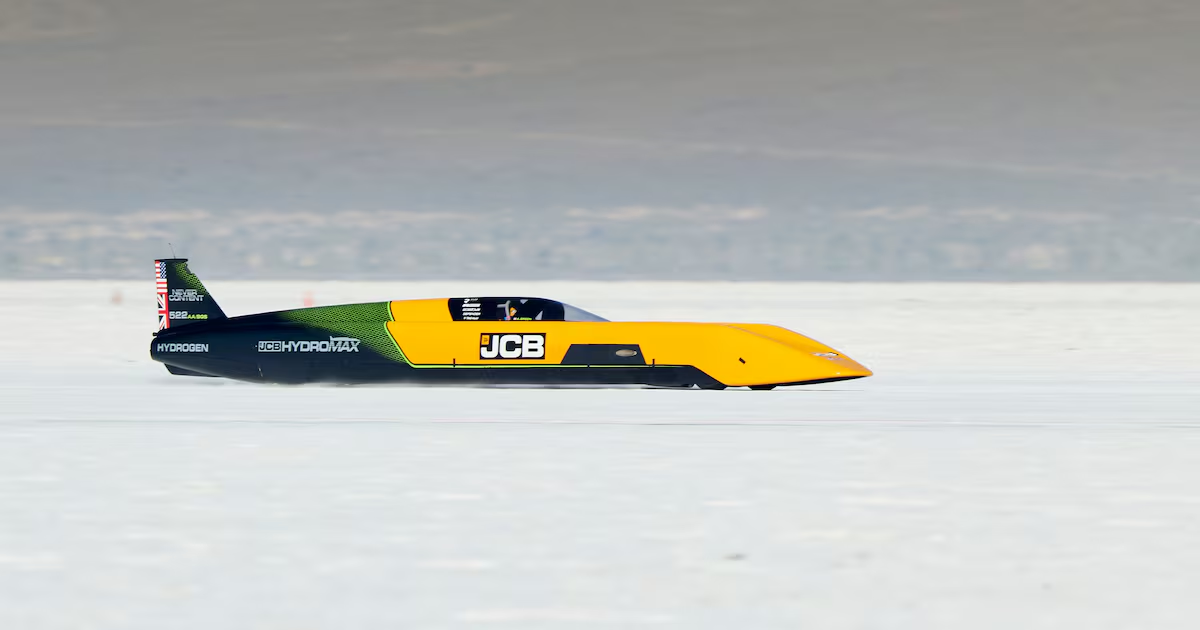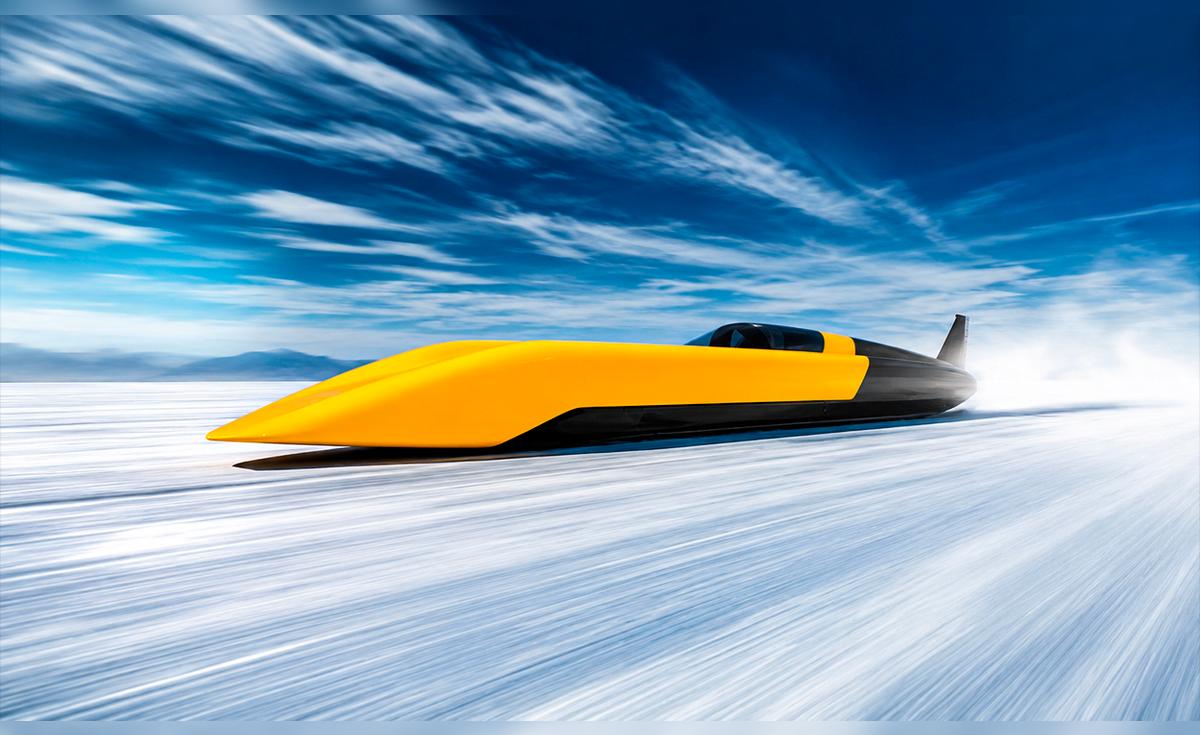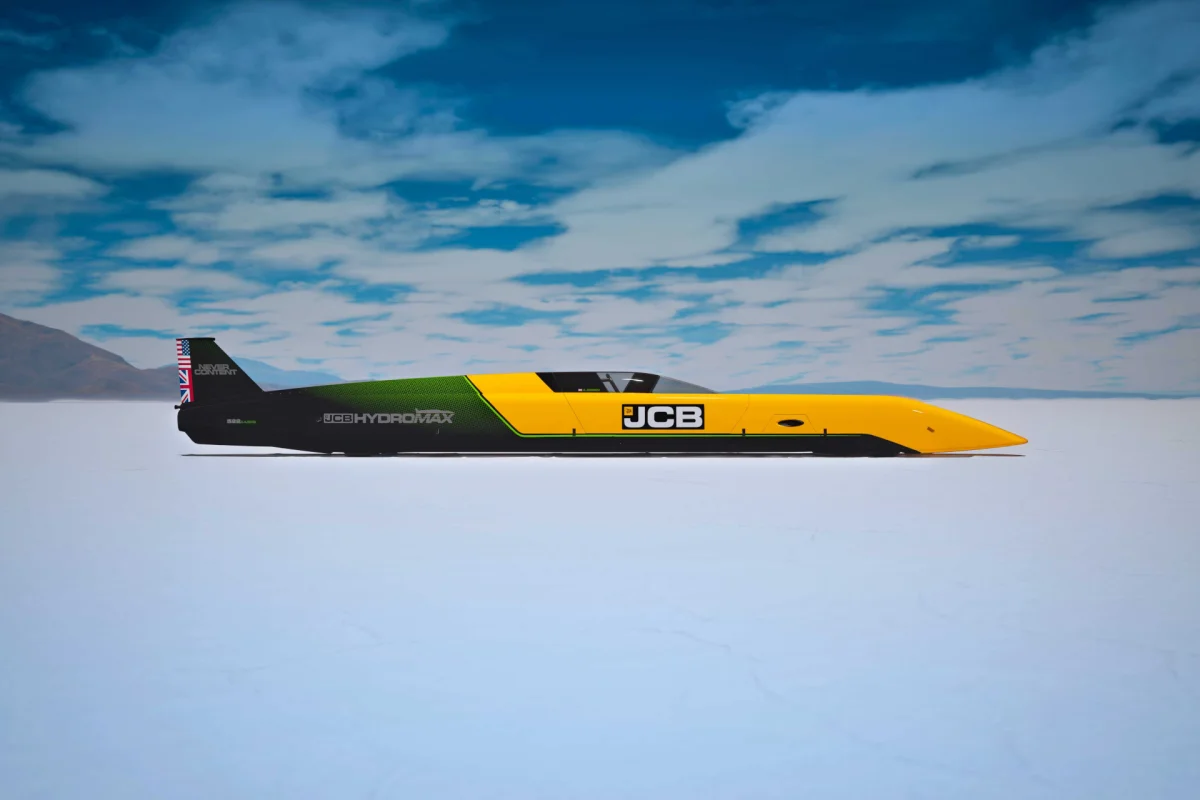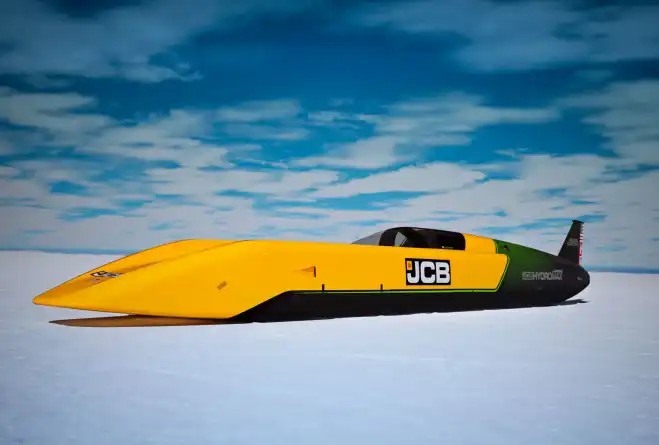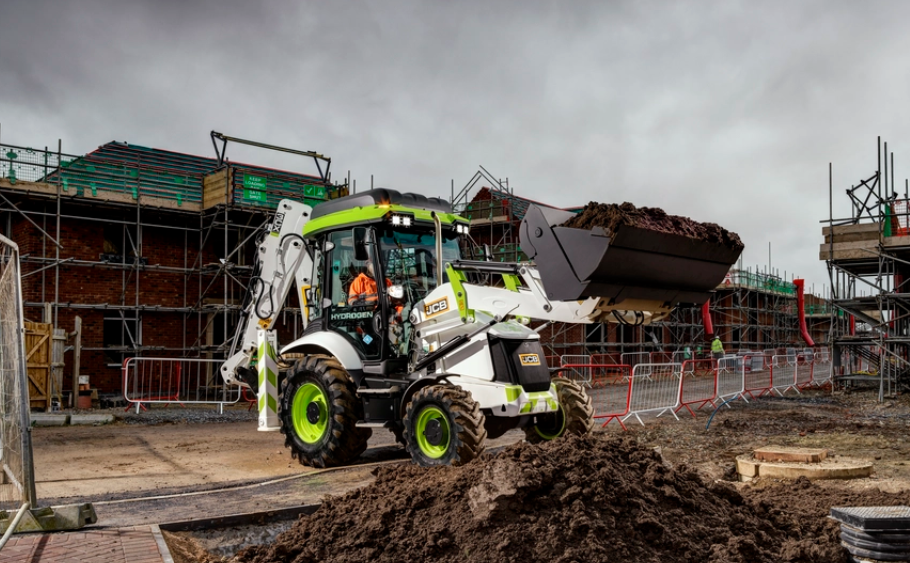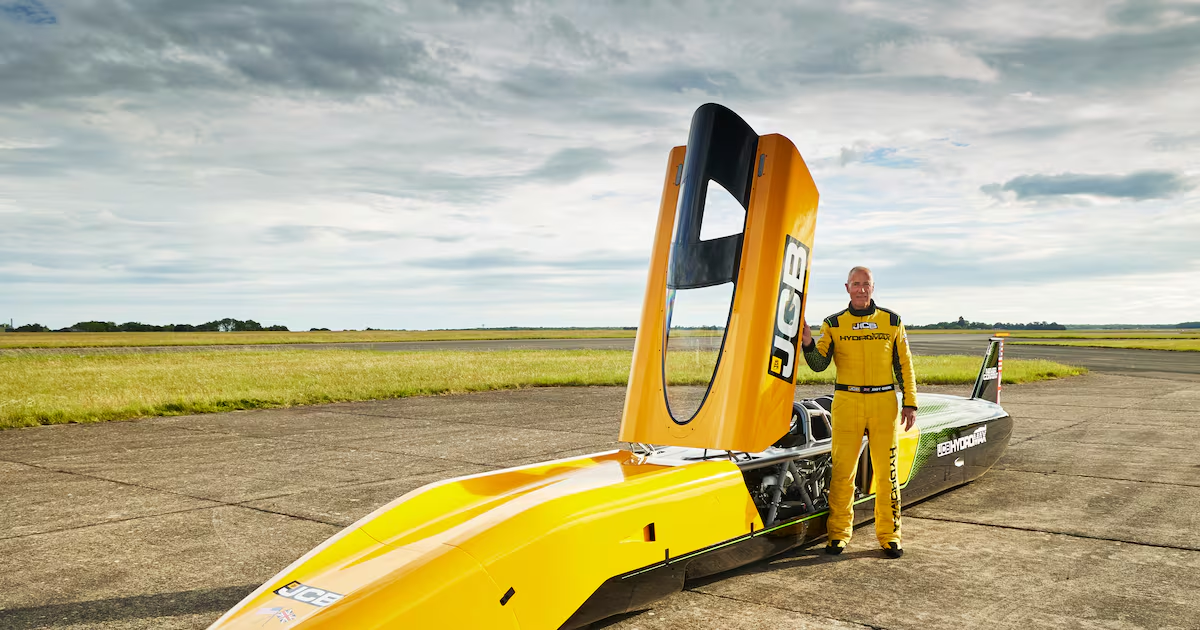
Andy Green broke the speed of sound in the mighty jet-engined Thrust SSC in 1997, but his latest record bid is in a car powered by two JCB digger engines and running on hydrogen.The 63-year-old former Royal Air Force (RAF) fighter pilot, whose land speed world record of 1,227.985km/h still stands, is chasing a somewhat slower hydrogen first in what he calls the “coolest zero-carbon racecar ever created”.When fully unleashed in August in Bonneville, Utah, the 9.7m-long JCB Hydromax will try to beat the diesel record of 563.418km/h set 20 years ago on the same salt flats by the British engineering giant’s JCB Dieselmax predecessor, also driven by Green.The car features two production-based 55kW hydrogen engines tuned to produce a combined 1,193kW. (James Arbuckle) “This is about showcasing the next generation of technology, the future of the internal combustion engine,” the Briton said after test runs down the 2.7km runway at the RAF Wittering airbase in central England.“That, for me, is really exciting. And 580km/h will look quite fast from where I’m sitting as well.”The test programme will continue next week, making the most of hot and dry weather, before the car is packed away and shipped to the US.Going to have to work harder JCB, whose fastest tractor can do 217km/h and who partners with the Aston Martin Formula One team, started the project in June 2025 and announced it last month with Prodrive, Ricardo and Xtrac.In testing this week, the Hydromax reached 285km/h, close to the limit over the distance available, in third gear.The runway at Bonneville extends to between 14km and 16km, a distance that has shrunk from 18km in 2006 due to salt mining and environmental conditions.Coming to a stop with the use of a rear parachute, although the car can also do so on brakes alone, will take about 3.5km.“The track will be shorter. Just to do what Dieselmax did, this car’s going to have to work harder and outperform its uglier, dirtier sister,” said Green, who said the record attempt was trying to do in 10 days what might normally take 10 years.The engine pumps about a litre of oil per second through the engine. It’s got seven litres of oil, and all seven litres go around the engine every seven seconds. Half of that oil is there just to stop the pistons melting— Andy GreenThe attempt, sanctioned by motorsport’s world governing body, the FIA, comes before JCB opens a new $500m (about R8.24bn) factory in San Antonio, Texas, that will employ 1,500 people to make machines for the US market.The company has invested £100m (about R2.18bn) to develop hydrogen-powered internal combustion engines and is using the Hydromax project to promote the green-engined diggers rolling off production lines.JCB sees hydrogen as the zero-emissions alternative to diesel in locations where machines, in constant use, need a highly mobile drop-in fuel and electric is not available or viable.The car features two production-based 55kW hydrogen engines tuned to produce a combined 1,193kW and with immense amounts of torque. There is more than 1km of wiring in the car.On a record run, JCB Hydromax will pump a bathtub of air every half-second through a titanium turbo compressor spinning at more than 150,000rpm at nearly 300ºC. The car will consume just over 2kg of hydrogen and produce 18l of water.The engines, one at each end with two Xtrac gearboxes, are laid sideways for reduced height.“To give you some idea of how challenging the cooling is on a 596kW hydrogen engine, the engine pumps about a litre of oil per second through the engine. It’s got seven litres of oil, and all seven litres go around the engine every seven seconds,” said Green.“Half of that oil is there just to stop the pistons melting.”Reuters
Andy Green to take on hydrogen land speed record
Record holder prepares JCB Hydromax for zero-carbon land speed attempt in Utah
624 words~3 min read