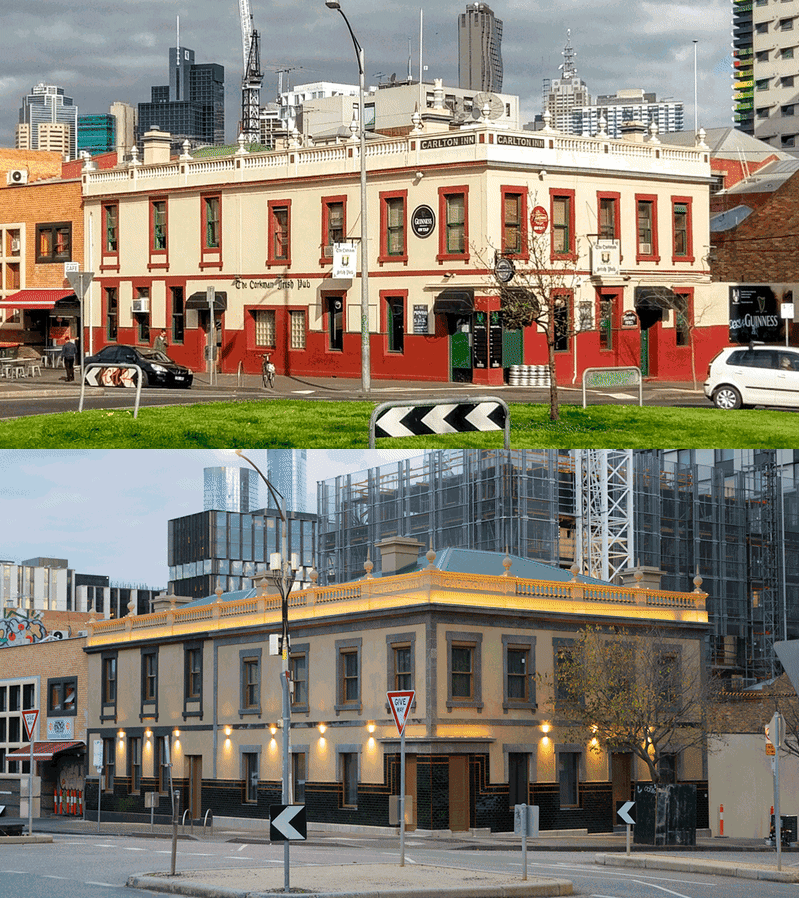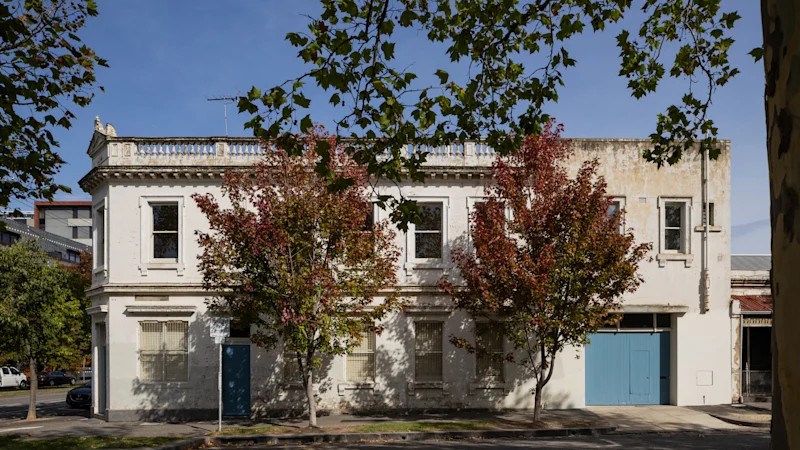
June 19, 2026 — 10:00pmSplatters of paint on the wooden floor, peeling walls and a 1950s kitchen are key features in an award-winning renovation that takes retaining the heritage of an old building to a whole new level.Once a hotel, the Carlton building’s original features are treated as gently as later additions left by former owners from the 1950s, celebrating its past as much as its present.This Carlton building’s original features are treated gently.Robert Simeoni It would have been easy for Robert Simeoni Architects to simply gut the Victorian building, put in a shiny new kitchen and bathroom and make it comfy for contemporary living but, instead, there are plenty of clues – like peeling paintwork on the exterior – to what lies inside.And Robert Simeoni’s efforts to retain its unique heritage features won the building plaudits, including the prestigious John and Phyllis Murphy Award for Alterations and Additions, and also a Heritage Award from the Australian Institute of Architects (Victorian Chapter).“I took the colour cue (a duck-egg blue) from the original 1950s palette,” says Simeoni, who was given a brief to create a flexible home/studio/office. Both the clients and Simeoni were on the same page about treading lightly with the building’s original fabric, whether from the late 1800s or later additions in the 1930s through to the ’70s.When you add a new pale-yellow Smeg fridge into the mix, what at first blush seems slightly dated suddenly becomes contemporary.Trevor MeinThere are three different points of entry painted duck-egg blue, double doors at the corner, a separate door to the side and the original garage door complete with a built-in door within the steel similar to garage doors from the post-war period. Rather than remove the steel mesh that was added in the 1970s to the windows, Simeoni left it, creating a subtle “veil”, as much as for security.Both the clients and Simeoni were on the same page about treading lightly with the building’s original fabric. Trevor MeinAside from a large concrete wall and concrete treads that linked the two levels, most of the original building has been retained – including the splatters of paint on the timber floor in the downstairs living area and the more marked concrete in the meeting area that was once used as a garage.Few architects or clients would agree to retaining original pipe work and even fewer would acquiesce to keeping a 1950s kitchen, complete with curved benches and pale-yellow wall tiles that were popular at the time.The new bathroom at ground level with D-tiles, in the same duck-egg blue used for the exterior paintwork.Trevor MeinBut when you add a new pale-yellow Smeg fridge into the mix, what at first blush seems slightly dated suddenly becomes contemporary. Mod cons, like a dishwasher, are concealed behind the original joinery.For the first-floor bar/kitchenette, adjacent to the dining area, there wasn’t the opportunity to work with the past. Instead, Simeoni put in a stainless-steel kitchen, using many off-the-shelf products to create a sense of rawness, but also to keep it bespoke. A similar approach was taken in the new bathroom at ground level. D-tiles, in the same duck-egg blue used for the exterior paintwork, were used with magical effect against the new concrete insertion.One of the main changes was the reworking of the building’s 1950s addition, including the garage below. Featuring concrete floors and new fine-steel windows, the dining area benefits from a north-facing terrace that creates a backdrop for climbing plants.Chain mesh wire was added to frame the void, the latter including original wire glass louvres popular in the 1950s. While most of the furniture and art was added by the owners, there are two monumental concrete forms in the dining area, one used to display objects, the other as a chaise adjacent to the terrace that further blurs the division between inside and out.Aside from a large concrete wall and concrete treads that linked the two levels, most of the original building has been retained.Robert Simeoni The owners also brought their own history to the project.There’s a traditional barber’s chair placed on the landing nook of the concrete stairs for quiet time and many of the pictures on the walls are of holiday advertisements from the 1950s and ’60s, one of which says: “Fly TAA for Extra Care.”And rather than just attach these posters directly to the hard-plastered walls, they stand proud with bulldog clips, caring for both the walls and the art itself.Renovators who prefer shiny and new might not appreciate the finesse of taking a more considered approach to heritage and contemporary design but for those who do, like me, this house is sheer joy at every turn.The Business Briefing newsletter delivers major stories, exclusive coverage and expert opinion. Sign up to get it every weekday morning.From our partners
This renovation takes heritage protection to a whole new level
The renovation of this former pub celebrating its past as much as its present.
795 words~4 min read