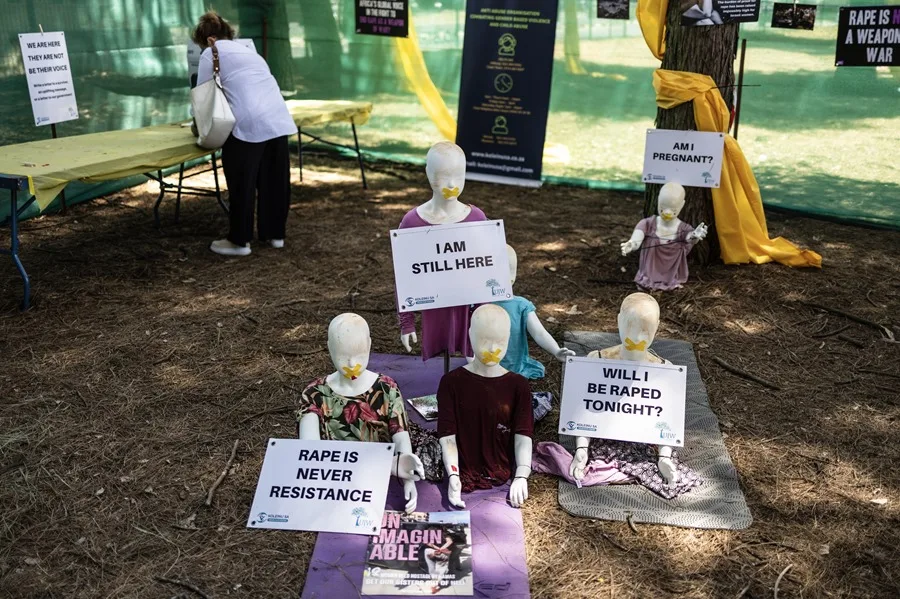
Warning: This explainer covers issues of sexual violence, which might be triggering. It is being published with the aim of raising awareness of these crimes and the need for justice.
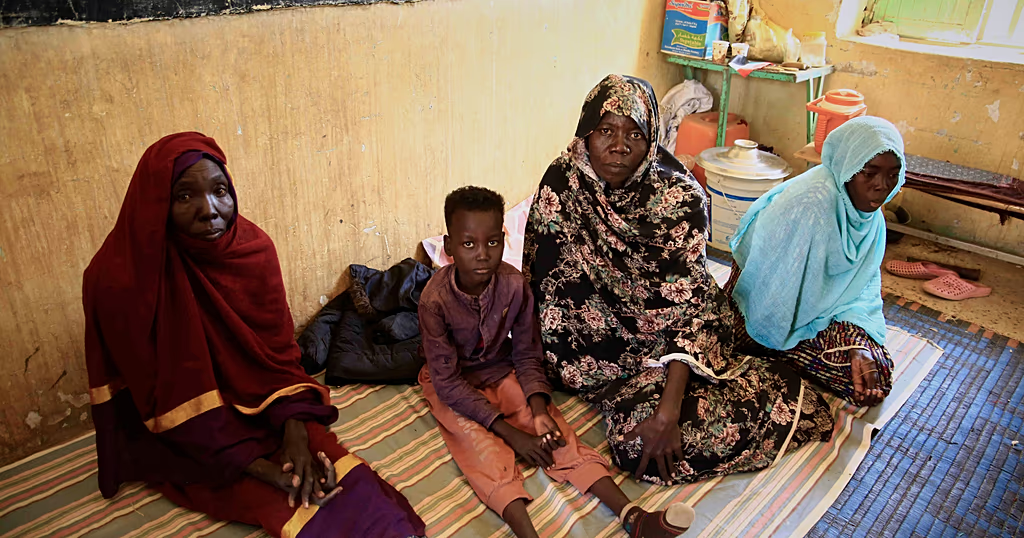
From Syria to Israel and the Occupied Palestinian Territory, from the Democratic Republic of Congo to Ethiopia, and Myanmar, conflict-related sexual violence occurs across the world with devastating regularity. It is perpetrated by government forces and armed groups to terrify and control communities, punish perceived opponents and force displacement. It is also a massively underreported crime. Lauren Aarons, Amnesty International’s Senior Adviser on Gender, Conflict and International Justice, answers key questions to understand the extent of this crime, what should be done to tackle it and support survivors.
When discussing conflict-related sexual violence people often first think of rape, but it extends far beyond that. It also includes sexual slavery, enforced prostitution, forced pregnancy, enforced sterilization, trafficking in persons for the purpose of sexual exploitation, and threats of rape or sexual violence. Sexual violence is not limited to physical invasion but can encompass a range of physical and non-physical acts that violate sexual autonomy and sexual integrity. It is often characterized by humiliation, domination, and destruction.