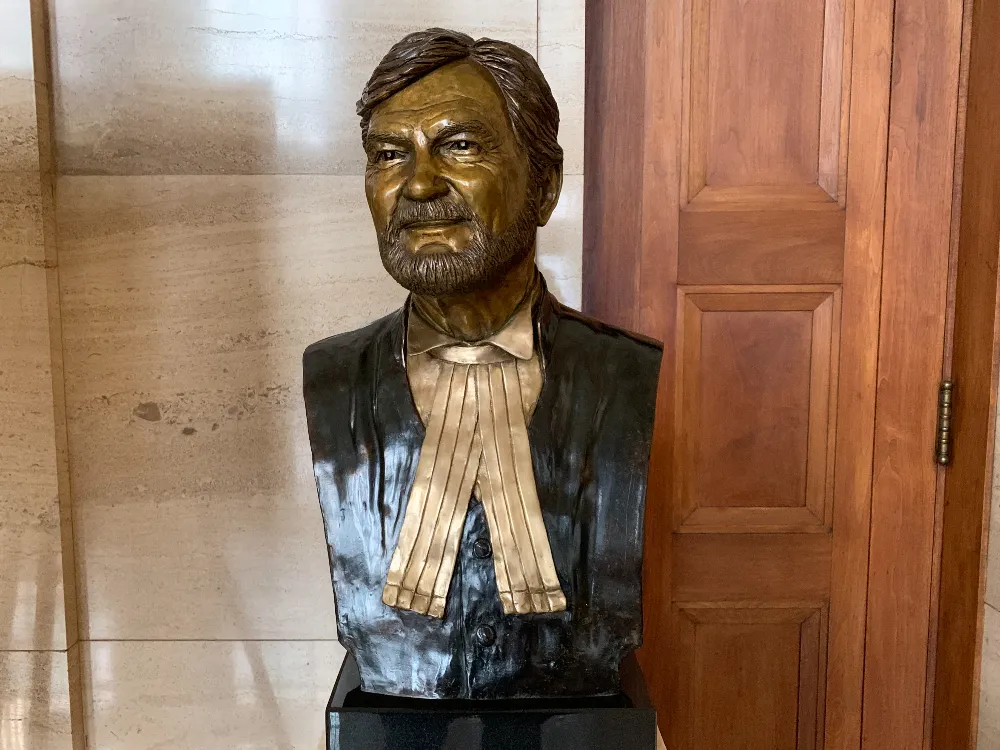
Skip to Content Subscribe Our Offers My Account Manage My Subscriptions FAQ Newsletters Canada Canadian True Crime Canadian Politics Health World Israel & Middle East Financial Post NP Comment Longreads Puzzmo Diversions Comics NP News Quiz New York Times Crossword Horoscopes Life Eating & Drinking Style Sponsored Play for Ontario Travel Travel Canada Travel USA Travel International Cruises Travel Essentials Culture Books Celebrity Movies Music Theatre Television Business Essentials Advice Lives Told Tails Told Shopping Buy Canadian Home Living Outdoor Living Kitchen & Dining Tech Style & Beauty Personal Care Entertainment & Hobbies Gift Guide Travel Guide Amazon Prime Day Deals Savings National Post Store More Sports Hockey Baseball Basketball Football Soccer Golf Tennis Driving Vehicle Research Reviews News Gear Guide Obituaries Place an Obituary Place an In Memoriam Classifieds Place an Ad Celebrations Working Business Ads Archives Healthing Epaper Manage Print Subscription Profile Settings My Subscriptions Saved Articles My Offers Newsletters Customer Service FAQ Newsletters Canada World Financial Post NP Comment Longreads Puzzmo Diversions Life Shopping Epaper Manage Print Subscription HomeNP CommentJohn Robson: The supreme hubris of Richard WagnerWagner’s war on criticism exposes the judiciary’s growing conceit — and why Parliament must rediscover its constitutional duty to check itLast updated Jun 19, 2026 You can save this article by registering for free here. Or sign-in if you have an account.Bust of Chief Justice Wagner in the Supreme Court of Canada's Grand Entrance Hall in Ottawa. Photo by Christopher Nardi /National PostEvidently we mere mortals are not to criticize judges. So says… a judge. The judge. Supreme Court Chief Justice Richard Wagner recently complained that “rhetorical attacks” on the justice system weakened the system. Yeah? Well pardon my vulgar lèse-majesté but what weakens the system is inept hubris. And you’re it.Enjoy the latest local, national and international news.Exclusive articles by Conrad Black, Barbara Kay and others. Plus, special edition NP Platformed and First Reading newsletters and virtual events.Unlimited online access to National Post.National Post ePaper, an electronic replica of the print edition to view on any device, share and comment on.Daily puzzles including the New York Times Crossword.Support local journalism.Enjoy the latest local, national and international news.Exclusive articles by Conrad Black, Barbara Kay and others. Plus, special edition NP Platformed and First Reading newsletters and virtual events.Unlimited online access to National Post.National Post ePaper, an electronic replica of the print edition to view on any device, share and comment on.Daily puzzles including the New York Times Crossword.Support local journalism.Create an account or sign in to continue with your reading experience.Access articles from across Canada with one account.Share your thoughts and join the conversation in the comments.Enjoy additional articles per month.Get email updates from your favourite authors.Create an account or sign in to continue with your reading experience.Access articles from across Canada with one accountShare your thoughts and join the conversation in the commentsEnjoy additional articles per monthGet email updates from your favourite authorsSign In or Create an AccountorAs Ben Woodfinden wrote critically, Wagner’s annual news conference “now-familiar themes” included “that criticizing court decisions risks casting judges as ‘partisan actors’ or as ‘obstacles to the will of the people’” and that a non-partisan judiciary “sheltered from all politicization’ is essential to the rule of law.” Politicization as in criticism or accountability.Wagner would not deny that other people must be scrutinized and corrected. It’s what he and his colleagues do, albeit with increasing languor, from on high. Way up high. As Woodfinden complained, “A bronze likeness of the sitting chief justice now stands in the Supreme Court’s entrance, paid for by a donor the court won’t name, at a cost it won’t disclose, which Wagner, who posed for the sculptor, says he cannot identify.”This newsletter from NP Comment tackles the topics you care about. (Subscriber-exclusive edition on Fridays)By signing up you consent to receive the above newsletter from Postmedia Network Inc.We encountered an issue signing you up. Please try againClearly he didn’t remind himself of Cato the Elder’s “I would much rather have men ask why I have no statue, than why I have one.” And nobody else dared remind him. Or of Lord Acton’s “Power tends to corrupt and absolute power corrupts absolutely.”Moi? Perish the thought. Instead, in June 2003, dismissing calls to reform judicial appointments, then-chief justice Beverley McLachlin preened “the sole concern should be to appoint individuals who embody the most valuable qualities of impartiality, empathy and wisdom. From where I sit, the current judiciary in Canada meets the highest standards in this respect.”Yup. From its apex, she gave herself straight A+s for intellect and character, meeting her own supercelestial standards so who cares about yours?Now look. I hear good things about humility but cannot speak from experience. Like Prime Minister Mark Carney praising it in his book Value(s) while reinventing morality. I wouldn’t trust myself with unchecked authority, or him, and neither should you. But I can speak from experience that our court system is riddled with nightmarish delays, unaffordable procedures and capricious rulings, with smug judges having each other’s backs and mistaking fear for awe.It’s not that they’re necessarily worse than the rest of us. Though clearly Liberal politicians pick liberal lawyers as judges to push them further left than voters want, then subject them to indoctrination on “systemic racism and systemic discrimination” that Wagner doesn’t suspect of being politicization, just enlightenment.It’s that human frailty is an old and pernicious thing, that has outlasted better transvaluations than Carney’s or Wagner’s. As Colby Cosh wrote, after savage partisan attacks on the truckers’ convoy, Wagner refused to recuse himself because “Chief Justice Wagner has advised that he did not, at any time, either directly or indirectly, comment on the Emergencies Act … or matters at issue in the proceedings.”Bosh. But unchecked power regards criticism as insolence. As Woodfinden reminds us, a complaint about Wagner to the Canadian Judicial Council was dismissed with him chairing it. Nemo iudex causa sua nisi iudices?Too many of us buy into their self-image, including using terms like “Carney government” or “Ford government” for the arrogant executive and supine legislature while the judiciary are some band of angels above the squalor of governance and sin. As, for instance, reports that “a group representing judges is taking the government to court” to see who thinks judges should get even more money, judges or other judges. But arbitrary arrogant authority isn’t new and clever.It’s old and despotic. As is the solution: checks and balances. The ignorant may consider them some crass American innovation. But the U.S. Founding Fathers rightly prized this key aspect of an ancient British constitution that distrusted power and presumption.As James Madison wrote in Federalist #51, “Ambition must be made to counteract ambition.” Including between executive, legislature and judiciary. And while the latter was initially more important there, especially after Marbury v. Madison in 1803, they’ve been growing in importance and conceit here.As McLachlin also said, “My job is simply to listen to what the parties have to say, and to do my best to understand the position, the ramifications of deciding one way or the other, to think about what’s best for Canadian society on this particular problem that’s before us, and give it my best judgment.” Not what the law says. What I say. And who was going to stop her?I’ll tell you. Us. From Magna Carta on, members of Parliament we the people choose could veto executive excesses. And judicial ones if only they dared. They have power to discipline by yanking the purse strings, even to impeach. And we can insist on it.Unless we enjoy being trampled with a sneer, I mean.National Post Join the Conversation This website uses cookies to personalize your content (including ads), and allows us to analyze our traffic. Read more about cookies here. By continuing to use our site, you agree to our Terms of Use and Privacy Policy.
John Robson: The supreme hubris of Richard Wagner
Wagner’s war on criticism exposes the judiciary’s growing conceit — and why Parliament must rediscover its constitutional duty to check it
1,304 words~6 min read