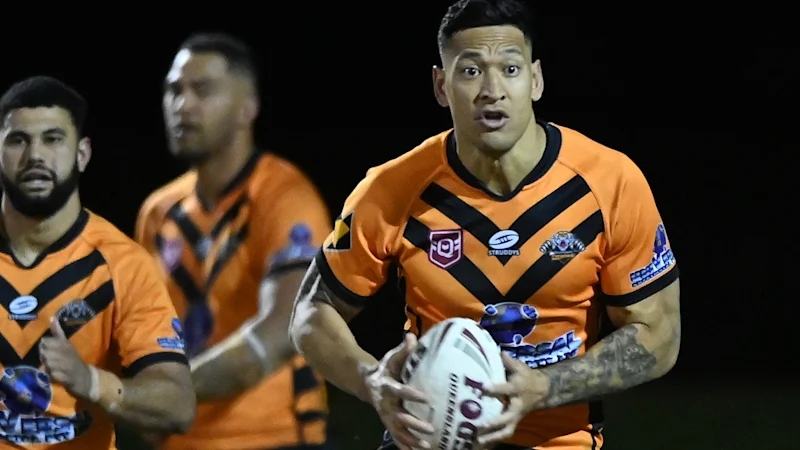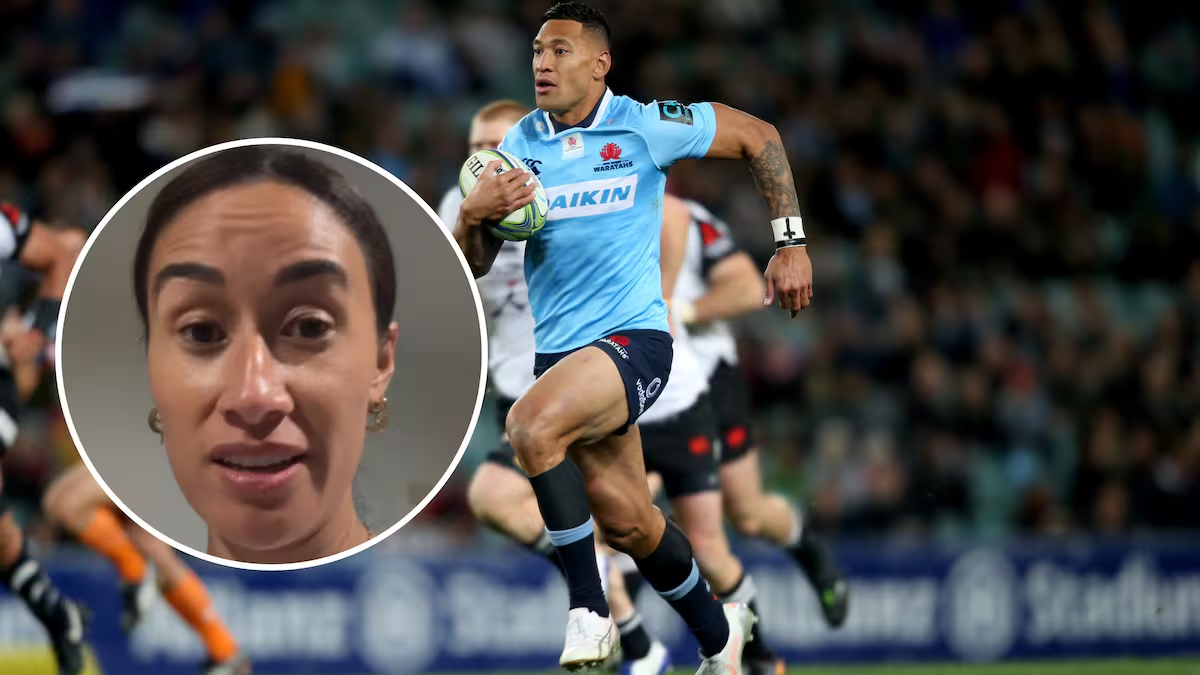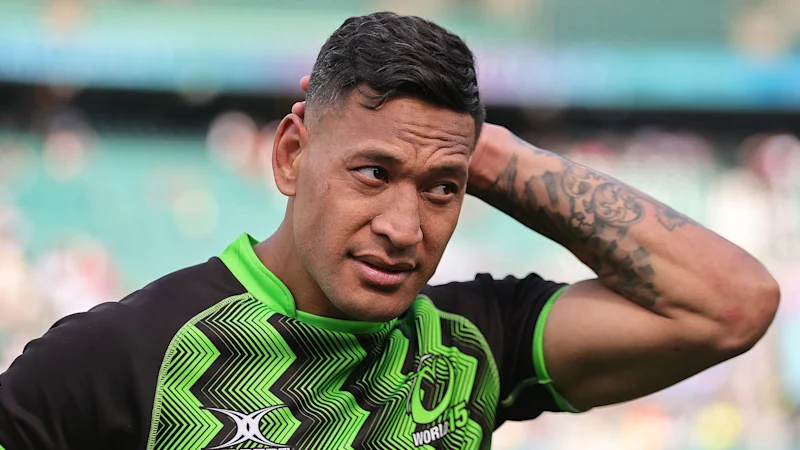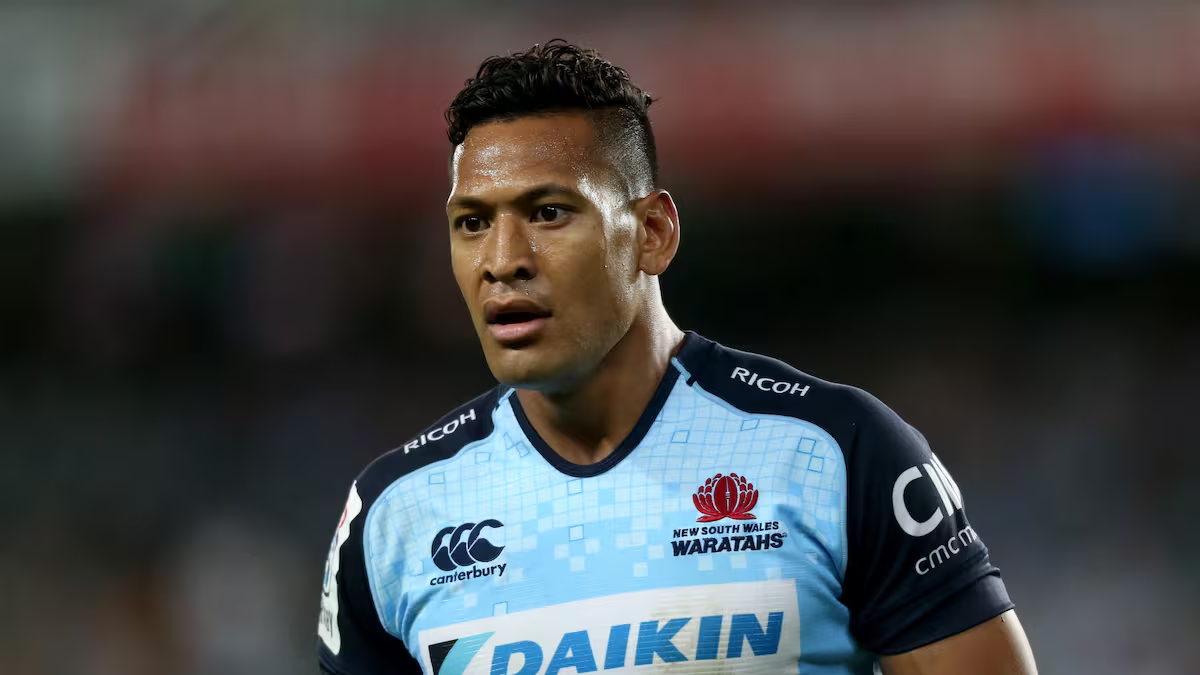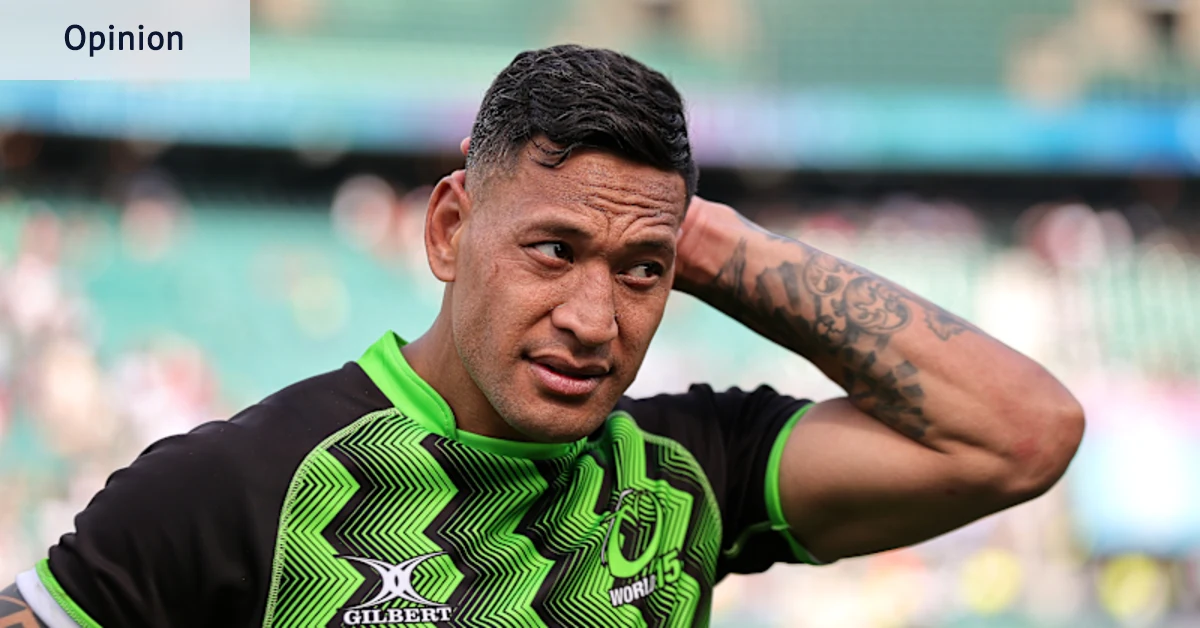
OpinionJune 19, 2026 — 7:30pmFive years ago, I wrote in these pages that it was confounding that rugby league should be the one Australian football code forced to wrestle with a hypothetical: how the NRL would respond if a club sought to register Israel Folau as a professional player. The hypothetical has aged; the confounding part hasn’t.This week, it ceased being hypothetical. The Wests Tigers, coached by Benji Marshall, who by every account wanted Folau in his squad, were reportedly on the cusp of lodging a train-and-trial contract for the now 37-year-old. Then, apparently, someone on the Australian Rugby League Commission intervened, and the club quietly decided to lodge nothing.This wasn’t the ham-fisted jibber jabber engaged in by St George Illawarra a few years back regarding the hypothetical possibility of offering Folau a contract. This was close to a real deal, apparently strangled only at the last gasp.Folau isn’t the 31-year-old athlete of 2021. He’s now 37, with a Japanese rugby contract ending and apparently wanting to finish his career back where he started. Whether Folau is worth a roster spot is a football question and not one I would dare opine on.That is not what killed this, however. What killed it, on the reporting, was the social media material that has framed the window through which he Folau has been considered since 2019.Pick the single Australian athlete who, across the past quarter-century, has paired athletic excellence with such versatility, and you might land on Folau. To have played three football codes professionally is extraordinary.Israel Folau was in negotiations with the Tigers.David RogersNone of that excuses his Instagram post in 2019 warning that homosexuals, among other groups, were destined for hell, which led to his termination by Rugby Australia. But it does mean the question of whether the NRL can fairly keep him out can’t be argued inside a rugby league silo, and it also can’t be answered by a body that pulls the lever in the dark and hopes nobody asks why.The rules haven’t changed in five years. The law underneath them hasn’t, either. The section of the NRL rules that matters is simple: nobody plays in the NRL unless the NRL registers them. No registration application can be made until a club and the player have signed a playing contract.Most of the time, registration is a perfunctory exercise. Now and then it’s anything but.In deciding whether to register a player, the NRL weighs specified factors, one of which is whether the person is fit and proper. The NRL may consider, at its discretion, any information it considers relevant.Israel Folau struggles for possession in a crowded Giants forward line.Simon AleknaThat includes prior conduct that might bring the game into disrepute, and whether that conduct would damage the interests and welfare of the game if it recurred after registration. Folau’s history sits comfortably inside that frame. The rules also reserve to the NRL the power to attach whatever conditions and restrictions on registration it considers necessary.Hold that last point, because I’ll come back to it. First, what “fit and proper person” actually means.The fit and proper test isn’t a rugby league invention. Thresholds in the same words run through professional and commercial life. The same goes for a long list of statutory licences.When the NRL elected to assess registration by reference to whether a player is fit and proper (and my earliest copies of its rules date to about 2005) it borrowed a standard with a settled legal pedigree. It didn’t invent a private test it can redefine at will. It can’t hand that test to decision-makers who mightn’t want to face the blowtorch of public backlash. Israel Folau on the charge for Southport Tigers in 2021.GettyThe authority is still the High Court’s judgment on the failed tycoon Alan Bond and his fitness to hold a broadcasting licence, which worked through what fit and proper means in agonising legal detail. The court held that the phrase, on its own, carries no precise meaning. It draws its content from context: the activities the person is or will be engaged in, and the ends those activities serve. The test applied to a would-be lawyer is a different test to the same words applied to a footballer.The court said the concept can’t be severed from evidence of the person’s past conduct. Depending on the activity, the right questions may be whether improper conduct has occurred, whether it is likely to recur, whether it can be assumed it will not, and whether the community can have confidence it will not.That’s the right question in Folau’s case. The court added that in some settings, character and reputation alone can be enough to base a conclusion that a person isn’t fit and proper for the activity in question.So once the NRL writes these thresholds into its rules, it can’t go off on a frolic and invent its own definition.Apply that to 2026. Folau can’t earn the salaries the NRL pays by playing professional rugby league anywhere else. In that setting, applying the fit and proper test to him artificially or capriciously, or leaning on a club so that the application never gets made, runs straight into the doctrine of restraint of trade and the law of competition.A contrived refusal might be dismantled in court. A refusal engineered so that no decision technically exists – a contract spiked before lodgement after a quiet word from above – is more exposed, not less. It has all the substance of a refusal and none of the process.Suppose the NRL took proper advice and applied the test to a registration application from Folau and a club willing to sign him. It’s hard to build the case in which he comes out unfit and improper.The material Folau has shown a taste for publishing is genuinely harmful. It still endangers thousands of fellow citizens who are trying to work themselves out. Even so, a decision to rule him unregistrable on fit and proper grounds would, in my view, struggle to survive a legal challenge.That danger isn’t abstract, and I won’t pretend it is. Just two weeks ago, Kane Evans, a veteran of 149 NRL games, came out as gay. He spoke with candour about two decades of denial, addiction, about wanting to end his life. Players, clubs and the game lined up behind him. That’s rugby league today. It’s a more welcoming place than the one Folau walked out of.The instinct to protect people like Evans is a good instinct. It’s not the same axis as legality, and the rules the NRL wrote for itself are an instrument of the second, not the first.Which is where the conditions come into frame. Spiking a contract in the dark and hoping the lawyers miss it was never the answer to any problem. If a club ever lodges a formal contract concerning Folau, the NRL can attach whatever special conditions the circumstances justify.No social media at all for Folau is a clean place to start: a binding registration condition, enforceable, breach of which ends his career the day it happens. That’s how a governing body squares protection with the law. Not by pretending it has no rules, but by using the ones it has.Yet the same regulator, under the same rules, has waved players back into the game after real criminal conduct. The double standard is palpable. Rugby league is a safe haven for those looking for a second chance. It should be.Scribbling with a big red Texta and decreeing that Folau is unfit to rejoin the game that made his name was the wrong answer in 2021. Doing the same thing five years later with an invisible hand, letting a club take the heat for a call the governing body won’t put its name to, is worse.The rules hand the NRL a lawful path to try to keep Folau out. It should hold the nerve to walk down it in daylight.News, results and expert analysis from the weekend of sport sent every Monday. Sign up for our Sport newsletter.Darren Kane is a sports columnist for The Sydney Morning Herald.Connect via X or email.From our partners
The NRL has a lawful path if it wants to bar Folau. Spiking a contract in the dark isn’t it
A refusal to register Israel Folau on “fit and proper person” grounds might struggle to survive a legal challenge. The governing body has, after all, waved players back into the game after real criminal conduct.
TL;DRAI
Israel Folau's attempt to register with NRL club Wests Tigers was blocked through undisclosed commission pressure before formal application. Spiking decisions without transparent process creates greater legal risk than formal denial, exposing governance vulnerability.
1,351 words~6 min read