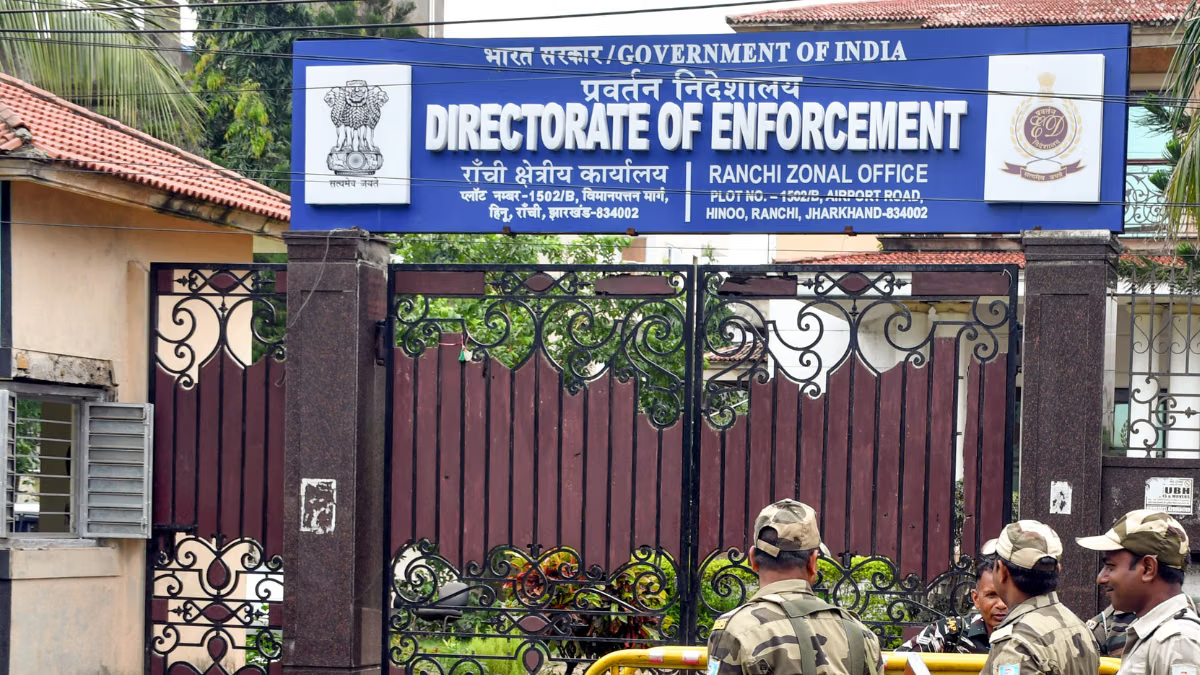
The Prevention of Money Laundering Act 2002, which came into force on 1 July 2005, has been highly controversial. The time is ripe to analyse the PMLA’s objectives, its efficacy, and the way forward.
The prime objectives of the PMLA are to tackle threats to India’s financial system and to confiscate “proceeds of crime”.These objectives emerged from a Political Declaration adopted by a Special Session of the United Nations General Assembly (UNGA) held in New York from 8 to 10 June 1998. It called upon Member States to adopt national money-laundering legislation. India was a signatory to the UNGA declaration.
The idea was conceived to counter the world’s drug problem. It is widely known that the global illicit drug trade generates billions of dollars. Thus, ab initio, PMLA was meant to have an international perspective.The first set of notified offences under the PMLA in 2002 included ten laws: The IPC 1860, NDPS Act 1985, Arms Act 1959, Immoral Traffic (Prevention) Act 1956, Prevention of Corruption Act 1988, and the Wild Life (Protection) Act 1972.None of these laws deal with cross-border transactions. Thus, the international perspective was missed at the very inception of PMLA. This was a failure of India’s international obligation.Gradually, the schedule of offences in PMLA was expanded, but still without any international perspective.