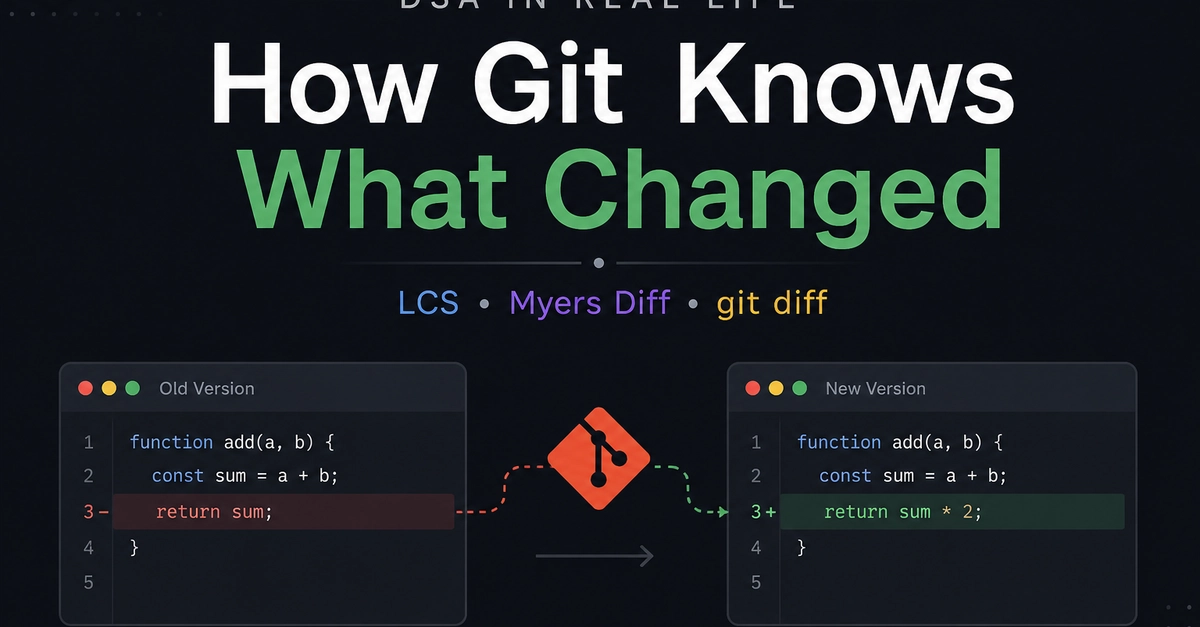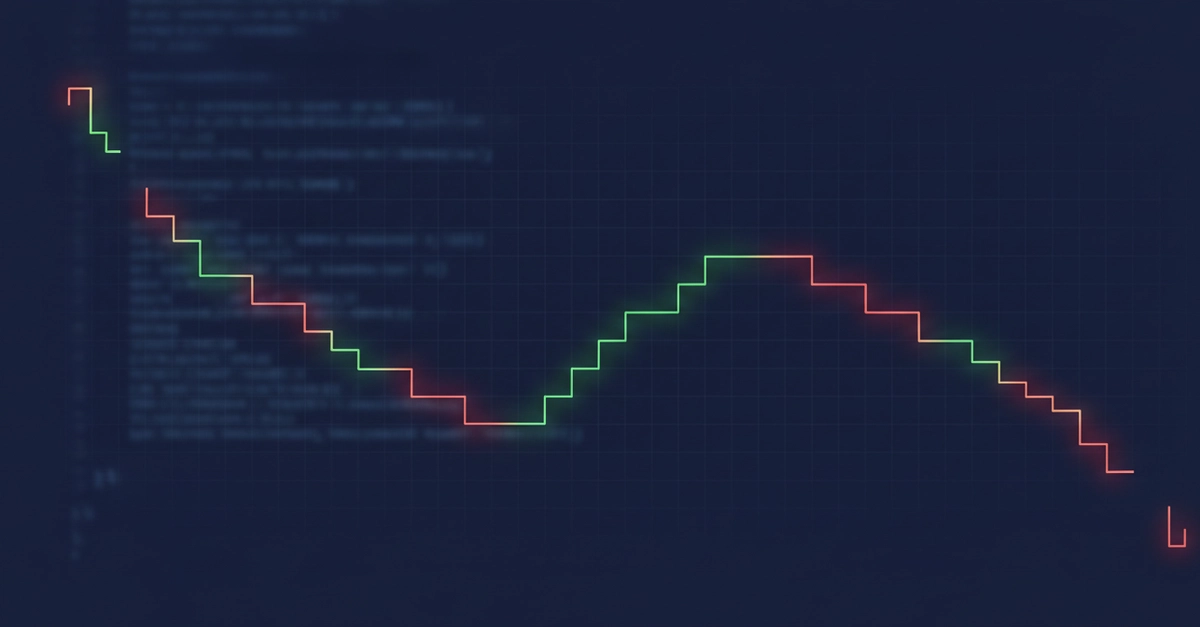
You run git diff dozens of times a day. You read the red and green lines, you stage the hunks, you move on. But there's a small algorithmic miracle happening every time: out of the astronomically many ways to describe "how file A became file B," the tool quietly finds one of the shortest ones.
That's not a formatting trick. It's a shortest-path search. Once you see it, code review, merge conflicts, and "why did git think I moved this whole block?" all start to make sense.
A diff is the shortest edit script
Forget the colored output. A diff between two sequences of lines — A (length N) and B (length M) — is an edit script: a list of insertions and deletions that turns A into B. There are always many valid scripts. The dumbest one is "delete all of A, insert all of B" — technically correct, completely useless.
What you actually want is the script with the fewest edits, because the lines you didn't touch are the ones that stayed the same. So the real goal is the mirror image: