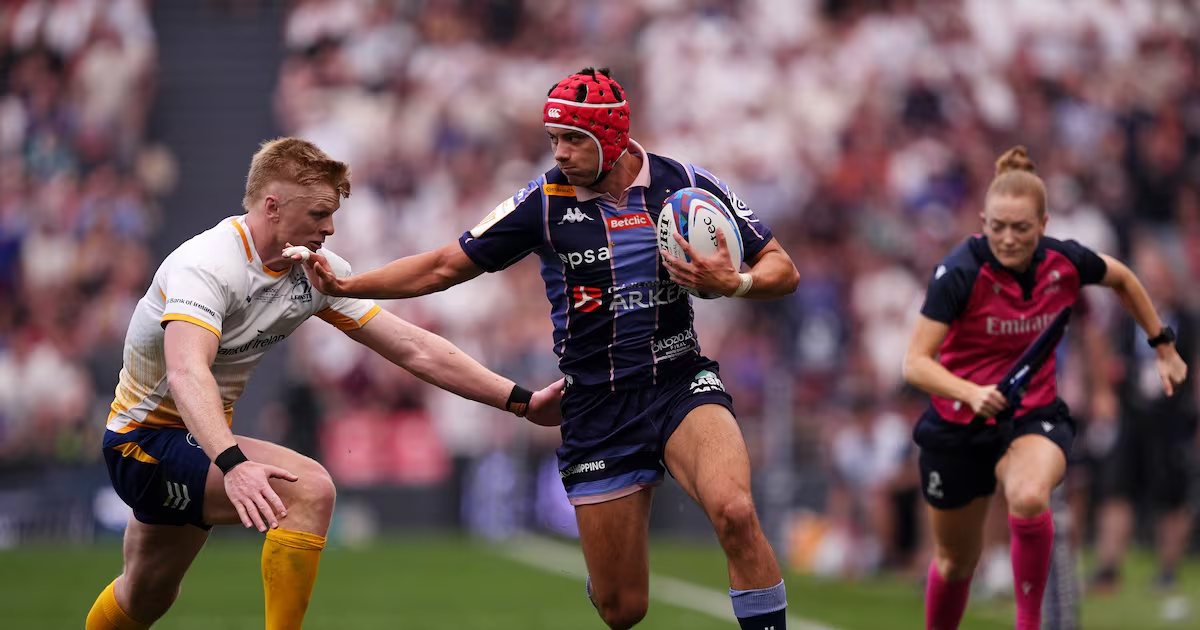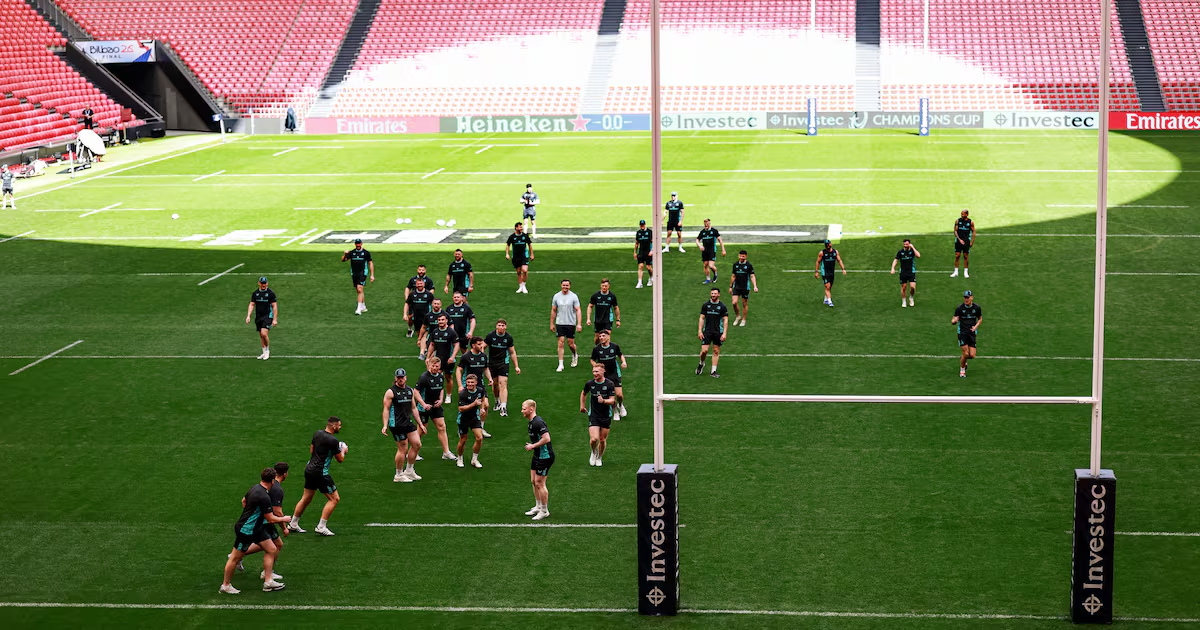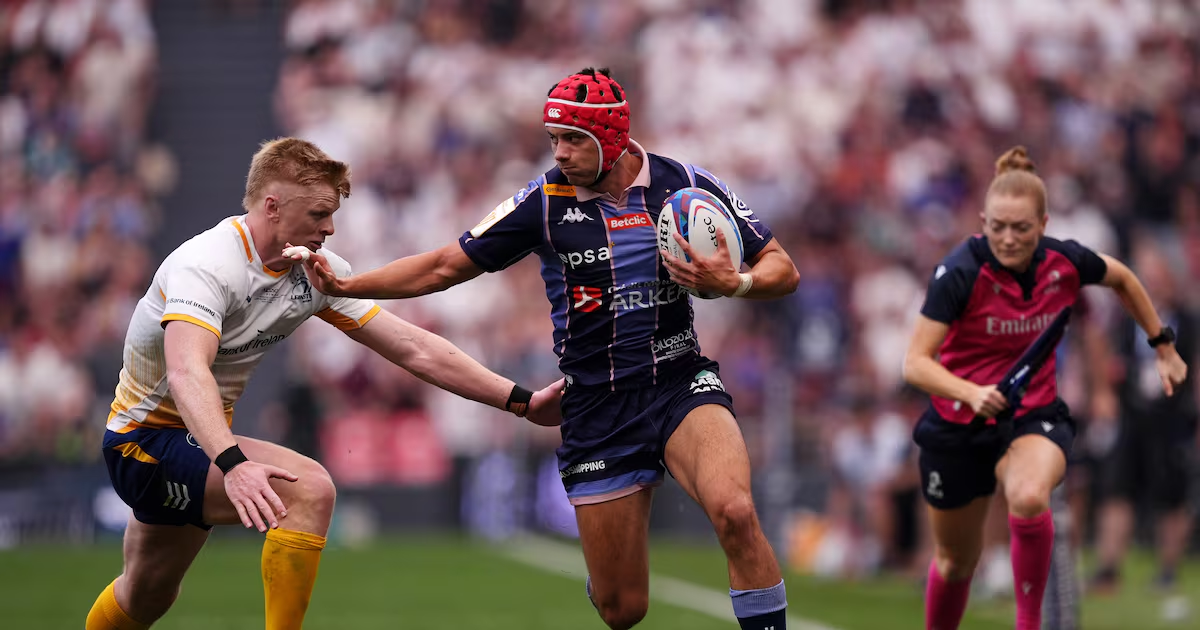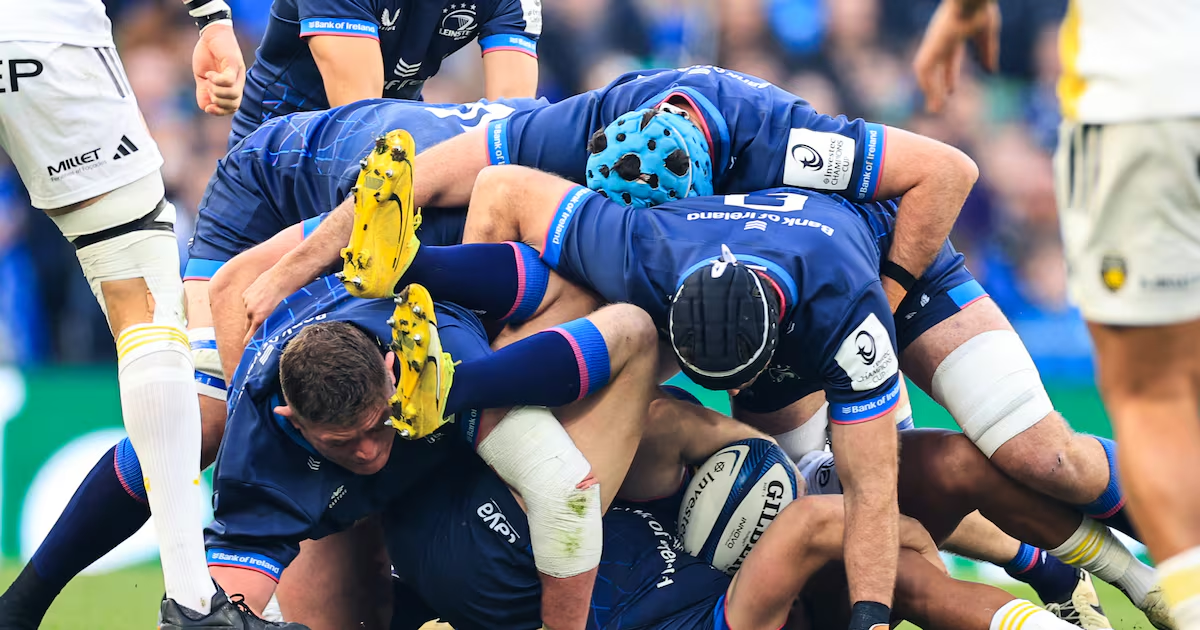
If not already out of sight on the scoreboard, the biggest emotional swing for Bordeaux Bègles when beating Leinster in last month’s Champions Cup final came right on the stroke of half-time. Leinster won a free-kick. Down 28-7, they played on despite starting inside their own 22 with the clock in the red. For a while, the attack was effective. Running lines found soft shoulders. Offloads were thrown. Rucks were fast. Within eight phases, they moved up towards the Bordeaux 22. Then the critical moment, Yoram Moefana reading Harry Byrne’s pass, with nothing but green grass between him and the posts. While moving 28 points ahead on the scoreboard was significant, the nature of the score was arguably more telling. An intense Leinster attack building through phases was undone by one moment of brilliance. Leinster toil contrasted with Bordeaux efficiency. What to make of Andy Farrell's Ireland squad to tour Australia and New Zealand Listen | 41:24This has been Leinster’s – and Ireland’s – battle in high-stakes knockout matches. For all that the DNA of this country is to unpick defences through phase after phase of well-organised attacks, this is not the blueprint of cup-winning sides. South Africa won two World Cups playing without the ball more often than with it. Ditto Bordeaux in last month’s final.The Bulls, Leinster’s opponents in Friday evening’s URC final, average 20 fewer successful attacking rucks per match than their Irish hosts. They also subscribe to the less-is-more theory. The URC final will therefore be Leinster’s (and Irish rugby’s) latest test in this clash of styles. There are, however, some trends that suggest the game is shifting back in favour of rewarding teams that prioritise having the ball and being effective with it. It remains to be seen if that leads to another URC crown for the province.Kurt-Lee Arendse scores Bulls' first try in the URC semi-final against Glasgow Warriors at Murrayfield on June 6th. Photograph: Ewan Bootman/Inpho In terms of attacking output, Leinster and the Bulls are remarkably similar. According to the URC’s database, Leinster average 30.6 points per game this season compared to 30.5 for the South Africans. Both sides are happy to kick – Leinster averaging 28.6 in play, while the Bulls put boot to ball on average 28 times. One of the biggest points of difference is at the breakdown. Leinster win 88.2 attacking rucks per game compared to the Bulls’ figure of 60.1. The disparity of nearly 30 rucks shows the willingness of one team to preserve possession in certain scenarios, whereas the other does not prioritise high-phase attacks. Here’s where holding on to the ball, working phases and winning rucks looks to be a good idea. In the URC this season, making more passes per match has a strong positive relationship with winning, the correlation being 0.6. Winning teams make 4.5 line breaks per match compared to 2.7 for losing teams. Victors also average 74 metres per match more than their opponents. Holding on to more ball, in theory, should lead to more opportunities for metres and line breaks, parts of the game that are supposed to help you win. The flip side, though, is dangerous. More ball equals more opportunities to lose it. Again, using the URC’s own figures, conceding turnovers has a negative relationship with winning, the correlation standing at -0.54. Teams that won matches this year averaged about three fewer turnovers than their opponents. In this era of transition-filled rugby, giving the ball away to a team that can strike quickly is a huge no-no. Especially against a Bulls side featuring the likes of Willie le Roux, Canan Moodie and Kurt-Lee Arendse. A case in point is that Bordeaux defeat, where Leinster coughed up 24 turnovers. They lost the ball once for every 6.8 carries made, a remarkable ratio when you consider how one week on against the Lions, that figure improved to 10.5 carries for each turnover conceded. Of course, if higher phase counts increase opportunities for line breaks, the same is true for turnovers. It’s all about weighing up the risk and reward, with Irish sides backing their breakdown precision and handling skills to ward off poachers. Teams from other countries often lean the other way and choose to minimise risk. It should be pointed out that the Bulls coughed up the most possession in the URC this season, conceding 309 turnovers across the campaign (no other side hit the 300 mark). Leinster, for their part, were joint third with 278. In terms of winning turnovers, the Bulls made up for some of their attacking profligacy by winning the fourth-most with 125 (Munster were top with 136). Leinster were firmly mid-table with 119. Turnovers are important, yes, but there is evidence to suggest they are becoming harder to earn. Writing in the London Times, Charlie Morgan recently noted that across all major European competitions, not just the URC, the amount of rucks-per-jackal turnover has increased across the last five years. For example, in 2021/22, there were 27.8 rucks per breakdown poach in the URC. In this campaign, that figure rose to 35.2. Many a pundit will bemoan life becoming too easy for poachers being protected by referees, but the data does not necessarily back this up. Is there anything to be taken from all of this?In a one-off game, trends don’t really matter. Still, it’s of interest to note how Leinster go through more rucks than the Bulls despite kicking just as often. It is equally important to register that the Bulls concede more turnovers than Leinster – and losing possession can have detrimental effects – while acknowledging that breakdown turnovers are now harder to secure.Possession itself is not as important as efficiency and avoiding turnovers. That clinical edge abandoned Leinster in Bilbao and they’ll have to find it in the URC final, lest the Bulls sit back, wait for a mistake and look to cash in. That would be Bilbao revisited. A final tidbit? Leinster, who are missing their three first-choice looseheads in Andrew Porter, Paddy McCarthy and Jack Boyle, had the third-most penalised scrum in the URC this season. We all know about the strength of the South African set-piece. Much like Thomas Clarkson excelled in last year’s final in the absence of Tadhg Furlong, Jerry Cahir and Alex Usanov will have to earn their supper.
Leinster can’t fall into the same trap that finished them off in Bilbao
The sport may be shifting to suit teams like Leinster, but there’s no substitute for efficiency in possession
1,054 words~5 min read