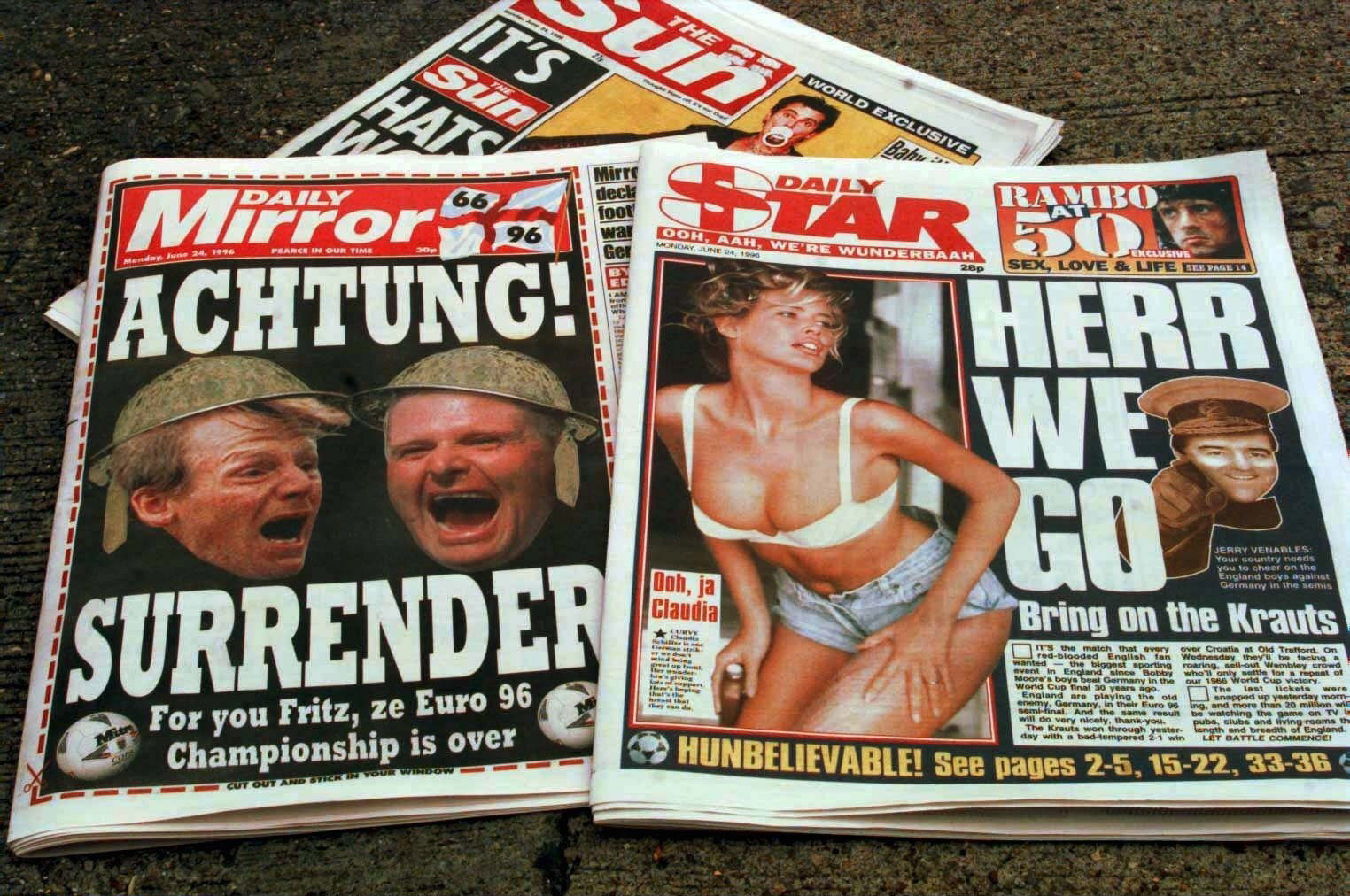
Before we routinely bored our friends to death with our hyper-optimised workflows, Strava personal bests, and alcohol-free lager, British people didn’t take themselves quite so seriously. Not so long ago, you couldn’t step five paces without a tabloid newspaper bunching around your ankles. The Sun and the Daily Mirror, their frontpages splashed in frantic red ink, served up a daily diet of love rats and busty babes often embroiled in something called ‘coke shame hell’.
Most popular
A terrible fate awaits Preston Davey’s killer in prison
With them vanished a magnificent dialect: Tabloid English—a compressed, bawdy, semi-literate poetry understood by barristers and bricklayers alike. Those newspapers flaunted their own vernacular: a rhythmic, gutter-level blank verse in which prisoners were lags, babes were busty, sex was a romp and unfailingly steamy. With the death of print, we didn’t merely lose newspapers. We lost a language. We lost Britain’s last great folk poetry.
This was a language forged not by academic committees or sensitivity readers, but by the brutal physics of the printing press. Headlines demanded punchy Anglo-Saxon words to fit tight layouts. All of the complexities of human nature were hammered down to their blunt Germanic roots. If a government minister disagreed with a Treasury policy, he didn’t riot in today’s airy Latinate language and ‘express extensive reservations regarding implementation models,’ he sparked fury in a bid to oust his boss. Today’s therapeutic language marshals its bloodless Latin and Greek roots to soften blows, avoid liability, and obscure reality. A philandering celeb doesn’t cheat on his wife. He engages in a temporary uncoupling.