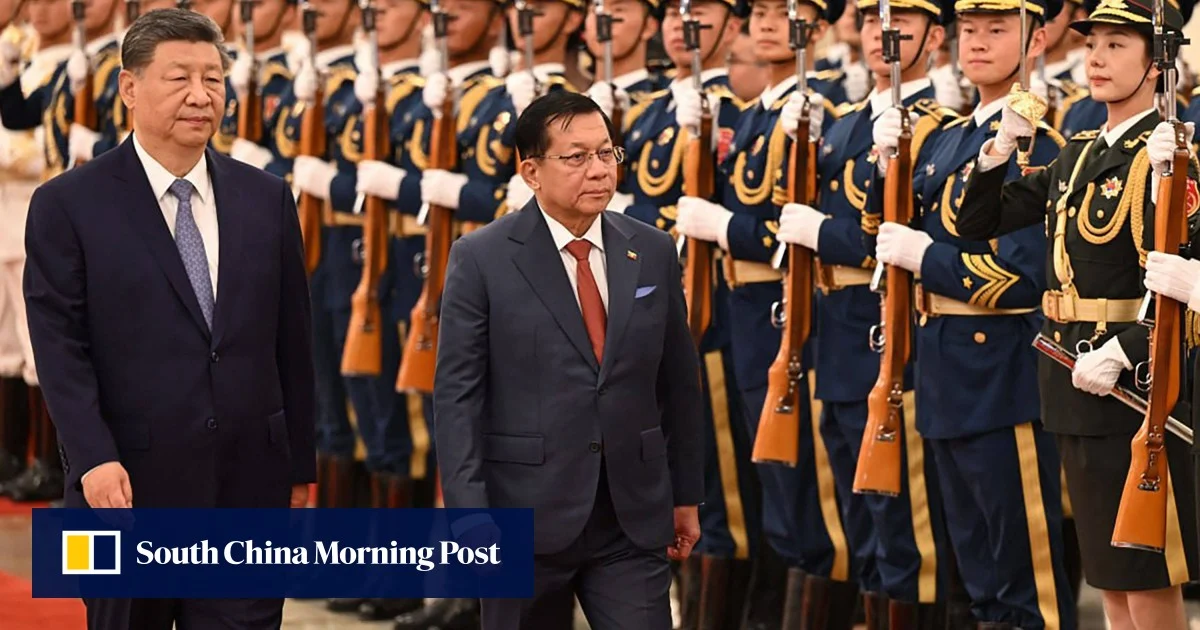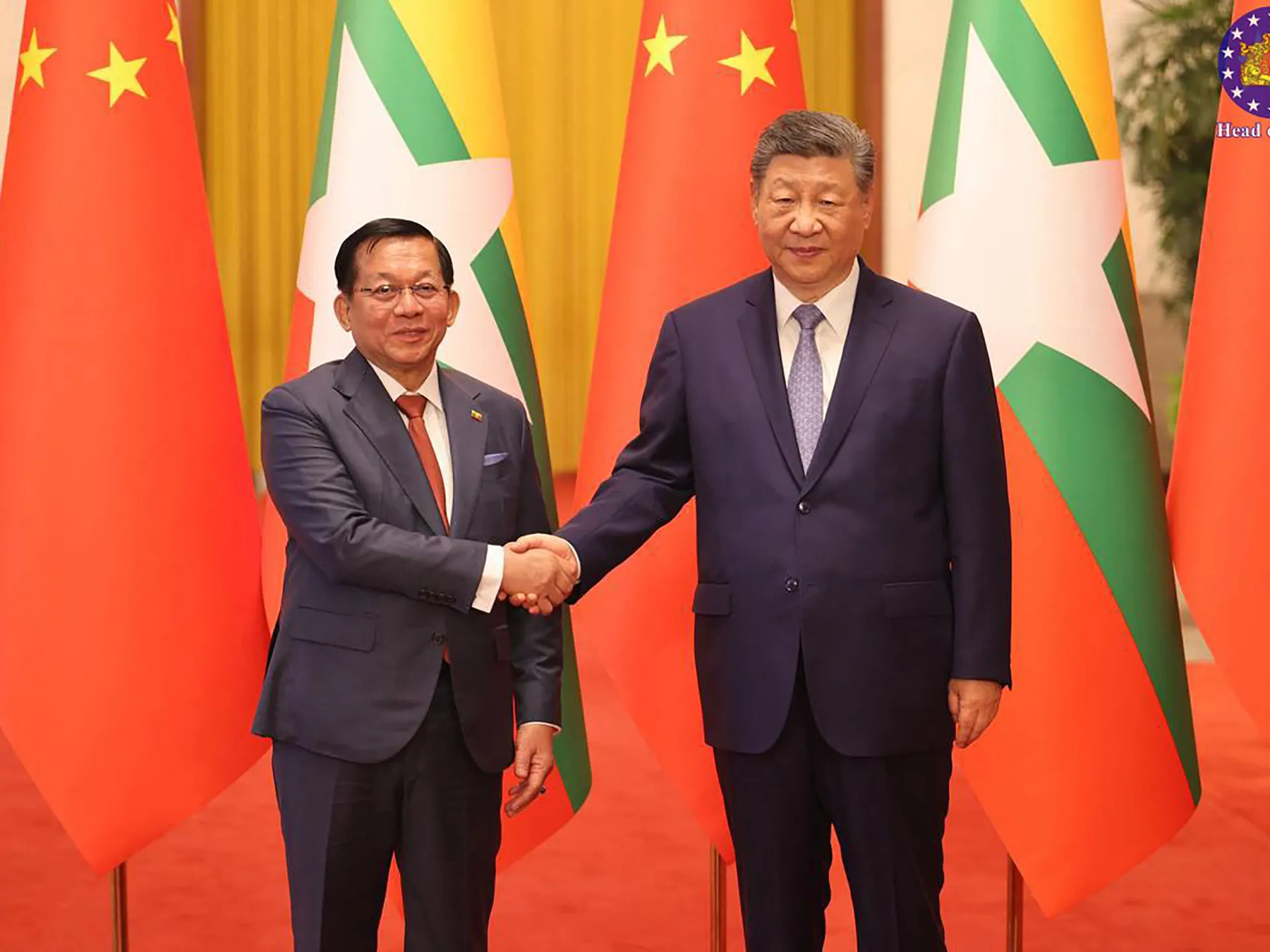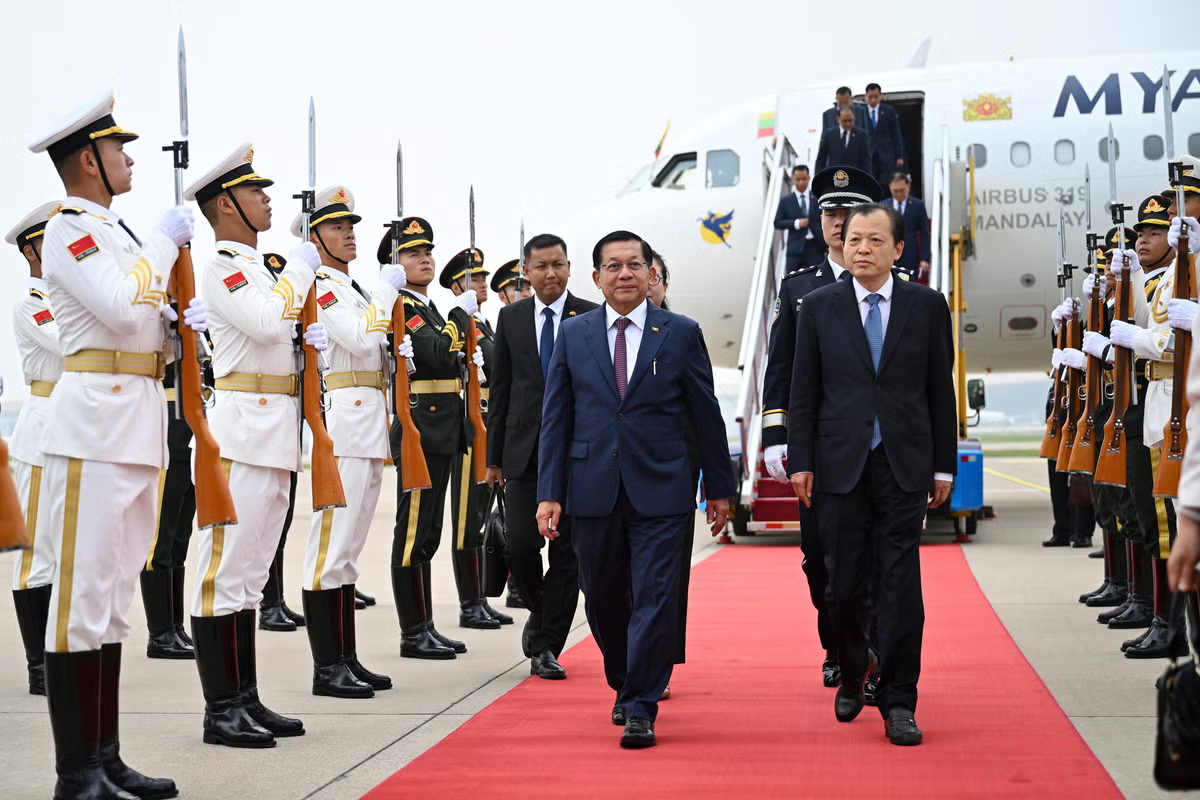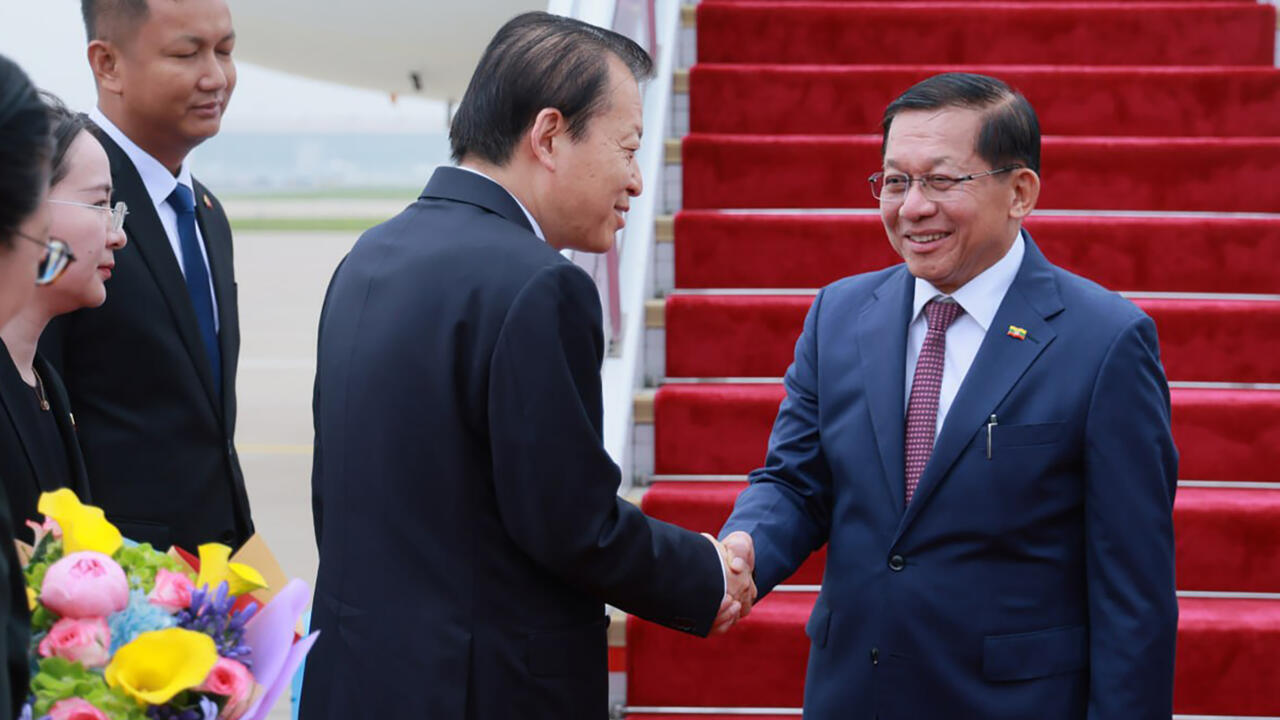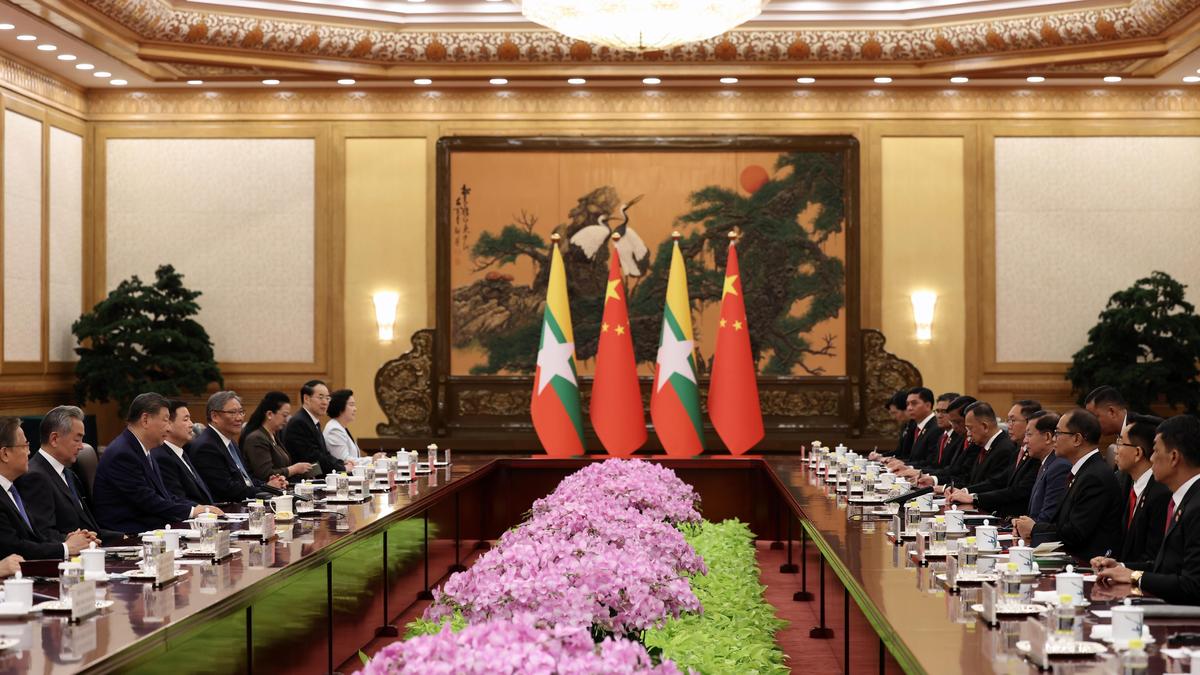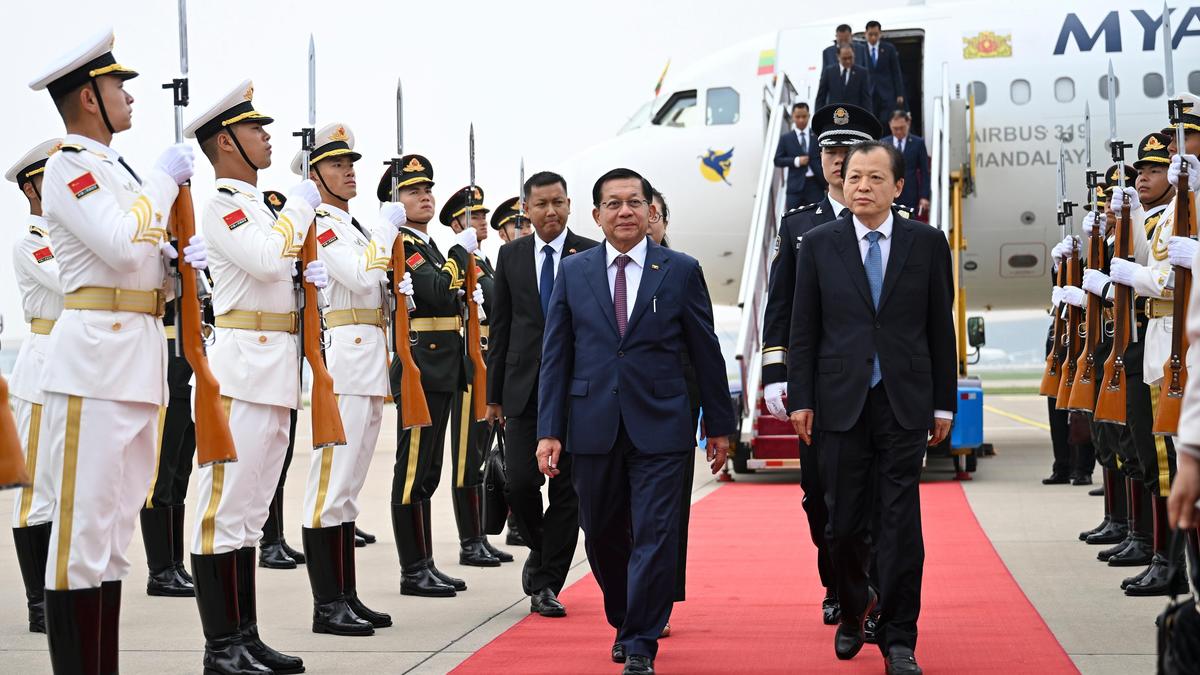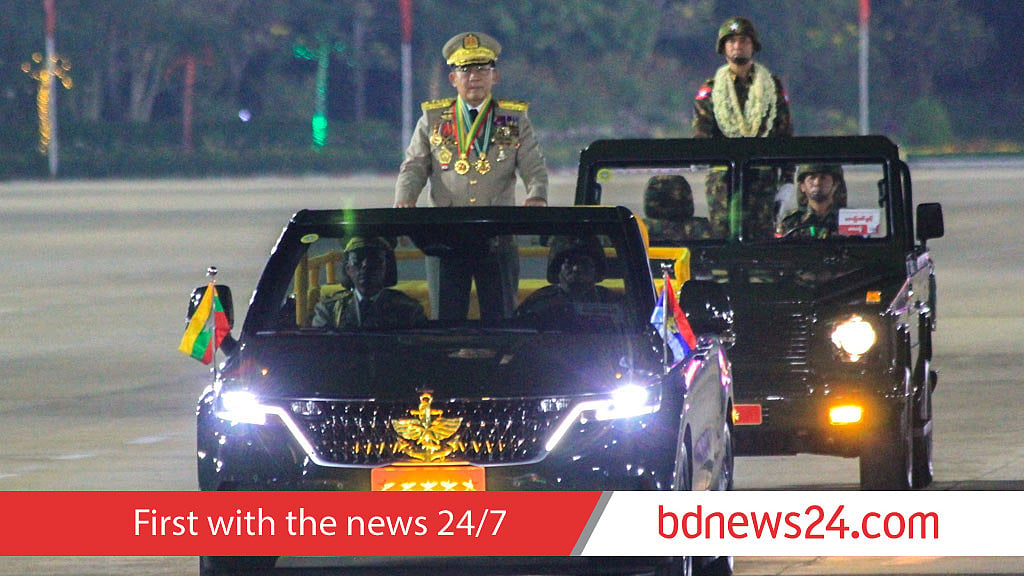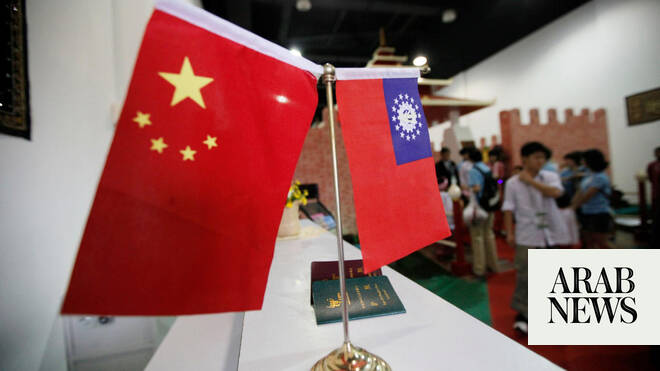
Myanmar president Min Aung Hlaing’s visit to Beijing this week was, on the face of it, no different from those of almost two dozen other leaders Xi Jinping has hosted since the start of this year. But what would have mattered to Min more than the ceremonial welcome on Tiananmen Square was that his reception was Xi’s clear endorsement for the former general who became his country’s president this year in the first election since the military seized power in 2021.“I am willing to continue strengthening our leadership, carry forward the brotherly friendship between our two peoples and deepen comprehensive strategic co-operation,” Xi said.“China supports all parties in Myanmar in advancing peace and reconciliation through peace talks and achieving lasting stability in northern Myanmar, which serves the fundamental and long-term interests of the Myanmar nation and people.”Myanmar’s elections were neither free nor fair, with major opposition parties excluded and voting cancelled in areas of armed insurgency. The pro-military Union Solidarity and Development Party won the elections, and after parliament chose Min as president he appointed personal allies to key positions.Beijing was silent in 2021 when Min led a military coup that overthrew the elected government led by Nobel peace prize winner Aung San Suu Kyi, but it was broadly supportive of the junta afterwards. China also has longstanding relationships with some of the ethnic armed groups fighting against Myanmar’s military and has helped to broker a number of ceasefires in recent years.With a shared border more than 2,000km long, Beijing’s primary interest is in ensuring that instability in Myanmar does not spill over into China. But China also has substantial investments in Myanmar, and in 2024 it established a joint security company with the military junta to protect Chinese projects and personnel.The most important investment is the China-Myanmar Economic Corridor, a multibillion-dollar megaproject that includes oil and gas pipelines, roads and railways linking the southwestern Chinese province of Yunnan with the Bay of Bengal. With a deep-sea port planned for Kyaukpyu in western Myanmar, the corridor would offer China a gateway to the Indian Ocean – an option that has become more attractive than ever since the closure of the Strait of Hormuz.Eighty per cent of China’s energy imports are shipped through the Strait of Malacca, a narrow stretch of water between the Malay Peninsula and the Indonesian island of Sumatra which connects the Indian Ocean and the South China Sea. Chinese leaders have long worried that the US Navy, which has bases nearby, could blockade the strait and choke off China’s energy supplies.Through its Belt and Road Initiative, Beijing has invested in a number of alternative routes – including the China-Pakistan Economic Corridor, which runs from Xinjiang through Pakistan to the port of Gwadar on the Arabian Sea. That route passes through Balochistan and near Kashmir, contested areas with heightened security threats, so the Myanmar corridor is more attractive as long as the civil war there remains under control and far from the Chinese infrastructure.[ European leaders debate getting tough on China: ‘We have to defend ourselves’Opens in new window ]“Myanmar attaches great importance to the safety of Chinese businesses and personnel in the country and will do its utmost to protect them,” Min told Xi in Beijing.Last month, Myanmar’s president visited India, the country’s other large and powerful neighbour, and discussed joint infrastructure projects. Myanmar’s government has also been repairing relations with Washington, engaging Donald Trump’s former associate Roger Stone to lobby the administration.The US and the European Union reacted to the coup in 2021 with condemnation and sanctions but the Trump administration has had a change of heart in recent months, elevating economic opportunities over concerns about human rights and democracy. This newfound enthusiasm is driven in part by the fact that Myanmar is rich in resources, as the world’s third-biggest producer of rare earth and with 600 billion cubic metres of natural gas reserves.Kachin state in the north of Myanmar contains most of the country’s rare earth deposits, and China controls most of the processing as well as much of the mining. Many rare earth deposits are in parts of the country not controlled by the central government, and Beijing’s relationships with the local ethnic groups give it a big advantage in any competition for the resources with Washington.
China endorses Myanmar president and keeps door open to economic corridor
Beijing’s primary interest is in ensuring instability in the neighbouring country does not spill over into China
TL;DRAI
Xi endorses Myanmar's Min Aung Hlaing to protect the China-Myanmar Economic Corridor—pipelines and Indian Ocean port bypassing Malacca Strait. Secures energy security (80% imports at risk) and locks rare earths processing control against US competition.
713 words~3 min read