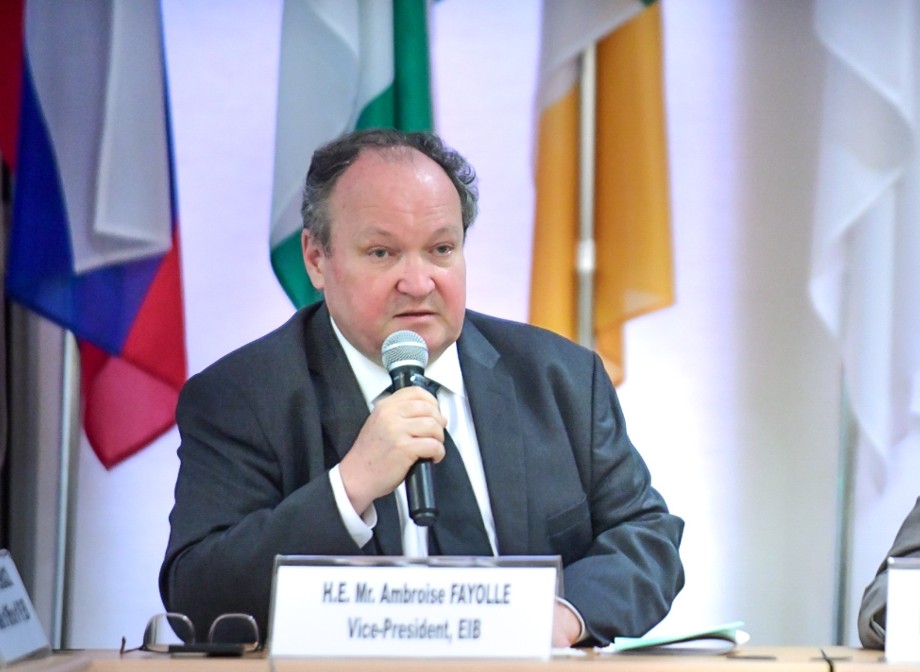
Nigeria continues to play a central role in the European Investment Bank’s engagement across Sub-Saharan Africa. During his first official visit to the country, EIB Vice-President, Ambroise Fayolle, announced new financing initiatives to support small and medium-sized enterprises, healthcare, sustainable transport and green finance. In this interview with THISDAY, Fayolle discusses the EIB’s growing partnership with Nigeria, the role of development finance in mobilising private investment, and how the Bank, working as part of the European Union’s Global Gateway strategy and Team Europe approach, is supporting the country’s long-term development priorities. He also highlights the importance of the 10th Nigeria–EU Business Forum as a platform for strengthening trade and investment ties and invites investors, policymakers and business leaders to participate in shaping the next chapter of the Nigeria–EU economic partnership.
Mr. Vice-President, could you briefly explain what the European Investment Bank is and its role in Africa and more particularly in the West African region?
The European Investment Bank (EIB), known as the EU Bank, is the financing arm of the European Union and one of the biggest multilateral financial institutions in the world. Through our activities, we aim to accelerate the green transition, technological innovation, social infrastructure. Our priority is to support an inclusive and sustainable growth across the EU and around the world. As the EU Bank, we finance and implement our activities in close cooperation with the European Commission and our partners in a Team Europe spirit, multilateral and national development finance institutions. Africa is a key partner for EIB and the biggest continent beneficiary with a total of €3.1 billion of new investments in 2025, of which 40% in West Africa.