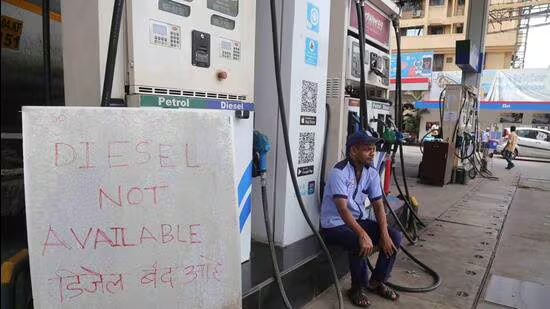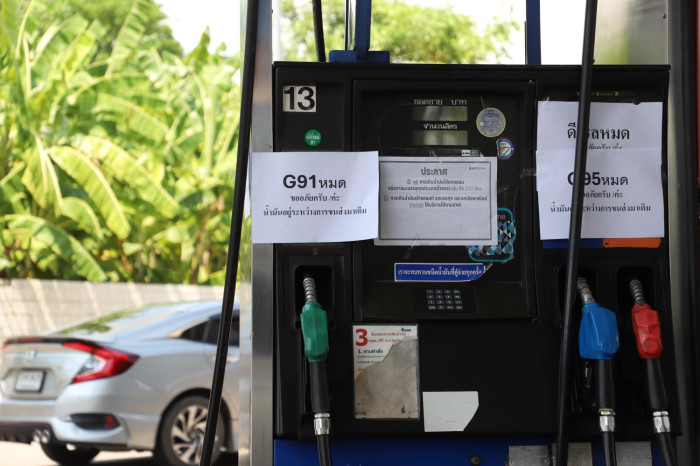
A petrol station in Samut Prakan displays signs saying that types of fuel, including gasohol 91, 95, and diesel, are out of stock. A notice is also posted "Fuel is currently being transported to replenish the supply." (Photo: Somchai Poomlard)
Policymakers should prioritise managing public sentiment during potential energy crises, warning that panic buying can be more disruptive than actual fuel shortages, says an energy analyst.The recommendation is one of the lessons learned from the recent turmoil sparked by the Israel-US conflict with Iran, which rattled global oil markets earlier this year.
The Oil Fuel Fund Office (Offo) gathered suggestions for the nation to better deal with energy obstacles if similar geopolitical conflicts occur.
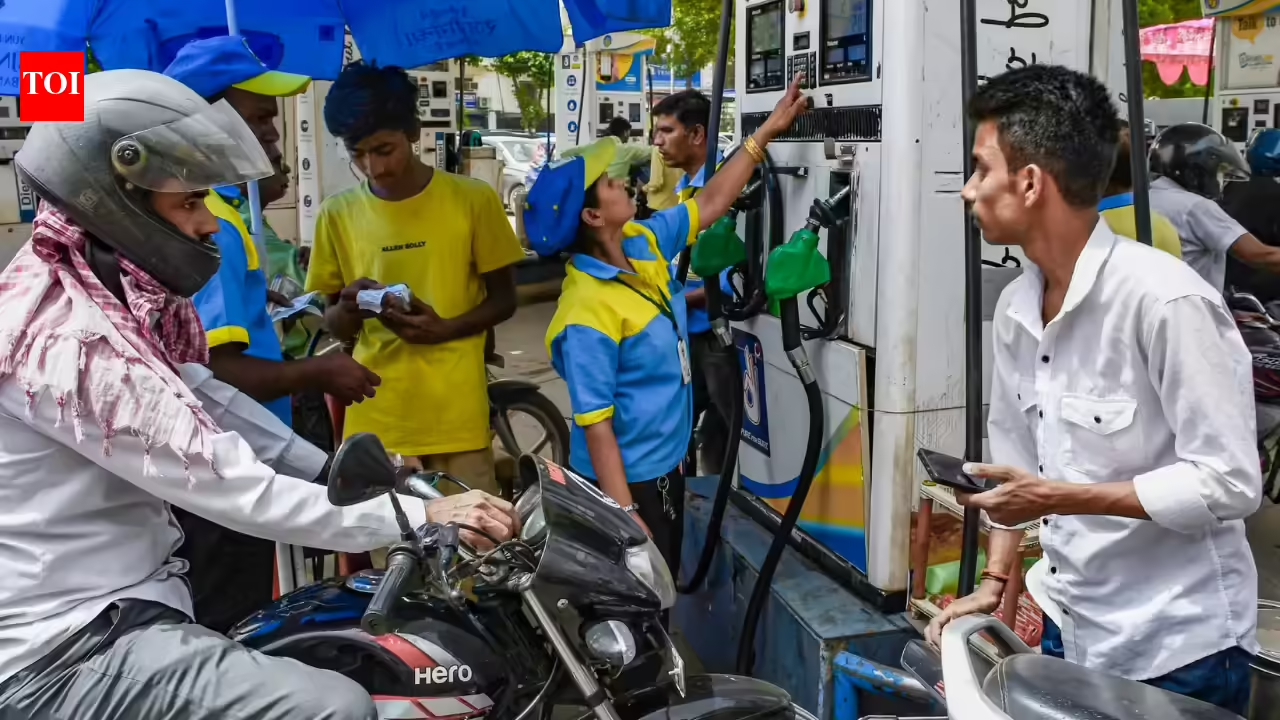
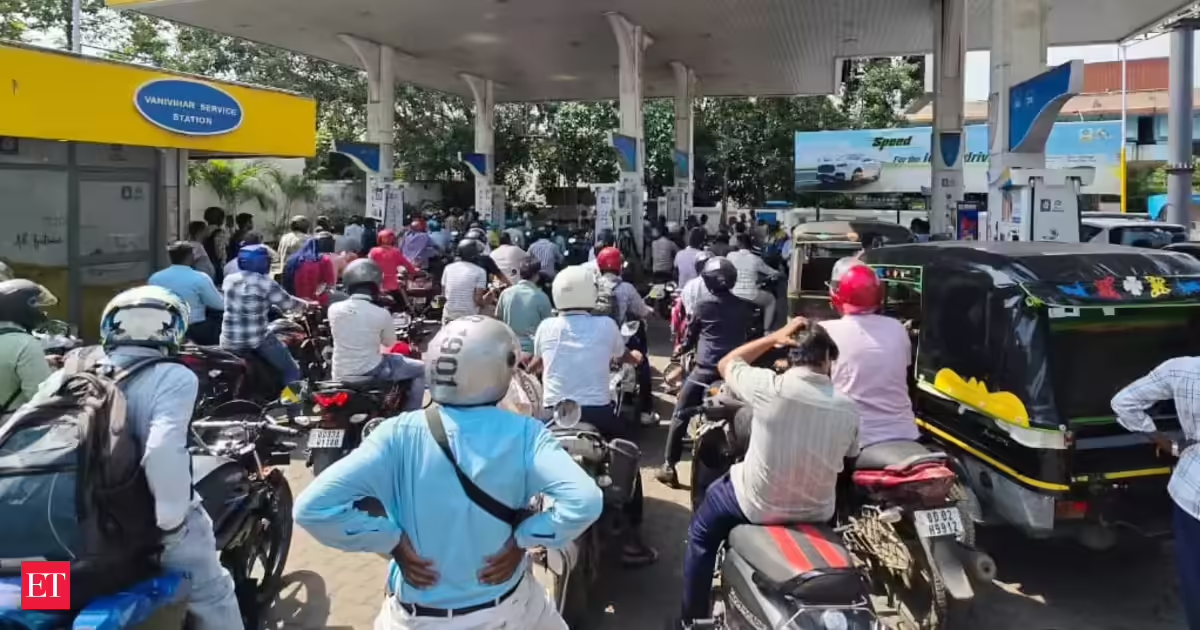
The war, which erupted on Feb 28, triggered widespread anxiety in March, leading to panic buying across Thailand.
Petrol stations displayed "out of fuel" signs, intensifying fears of scarcity despite assurances that reserves were sufficient for at least 60 days.