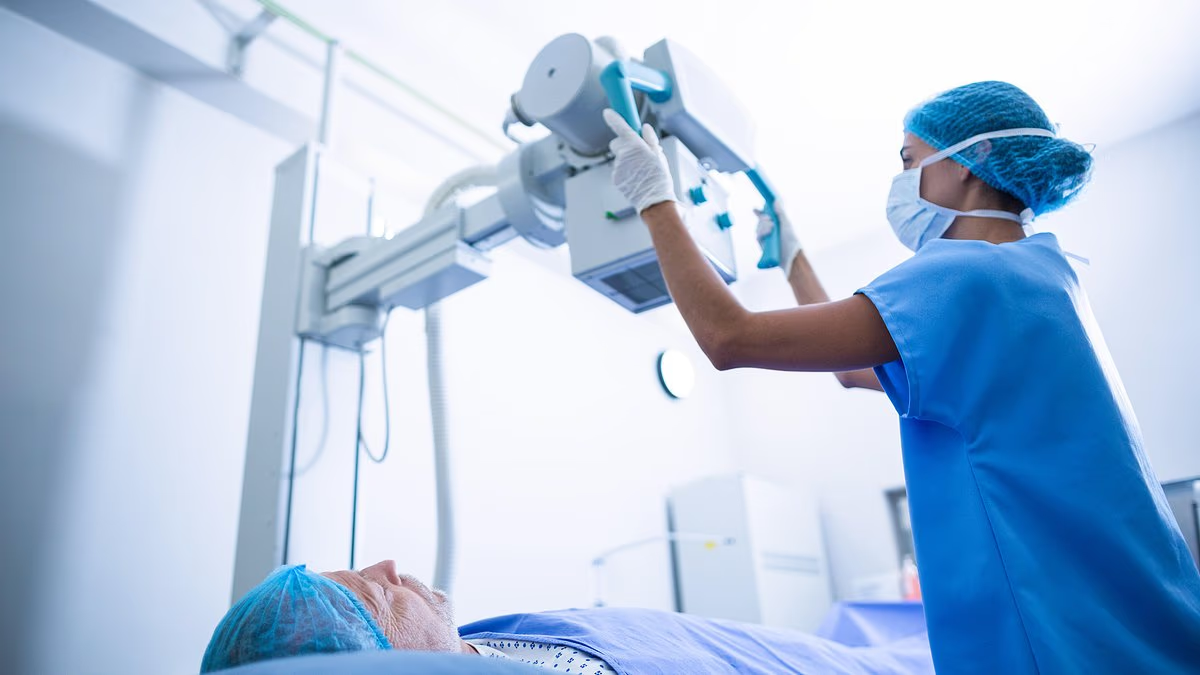
Thousands of people across the UK could face complex surgery to remove a spinal implant now linked to significant bone loss. This alarming development follows the device's global withdrawal from sale and an urgent recall for patients to undergo X-rays.One woman, who received the implant seven years ago and subsequently developed a serious infection, is now confronting "daunting" operations on her spine.The M6-C artificial disc implant was designed to replace damaged neck discs, offering an alternative to spinal fusion surgery, involving metal rods. However, the implant has been associated with osteolysis – a progressive condition where bone tissue is destroyed and reabsorbed by the body.Device manufacturer Orthofix announced it would discontinue the M6-C disc in February 2025.Law firm Penningtons Manches Cooper said it has been contacted by at least 10 people who have had the implant, with lawyers concerned that thousands more could be affected.It is now exploring if a legal claim is possible against the manufacturer.Sophia Harrison, 52, from East Grinstead, East Sussex, had the implant fitted in 2019.Two years later, she went to see her surgeon complaining of pins and needles in her hands, and around the same time noticed a lump in her throat that was impacting her voice and swallowing.Ms Harrison, who works in corporate communications, said she did not realise the two issues were connected.After receiving a letter from the Medicines and Healthcare products Regulatory Agency (MHRA), she went for a CT scan which checked for osteolysis, which also showed a large mass which turned out to be a 10cm abscess.She said: “My doctor said he nearly fell off his chair looking at the results as the infection continued to grow despite being drained.“I can feel it growing again by the day and I’ve now been told they may have to take out two further discs along with the implant and insert a metal rod.Sophia Harrison, 52, from East Grinstead, East Sussex, had the implant fitted in 2019 (PA)“I’m speaking out as I want to raise awareness and tell people who have this implant to have a scan as soon as they can so that they can avoid what is happening to me.“You may not even be aware you have an associated infection or other symptoms. I feel for all of the surgeons who are having to clear up the mess of the previous doctors who inserted these implants into patients.”Australian regulators had issued a hazard alert due to concerns about bone loss associated with the M6-C disc in 2020.However, UK patients were not updated until six years later.In January, the MHRA flagged the device’s links to the risk of osteolysis and said those with the implant should have annual routine monitoring.Ms Harrison said: “I am so angry that we weren’t told about the faults of the disc that leads to bones disintegrating.“It’s absolutely despicable as the manufacturer would have known about this so why has it taken so long?“If I had known earlier, the infection would have been caught and I would not be facing what has now become such complex and daunting surgeries on my spine.”Lyndsey Skibinski, a specialist medical negligence solicitor at Penningtons Manches Cooper – who is advising Ms Harrison and leading the investigation for other implant patients, said: “This is a potentially huge public health issue with thousands of patients affected.“Most of the people approaching us have had the implant in place for between eight and nine years but it is crucial that anyone who has this implant gets a scan to identify any problems and continues with recommended annual monitoring.“Many will need complex surgery to remove the implants which poses the risk of paralysis or long term chronic pain.“We are currently investigating the legal options open to those we are advising to see how we can secure justice for the trauma and suffering they are experiencing and also to recover funding for future treatment and rehabilitation.”Dr Stephanie Millican, deputy director of benefit risk evaluation at the MHRA, said the regulator started an investigation into the M6-C device following reports in early 2025.“The MHRA took these concerns seriously and found that there was a delay in the manufacturer’s communication of the risks of osteolysis to users and patients in the UK,” she said.“Patient safety is our top priority. We continuously monitor medical devices used in the UK to ensure they perform to the expected standards.“The MHRA has advised healthcare professionals that patients implanted with the M6-C artificial cervical disc should be informed of the risks of osteolysis, receive annual routine monitoring and discuss the need for further investigation and continued follow-up.“Patients who have an M6-C device implanted should expect to be contacted by their surgeon or implanting hospital.“We encourage patients, carers and healthcare professionals to report any suspected side effects to the MHRA via the Yellow Card scheme.”
Patients with spine implant recalled for urgent x-rays after bone loss risk
The device, which was designed to replace damaged discs in the neck, has been removed from worldwide sale
TL;DRAI
Orthofix halted M6-C cervical disc sales in February 2025 due to osteolysis risk affecting thousands of UK patients; lawsuits pending. A six-year delay between Australia's 2020 alert and UK's January 2025 notice exposes governance gaps in medical device liability.
798 words~4 min read