Say industry leaders; experts warn stronger enforcement is crucial
44 MIN(s) ago
Mohammad Suman
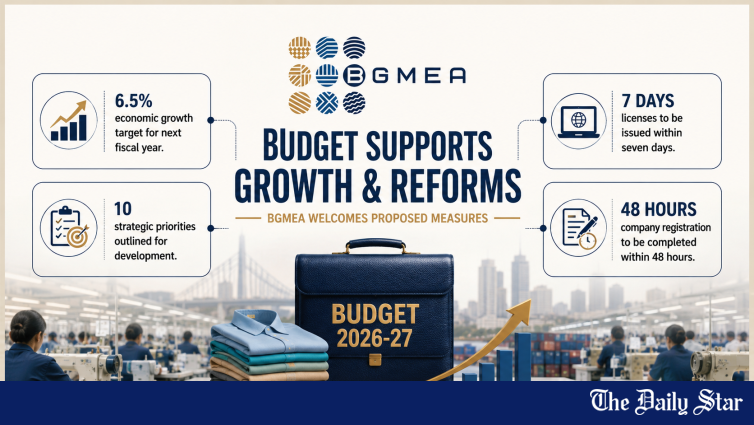
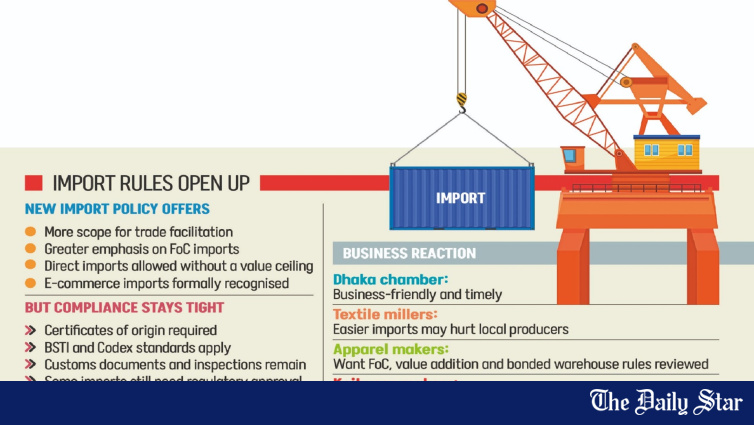
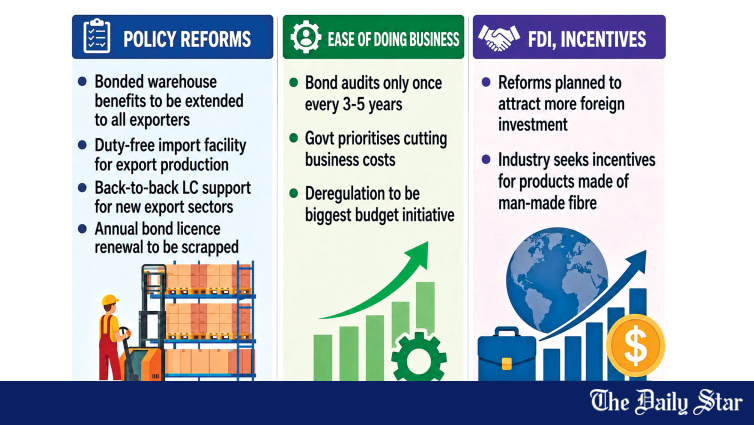
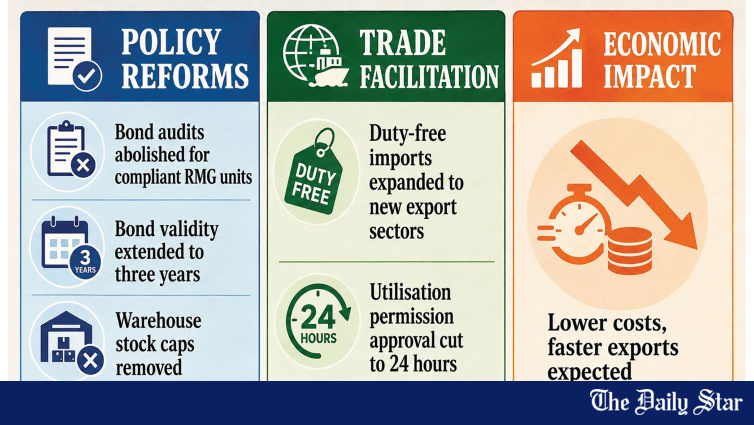
The government has proposed a landmark overhaul of the customs bond regime in the fiscal year 2026-27 budget, extending duty-free import facilities to emerging export sectors and easing compliance requirements for garment factories -- steps exporters say will significantly boost trade competitiveness.Officials and analysts, however, warn the reforms risk being undermined by existing patterns of abuse unless accompanied by stronger enforcement.The proposed changes amend several key regulations -- the Bonded Warehouse Licensing Rules 2024, the Bonded Warehouse Management Rules for export-oriented industries, the General Bond Rules 2024, and provisions governing annual import entitlement and warehouse operations.The most significant proposals include scrapping annual bond audits for fully compliant garment factories, extending general bond validity from one to three years, removing stock limits in bonded warehouses and cutting the approval window for utilisation permission to 24 hours.New rules would also allow bonded raw materials to be transferred among licensed warehouse operators and export-oriented industries.The reforms extend beyond RMG to the leather, footwear, terry towel, pharmaceuticals and jewellery sectors. A separate bonded facility framework has been proposed for importing gold bars and gold scrap to support jewellery exports.Business leaders say the measures could shorten production lead times and reduce the cost of doing business.“The abolition of bond audits and removal of bonding capacity limits will strengthen the competitiveness of exporters,” said Nasir Uddin Chowdhury, managing director of an export-oriented business and a director of the Chattogram Chamber of Commerce and Industry (CCCI).M Masrur Reaz, chairman and CEO of Policy Exchange Bangladesh, said reducing the capital burden at the initial stage would encourage investment and help new sectors expand export capacity.“Most entrepreneurs in Bangladesh have limited initial capital. As a result, many are unable to make large-scale investments even when they want to,” he said.Entrepreneurs from pharmaceuticals, leather goods and footwear welcomed the extension of bonded warehouse facilities.Many of these industries export products manufactured from imported raw materials while also serving the domestic market, but have until now received duty drawbacks only after completing exports. Under the proposed changes, they would be able to import raw materials duty-free from the outset, easing cash-flow pressures.Some industry representatives, however, cautioned against a uniform approach.“Treating every export-oriented industry in the same way as the RMG sector may not produce the desired results. Each industry has its own production process, raw material requirements and market dynamics,” one industry leader said.Mohammad Zakir Hossain, managing director of Delta Pharmaceuticals, said the bonded warehouse facility may have limited immediate benefits for his sector.