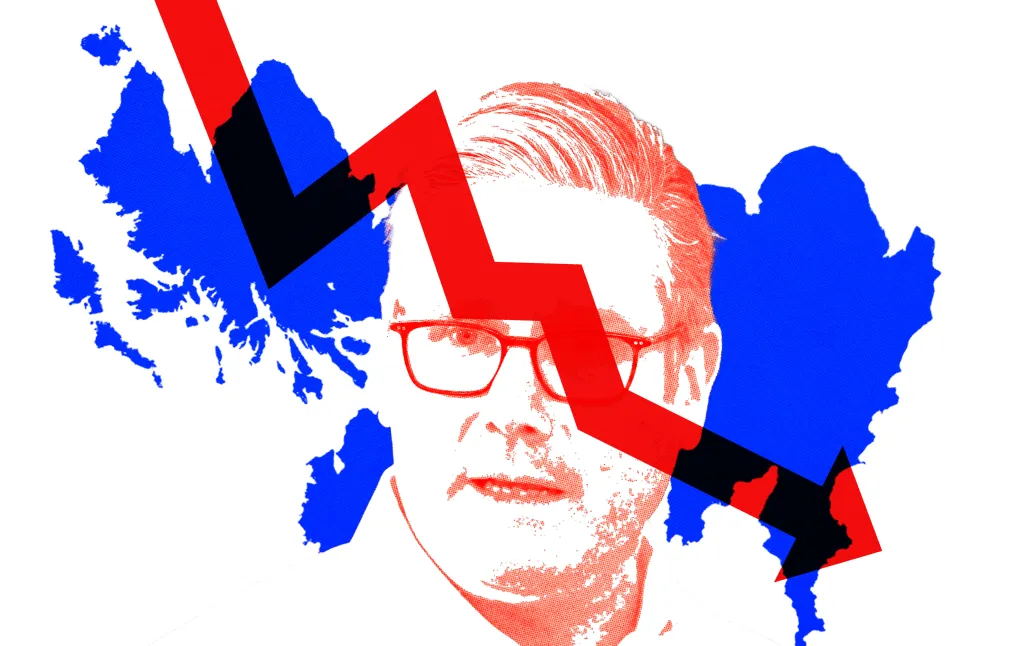
Britain is currently quite broken. This is the premise of The Land Where Nothing Works, a new book by historian A.G. Hopkins. It’s also a widely accepted truth among Brits of all stripes. Once seen as a country punching far above its weight, the United Kingdom has now spent some time—to quote one of its famous authors, Terry Pratchett—sauntering vaguely downward.
To pick only a few of the facts mentioned in Hopkins’ first chapter: Middle-income families were, in 2023, 20 percent poorer than their German counterparts, and 9 percent poorer than their French ones. The figure rose to 27 percent for low-income families, in comparison with both countries. Britain has the highest degree of inequality in Europe. Its productivity growth since 2008 has been half that of the 25 richest Organisation for Economic Co-operation and Development countries.
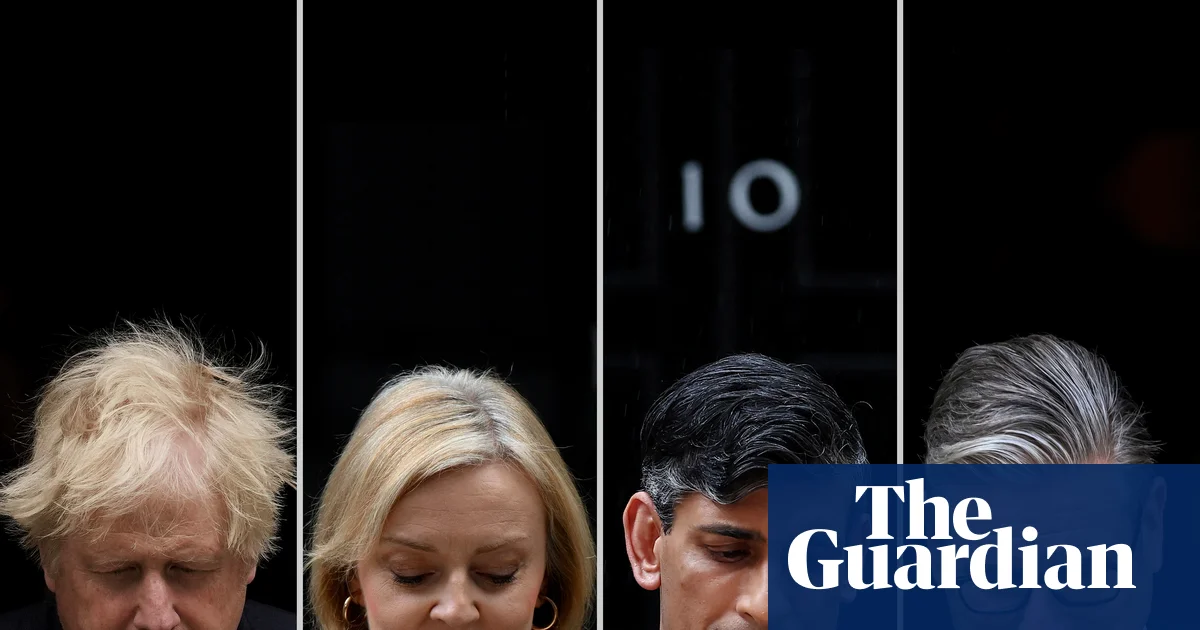
Britain also has the highest rate of incarceration in Western Europe, and it’s the pothole capital of Europe. On top of it all, its recent prime ministers have hardly had an encouraging track record, from David Cameron’s botched Brexit vote to the moral vacuum of Boris Johnson.
So, what exactly happened?
Many historians and journalists have written books on the topic recently. The narrative goes something like this: Britain has been in slow but steady decline for around half a century, beginning just before Margaret Thatcher’s premiership in the 1980s. Thatcher’s reforms weakened the state, and the leaders that followed merely applied Band-Aids to the country’s deep wounds. After decades of muddling through, followed by the 2008 crash and a stringent austerity program in the early 2010s, Britain was hit by the twin crises of Brexit and COVID-19. Amid all this, the nation kept lying to itself about its place in the world, as it went from colonial superpower to mid-sized country off the edge of Europe.